Artwork
An Idyll
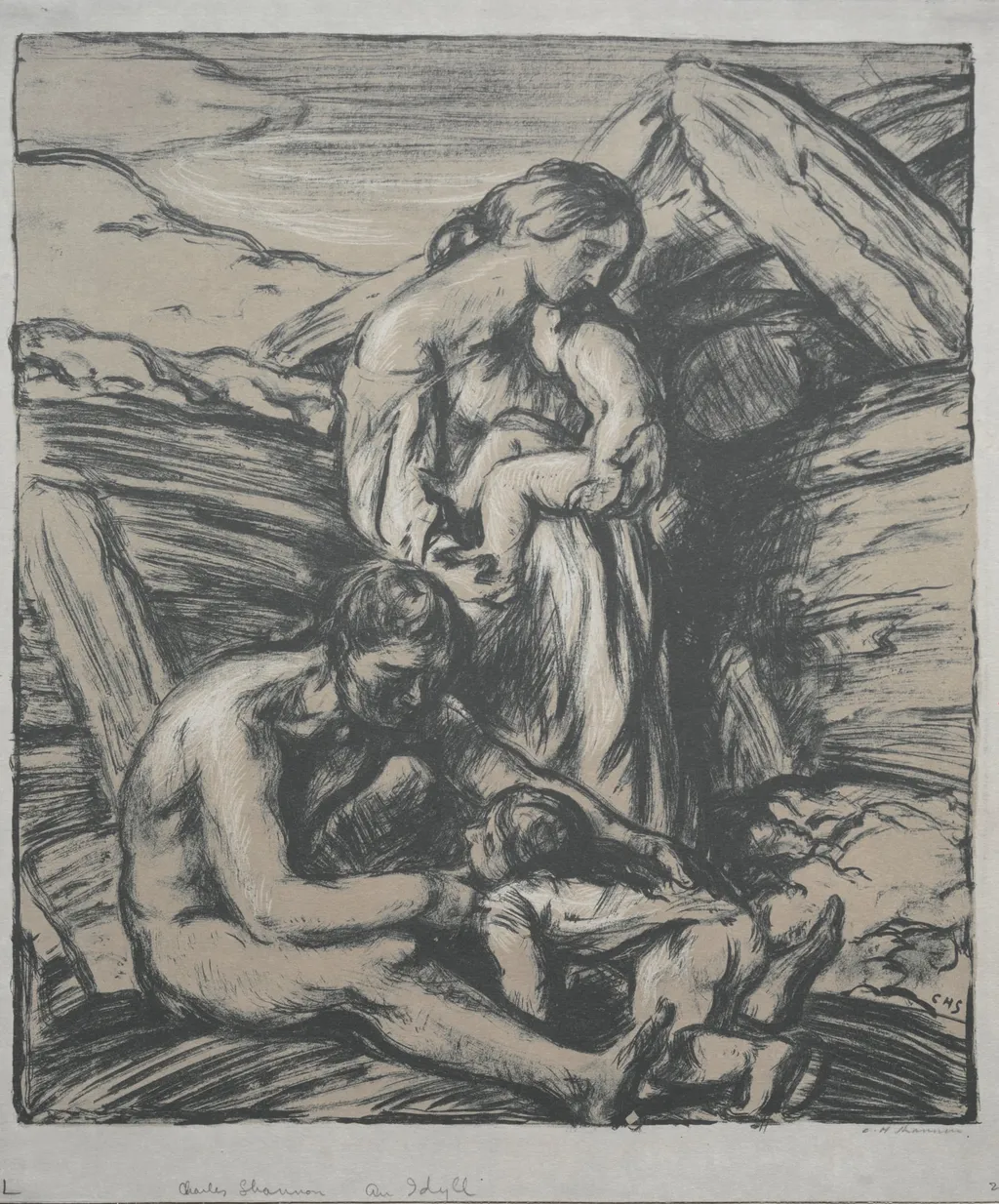
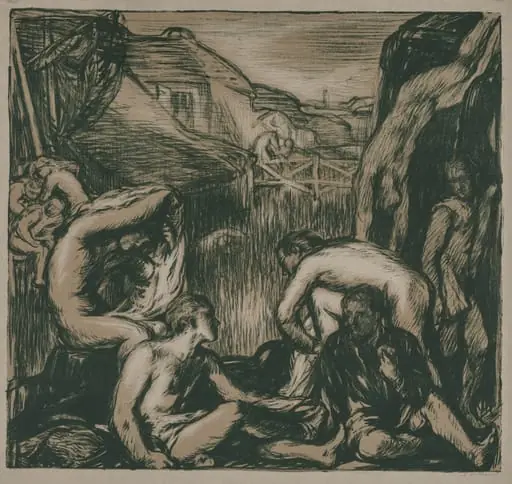
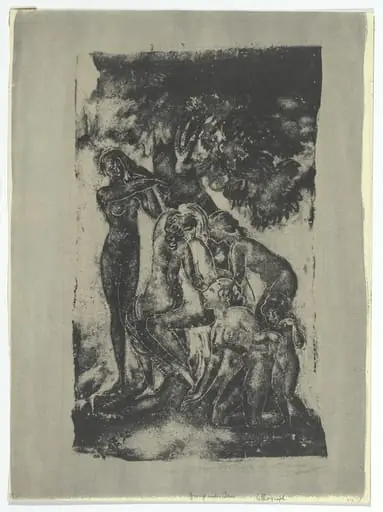
An Idyll is a print by Charles Hasslewood Shannon. It dates from 1905 and is held in the collection of the Cleveland Museum of Art.
About this work
Overview
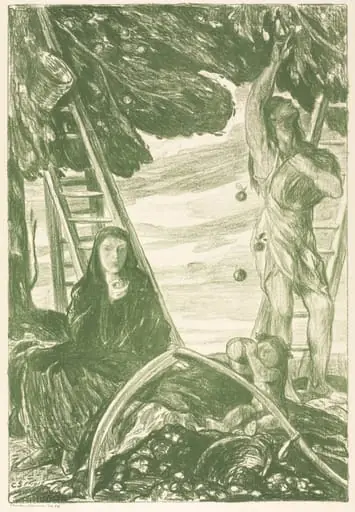
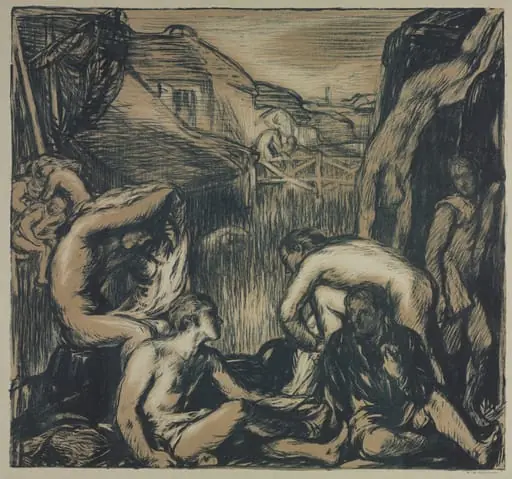
An Idyll, created in 1905 by Charles Hasslewood Shannon, is a monochromatic print held in the collection of The Cleveland Museum of Art. Executed with swift, expressive strokes, the work captures a moment of intimate stillness amid a turbulent environment. The composition relies on contrast and gesture rather than detail, conveying emotion through form and movement rather than narrative clarity.
Subject & Meaning
Three figures are grouped beneath a rocky shelter, one standing over two others curled on the ground. The posture suggests vulnerability, protection, or shared exhaustion. The absence of identifiable features or context invites interpretation—perhaps a moment of refuge, mourning, or quiet communion. The scene resists clear storytelling, emphasizing emotional resonance over literal meaning.
Technique & Style
Shannon employed bold, gestural lines and stark tonal contrasts to model form and space. The background is rendered with jagged, energetic marks that imply rugged terrain or storm-lit skies. By omitting fine details, he prioritized the dynamic arrangement of bodies and the interplay of light and shadow, using chiaroscuro to heighten the sense of drama and immediacy.
History & Provenance
Created in 1905, the print entered the collection of The Cleveland Museum of Art at an early stage in its institutional history. Its acquisition reflects the museum’s interest in early 20th-century graphic works and the British aesthetic movement. No record of prior ownership or exhibition prior to its arrival in Cleveland is widely documented.
Context
Shannon worked during a period when artists across Europe were redefining printmaking as a medium for personal expression. Influenced by Japanese woodcuts and the Symbolist interest in mood, he moved away from detailed illustration toward evocative abstraction. An Idyll aligns with this shift, embracing economy of line and emotional intensity over realism.
Legacy
The work stands as an example of Shannon’s mature graphic style—minimalist yet emotionally charged. While not widely reproduced, it contributes to understanding how early modernist printmakers used restraint to amplify psychological depth. Its presence in a major American museum underscores its role in bridging British aesthetic traditions and American collecting practices of the era.
Artist & collection