Artwork
Bread (Brot)
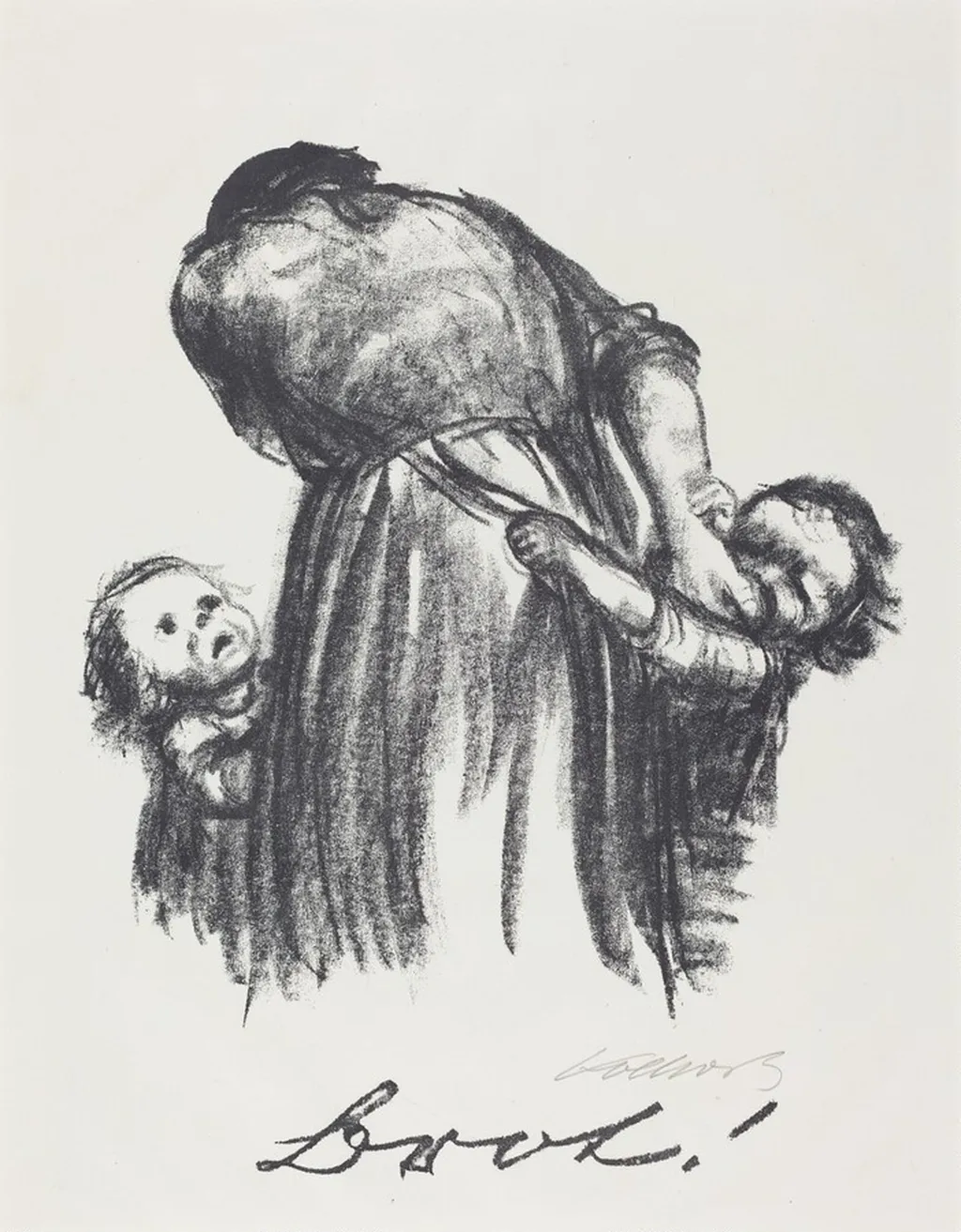
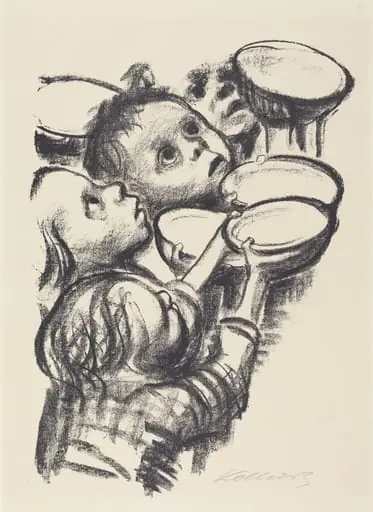
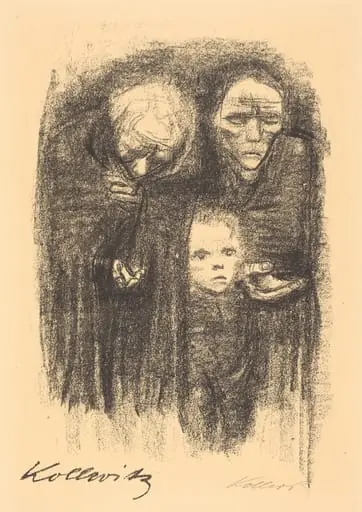
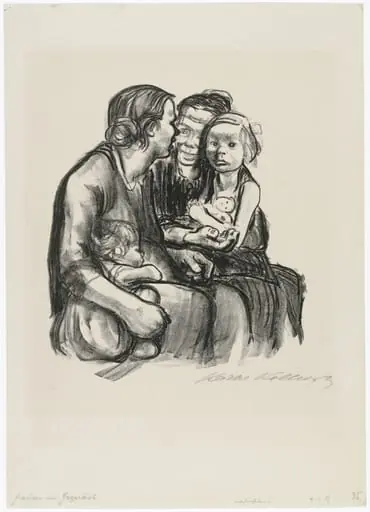
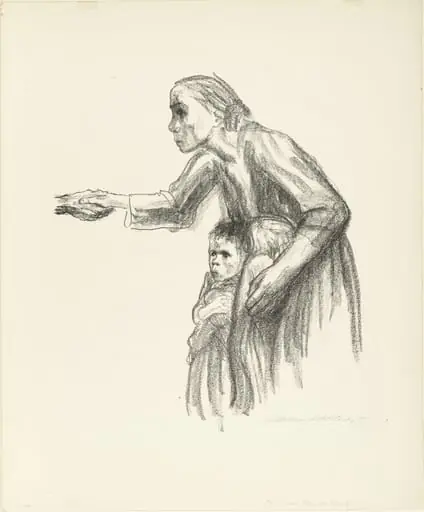
Bread (Brot) is an ink print by Käthe Kollwitz. It dates from 1924 and is held in the collection of the National Gallery of Art.
About this work
Overview
Käthe Kollwitz produced the lithograph *Bread* in 1924 as part of a sustained artistic focus on economic deprivation and maternal suffering.
Käthe Kollwitz produced the lithograph *Bread* in 1924 as part of a sustained artistic focus on economic deprivation and maternal suffering. Known for her printmaking, she often depicted the lives of working-class families with unflinching empathy. This work belongs to a series of images that respond to the social turmoil of postwar Germany, using the quiet intimacy of domestic hardship to reflect broader systemic failures.
Subject & Meaning
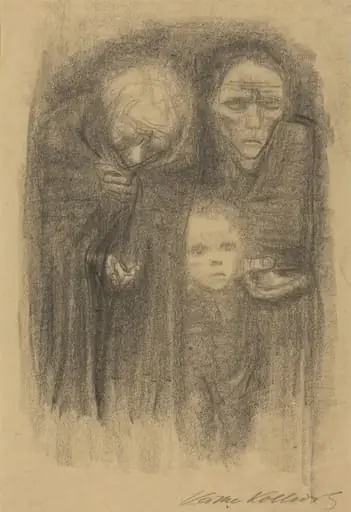
The image shows a woman, weary and bent, holding one child while another peeks from behind her. Her posture suggests physical and emotional depletion, while the children’s expressions convey vulnerability and silent apprehension. The title, *Bread*, points to the fundamental absence of sustenance, transforming the scene into a quiet indictment of hunger and the burden carried by mothers in times of scarcity.
Technique & Style
Kollwitz employed lithography to achieve dense, tactile contrasts between shadow and form. The dark, muted tones and heavy linework amplify the emotional weight of the figures, with minimal detail focusing attention on gesture and posture. Her technique avoids ornamentation, using the medium’s capacity for texture to deepen the sense of lived hardship rather than to embellish it.
History & Provenance
Created during the Weimar Republic, *Bread* emerged from a period of economic instability and rising social unrest in Germany. Kollwitz, already established for her social realist cycles like *The Weavers*, continued to engage with public suffering through accessible prints. The work was widely distributed, aligning with her belief that art should serve as a voice for the marginalized.
Context
In the early 1920s, Germany faced hyperinflation, food shortages, and widespread unemployment. Kollwitz’s work responded directly to these conditions, drawing from her observations of urban poverty and her own experiences as a mother. Her imagery resonated with contemporary movements advocating for labor rights and social reform, grounding her art in the material realities of her time.
Legacy
Kollwitz’s prints, including *Bread*, influenced later generations of socially engaged artists and activists. Her commitment to depicting suffering without sensationalism established a model for humanitarian visual storytelling. As the first woman elected to the Prussian Academy of Arts, her career also challenged institutional barriers, reinforcing the legitimacy of women’s perspectives in public art.
Artist & collection
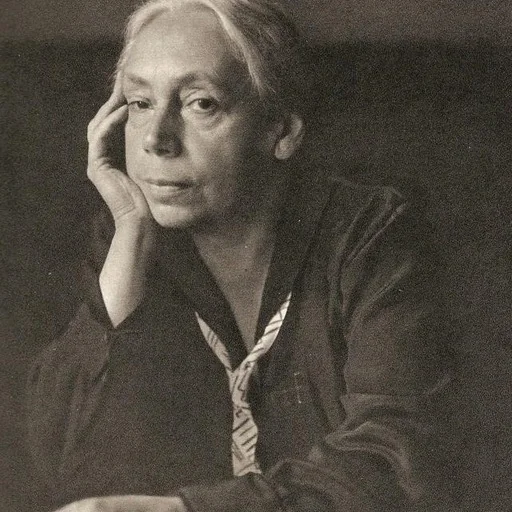
Artist
Käthe Kollwitz (German pronunciation: born Schmidt; 8 July 1867 – 22 April 1945) was a German artist who worked with painting, printmaking (including etching, lithography and woodcuts) and sculpture.