Artwork
Interior
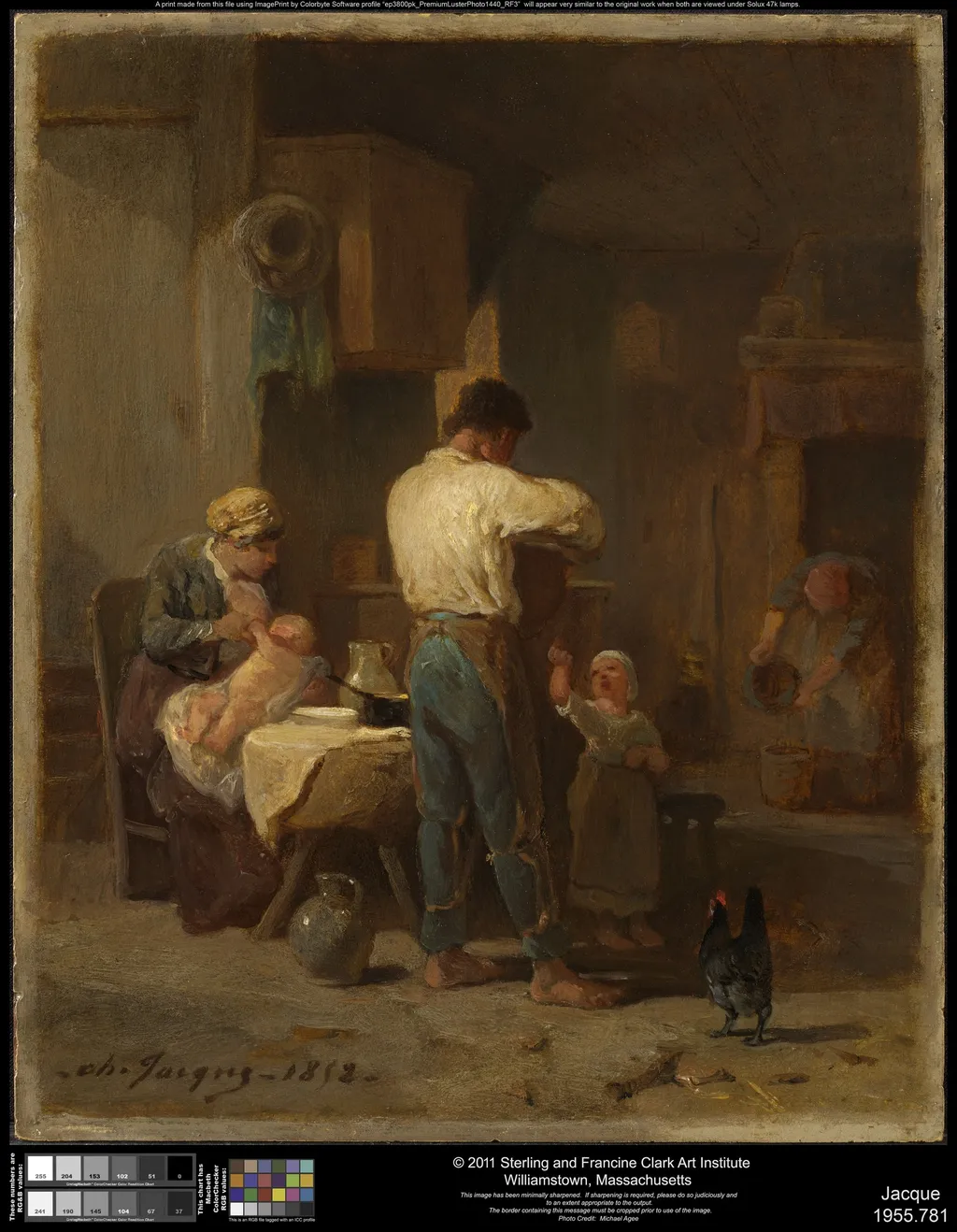
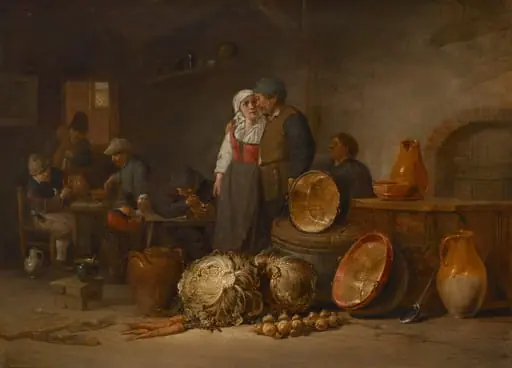
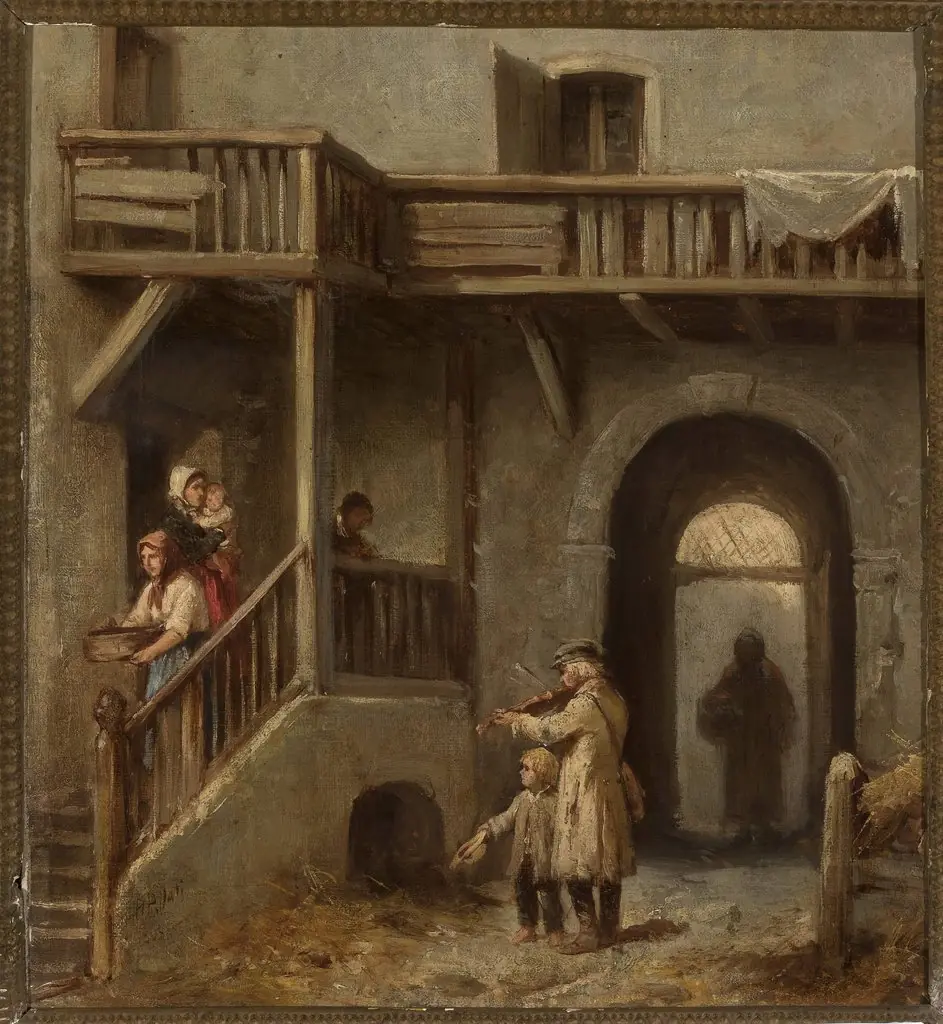
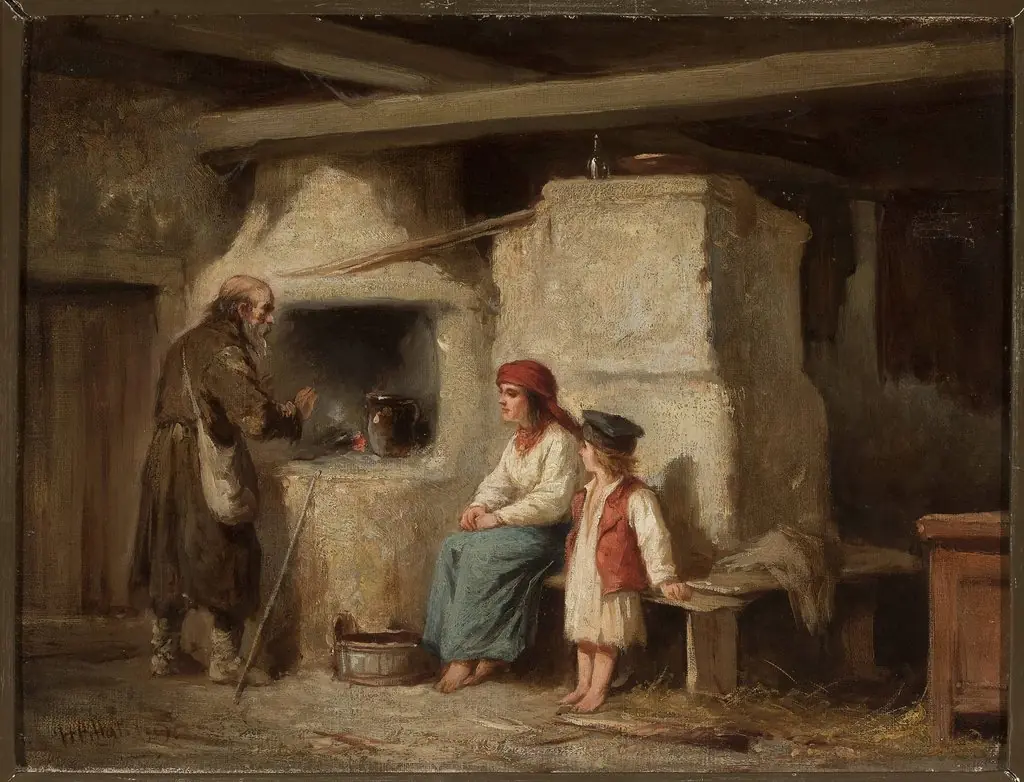
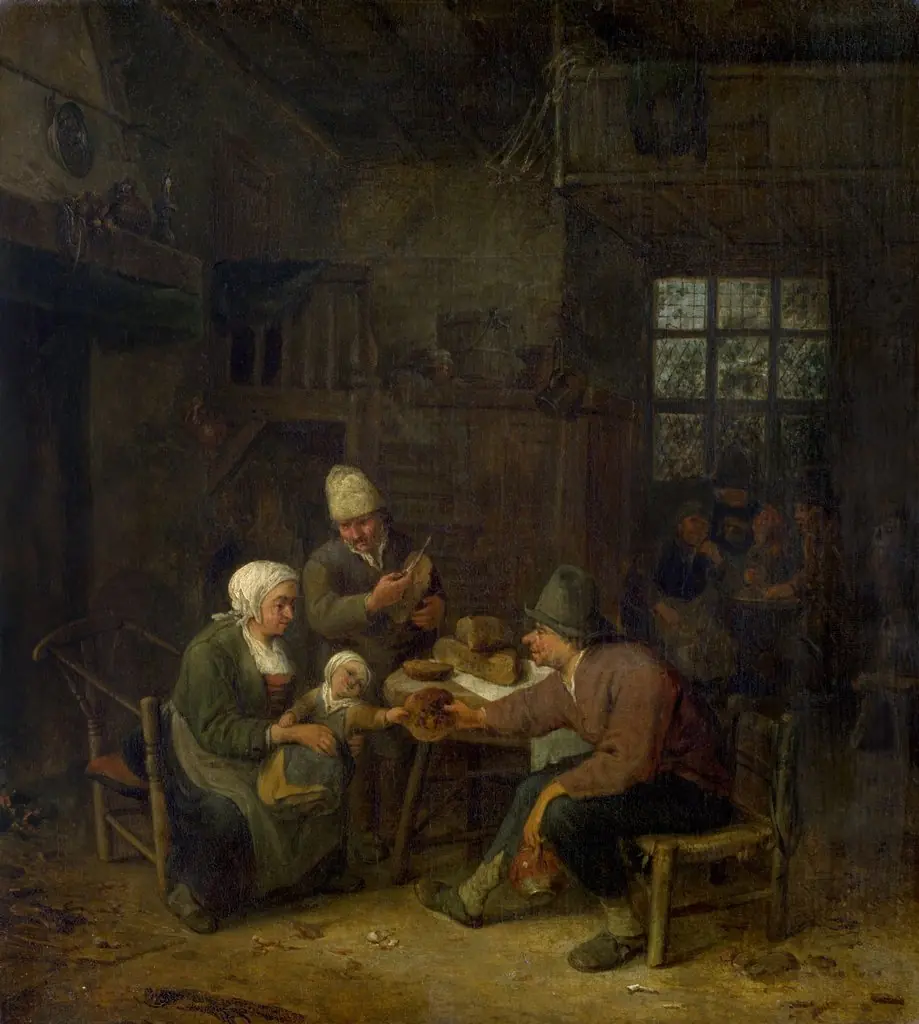
Interior is an oil painting by the Barbizon school artist Charles Jacque. It dates from 1852 and is held in the collection of the Clark Art Institute.
About this work
Overview
Executed with restrained detail and muted tones, the work aligns with the Barbizon School’s interest in unidealized everyday life.
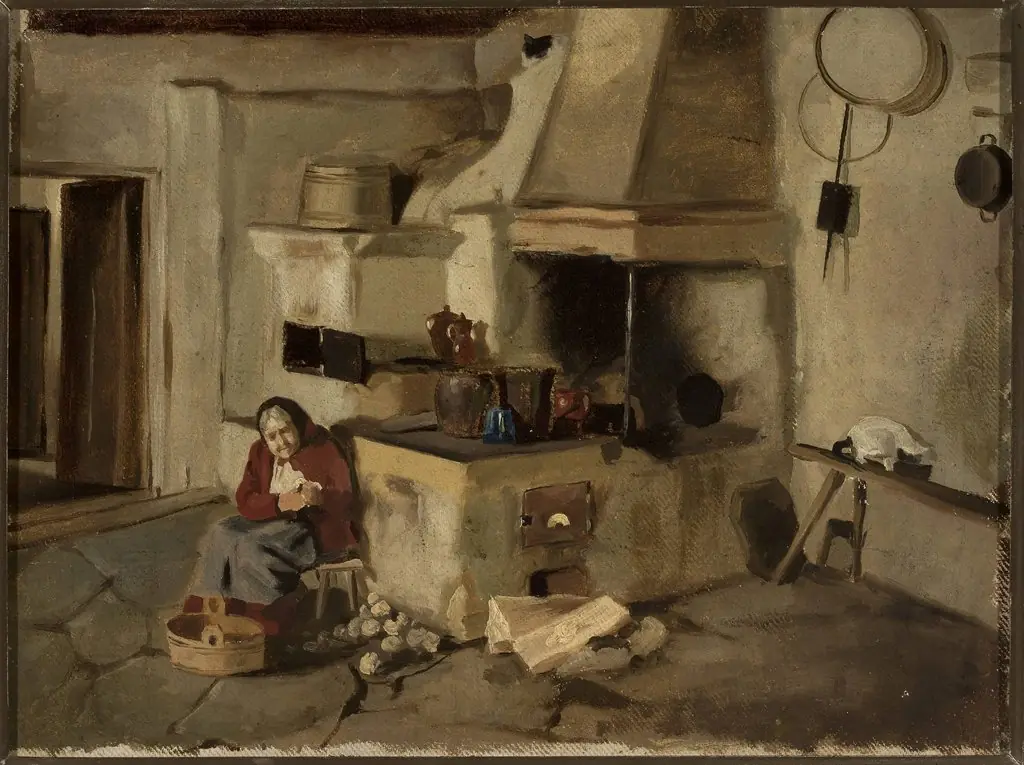
Charles Jacque’s 1852 oil painting Interior depicts a quiet domestic moment in a rural French home. Executed with restrained detail and muted tones, the work aligns with the Barbizon School’s interest in unidealized everyday life. Unlike grand historical or romanticized scenes common in mid-19th-century art, this piece focuses on the stillness of ordinary domestic routine, rendered without dramatic flourish.
Subject & Meaning
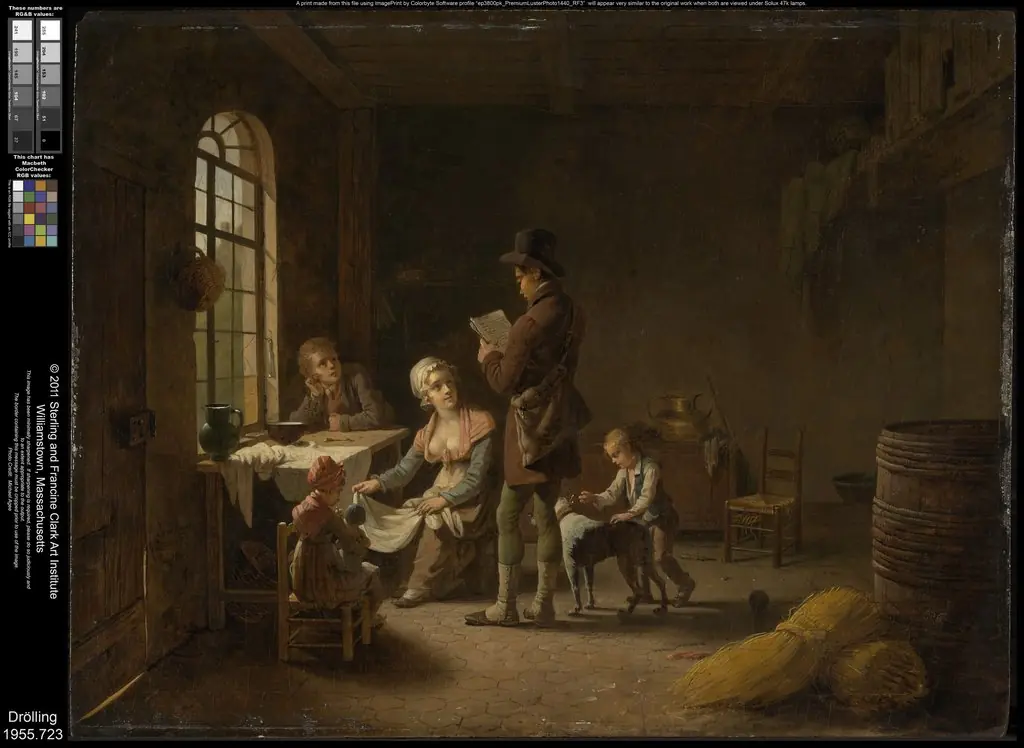
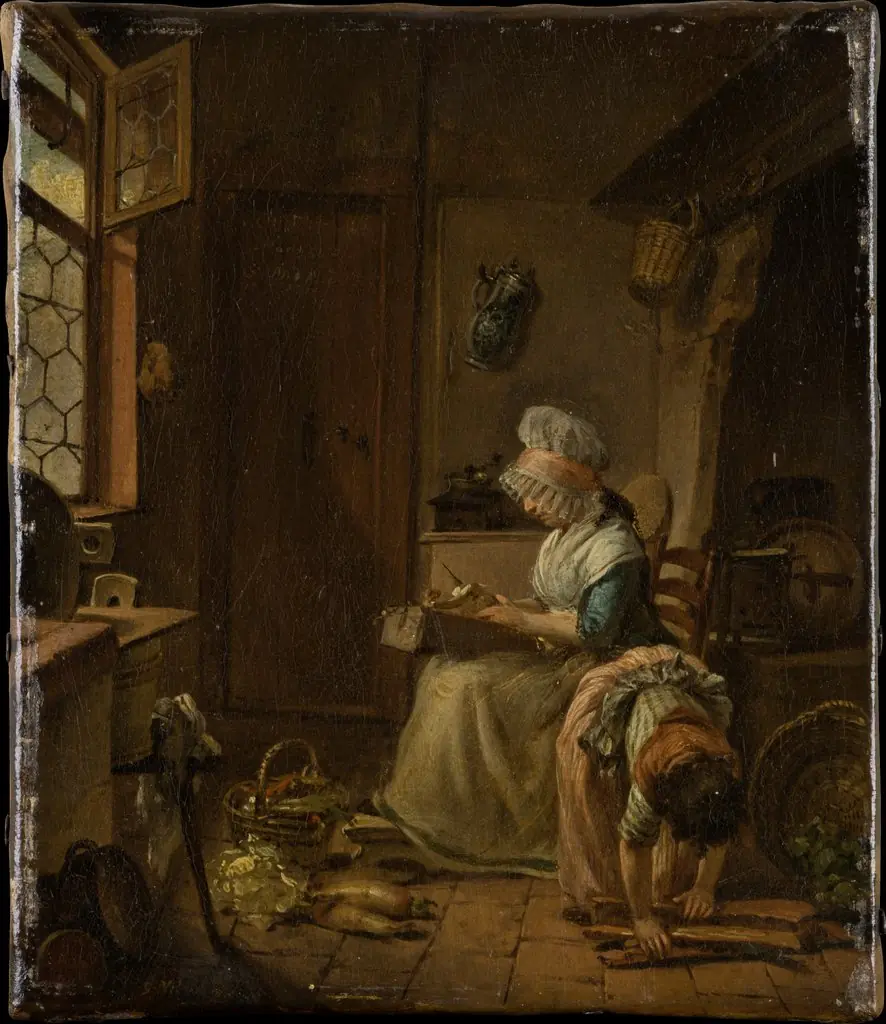
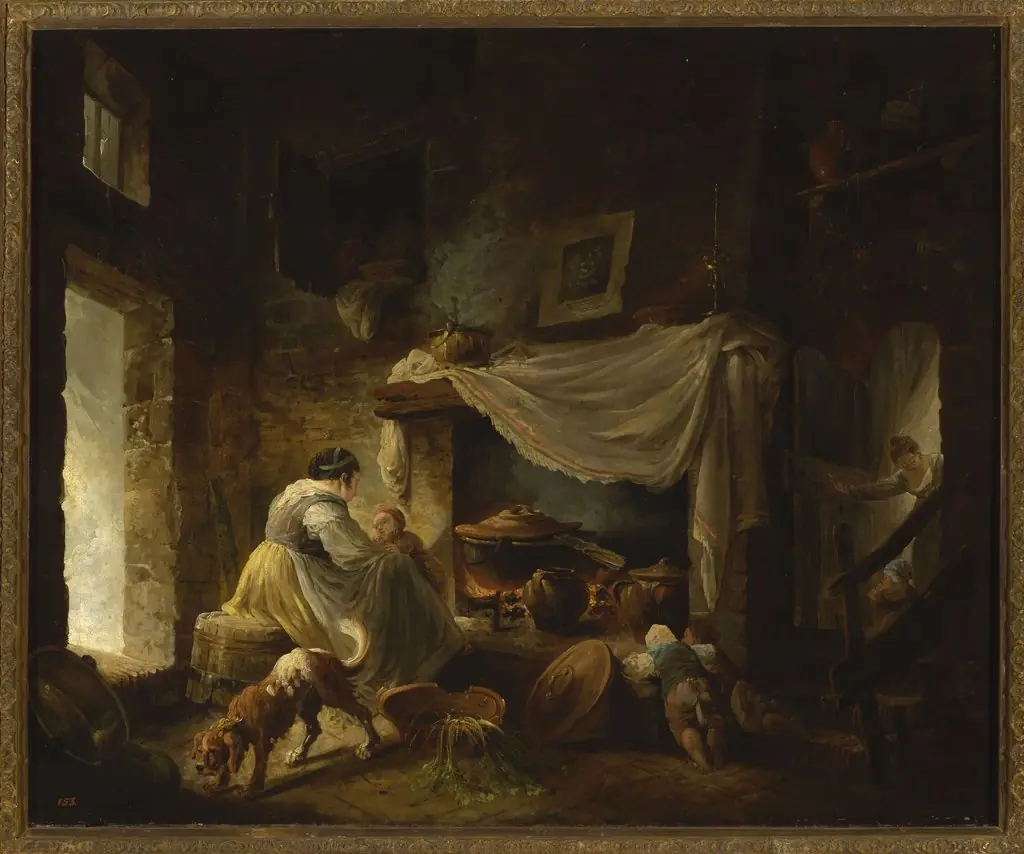
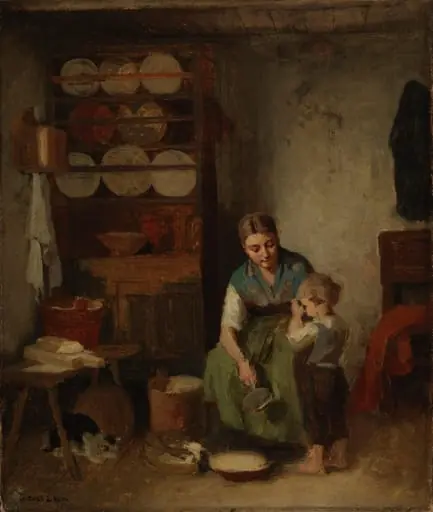
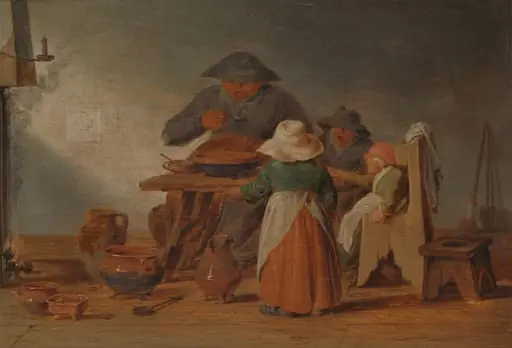
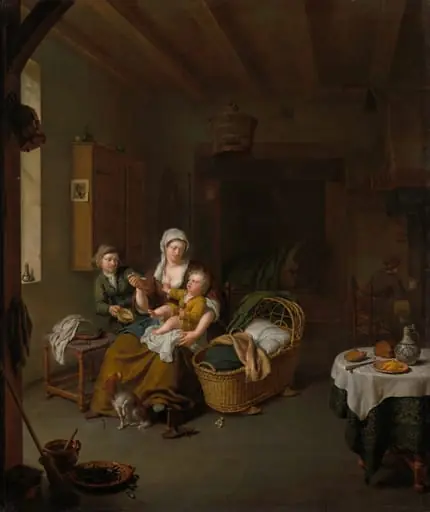
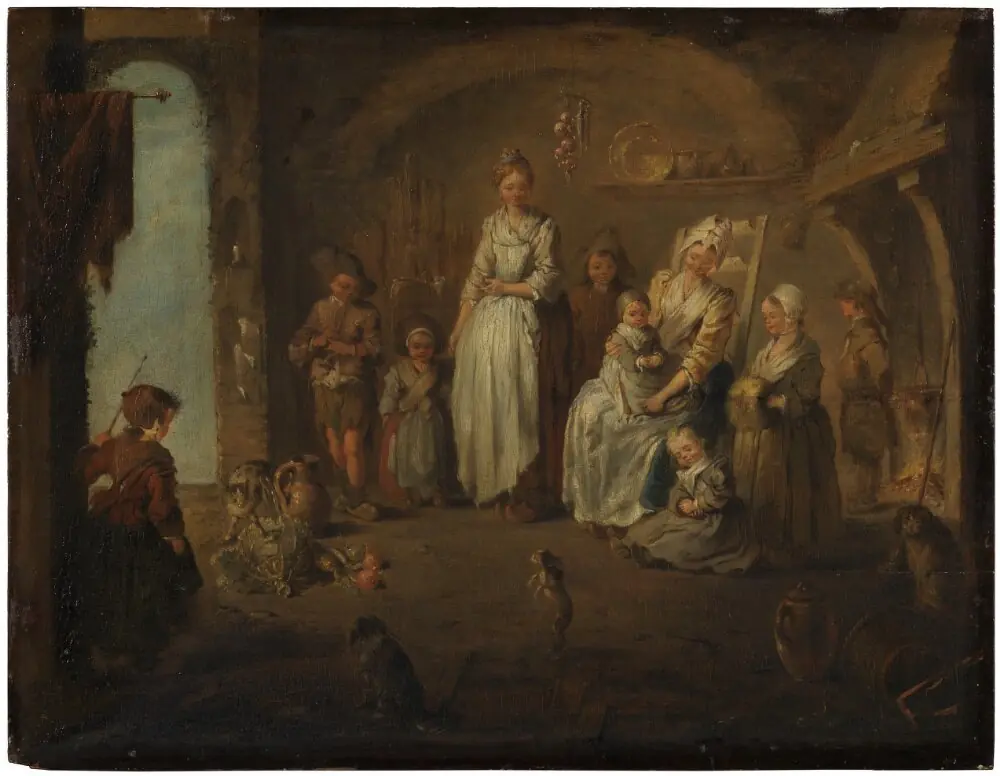
The painting portrays a family engaged in mundane activities: a man stands facing a table, a woman holds an infant, and a child stands nearby, while a chicken moves at their feet. The absence of direct eye contact or overt emotion suggests a quiet, unselfconscious rhythm of daily life. The inclusion of the chicken hints at the integration of livestock within the household, reflecting the practical realities of rural existence.
Technique & Style
Jacque employed oil paint to build subtle textures and soft transitions of light, particularly in the fabric of the tablecloth and the walls near the fireplace. His background in engraving informed his precise handling of form and contour, evident in the clear outlines of figures and objects. The palette is restrained—earthy browns, muted grays, and pale whites—emphasizing atmosphere over coloristic drama.
History & Provenance
Painted in 1852, Interior entered the collection of the Clark Art Institute, where it remains today. Jacque, who served in the French Army and learned engraving during his service, transitioned to painting after his military career. His work was closely associated with the Barbizon artists, who sought to portray rural France with sincerity, rejecting academic conventions in favor of direct observation.
Context
In the mid-19th century, French art increasingly turned toward the lives of peasants and laborers, away from mythological or aristocratic subjects. Jacque’s Interior reflects this shift, aligning with the Barbizon School’s commitment to painting from nature and daily experience. The scene’s intimacy and lack of narrative climax mark it as part of a broader movement toward realism in French painting.
Legacy
Jacque’s Interior contributes to the broader recognition of domestic rural life as worthy artistic subject matter. While less celebrated than some of his contemporaries, his work exemplifies the quiet, observational approach that helped pave the way for later realist and impressionist practices. The painting endures as a modest but significant record of 19th-century French rural domesticity.
Artist & collection
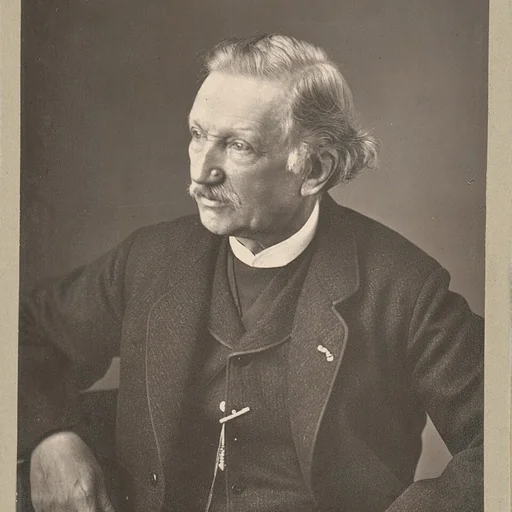
Artist
Charles-Émile Jacque (23 May 1813 – 7 May 1894) was a French painter of Pastoralism and engraver who was, with Jean-François Millet, part of the Barbizon School. He first learned to engrave maps when he spent seven years in the French Army.