Artwork
Leaving the Stall
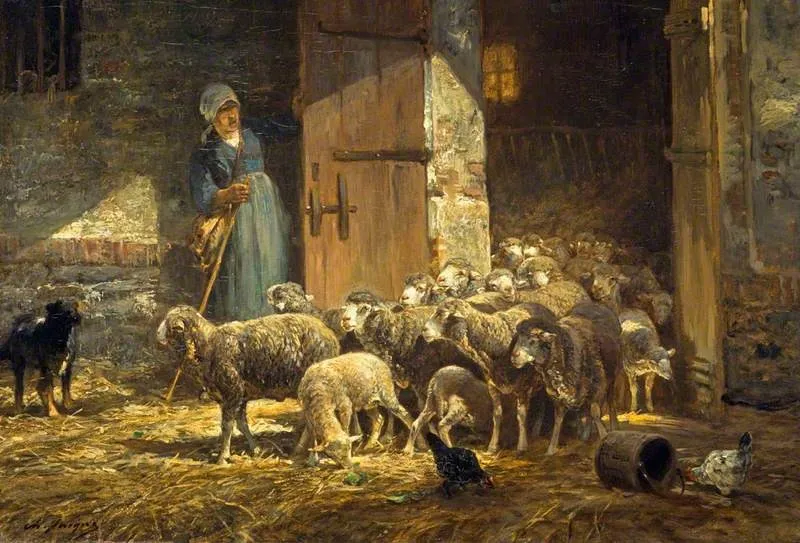
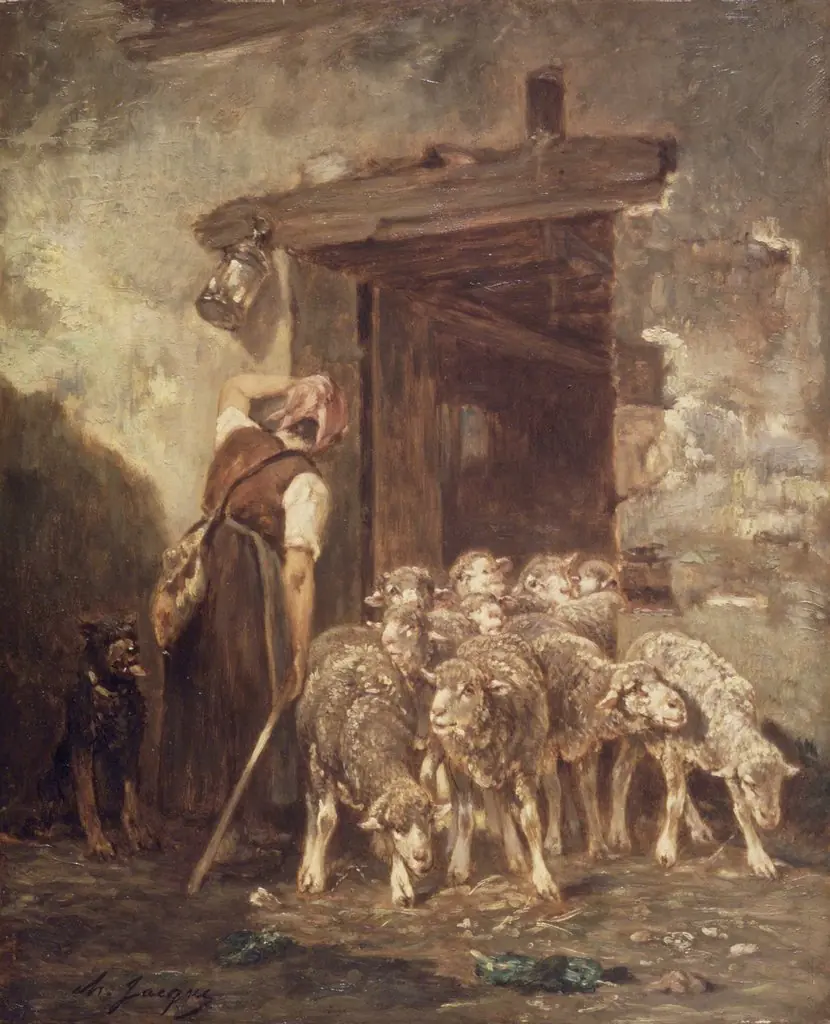
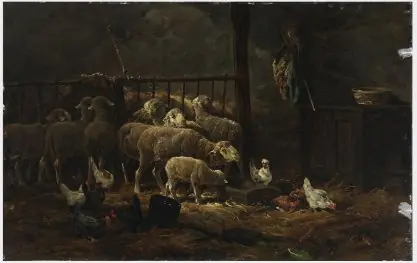
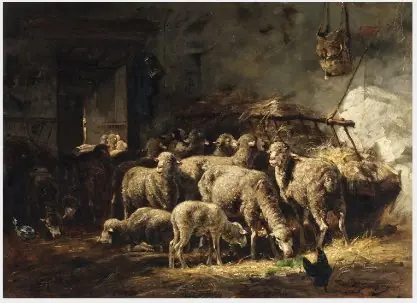
Leaving the Stall is an oil painting by the Realist artist Charles Jacque. It dates from 1853 and is held in the collection of the National Galleries Scotland.
About this work
Overview
Leaving the Stall, an 1853 oil painting, exemplifies the Barbizon School's emphasis on naturalistic rural scenes. Created by French artist Charles Jacque, the work captures a serene moment of daily farm life.
Subject & Meaning
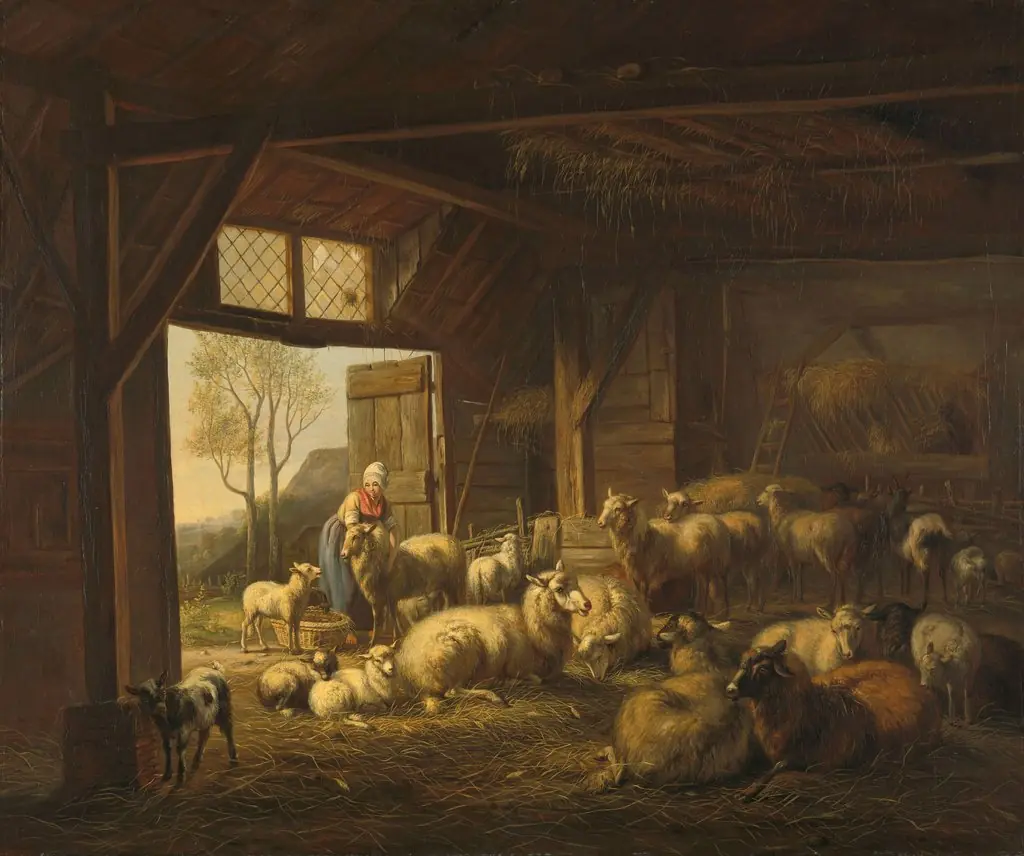
The painting portrays a woman in traditional attire guiding a group of sheep out of a barn, conveying a sense of quiet confidence and peaceful interaction between human and animal. The scene reflects the Realist movement's focus on everyday rural life.
Technique & Style
Jacque employs warm, earthy tones to create a cozy atmosphere, while the composition suggests the use of chiaroscuro, a technique utilizing strong contrasts of light and dark to enhance the intimate, naturalistic setting.
History & Provenance
Originally created in 1853 by Charles Jacque, a colleague of Jean-François Millet, the painting is now part of the collection at the Scottish National Gallery.
Context
As part of the Barbizon School and broader Realist movement, *Leaving the Stall* contributes to 19th-century France's artistic shift towards depicting ordinary, rural life with authenticity and simplicity.
Artist & collection
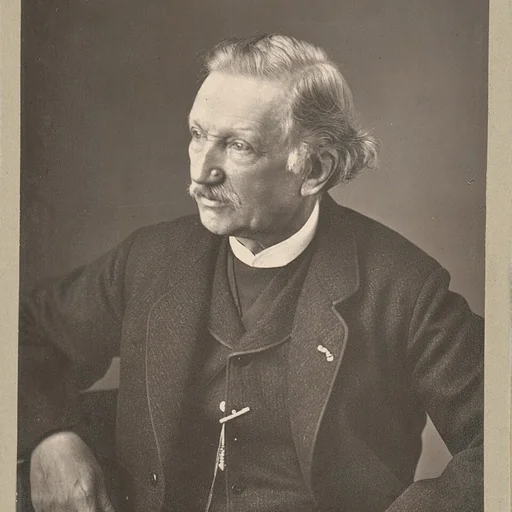
Artist
Charles-Émile Jacque (23 May 1813 – 7 May 1894) was a French painter of Pastoralism and engraver who was, with Jean-François Millet, part of the Barbizon School. He first learned to engrave maps when he spent seven years in the French Army.