Artwork
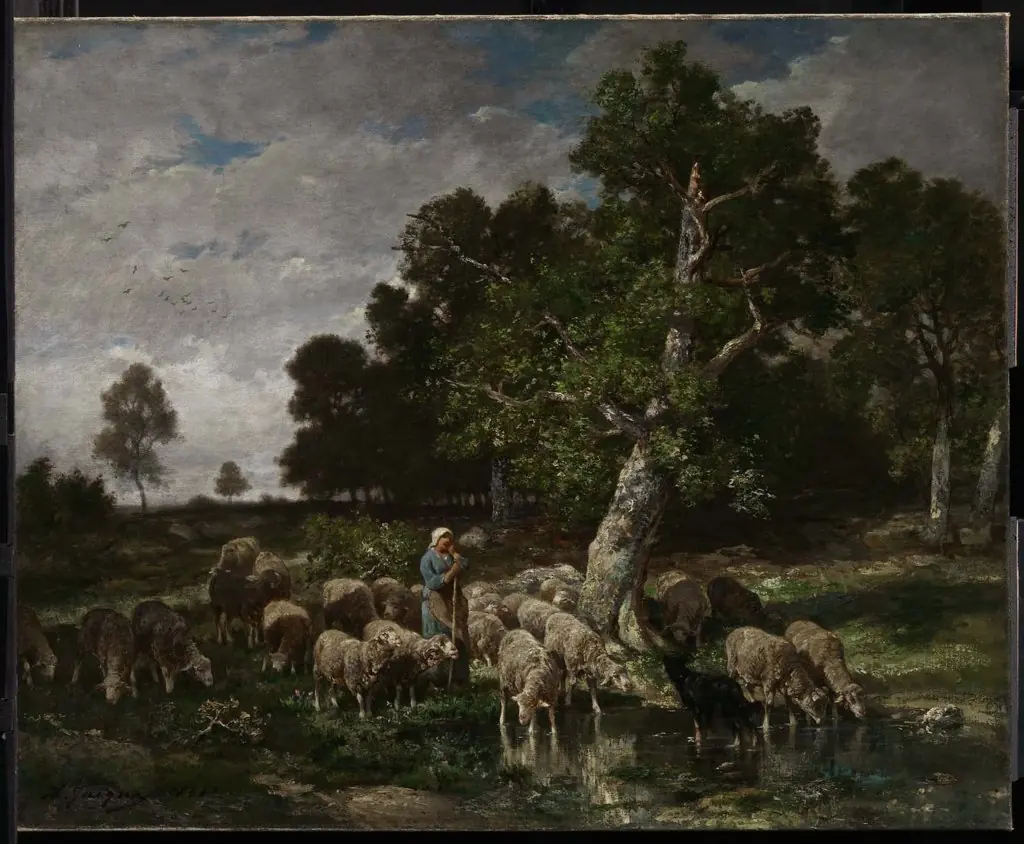
A Shepherdess near a Wood, Barbizon
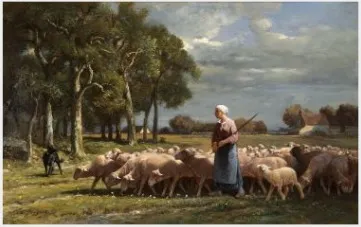
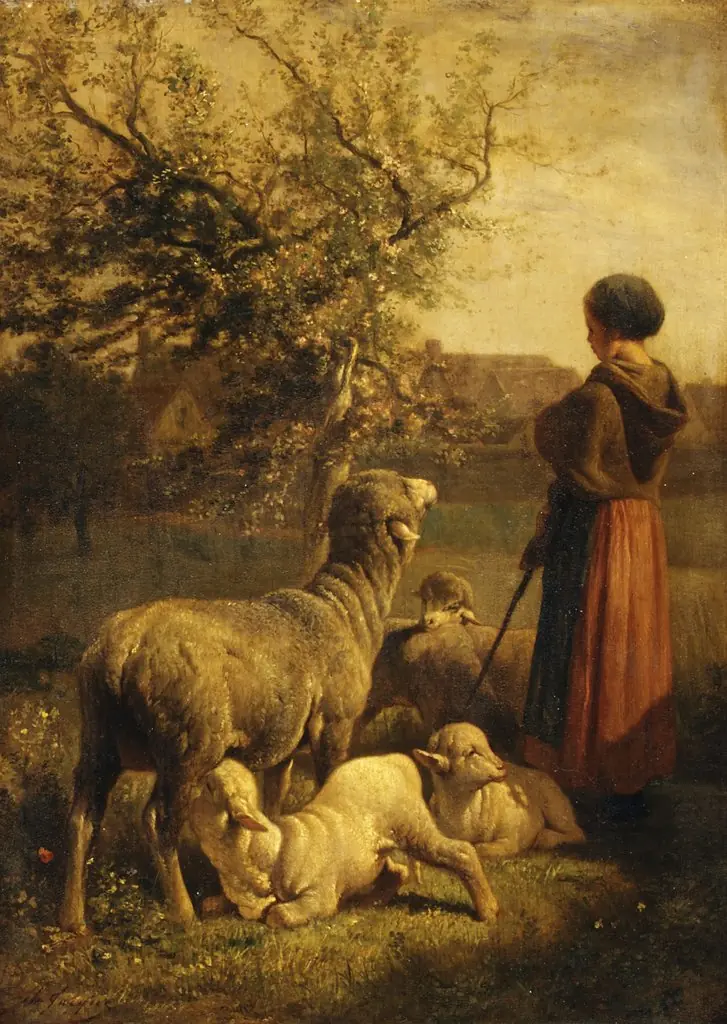
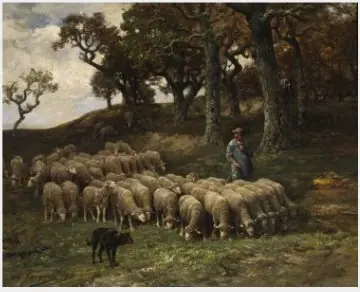
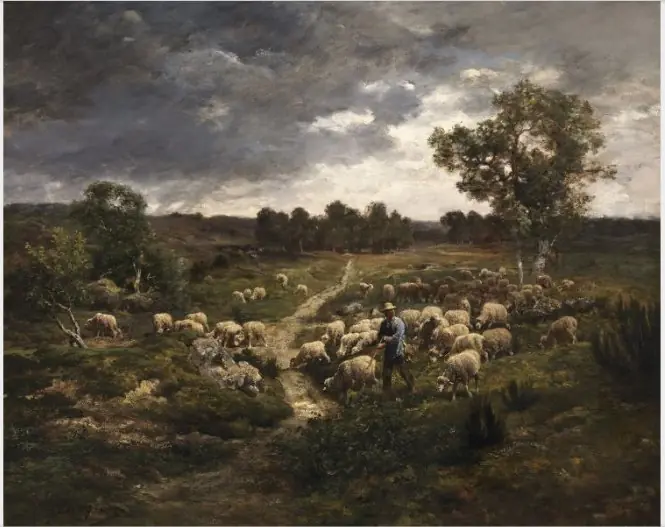
A Shepherdess near a Wood, Barbizon is an oil painting by the Barbizon school artist Charles Jacque. It dates from 1862 and is held in the collection of the National Gallery of Ireland.
About this work
Overview
Painted in 1862 by Charles Jacque, this oil on canvas depicts a quiet rural scene near Barbizon, France. Jacque, a key figure in the Barbizon School, turned his attention to the everyday rhythms of country life. The work is part of a broader effort by artists to capture the land and its inhabitants without idealization, grounding their vision in direct observation of the natural world.
Subject & Meaning
The setting implies a life shaped by seasonal rhythms and solitude, reflecting the Barbizon interest in the quiet endurance of rural existence.
A lone shepherdess stands calmly amid her flock, her posture unassuming, her tools simple: a crook and a headscarf. The sheep, scattered and attentive, suggest a moment of pause rather than labor. The scene conveys neither drama nor narrative, but a quiet dignity in routine. The setting implies a life shaped by seasonal rhythms and solitude, reflecting the Barbizon interest in the quiet endurance of rural existence.
Technique & Style
Jacque employs soft, muted tones and loose brushwork to render the landscape and figures with a sense of immediacy. The sky is lightly textured, the trees along the left edge rendered with subtle variation in green and gray. The shepherdess is defined by form rather than detail, her clothing blending into the earthy palette. The composition avoids theatricality, favoring balance and spatial harmony over focal emphasis.
History & Provenance
Created during Jacque’s active years in Barbizon, the painting was likely made on-site, consistent with the group’s practice of working outdoors. It entered the National Gallery of Ireland’s collection in the 20th century, where it remains as part of a growing European collection focused on 19th-century realism. Its provenance reflects the international appreciation for Barbizon works beyond France.
Context
The Barbizon School emerged in the mid-19th century as artists rejected academic idealism in favor of painting nature as they saw it. Jacque, alongside Millet and Rousseau, helped shift focus from historical or mythological subjects to the lives of peasants and the textures of the forest and field. This painting aligns with that ethos, portraying labor not as spectacle but as a quiet, integral part of the land.
Legacy
Jacque’s work contributed to the legitimacy of rural subjects in fine art, influencing later movements such as Impressionism. His attention to light, atmosphere, and the dignity of ordinary labor helped redefine what was worthy of artistic attention. While not widely known today, his paintings remain important examples of how 19th-century artists reconnected painting with the physical world.
Artist & collection
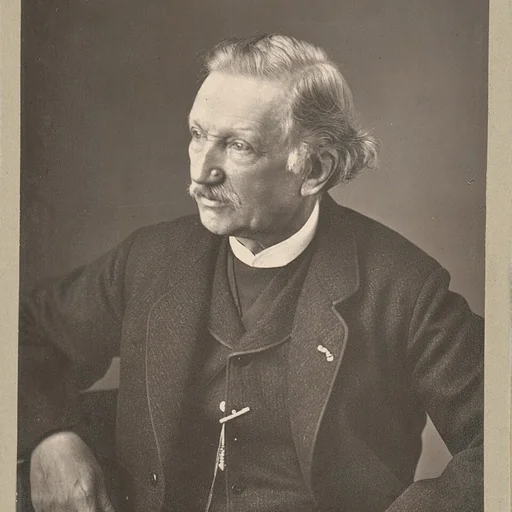
Artist
Charles-Émile Jacque (23 May 1813 – 7 May 1894) was a French painter of Pastoralism and engraver who was, with Jean-François Millet, part of the Barbizon School. He first learned to engrave maps when he spent seven years in the French Army.