Artwork
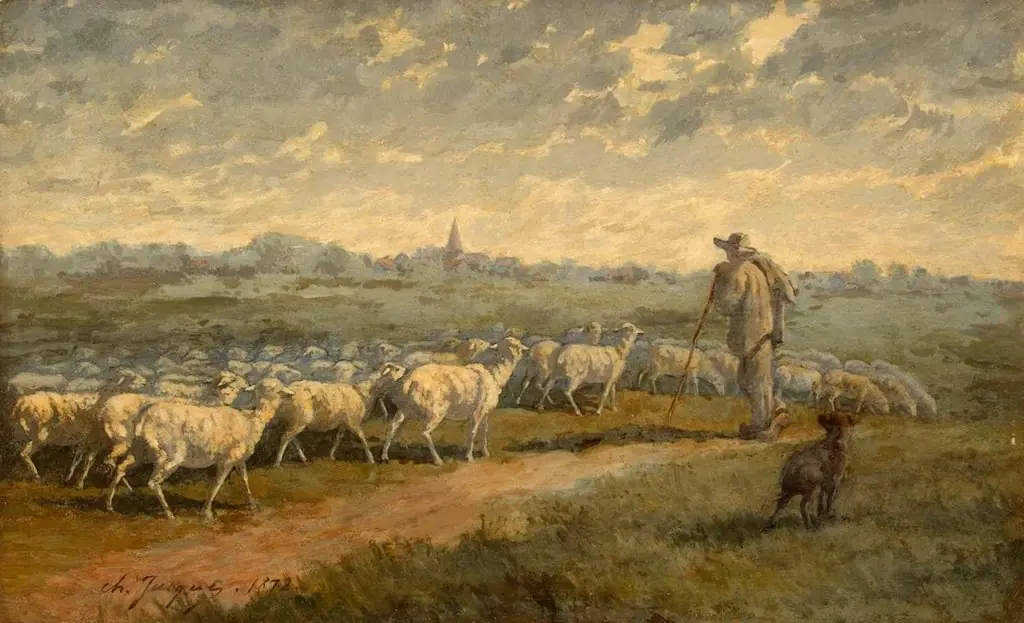
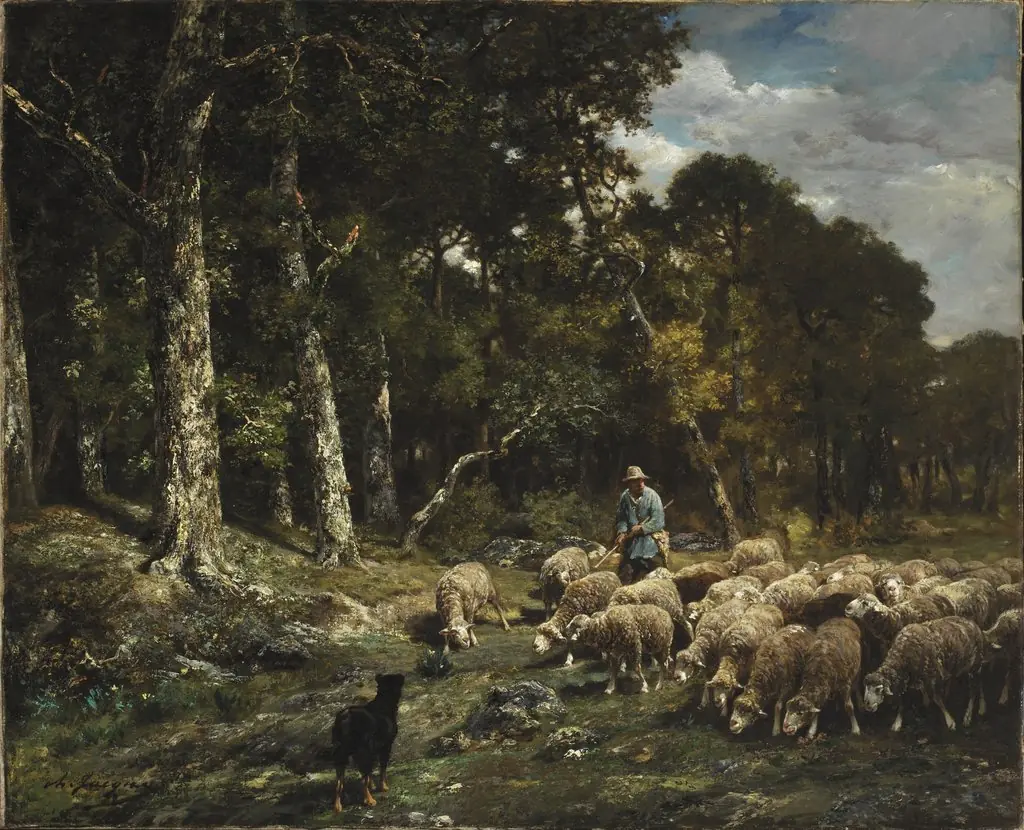
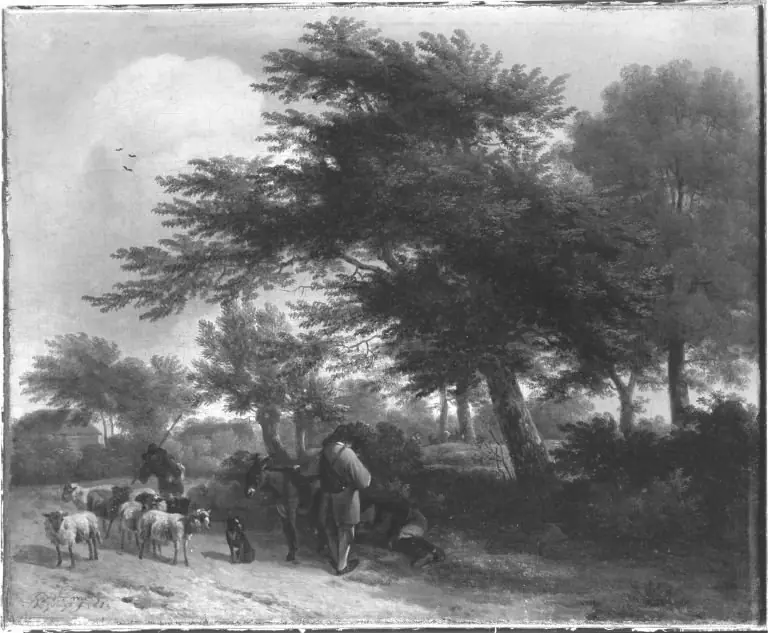
Shepherd and Sheep on the Edge of a Plain
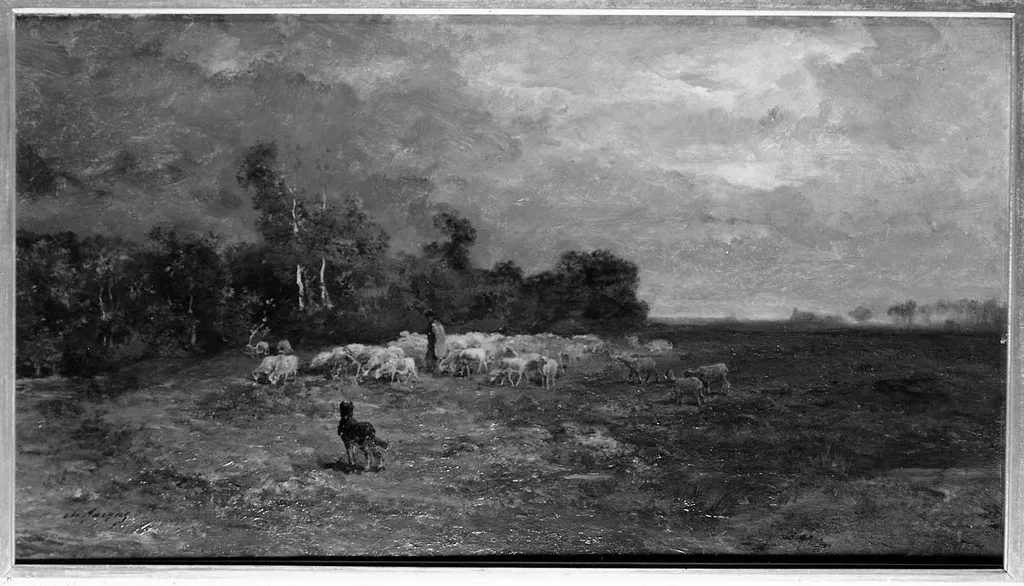
Shepherd and Sheep on the Edge of a Plain is an unspecified painting by Charles Jacque. It dates from 1863 and is held in the collection of the Museum of Fine Arts Boston.
About this work
Overview
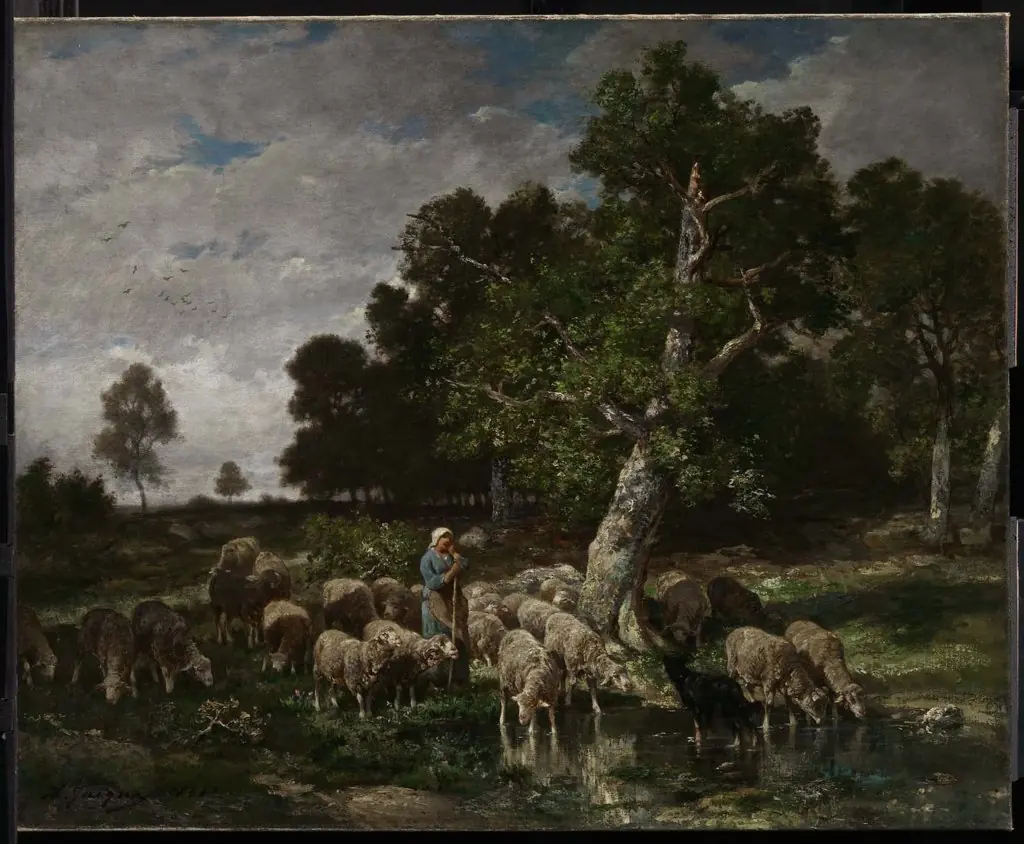
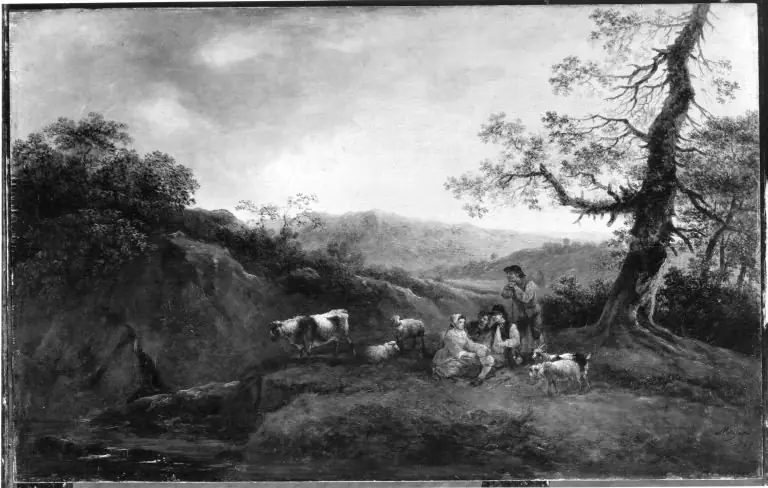
Created circa 1863, this oil painting by French artist Charles Jacque portrays a quiet rural tableau. A lone shepherd stands among his flock at the fringe of an open plain, while a dog watches attentively. Distant trees and a cloud‑filled sky frame the scene, conveying a sense of spaciousness and calm.
Subject & Meaning
The composition centers on the everyday labor of a shepherd, emphasizing the harmonious relationship between man, animal, and landscape. The inclusion of the dog, poised and looking outward, invites the viewer into the pastoral world, suggesting a contemplative pause in the routine of pastoral life.
Technique & Style
Jacque employs a palette of muted earth tones, allowing subtle shifts in hue to model form and suggest depth. Visible brushwork adds texture to the foliage and sky, while the careful placement of figures creates a balanced perspective that guides the eye from the foreground shepherd to the distant horizon.
History & Provenance
A member of the Barbizon School, Jacque produced this work during a period when French artists were turning toward realistic depictions of countryside labor. The painting entered the Museum of Fine Arts, Boston, where it remains part of the institution’s permanent collection, representing the school’s focus on naturalistic rural scenes.
Artist & collection
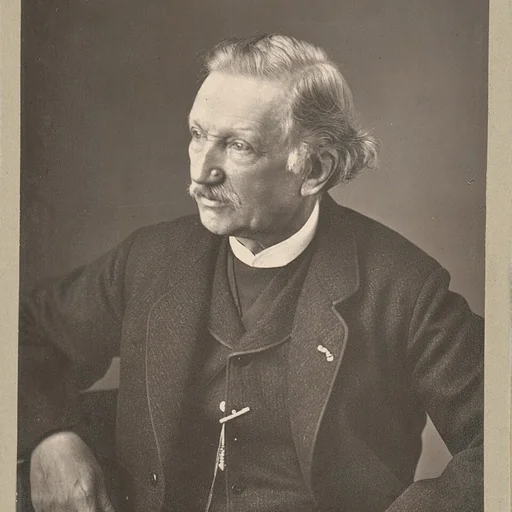
Artist
Charles-Émile Jacque (23 May 1813 – 7 May 1894) was a French painter of Pastoralism and engraver who was, with Jean-François Millet, part of the Barbizon School. He first learned to engrave maps when he spent seven years in the French Army.