Artwork
Daedalus and Icarus
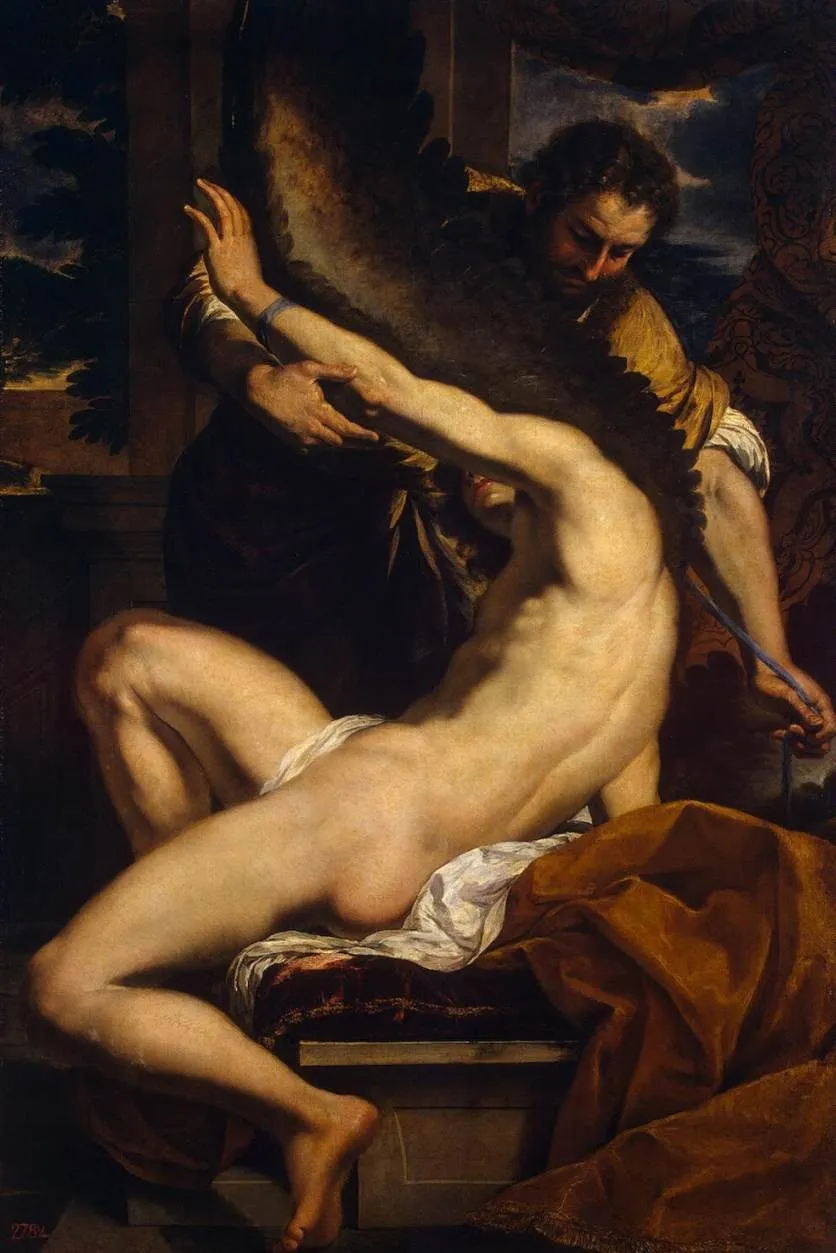
Daedalus and Icarus is an oil painting by the French Classical Baroque artist Charles Le Brun. It dates from 1645 and is held in the collection of the Hermitage Museum.
About this work
Overview
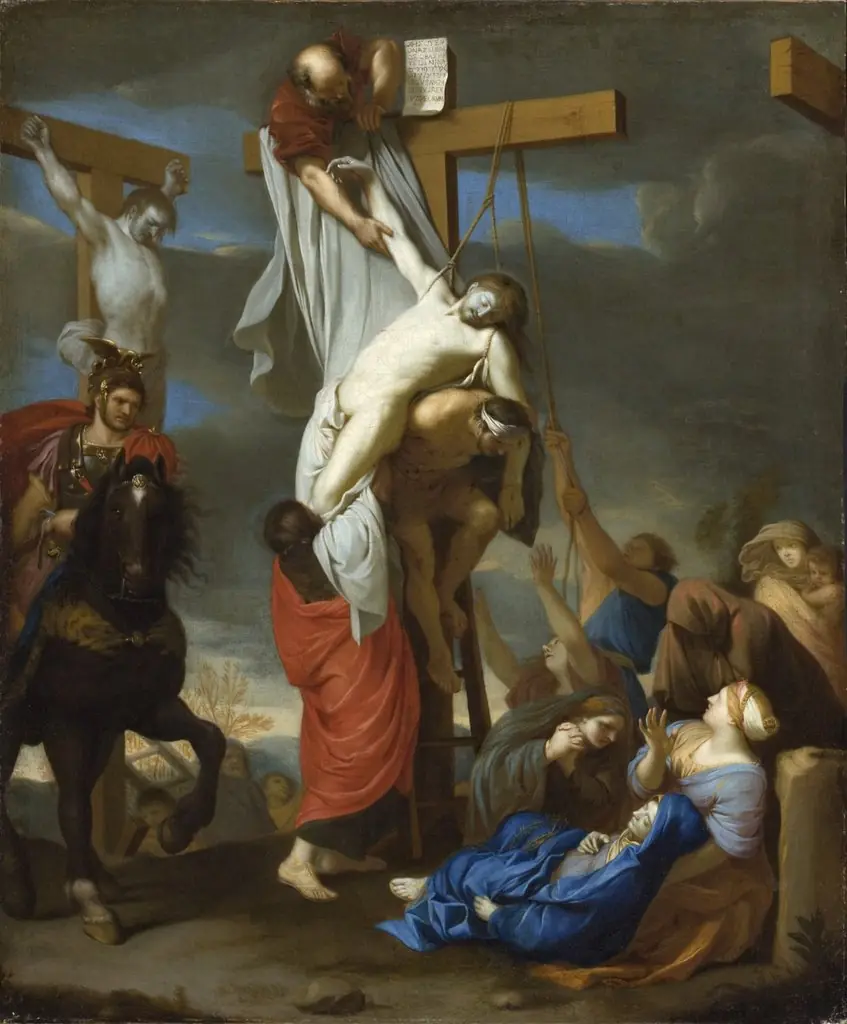
Created in 1645, this oil on canvas portrays a moment from the myth of Daedalus and Icarus, rendered in the French Classical Baroque idiom. The composition centers on a bearded figure kneeling beside a partially clothed, fallen body, while a dimly lit landscape recedes into shadow. The work is part of the collection of the State Hermitage Museum.
Subject & Meaning
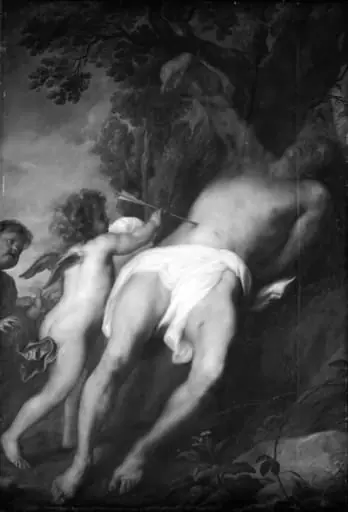
The scene captures the aftermath of Icarus’s fatal flight, with Daedalus cradling his son’s arm as the youth lies motionless on a draped surface. The juxtaposition of the grieving father and the vulnerable, half‑naked youth underscores themes of loss, hubris, and the tragic consequences of overreaching ambition in classical mythology.
Technique & Style
Le Brun employs pronounced chiaroscuro, allowing the illuminated figures to emerge from a tenebrous background. The flesh tones are rendered with a polished smoothness, while the textiles exhibit a subtle gradation of light, creating a tactile sense of softness. The overall effect reflects the disciplined composition and controlled drama characteristic of French Baroque painting.
History & Provenance
The painting was produced during a formative phase of Le Brun’s career, when he was consolidating his academic principles under the influence of Nicolas Poussin. Later, as the principal painter to Louis XIV, Le Brun would shape French artistic policy. The canvas eventually entered the State Hermitage Museum’s holdings, where it remains on display.
Context
In mid‑17th‑century France, the court sought art that combined classical restraint with emotional intensity.
In mid‑17th‑century France, the court sought art that combined classical restraint with emotional intensity. Le Brun’s work aligns with this agenda, merging a mythological narrative with a formal, academic approach. The piece exemplifies the period’s preference for moralizing subjects rendered with theatrical lighting and refined drawing, reflecting broader cultural and artistic currents of the time.
Artist & collection
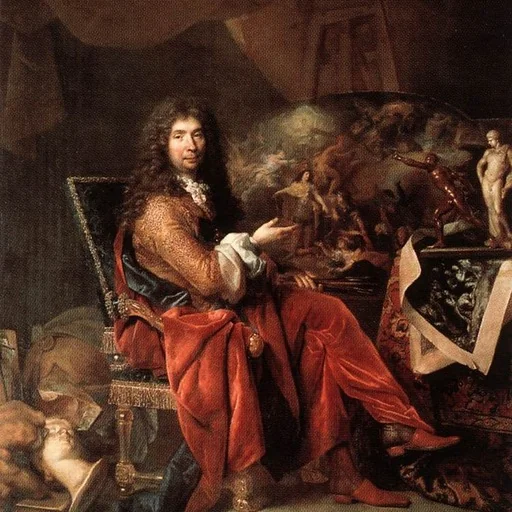
Artist
Charles Le Brun (French pronunciation: ; baptised 24 February 1619 – 12 February 1690) was a French painter, physiognomist, art theorist, and a director of several art schools of his time.