Artwork
Church of St. Nicholas, Rouen
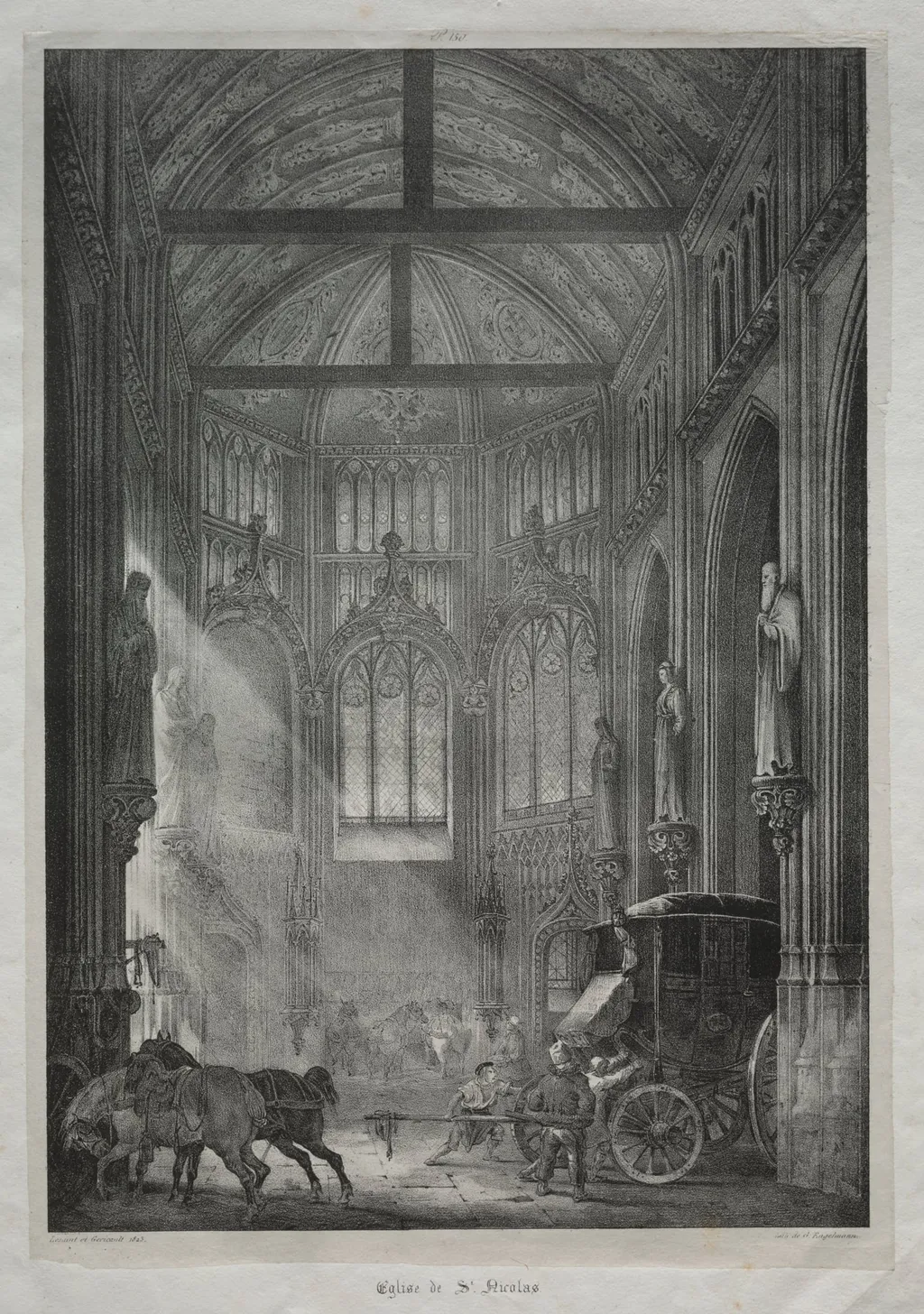
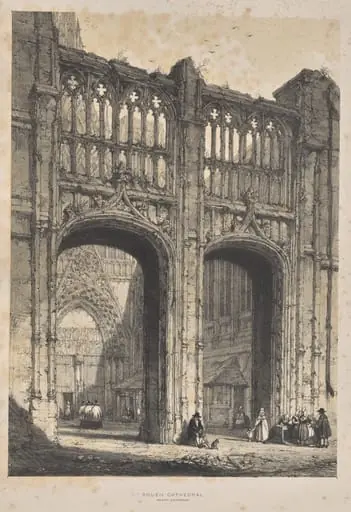
Church of St. Nicholas, Rouen is a print by the Romanticist artist Charles Louis Lesaint. It dates from 1823 and is held in the collection of the Cleveland Museum of Art.
About this work
The painting shows a church in Rouen, with a large tower and a detailed facade.
This work is interesting because it gives us a glimpse of what Rouen looked like in the 19th century. The artist paid close attention to the architecture.
To learn more about similar artworks, visit the museum where this painting is held, the Cleveland Museum of Art.
Overview
Created in 1823 by Charles Louis Lesaint, this print depicts the Church of St. Nicholas in Rouen, France. Executed in a precise, topographical style, it captures the building’s architectural form with careful attention to structural detail. The work is part of the collection at the Cleveland Museum of Art, where it serves as a record of early 19th-century urban architecture in northern France.
Subject & Meaning
The subject is the Gothic parish church of St. Nicholas, a prominent landmark in Rouen’s cityscape. Rather than dramatizing religious symbolism, the print emphasizes the building’s physical presence and civic importance. Its inclusion in Lesaint’s oeuvre reflects a broader interest in documenting France’s ecclesiastical structures during a period of post-revolutionary cultural reassessment.
Technique & Style
Lesaint employed fine-line engraving to render the church’s stonework, buttresses, and spire with clarity and restraint. The composition is frontal and symmetrical, minimizing atmospheric effects to prioritize architectural accuracy. Shading is subtle, relying on line density rather than tone, characteristic of topographical prints intended for documentation over artistic expression.
History & Provenance
The print was produced in 1823, during a time when French artists and publishers were systematically recording regional monuments.
The print was produced in 1823, during a time when French artists and publishers were systematically recording regional monuments. It entered the Cleveland Museum of Art’s collection through established acquisition channels, likely as part of a broader 19th- or early 20th-century effort to assemble European architectural studies. Its provenance remains tied to scholarly and institutional collections.
Context
In the early 1800s, France saw renewed interest in preserving and documenting its medieval heritage, especially after the destruction of the Revolution. Lesaint’s print aligns with this movement, contributing to a visual archive of churches and civic buildings. Similar works by contemporaries sought to stabilize national identity through architectural record-keeping.
Legacy
The print endures as a factual record of St. Nicholas Church before later restorations and wartime damage. It offers researchers a baseline for studying the building’s evolution and reflects the role of printmaking in 19th-century architectural historiography. While not widely exhibited, it remains a reference point for scholars of French urban history and print culture.
Artist & collection

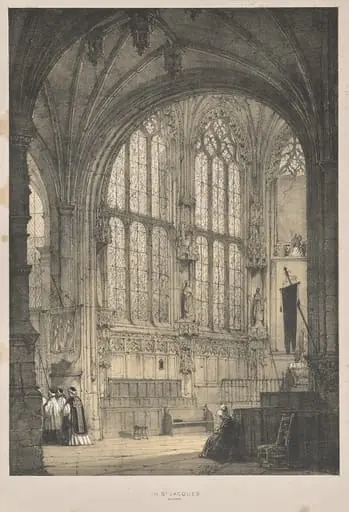 Architecture of the Middle Ages: In St. Jacques, Dieppe, East End, Interior
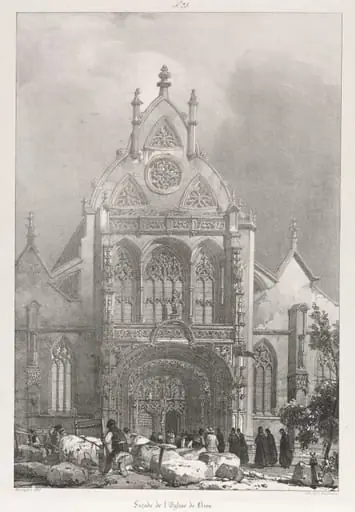 Picturesque and Romantic Trips in Old France, Franche-Compté: Front of the Church at Brou
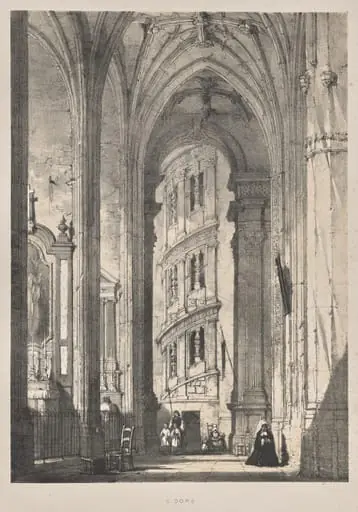 Architecture of the Middle Ages: Church of St. Gisors, Interior
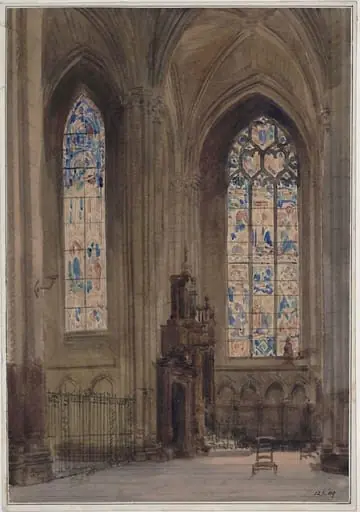 Chapel in the south transept of Rouen Cathedral
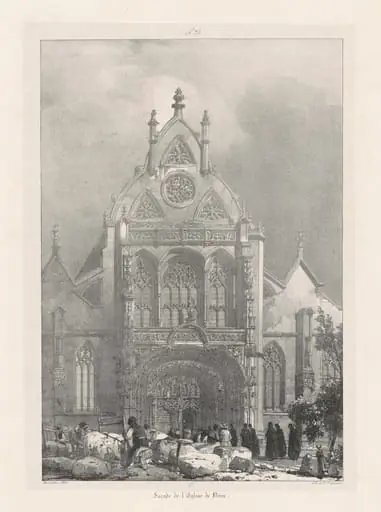 Façade de l'Église de Brou (Facade of the Church at Brou)
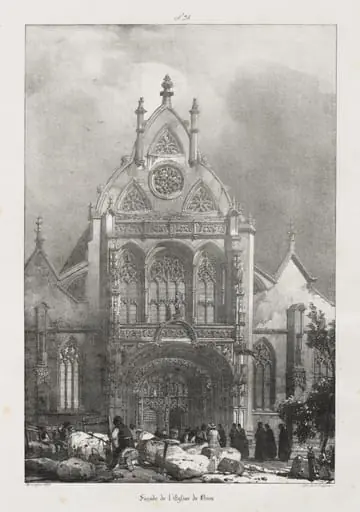 Voyages pittoresques et romantiques dans l'ancienne France, Franche-Comté: Façade de l'église de Brou
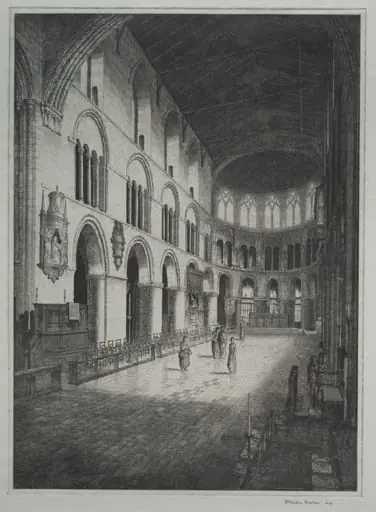 St. Bartholomew's Church, Interior
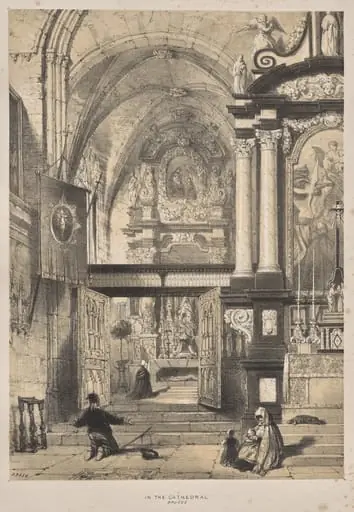 Architecture of the Middle Ages: In the Cathedral, Bruges
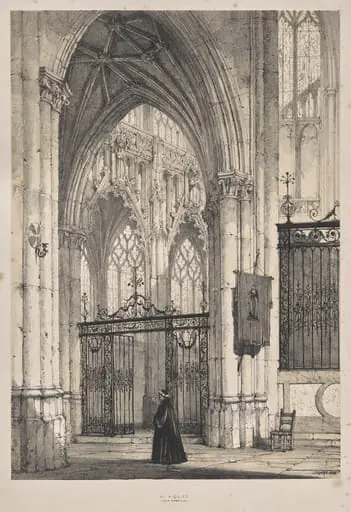 Architecture of the Middle Ages: Church of St. Riquier, near Abbeville
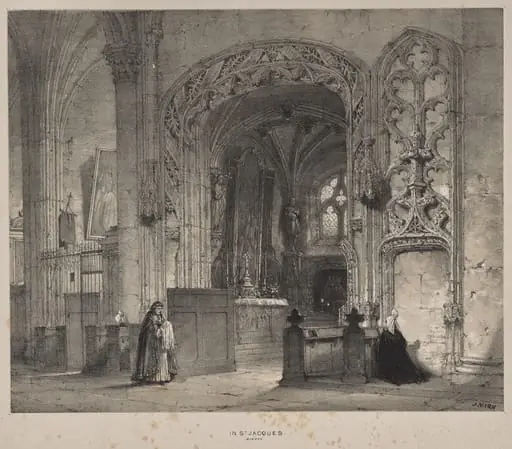 Architecture of the Middle Ages: Chapel in St. Jacques, Dieppe
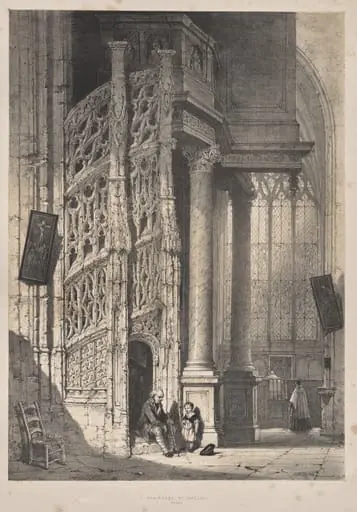 Architecture of the Middle Ages: Staircase, St. Maclou, Rouen
 Architecture of the Middle Ages: Rouen Cathedral, North Entrance