Artwork
Façade de l'Église de Brou (Facade of the Church at Brou)
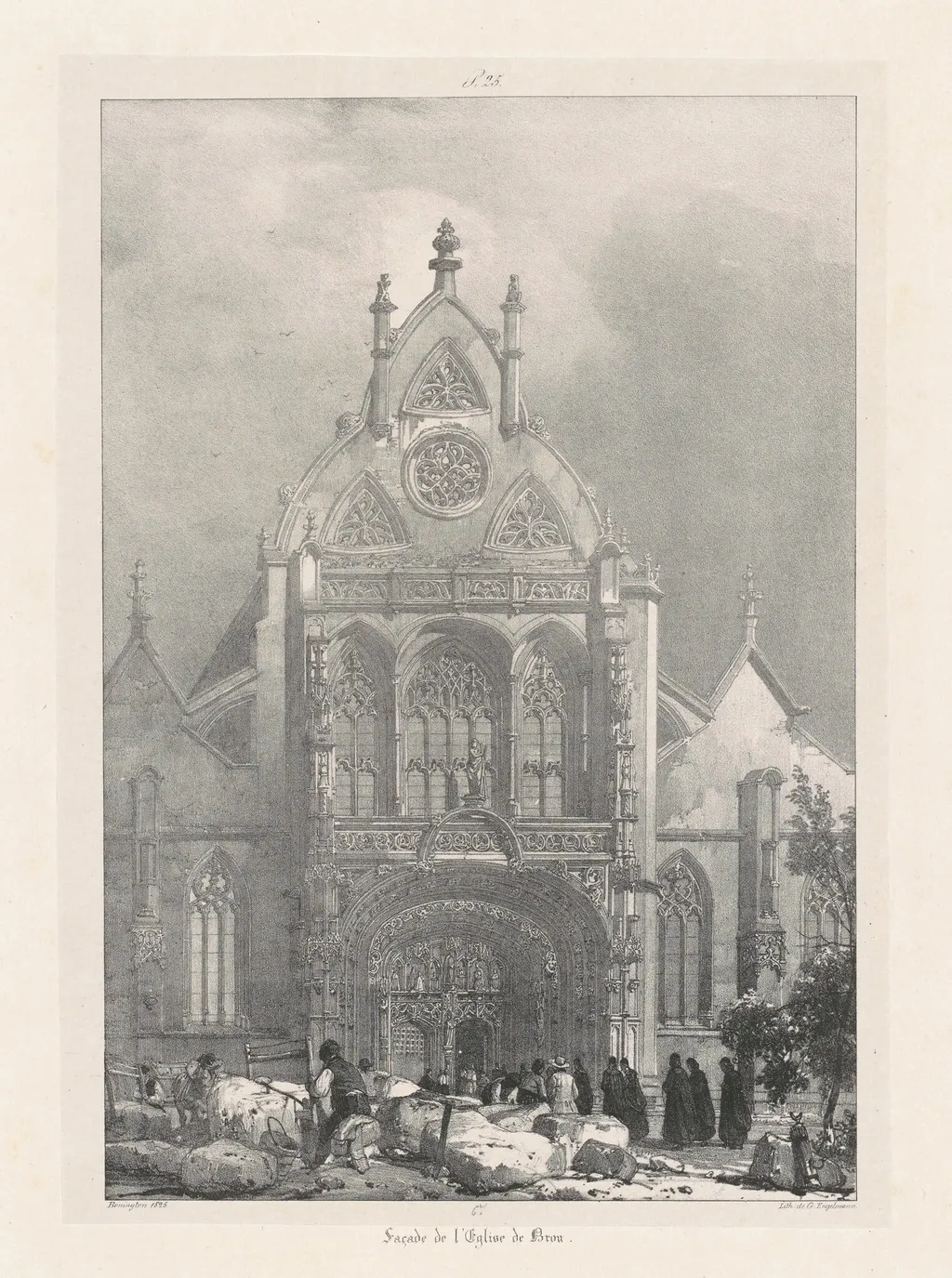
Façade de l'Église de Brou (Facade of the Church at Brou) is an ink print by the Romanticist artist Richard Parkes Bonington. It dates from 1825 and is held in the collection of the National Gallery of Art.
About this work
Overview
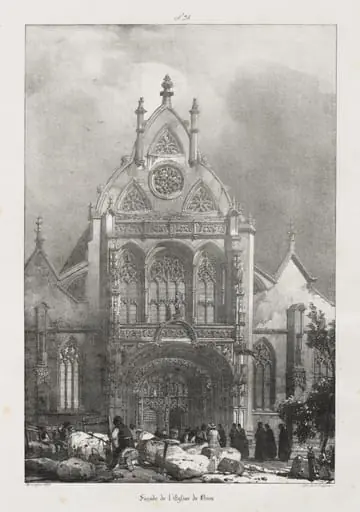
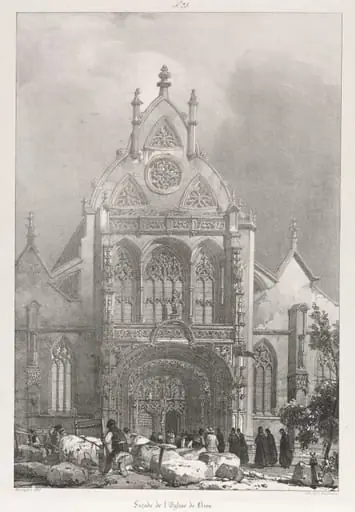
Created in 1825, this lithograph by Richard Parkes Bonington captures the façade of the Church of Brou in eastern France.
Created in 1825, this lithograph by Richard Parkes Bonington captures the façade of the Church of Brou in eastern France. Executed in a delicate, linear style, the print reflects Bonington’s interest in architectural detail and ambient light. As a British artist working extensively in France, he brought a fresh sensitivity to continental subjects, using lithography to translate fleeting atmospheric effects into reproducible form.
Subject & Meaning
The composition centers on the church’s ornate Gothic façade, with pointed arches, intricate stonework, and a modest tower crowned by a cross. Figures in early 19th-century dress linger near a low wall and scattered rocks, suggesting quiet daily life around a sacred space. The scene avoids grandeur, instead emphasizing the quiet integration of architecture into its human context, reflecting a Romantic sensibility toward place and time.
Technique & Style
Bonington employed lithography to achieve a sketchlike quality, using fine, fluid lines to suggest texture and depth. The tonal gradations mimic pencil drawing, with soft shadows defining the stonework and subtle contrasts guiding the eye across the façade. This approach, rooted in direct observation, diverged from rigid architectural rendering, favoring immediacy and atmospheric nuance over precision.
History & Provenance
Produced during Bonington’s time in France, the print likely originated from a sketch made on-site. It was published as part of a series of architectural views, circulated among collectors and artists. Though not widely exhibited in his lifetime, the work entered private collections in Britain and France, preserving its role as a quiet testament to his engagement with French Gothic structures.
Context
In the 1820s, lithography emerged as a popular medium for artists seeking to disseminate landscapes and architectural views. Bonington’s work aligned with a broader European interest in medieval heritage, fueled by Romanticism’s fascination with the past. His treatment of the church avoided antiquarian rigidity, instead capturing the building as a living element within its contemporary environment.
Legacy
Bonington’s lithographs, including this one, influenced later British artists by demonstrating how printmaking could convey mood and light with spontaneity. His integration of sketch-like immediacy into reproductive media helped bridge the gap between plein air drawing and published art, paving the way for the watercolor and print traditions of the mid-19th century.
Artist & collection
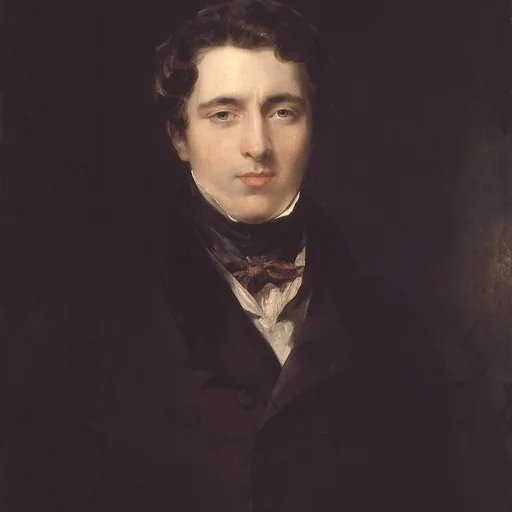
Artist
Richard Parkes Bonington (25 October 1802 – 23 September 1828) was an English Romantic landscape painter.

 Voyages pittoresques et romantiques dans l'ancienne France, Franche-Comté: Façade de l'église de Brou
 Picturesque and Romantic Trips in Old France, Franche-Compté: Front of the Church at Brou
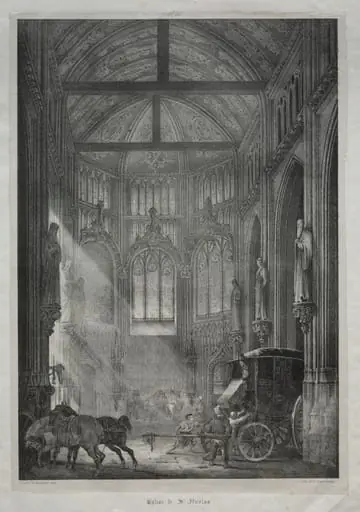 Church of St. Nicholas, Rouen
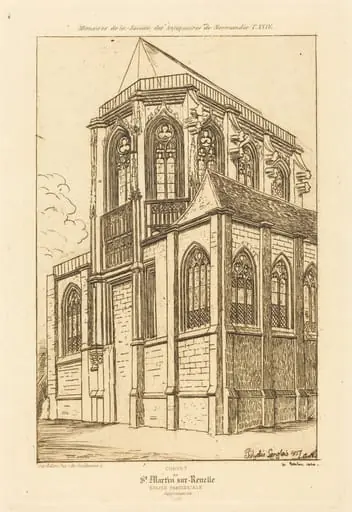 Chevet de St. Martin-sur-Renelle (The Apsis of the Church of St. Martin-sur-Renelle)
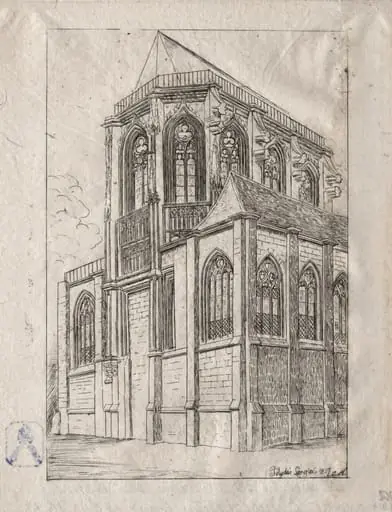 The Apse of the Church of St. Martin-sur-Renelle
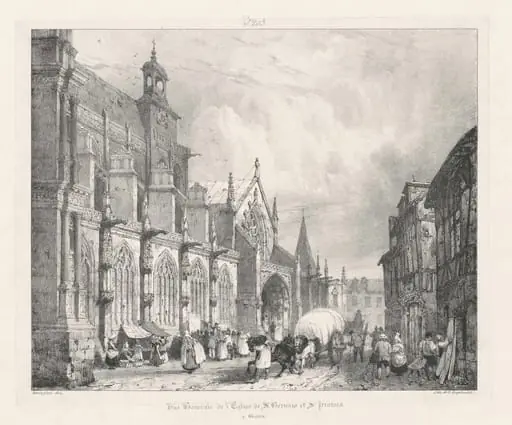
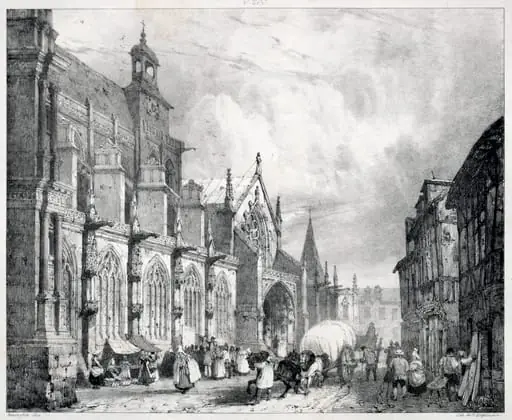 Voyages pittoresques et romantiques dans l'ancienne France, Normandie: Église de Saint Gervais et Saint Protais à Gisors
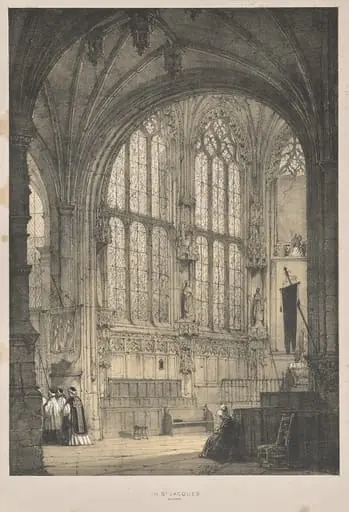 Architecture of the Middle Ages: In St. Jacques, Dieppe, East End, Interior
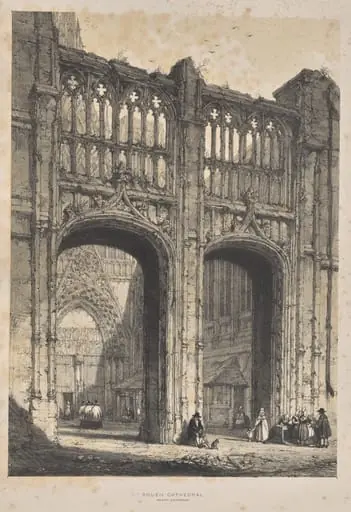 Architecture of the Middle Ages: Rouen Cathedral, North Entrance
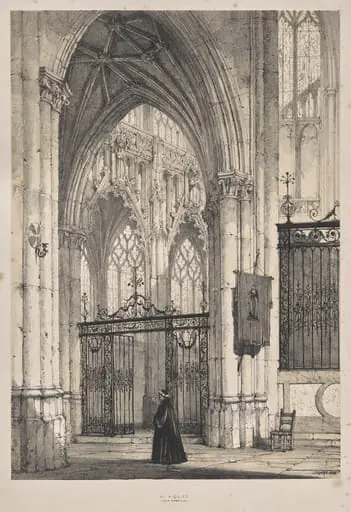 Architecture of the Middle Ages: Church of St. Riquier, near Abbeville
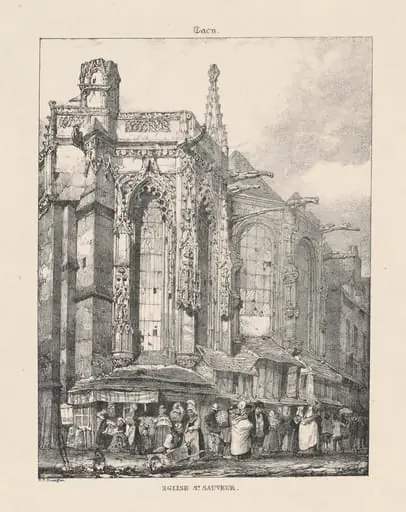 Église St. Sauveur
 Porch of the Church at East Bergholt, Suffolk
 Vue general de l'Église St. Gervais et St. Protais à Gisors