Artwork
Rue Jean-de-Beauvais. Vue prise de la rue des Écoles vers la boulevard Saint-Germain, en travaux
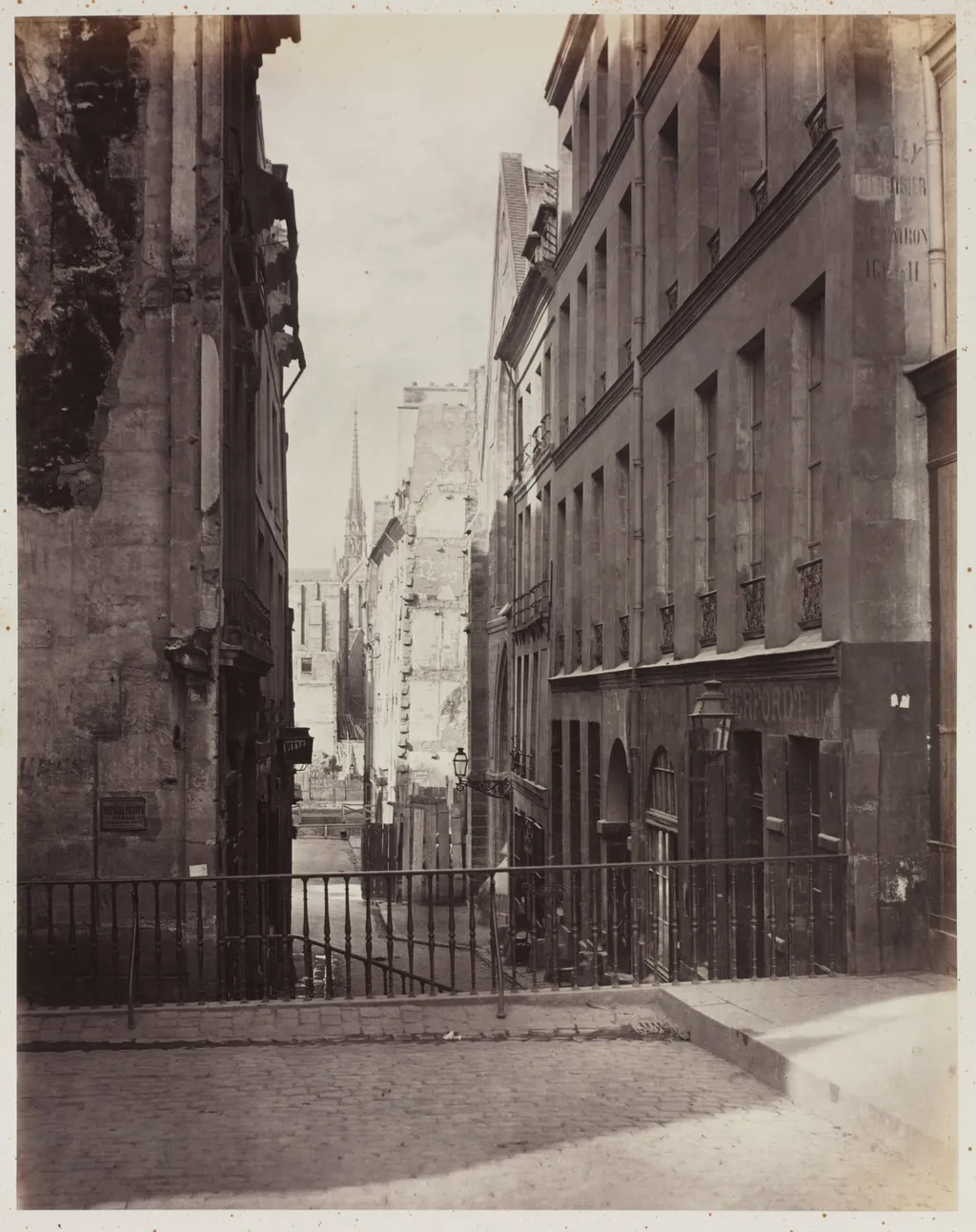
Rue Jean-de-Beauvais. Vue prise de la rue des Écoles vers la boulevard Saint-Germain, en travaux is a photography by the Impressionist artist Charles Marville. It dates from 1867 and is held in the collection of the Cleveland Museum of Art.
About this work
Overview
Rue Jean-de-Beauvais captures a transitional urban landscape in late 19th-century Paris, contrasting a narrow, elevated medieval street (rue des Écoles) with the newly constructed, sunlit Boulevard Saint-Germain in the background.
Subject & Meaning
The photograph juxtaposes old and new Paris, highlighting Haussmann's urban renovations. The composition guides the viewer from the dark, historic rue des Écoles into the bright, modern boulevard, symbolizing the city's transformation.
Technique & Style
Shot in a Realist style, the image presents an unromanticized, observational view of everyday urban life. The empty, grey-skied scene emphasizes the mundane, while the contrast between light and dark, old and new, adds depth.
History & Provenance
Taken by Charles Marville, this photograph documents a specific phase in Paris's Haussmannization, when narrow medieval streets were integrated into broader, more modern thoroughfares like the Boulevard Saint-Germain.
Context
Created during the Second Empire (1852-1870), the image reflects the era's massive urban renewal projects aimed at modernizing Paris. The half-finished buildings and construction in the background underscore the city's state of flux.
Legacy
As part of Marville's documentary work, Rue Jean-de-Beauvais contributes to the historical record of Paris's transformation. It also exemplifies the Realist movement in photography, focusing on the unvarnished reality of urban change.
Artist & collection

Artist
Charles Marville, the pseudonym of Charles François Bossu, was a French photographer, who mainly photographed architecture, landscapes and the urban environment.

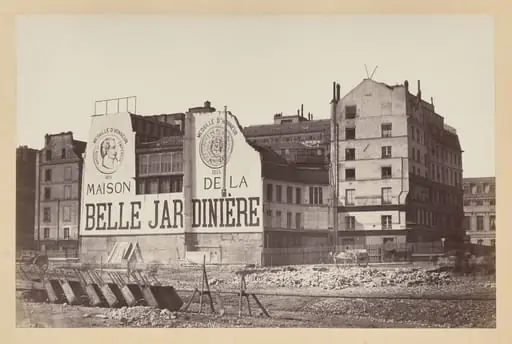 La Belle Jardinère: le magasin de la rue de la Cité pendant sa demolition, Paris
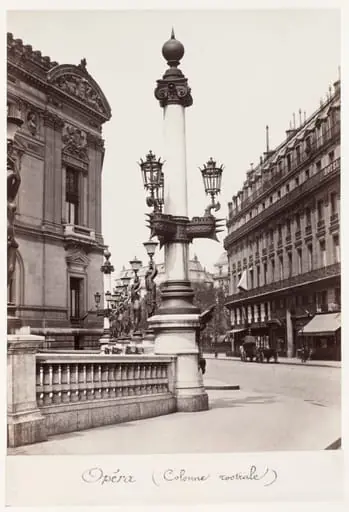 Opéra (Rostral Column)
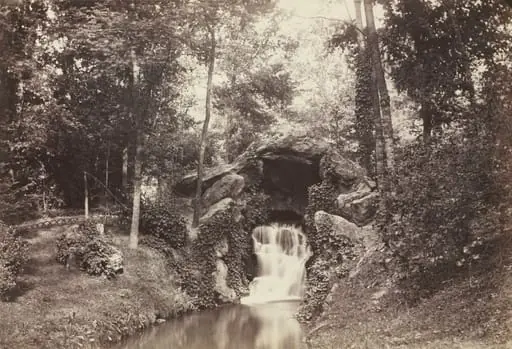 View of the Small Grotto toward the Deer Pond, Bois de Boulogne
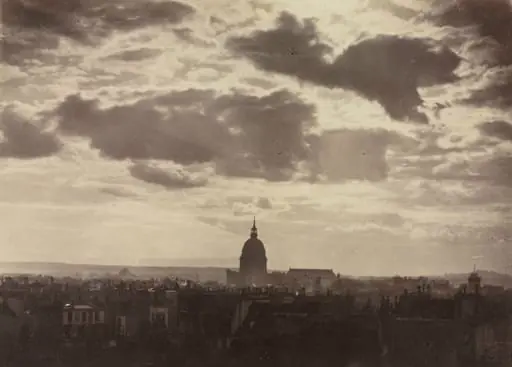 Sky Study, Paris
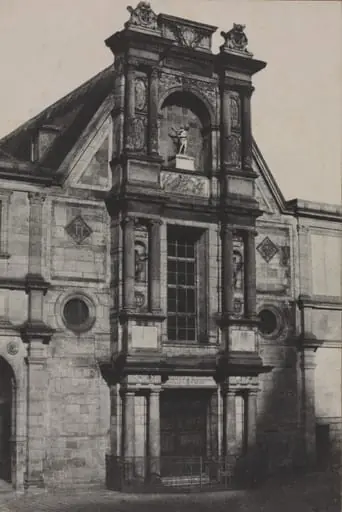 Portico of the Château d'Anet, now at the École des Beaux-Arts, Paris
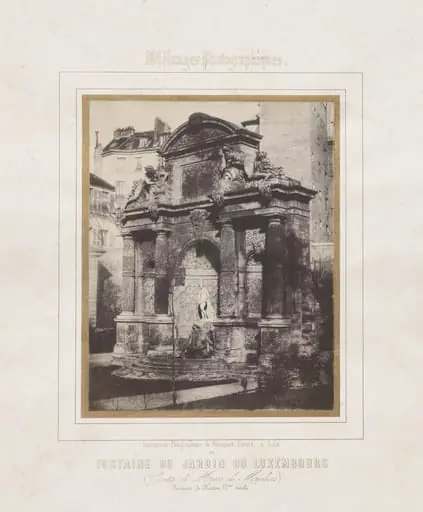 Fontaine du Jardin du Luxembourg (grotte de Marie de Médécis)
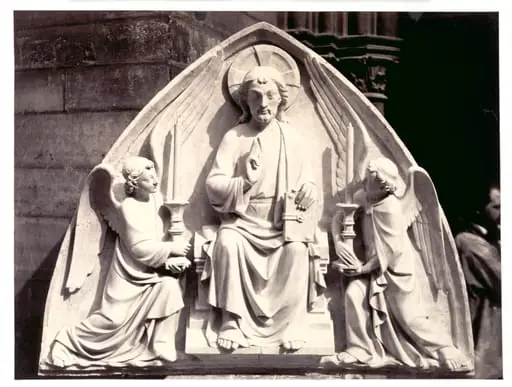 Tympanum, Strasbourg Cathedral
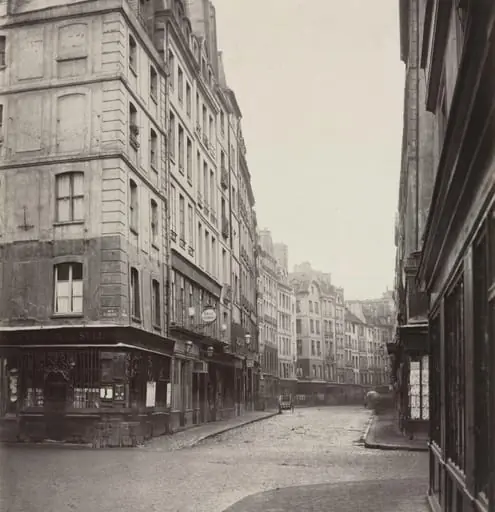 Rue de la Ferronnerie
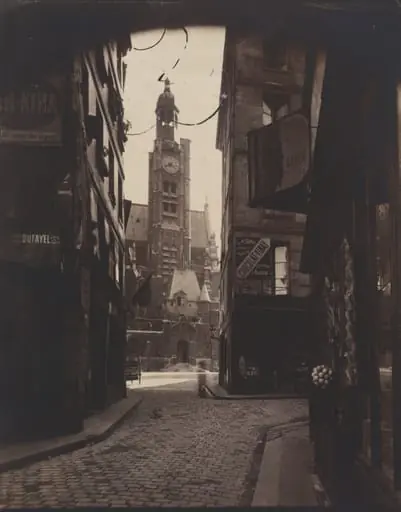 Rue de la Montagne-Sainte-Geneviève
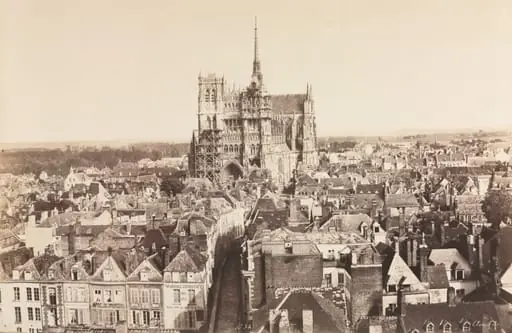 Amiens
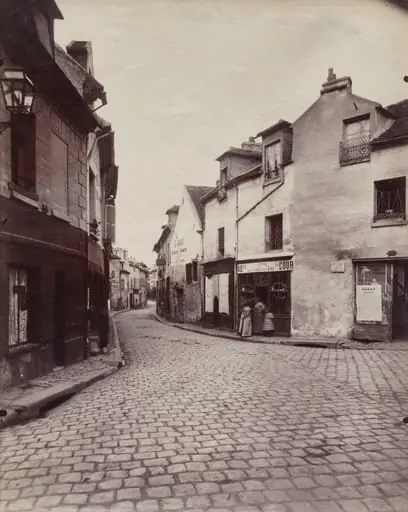 Clamart (Vielle Rue)
 Street in Dijon
 Notre Dame de Paris
 Eaux-Fortes sur le Vieux Paris: Ancienne école de médecine rue de la Bûcherie (Etchings of Old Paris: Former Medical School, rue de la Bucherie)
 Rue des Marmousets (Quartier de la cite, vieux Paris)
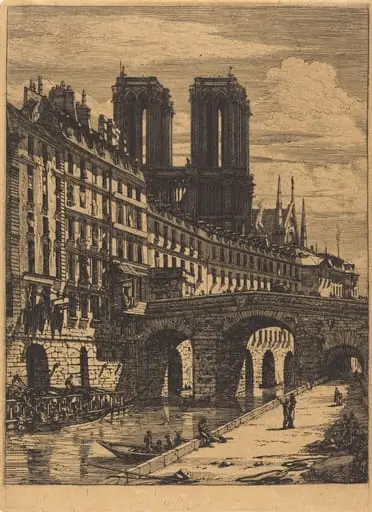 Le Petit Pont, Paris
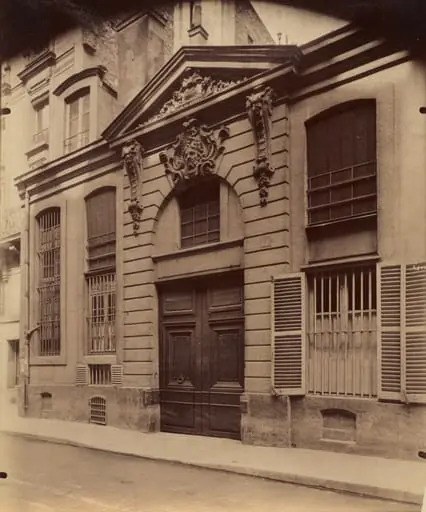 Rue du Regard
 Le Petit Pont, Paris