Artwork
Winter
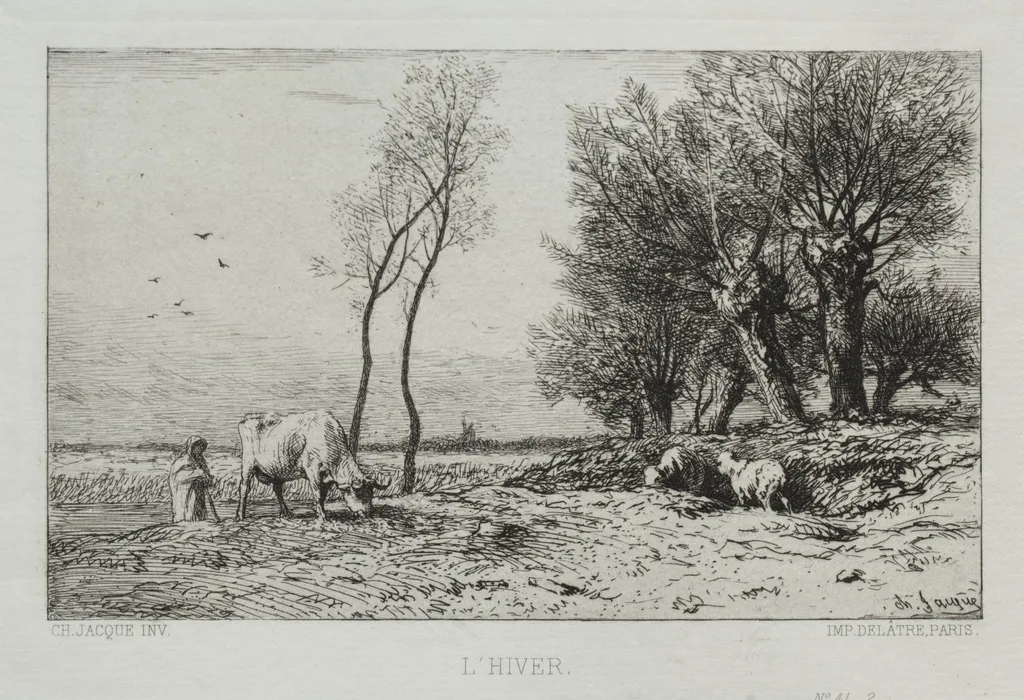
Winter is a print by the Impressionist artist Charles Jacque. It dates from 1867 and is held in the collection of the Cleveland Museum of Art.
About this work
Next, look up Charles-Émile Jacque (French, 1813–1894) to see more of his work.
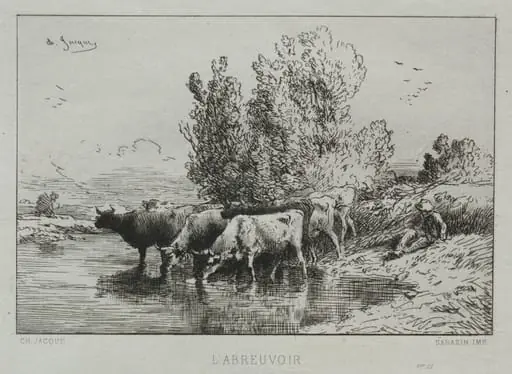
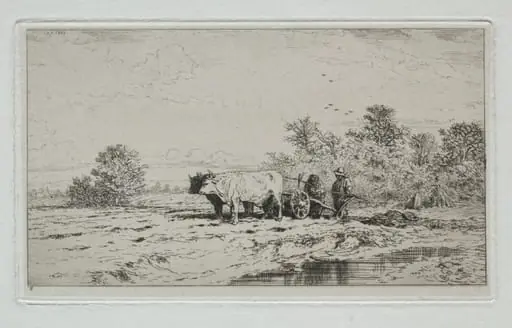
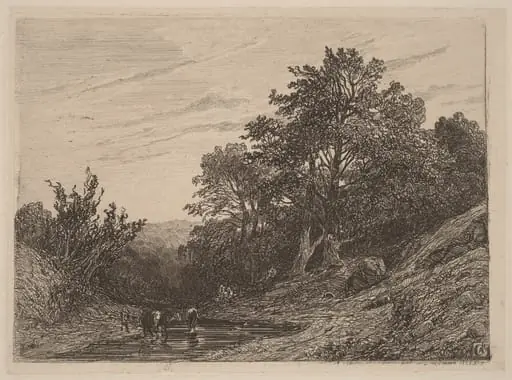
This black-and-white drawing shows a quiet winter scene. A lone person in a long coat walks beside two cows near a shallow river. Leafless trees line the bank, and the ground looks frozen or muddy. The sky is faint, with just a hint of light.
The artist focused on everyday rural life, not fancy scenes. The title *Winter* is written below, and the style feels simple but detailed.
Next, look up Charles-Émile Jacque (French, 1813–1894) to see more of his work.
Overview
Winter, a print by Charles-Émile Jacque (1867), presents a serene winter landscape, characteristic of the Barbizon School’s emphasis on rural life and natural settings.
Subject & Meaning
The scene depicts a solitary figure in a long coat walking with two cows beside a shallow, winter river, surrounded by leafless trees and a subdued sky, highlighting the artist’s focus on everyday agricultural life.
Technique & Style
Executed in black-and-white, the drawing balances simplicity with detailed rendering, reflecting Jacque’s ability to convey depth and atmosphere through restrained visual elements.
History & Provenance
Created in 1867 by Jacque, a painter and engraver associated with Jean-François Millet within the Barbizon School, the work’s specific provenance details are not provided.
Context
Aligned with the Barbizon School’s values, Winter reflects Jacque’s contribution to the movement’s pastoral themes, contrasting with more ornate contemporary artistic trends.
Legacy
As part of Jacque’s oeuvre, Winter contributes to the enduring appreciation of Barbizon School’s rustic, naturalist aesthetic, influencing subsequent depictions of rural life in art.
Own this work as a print
Artist & collection
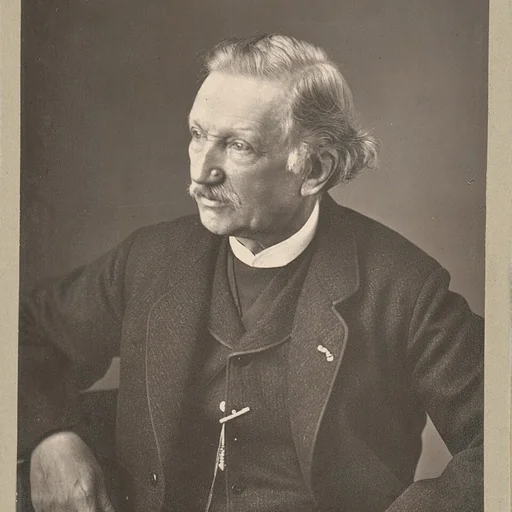
Artist
Charles-Émile Jacque (23 May 1813 – 7 May 1894) was a French painter of Pastoralism and engraver who was, with Jean-François Millet, part of the Barbizon School. He first learned to engrave maps when he spent seven years in the French Army.