Artwork
The Watering Place
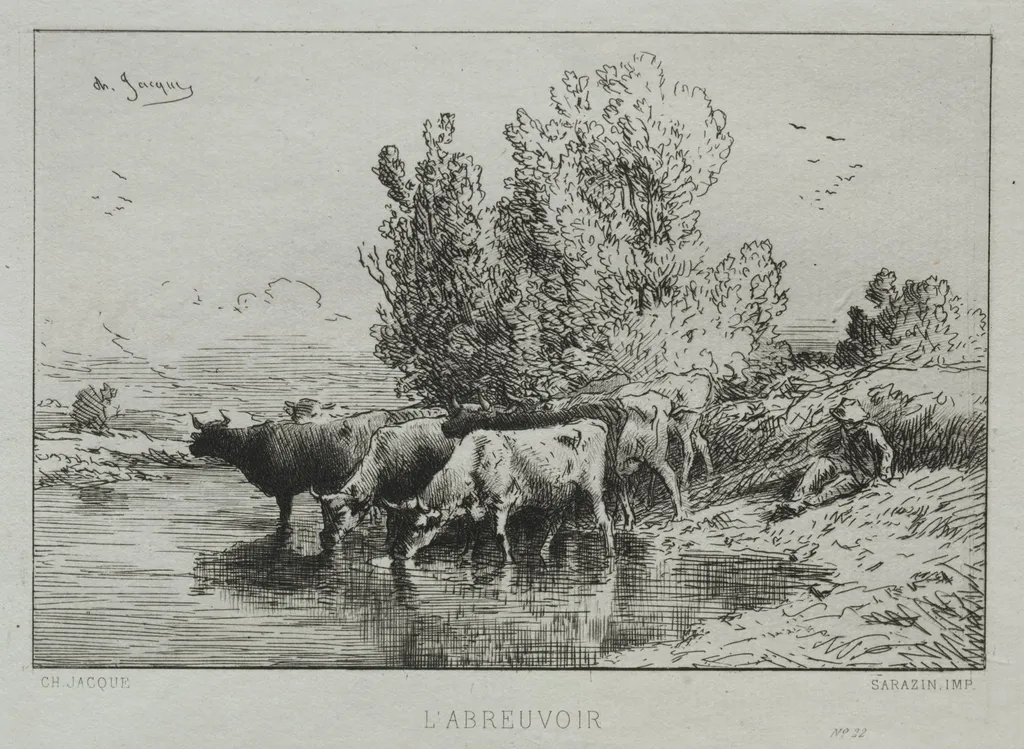
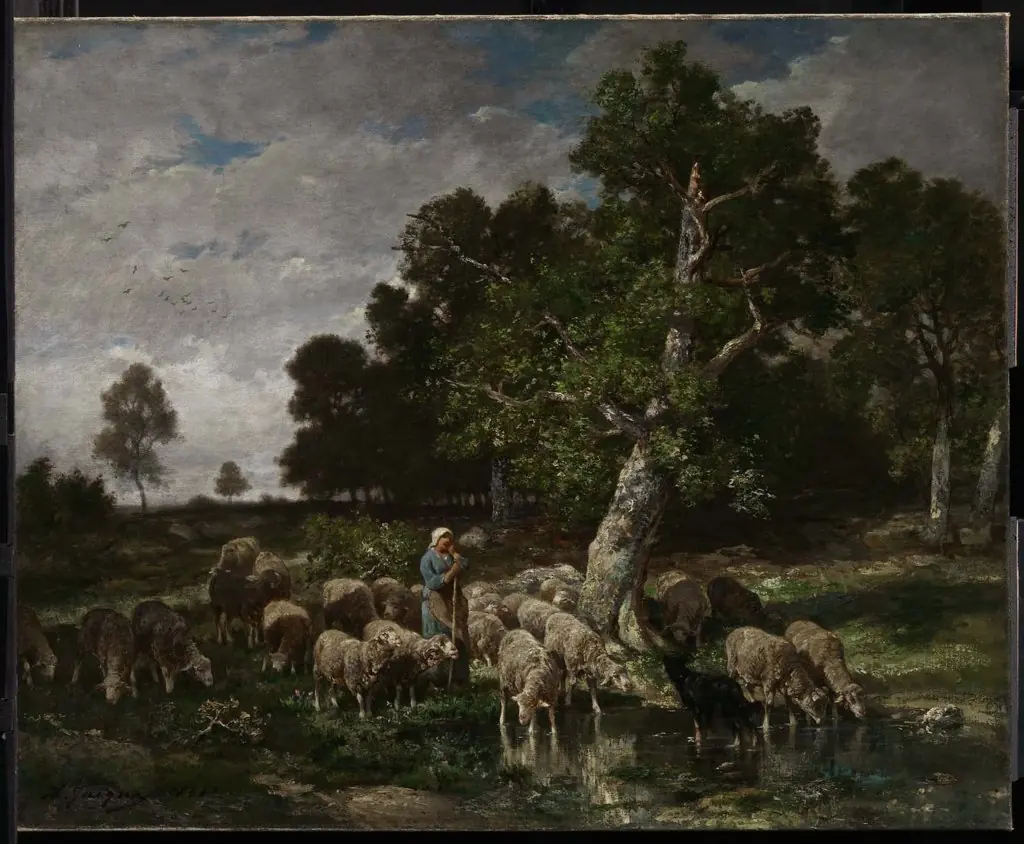
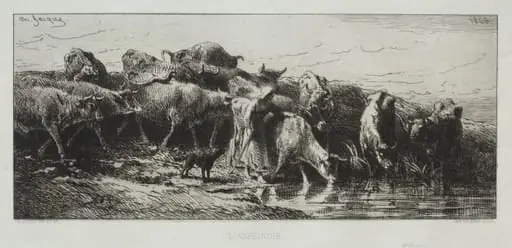
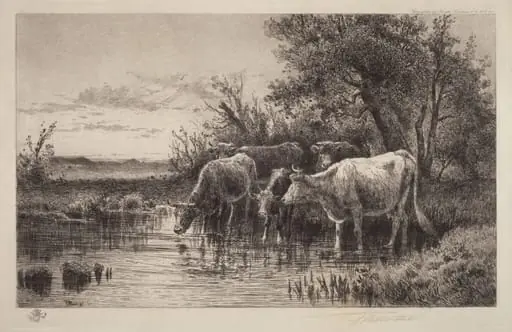
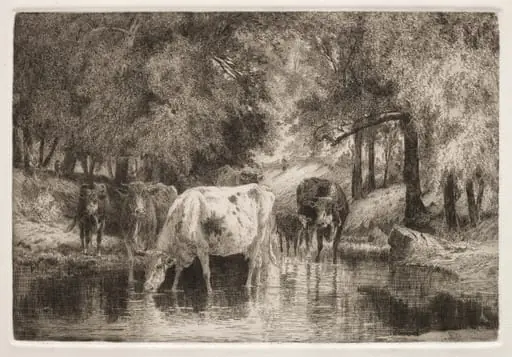
The Watering Place is a print by the Impressionist artist Charles Jacque. It dates from 1864 and is held in the collection of the Cleveland Museum of Art.
About this work
Overview
This work exemplifies his transition from technical draftsmanship to expressive landscape imagery rooted in observation rather than idealization.
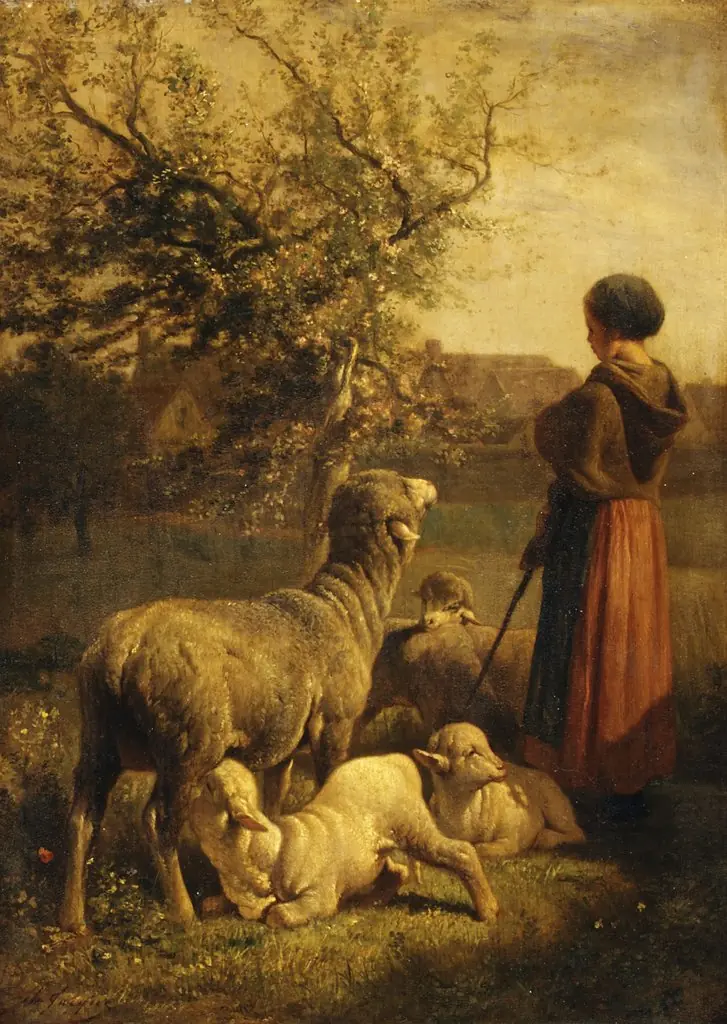
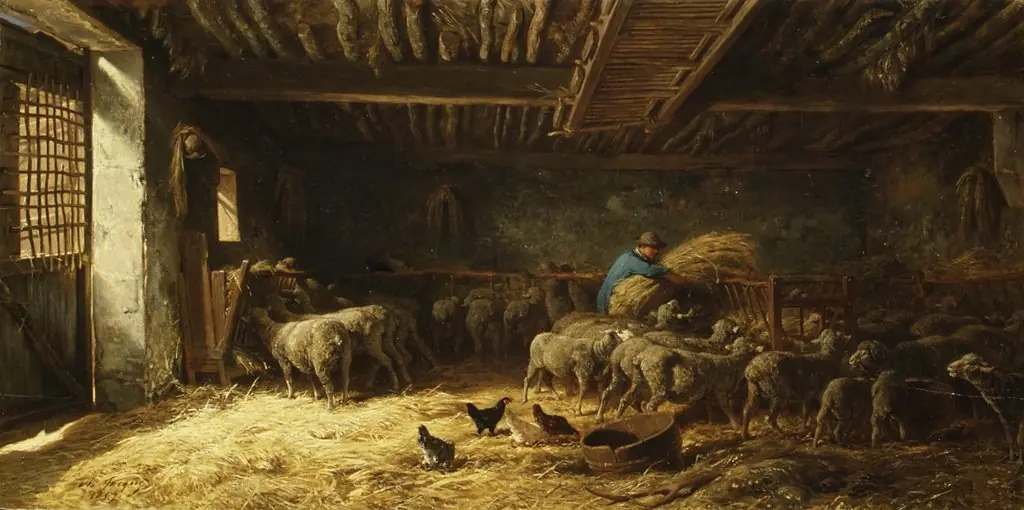
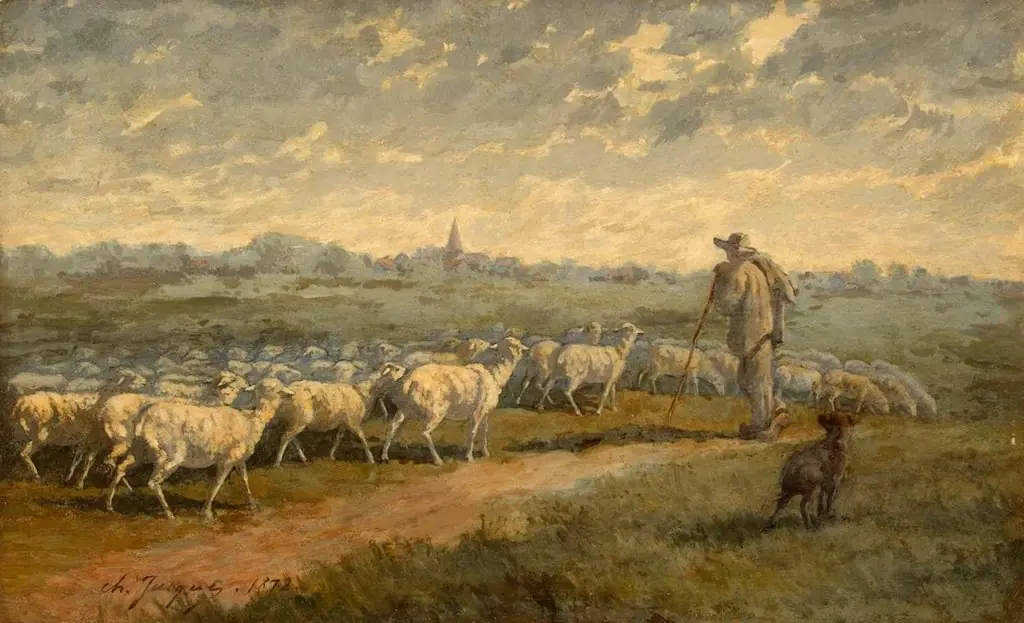
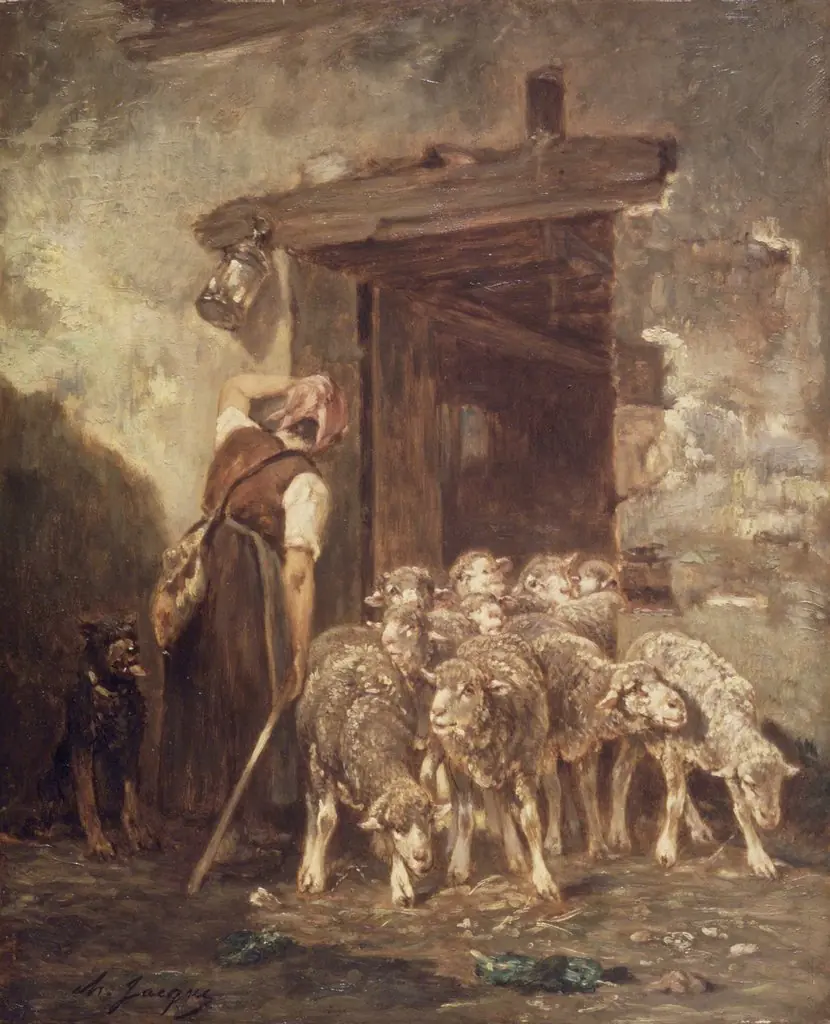
Charles-Émile Jacque produced *The Watering Place* in 1864 as a print reflecting his engagement with the Barbizon School. Though trained in military engraving and mapmaking, he shifted toward rural subjects, aligning with artists like Jean-François Millet who sought to portray the quiet rhythms of country life. This work exemplifies his transition from technical draftsmanship to expressive landscape imagery rooted in observation rather than idealization.
Subject & Meaning
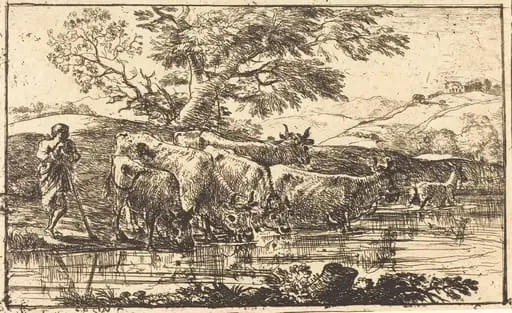
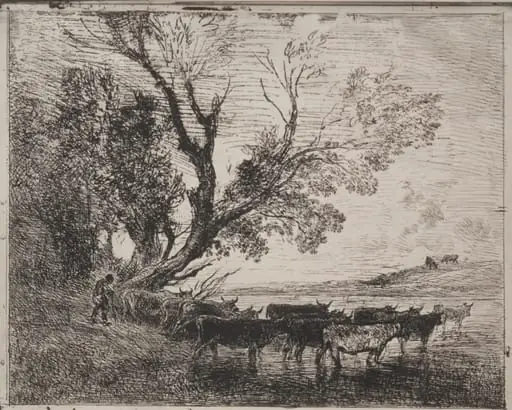
The scene centers on a group of cattle gathered at a shallow water source, their postures suggesting rest and routine. No human figures appear, emphasizing the autonomy of animal life within the natural environment. The composition avoids narrative drama, instead conveying a sense of quiet continuity — a moment of daily necessity in the rural landscape, aligned with Barbizon ideals of dignity in ordinary existence.
Technique & Style
Jacque employed fine linear engraving to render textures: the wet sheen of the water, the coarse fur of the animals, and the gnarled bark of trees. Subtle tonal gradations create depth without heavy chiaroscuro, relying on delicate hatching to suggest light filtering through foliage. The restrained palette and careful attention to surface variation reflect his engraving background, translating painterly observation into precise graphic form.
History & Provenance
Created during Jacque’s mature period, the print was likely produced for a broader audience interested in rural themes, following the Barbizon School’s rising popularity. It circulated among collectors and print enthusiasts in mid-19th-century France, though specific ownership records before the 20th century remain sparse. Its survival in institutional collections underscores its recognition as a representative work of the movement’s graphic output.
Context
In the 1860s, French art increasingly turned away from historical and mythological subjects toward direct observation of nature and peasant life. The Barbizon artists, working near the Forest of Fontainebleau, rejected academic conventions. Jacque’s focus on livestock and water sources aligned with this shift, positioning rural labor and animal existence as worthy of artistic attention without sentimentality or moralizing.
Legacy
Jacque’s prints, including *The Watering Place*, contributed to the legitimization of rural themes in graphic arts. His technical precision influenced later generations of printmakers interested in naturalism. Though less celebrated than his painter peers, his work remains a quiet testament to the Barbizon commitment to seeing the ordinary landscape with clarity and respect.
Own this work as a print
Artist & collection
Artist
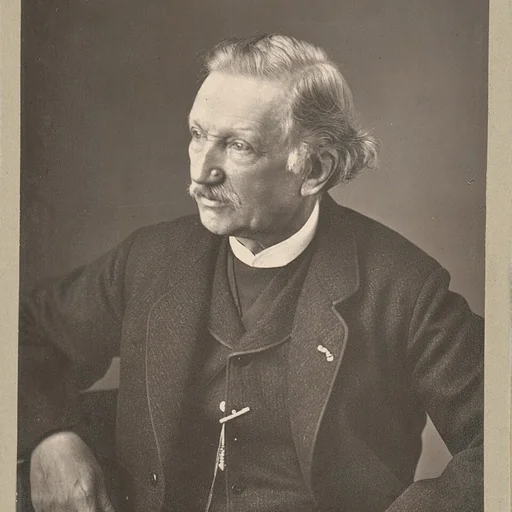
Charles-Émile Jacque (23 May 1813 – 7 May 1894) was a French painter of Pastoralism and engraver who was, with Jean-François Millet, part of the Barbizon School. He first learned to engrave maps when he spent seven years in the French Army.