Artwork
View of Buenos Aires
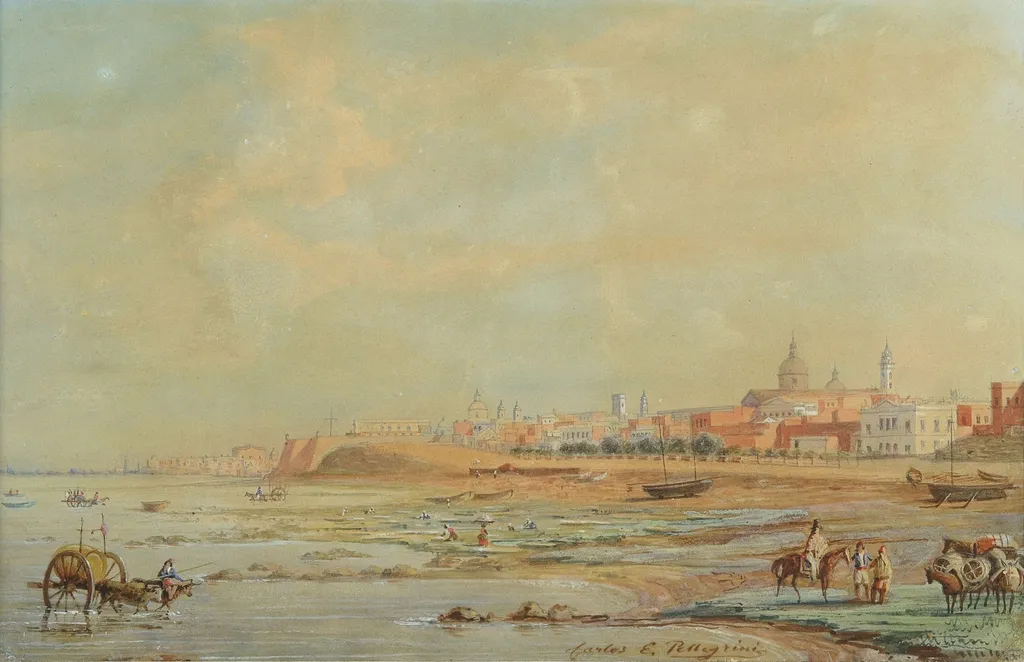
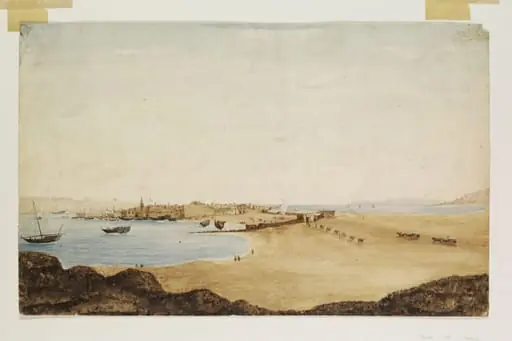
View of Buenos Aires is a watercolor painting by Charles Pellegrini. It dates from 1850 and is held in the collection of the National Museum of Fine Arts, Argentina.
About this work
Overview
Created circa 1850, *View of Buenos Aires* is a watercolor painting by Charles Pellegrini, an Italian-born artist active in Argentina.
Created circa 1850, *View of Buenos Aires* is a watercolor painting by Charles Pellegrini, an Italian-born artist active in Argentina. The work captures the city’s emerging urban character during a period of rapid growth. Executed in a detailed, observational style, it reflects Pellegrini’s background in engineering and architecture, emphasizing spatial accuracy and topographical clarity over romantic embellishment.
Subject & Meaning
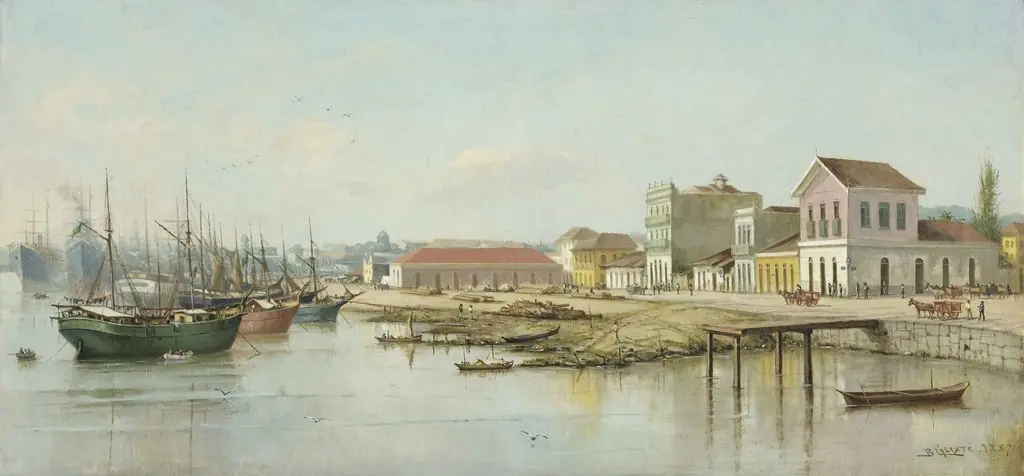
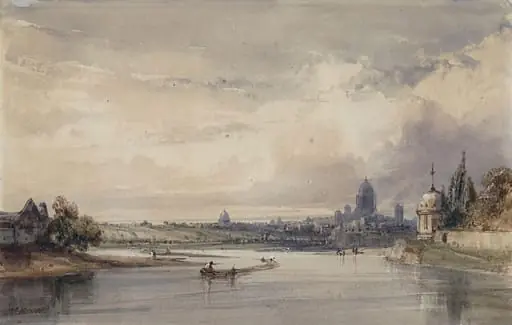
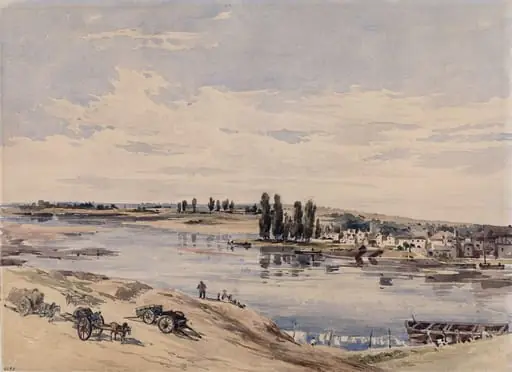
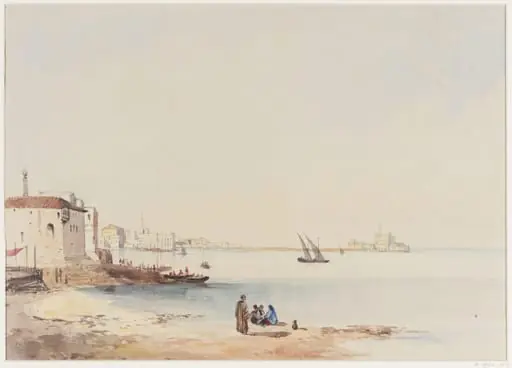
The painting depicts Buenos Aires as a port city in transition, with low-rise buildings lining the shore, sailing vessels in the bay, and figures engaged in daily activities—horses, carts, and pedestrians moving along the waterfront. It presents no idealized narrative but instead records the functional rhythm of a commercial hub, suggesting the city’s evolving identity as a center of trade and regional importance.
Technique & Style
Pellegrini employed watercolor to achieve a light, translucent effect, allowing the paper’s texture to contribute to the sense of atmosphere. Brushwork is deliberate and precise, with visible strokes defining architectural forms and natural elements. The medium’s fluidity suits the depiction of sky and water, while the restrained palette reinforces the work’s documentary intent, avoiding dramatic contrasts in favor of tonal harmony.
History & Provenance
The painting entered the collection of the National Museum of Fine Arts in Buenos Aires, where it remains today. Its preservation reflects early institutional interest in documenting Argentina’s visual heritage. Pellegrini’s broader body of work, including lithographs and architectural sketches, contributed to the formation of a national visual record during the mid-19th century, making this piece part of a larger archival effort.
Context
In the 1840s–1850s, Buenos Aires was expanding beyond its colonial core, with new infrastructure and increasing foreign trade. Pellegrini’s work coincided with efforts to modernize the city and assert its place in the region. His depictions served both as personal records and as tools for civic identity, offering a visual reference for residents and outsiders alike during a time of political and economic transformation.
Legacy
Pellegrini’s watercolors, including this view, are valued for their fidelity to the urban environment of their time. They provide historians with a visual archive of Buenos Aires before large-scale modernization. While not widely exhibited internationally, his works remain foundational within Argentina’s art historical canon, particularly for their role in shaping early representations of the nation’s capital.
Artist & collection
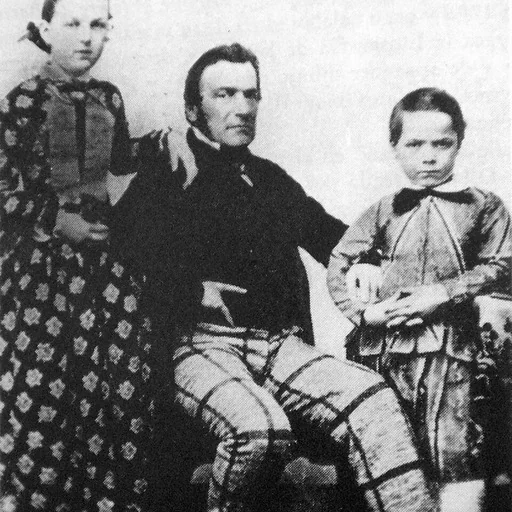
Artist
Charles Henri Pellegrini (28 July 1800 – 12 October 1875) was an Italian Argentine engineer, lithographer, painter, and architect. He was father of Argentine president Carlos Pellegrini.

Museum
National Museum of Fine Arts, Argentina
Continue through works from the same source collection.