Artwork
Winter
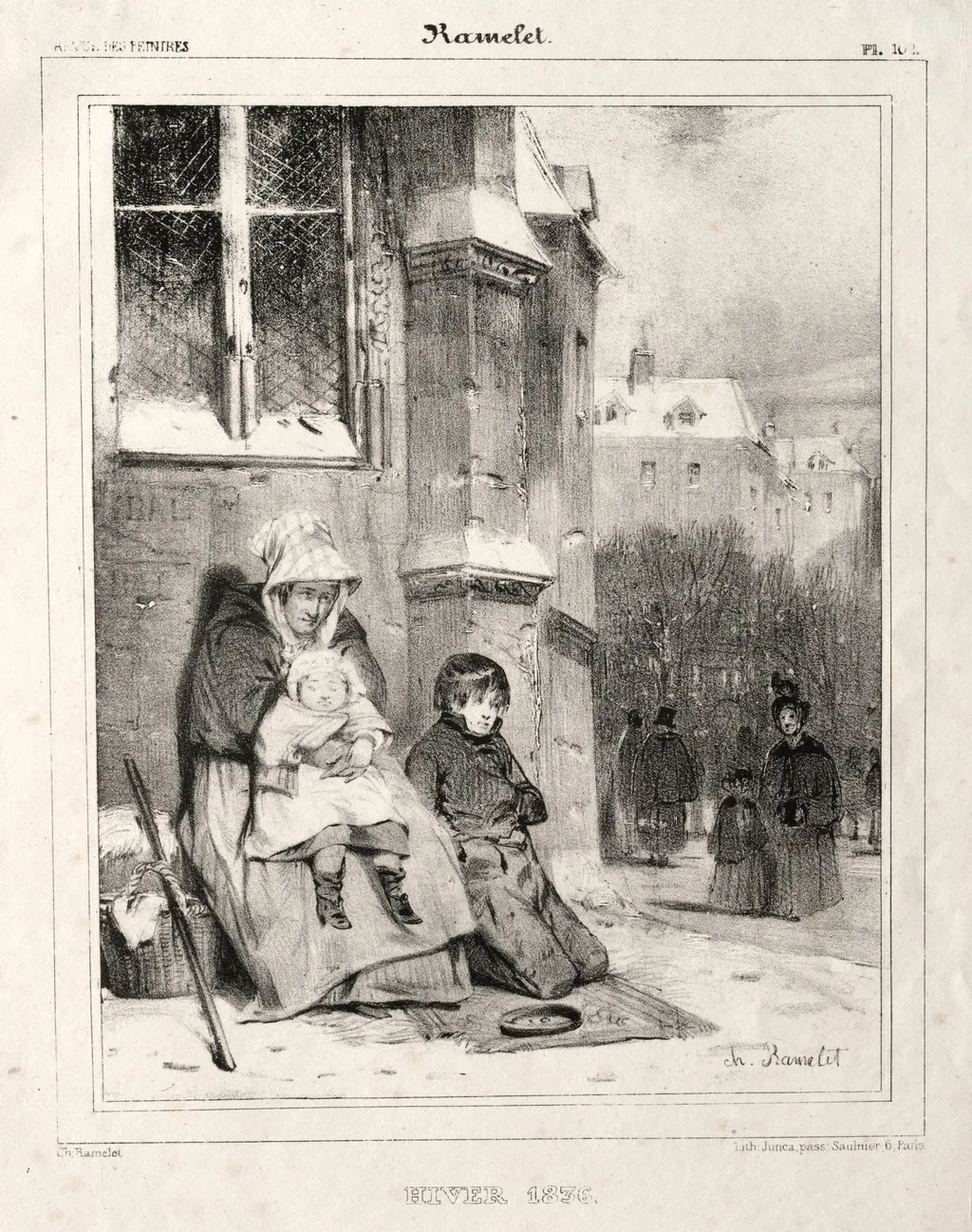
Winter is a print by the Romanticist artist Charles Ramelet. It dates from 1836 and is held in the collection of the Cleveland Museum of Art.
About this work
Overview
Their stillness and exposed position contrast with the distant figures moving along a frozen street, suggesting isolation amid urban life.
Created in 1836 by Charles Ramelet, this print captures a quiet winter moment in a European town. The scene centers on a woman and two children seated on the ground before a snow-laden building. Their stillness and exposed position contrast with the distant figures moving along a frozen street, suggesting isolation amid urban life. The work is part of the collection at The Cleveland Museum of Art.
Subject & Meaning
The figures—mother and two children—appear to have no shelter, their posture and attire hinting at vulnerability. The baby in her lap and the older child beside her emphasize dependence and endurance. The barren landscape and muted tones reinforce a sense of hardship, not as a dramatic spectacle but as an unremarkable reality of winter poverty. The image avoids sentimentality, presenting struggle with quiet dignity.
Technique & Style
Ramelet employs fine linear detail and subtle tonal gradations to render snow, fabric, and architecture. The composition directs attention to the central group through spatial framing and reduced detail in the background. The palette favors cool grays and muted browns, with minimal contrast to evoke the damp chill of a winter day. The print’s precision reflects the influence of contemporary graphic traditions.
History & Provenance
The print was made in 1836 and entered the Cleveland Museum of Art’s collection through documented acquisition. Little is known about Ramelet’s broader career, and this work remains one of the few securely attributed pieces. Its survival and preservation suggest it was valued within its time, possibly as a social observation rather than a decorative piece.
Context
In the 1830s, European cities saw growing awareness of urban poverty, reflected in emerging realist imagery. While Romanticism often idealized nature or emotion, Ramelet’s work aligns more closely with early social documentation—depicting everyday hardship without theatricality. The scene echoes broader visual trends in printmaking that turned attention toward the lives of the working poor.
Legacy
Ramelet’s print contributes to a lesser-known strand of 19th-century graphic art that recorded social conditions with restraint. Though not widely reproduced or studied, it remains a quiet testament to the visibility of destitution in urban winters. Its presence in a major museum underscores its role as a historical record rather than an artistic novelty.
Artist & collection
Artist
Charles Ramelet (1805–1851) was a French artist, born in Marseille-en-Beauvaisis.

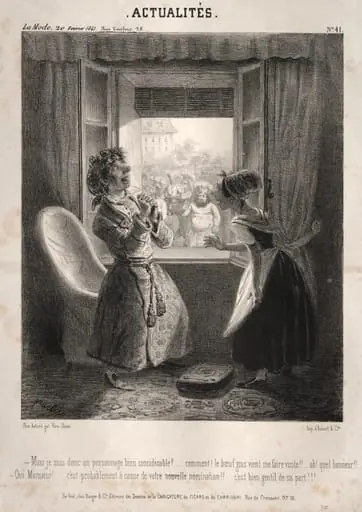 Actualités: ---Mais je suis donc un personnage bien considerable?
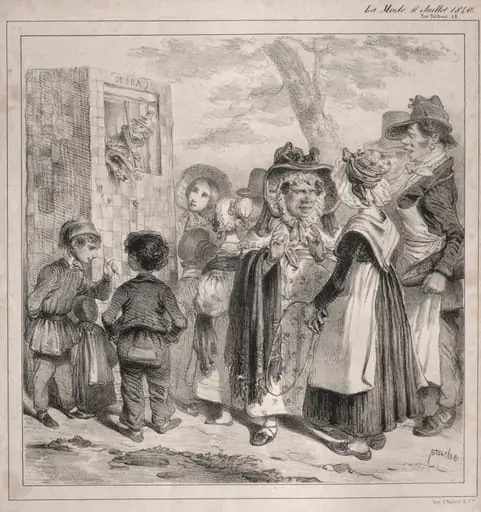 Voyez-vous ma Chère! c'est la police qui fait jouer ces polichinels là, pour détourner l'attention...
 The Pedestrian
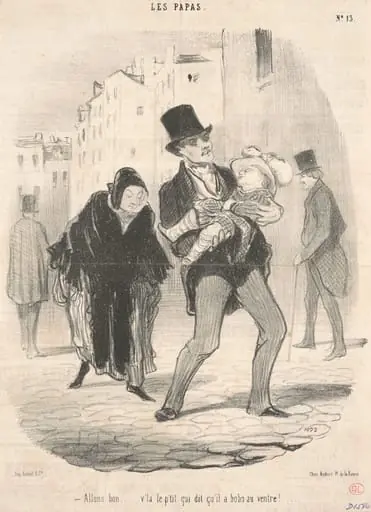 Allons bon ... v'la p'tit qui dit ...
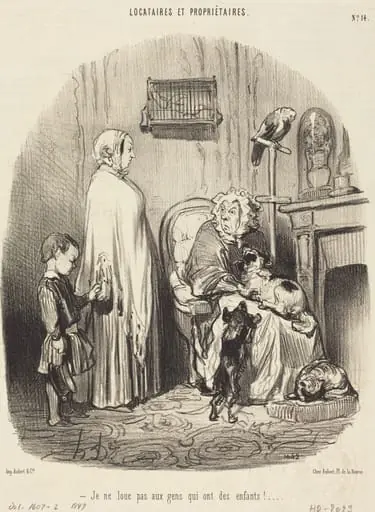 Je ne loue pas aux gens qui ont des enfants!
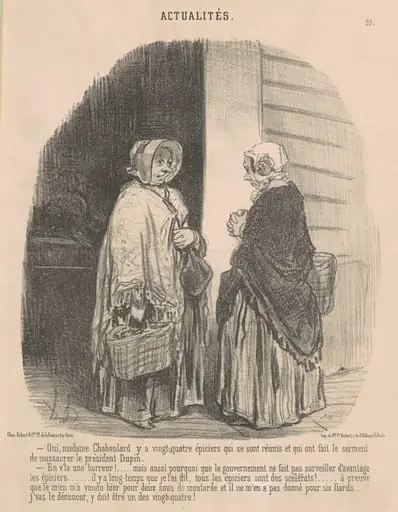 Oui, Madame Chaboulard ...
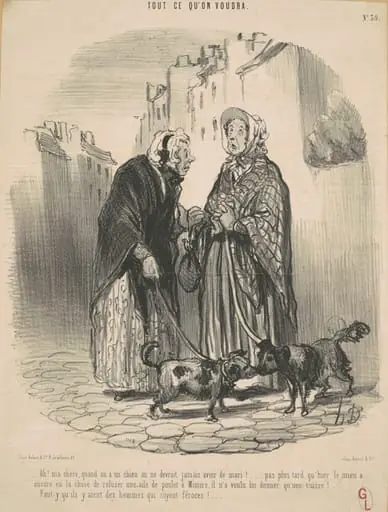 Ah! Ma chère, quand on a un chien ...
![Oui, madame Chaboulard... vingt-quatre épiciers... [recto], by Honoré Daumier](https://artifactworldgallery.com/img/honore-daumier--oui-madame-chaboulard-vingt-quatre-epiciers-recto--e54ef32ef25a1625-w320.webp) Oui, madame Chaboulard... vingt-quatre épiciers... [recto]
Oui, madame Chaboulard... vingt-quatre épiciers... [recto]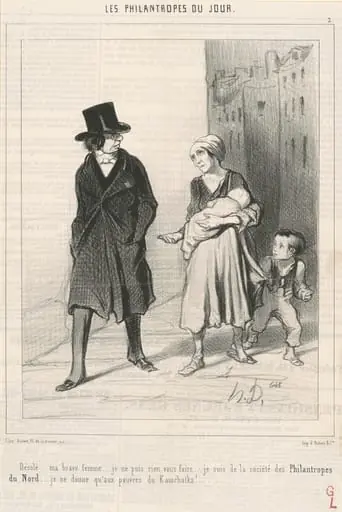 Désolé ... Je suis de la société des philantropes du nord ...
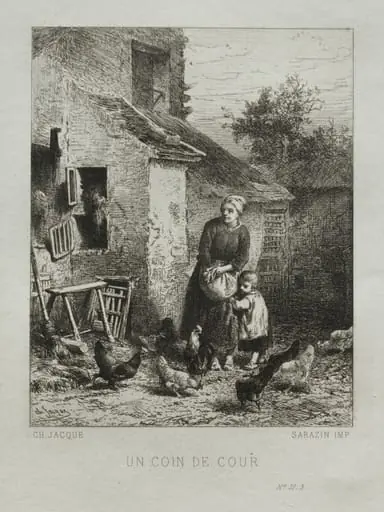 A Corner of the Yard
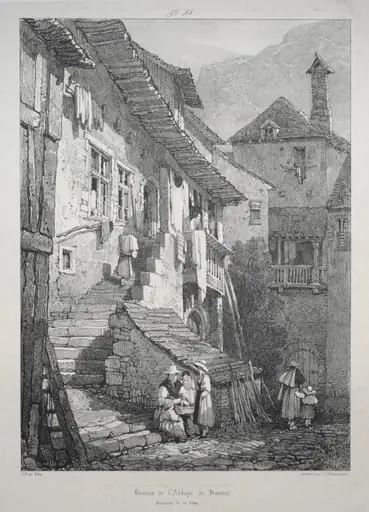 Ruins of the Abbey of Baume. Interior of the Court
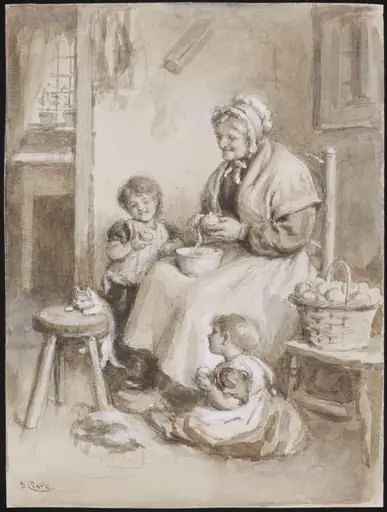 Sketch for the oil painting 'Vaulting Ambitions'