Artwork
Désolé ... Je suis de la société des philantropes du nord ...
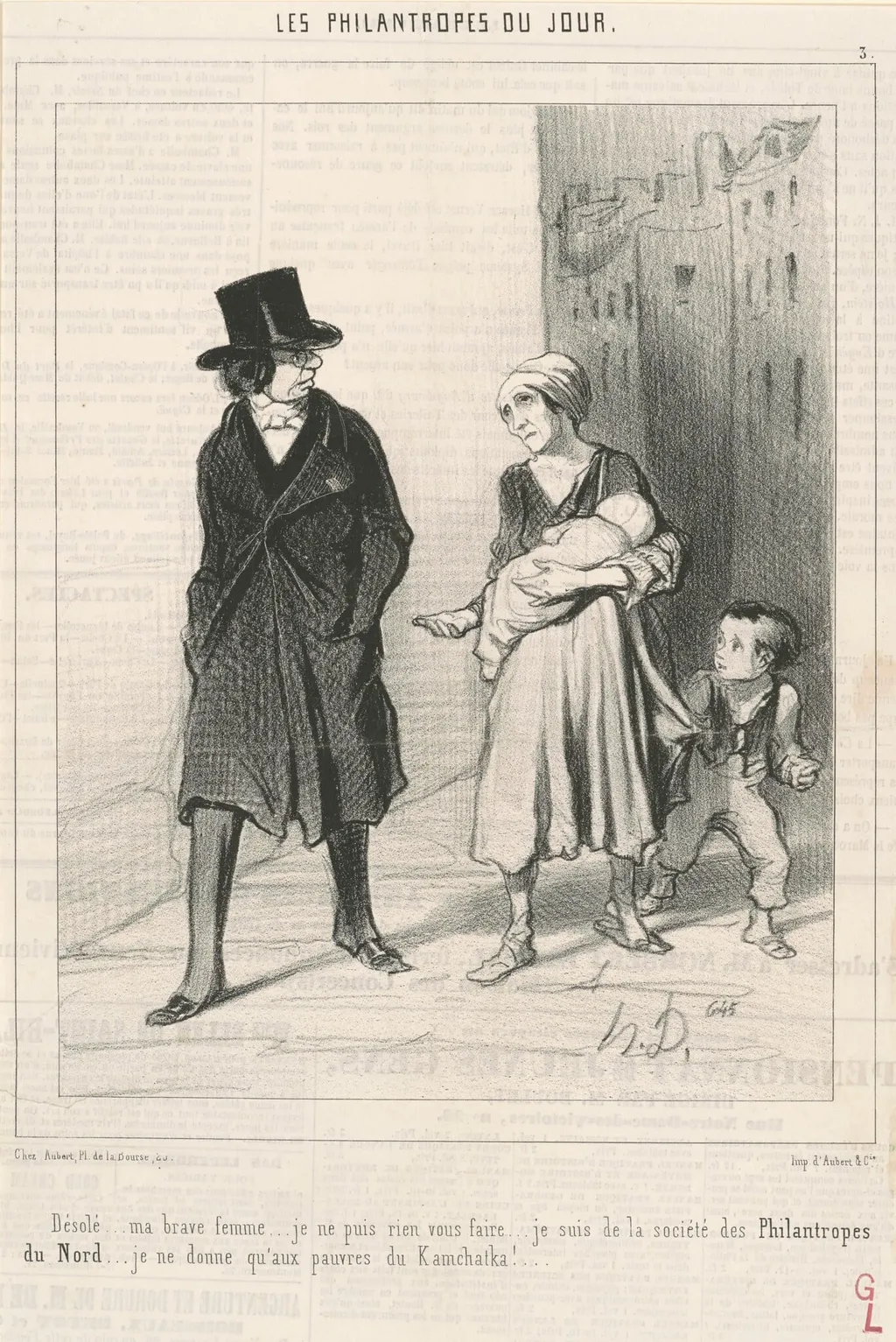
Désolé ... Je suis de la société des philantropes du nord ... is an ink print by the Romanticist artist Honoré Daumier. It dates from 1844 and is held in the collection of the National Gallery of Art.
About this work
Overview
It portrays a family—two adults and two children—standing in a city setting, their postures and expressions conveying exhaustion and quiet desperation.
Created in 1844 by Honoré Daumier, this lithograph presents a quiet yet powerful moment of urban hardship. It portrays a family—two adults and two children—standing in a city setting, their postures and expressions conveying exhaustion and quiet desperation. The work belongs to a series of prints Daumier produced to highlight social inequality, using everyday scenes to draw attention to systemic neglect.
Subject & Meaning
The figures—a man, a woman cradling an infant, and a young child—represent the vulnerability of the urban poor. Their worn clothing and downcast gazes suggest economic strain and emotional burden. The title, referencing a fictional philanthropic society, subtly mocks institutional indifference. The scene resists sentimentality, instead offering a restrained commentary on the gap between charitable rhetoric and lived reality.
Technique & Style
Daumier employed lithography to achieve rapid, expressive lines and tonal contrasts. His use of ink washes and hatching gives texture to fabric and shadowed faces, enhancing emotional depth without elaborate detail. The composition is tightly framed, focusing attention on the figures’ gestures and expressions. The medium’s accessibility allowed the image to circulate widely, reinforcing its social message.
History & Provenance
Produced during the July Monarchy, the print was likely distributed in periodicals or as a standalone sheet, reaching a broad public. Daumier often published such works in satirical journals, where his critiques of class and authority were both popular and controversial. While the original print’s early ownership is undocumented, its inclusion in later museum collections reflects its enduring recognition as a document of 19th-century social conditions.
Context
In 1840s Paris, rapid urbanization and industrialization intensified poverty among the working class. Daumier, observing daily life in the streets, turned his attention to families displaced by economic change. His prints countered idealized portrayals of society, offering instead unvarnished depictions of those left behind—making this image part of a broader visual critique of the era’s social structures.
Legacy
This lithograph remains a key example of Daumier’s commitment to social realism. It influenced later artists who used printmaking to address inequality, and its unembellished humanity continues to resonate in discussions of urban poverty. Unlike grand historical paintings, its power lies in its quiet observation—making visible those often ignored by official narratives.
Artist & collection

Artist
Honoré-Victorin Daumier was a French painter, sculptor, and printmaker, whose many works offer commentary on the social and political life in France, from the Revolution of 1830 to the fall of the Second French Empire in 1870.









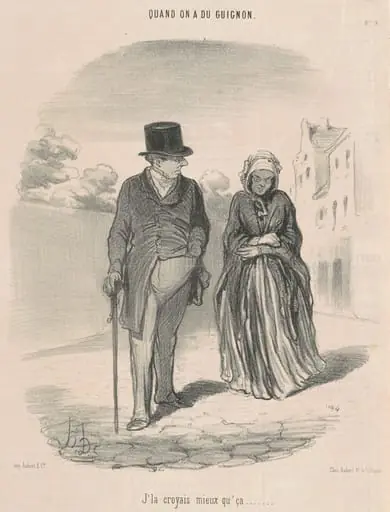 J'la croyais mieux qu'ça ...
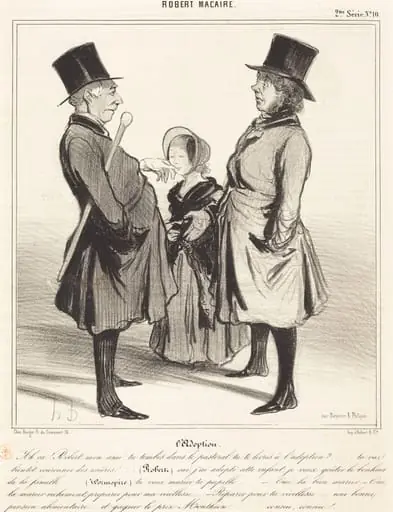 L'Adoption - Ah ça! Robert, mon ami...
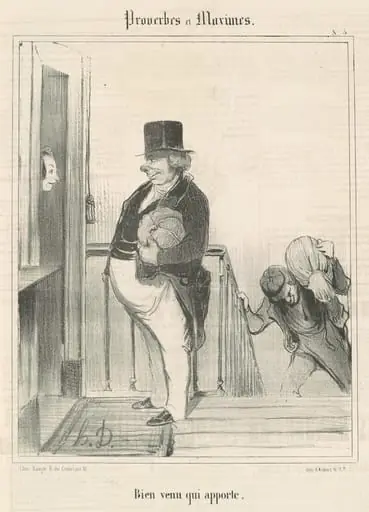 Bien venu qui apporte
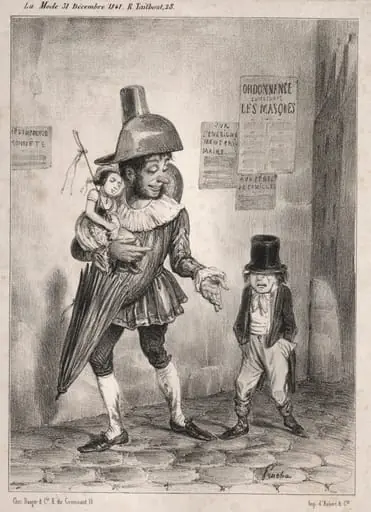 Pochades de carnaval: Vois-tu, si ton maître est bien content de toi et si tu as le prix de sagesse cette année! je te laisserai deguiser en paillasse! ...l'année prochaine!!
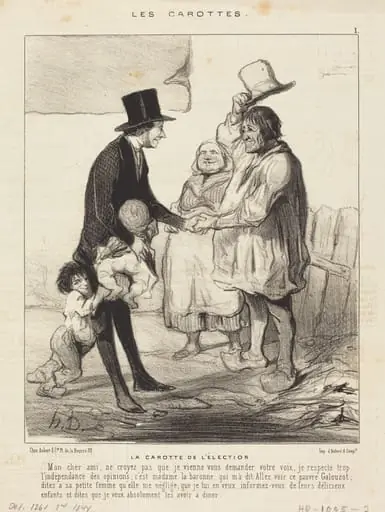 La Carotte de l'élection
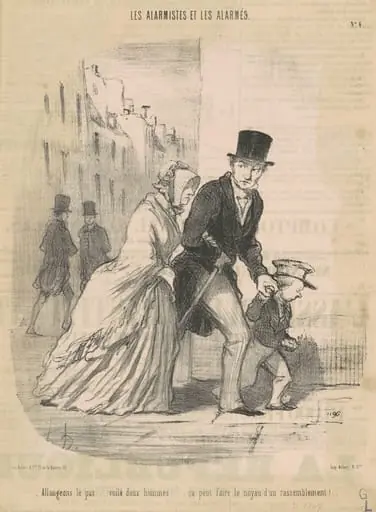 Allongeons le pas ... voila ceux hommes ...
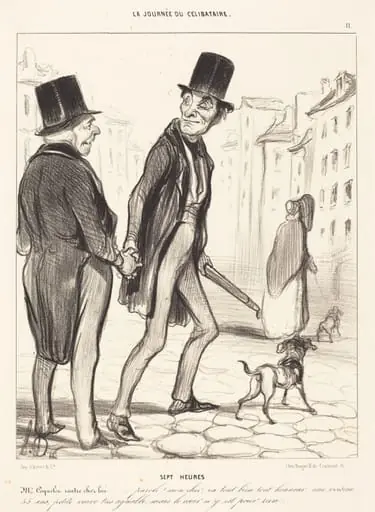 Sept heures