Artwork
Untitled
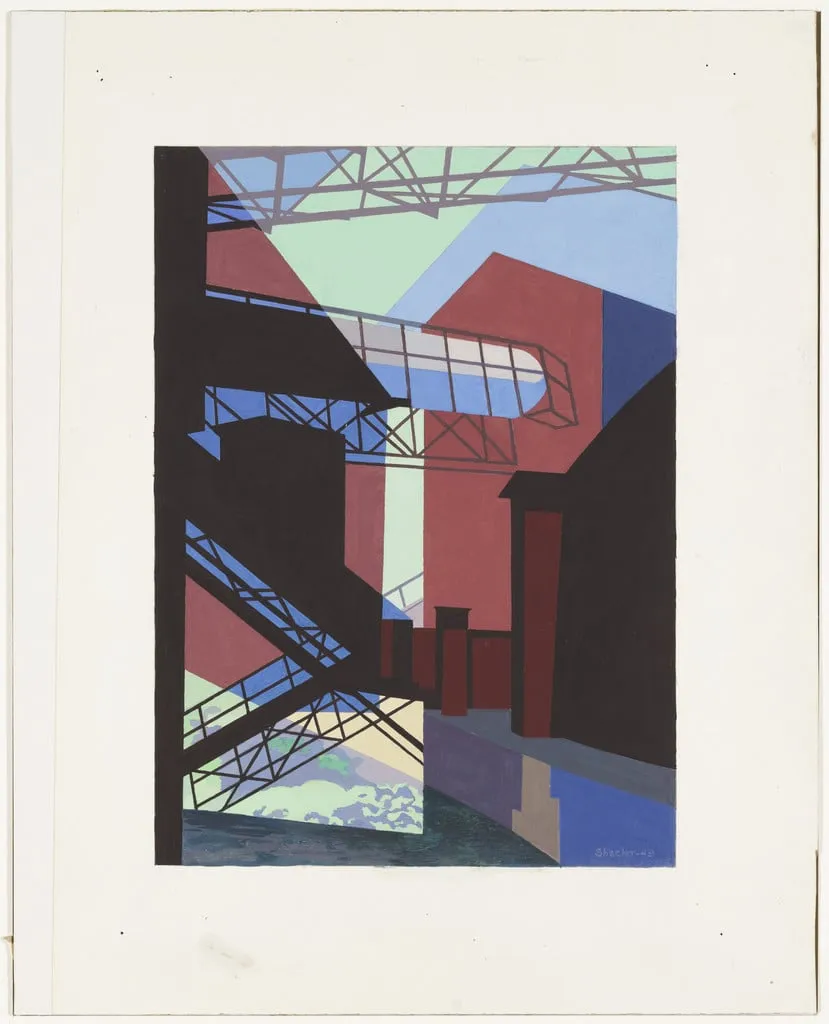
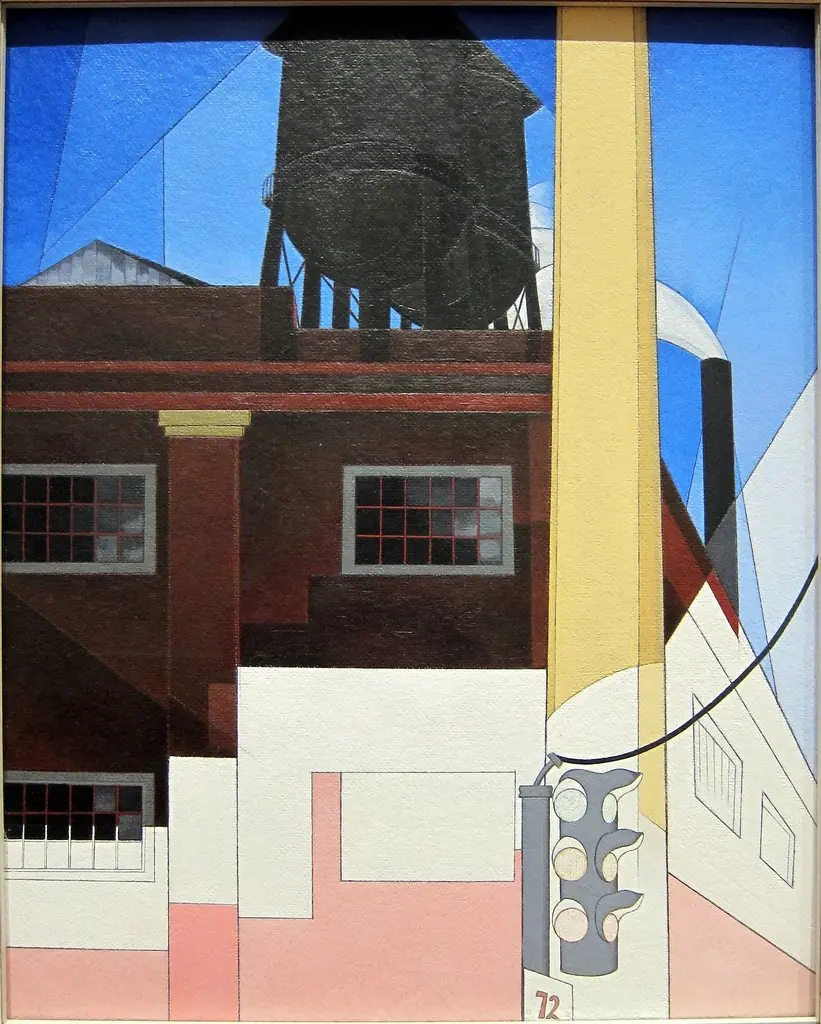
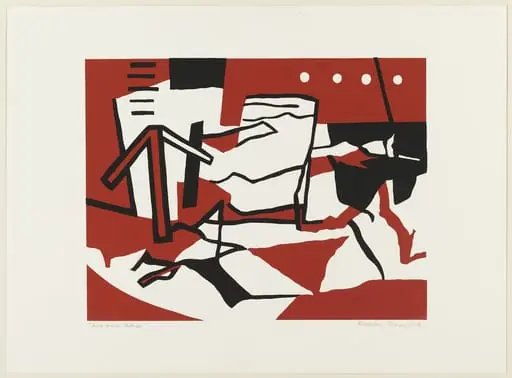
Untitled is a gouache drawing by Charles Sheeler. It dates from 1949 and is held in the collection of the Museum of Modern Art.
About this work
Overview
Its clean lines and simplified forms reflect a continued commitment to Precisionism, emphasizing structure over narrative.
Charles Sheeler’s 1949 gouache on board is a restrained, geometric composition that exemplifies his mature style. Executed in a matte, opaque medium, the work avoids the luminosity of oil paint in favor of flat, unmodulated color. Its clean lines and simplified forms reflect a continued commitment to Precisionism, emphasizing structure over narrative. The piece stands as a quiet meditation on form, space, and industrial aesthetics.
Subject & Meaning
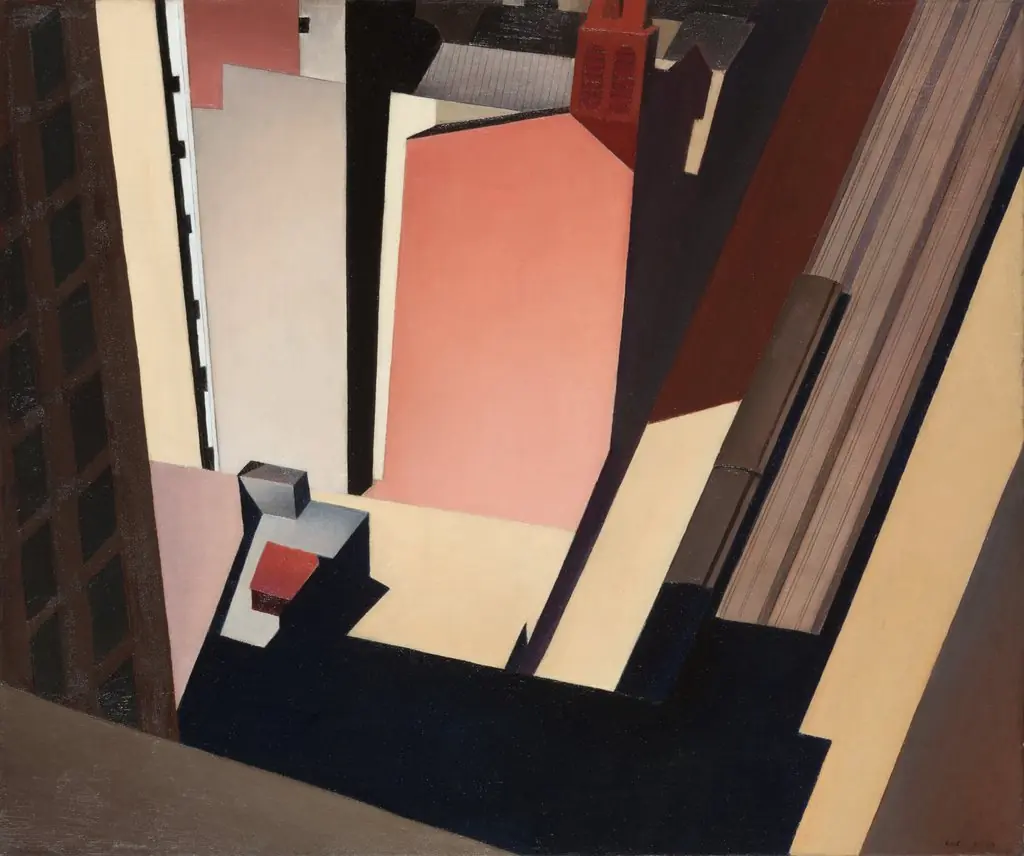
The central red structure appears to be an architectural or industrial element, possibly a factory or storage unit, rendered with minimal detail. Dark, angular shapes intersect it like elevated walkways or staircases, suggesting functional infrastructure without literal representation. The greenish sky and blue lower band imply an environment—perhaps a riverside industrial zone—but the scene remains abstracted, prioritizing formal relationships over identifiable location.
Technique & Style
Sheeler employed gouache for its opaque, matte quality, allowing sharp edges and flat planes to dominate. Bold black outlines define each form, creating a sense of containment and order. Colors are deliberately limited and unblended, enhancing the mechanical feel. The composition is tightly controlled, with no visible brushwork or texture, reinforcing the impersonal, engineered aesthetic central to his later work.
History & Provenance
Created in 1949, this work belongs to Sheeler’s later period, following his established reputation from the 1920s and 30s. It reflects his sustained interest in industrial subjects, though without the overt social commentary of earlier pieces. The work’s provenance traces to private collections after its completion, consistent with the quiet reception of his non-commercial drawings during this phase of his career.
Context
In the postwar era, American art shifted toward abstraction and expressionism, yet Sheeler remained committed to geometric clarity and industrial themes. This piece aligns with a quieter current in modernism—artists who refined earlier styles rather than abandoning them. His choice of gouache, a medium associated with illustration, underscores his interest in the boundary between art and design.
Legacy
Sheeler’s late works, including this gouache, demonstrate how Precisionism evolved beyond its initial industrial glorification into a formal language of abstraction. His disciplined use of line and color influenced later generations interested in minimalism and architectural drawing. Though less celebrated than his earlier paintings, this work exemplifies his enduring focus on structure as a visual principle.
Artist & collection
Artist
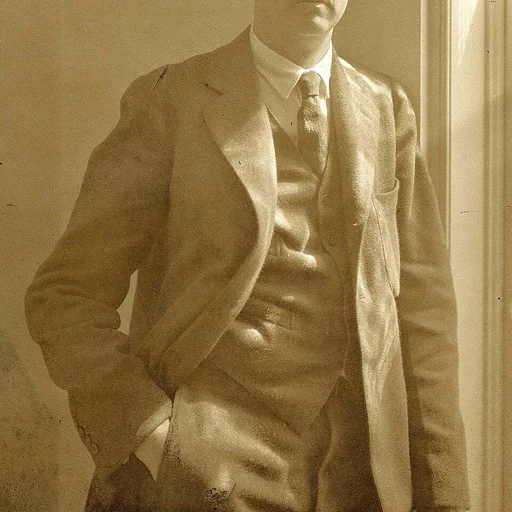
Charles Sheeler (July 16, 1883 – May 7, 1965) was an American artist known for his Precisionist paintings, commercial photography, and the 1921 avant-garde film, Manhatta, which he made in collaboration with Paul Strand.