Artwork
Offerings of a Chariot and Horse, Tomb of Userhat
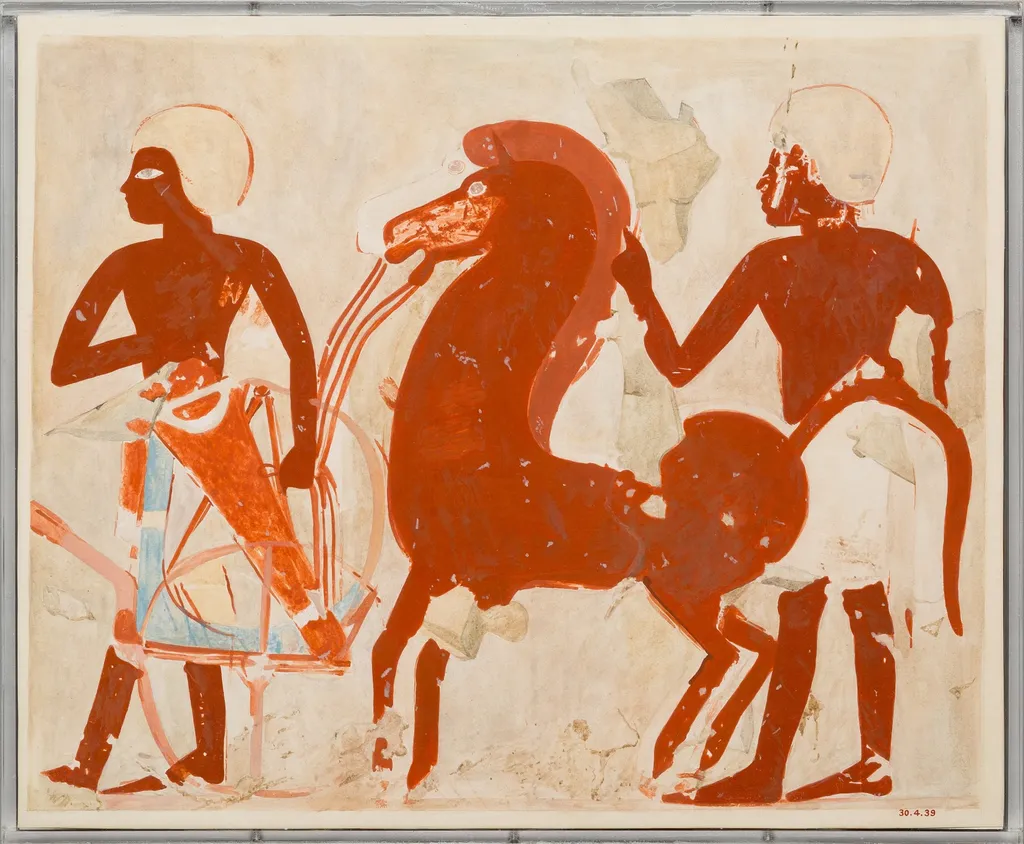
Offerings of a Chariot and Horse, Tomb of Userhat is an unspecified painting by Charles Wilkinson. It is held in the collection of the Metropolitan Museum of Art. This painted scene originates from the tomb of Userhat, an official in ancient Egypt’s New Kingdom.
About this work
Overview
The composition follows traditional Egyptian conventions: figures are arranged in horizontal registers, with minimal spatial depth and no perspective.
This painted scene originates from the tomb of Userhat, an official in ancient Egypt’s New Kingdom. It depicts three figures and a horse, likely illustrating ritual offerings meant to accompany the deceased in the afterlife. The composition follows traditional Egyptian conventions: figures are arranged in horizontal registers, with minimal spatial depth and no perspective. Colors are restrained, dominated by earth tones, reinforcing the solemn, ceremonial tone.
Subject & Meaning
The figures appear to be presenting a horse and chariot, symbolic elements associated with status and mobility in the afterlife. The horse, rendered with attention to muscular form and fur texture, suggests value and care. The men, dressed plainly, may represent servants or family members fulfilling funerary duties. The scene reflects beliefs in sustaining the deceased’s needs beyond death through ritual imagery.
Technique & Style
The painting employs flat, outlined forms typical of Egyptian artistic norms, with figures shown in composite view—heads in profile, torsos frontal. Shading is absent; volume is implied through contour and subtle modeling of the horse’s coat. Pigments are mineral-based, applied in thin layers, preserving a matte finish. The texture of the horse’s fur is rendered with fine, parallel strokes, a rare detail that adds tactile realism within a rigid stylistic framework.
History & Provenance
The painting was part of the decoration in Userhat’s tomb, located in Thebes, likely dating to the 18th Dynasty. It was excavated in the 19th or early 20th century and is now held in a major museum collection. Its preservation is notable, as many tomb paintings suffered damage from humidity or looting. The work’s survival offers insight into the artistic practices of non-royal elites during the New Kingdom.
Context
Tomb paintings like this were standard among high-ranking officials, serving both religious and social functions. They affirmed the deceased’s status and ensured their continued provision in the afterlife. While royal tombs featured grander scenes, private tombs such as Userhat’s emphasized personal identity and duty. The inclusion of a horse reflects its growing importance in Egyptian military and ceremonial life during the New Kingdom.
Legacy
This work exemplifies how Egyptian artists balanced symbolic convention with subtle naturalism, particularly in animal depiction. Though not widely known outside Egyptological circles, such paintings influenced later studies of ancient visual culture. The attention to the horse’s fur, unusual in its detail, has drawn scholarly interest as an early example of textural experimentation within a rigid artistic system.
Artist & collection
Artist
Egyptian artists carved lively scenes on tomb walls to keep the dead company. Wilkinson’s bundle offers five such reliefs, from a falcon guarding a pharaoh to wine presses and chariots left behind for the next world.…

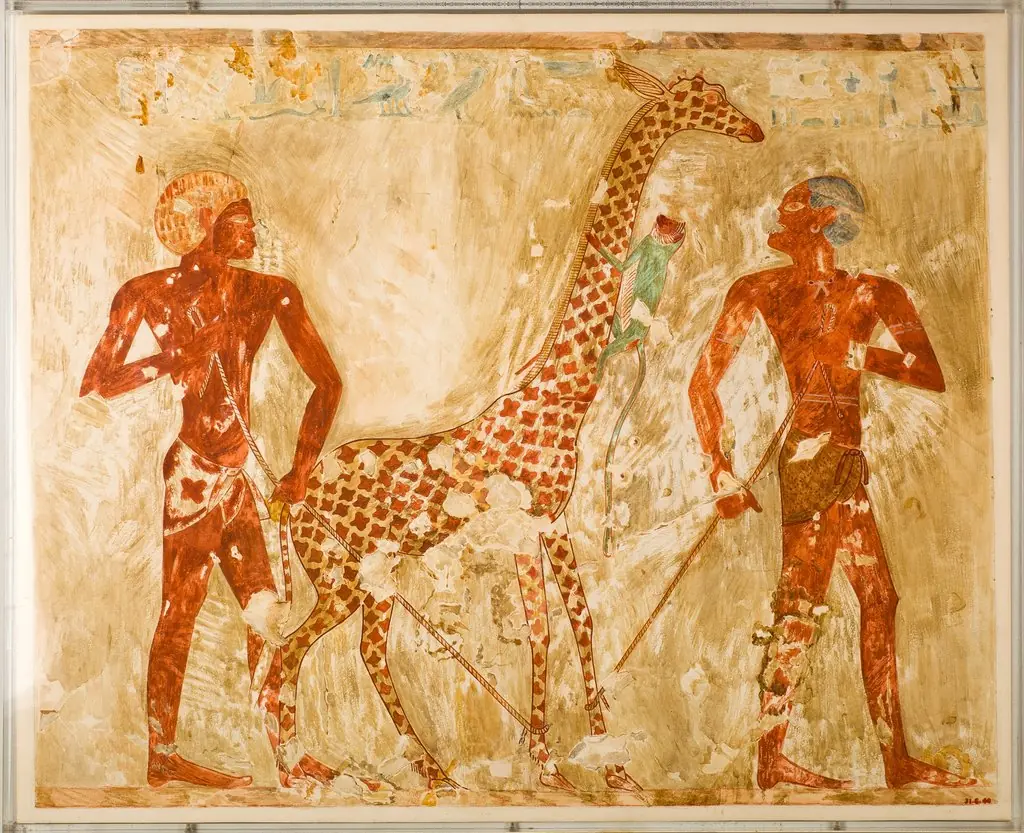 Nubians with a Giraffe and a Monkey, Tomb of Rekhmire
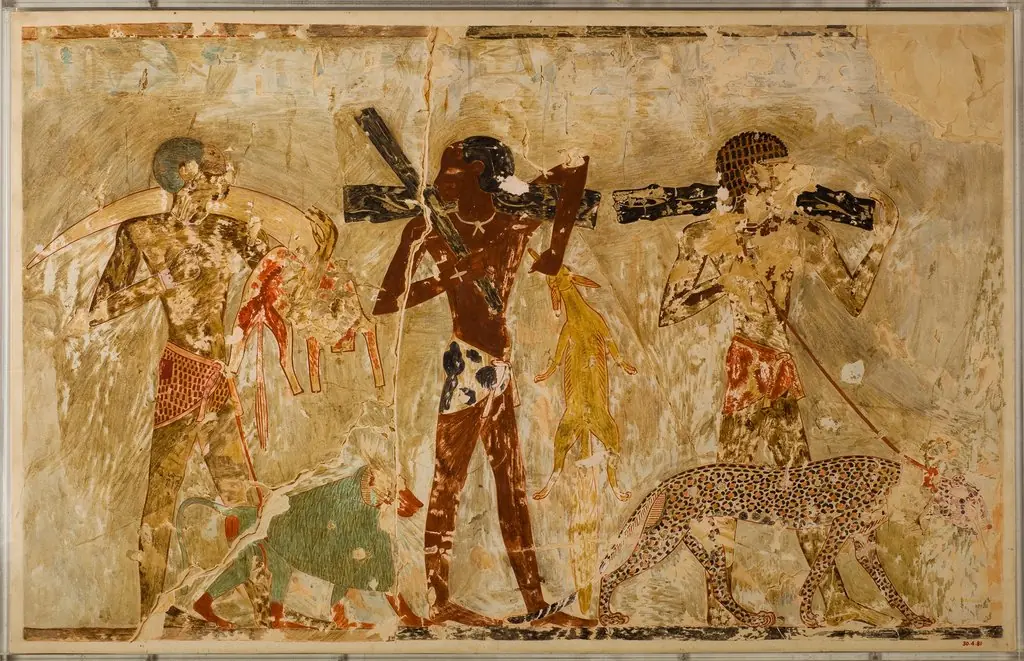 Facsimile painting from the tomb of Rekhmire
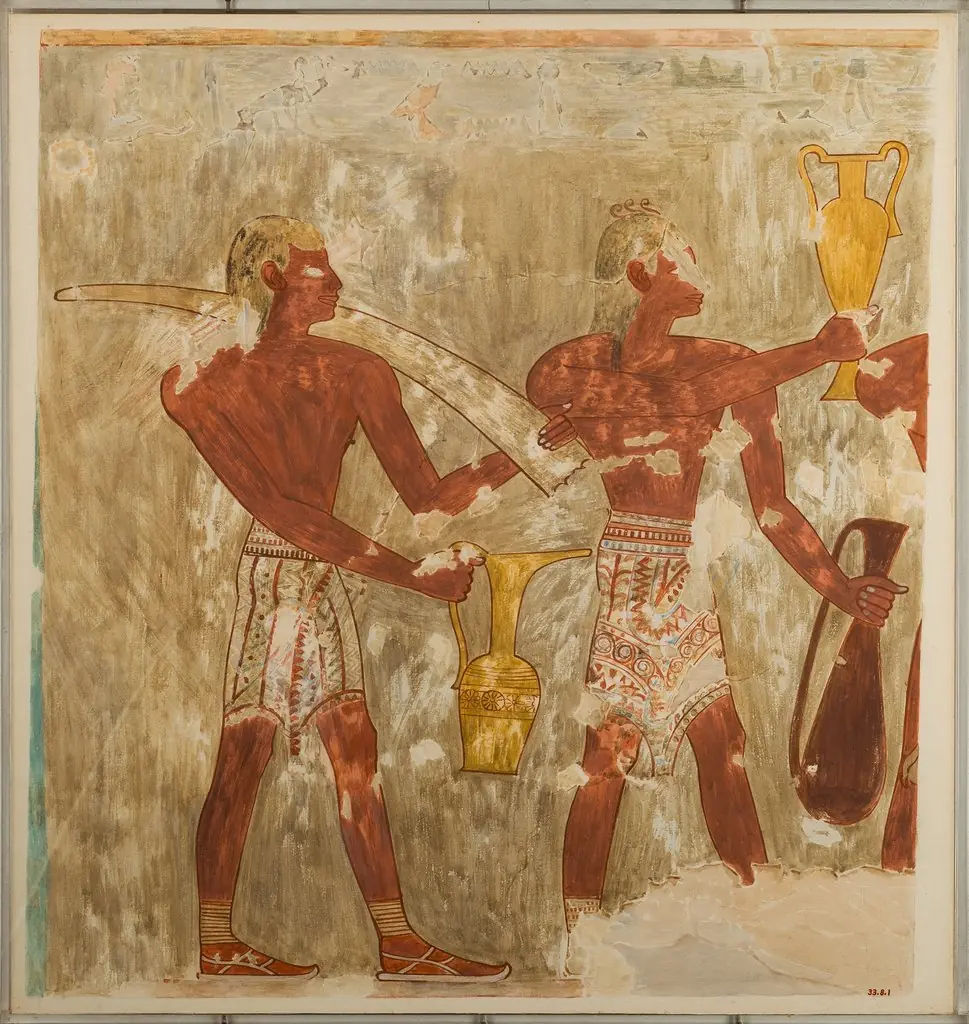 Aegean Islanders in the Tomb of Rekhmire
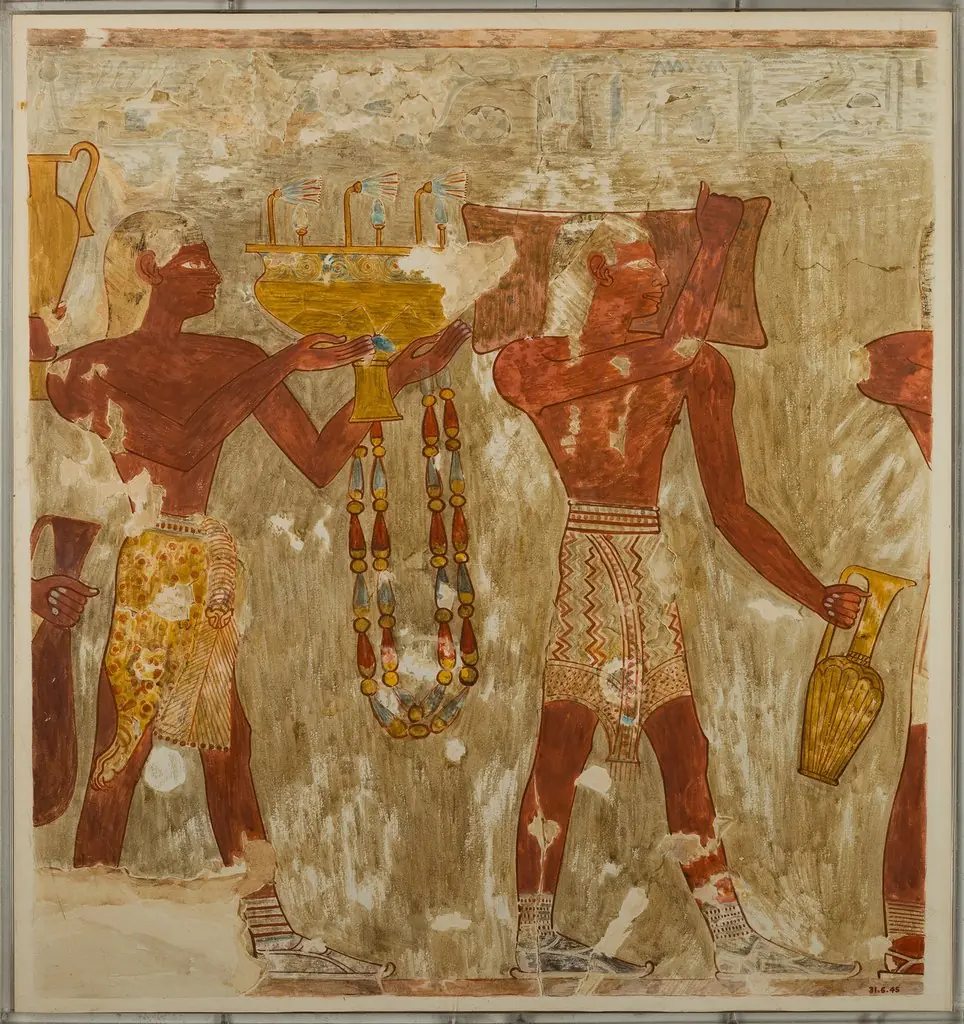 Cretans Bringing Gifts of Metal and Jewelry, Tomb of Rekhmire
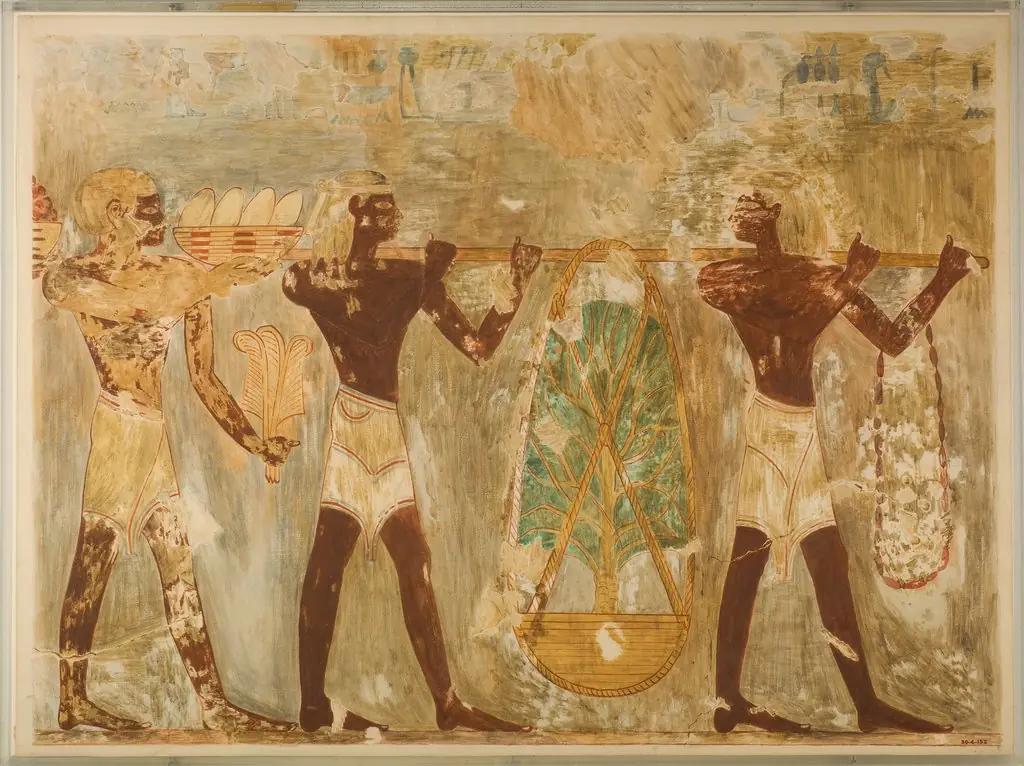 Men from Punt Carrying Gifts, Tomb of Rekhmire
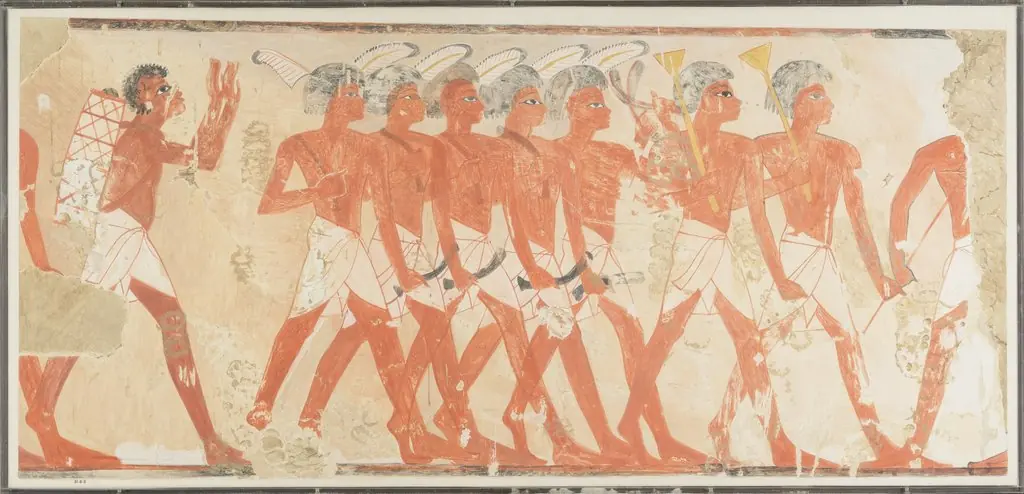 Military Musicians Showing Nubian and Egyptian Styles
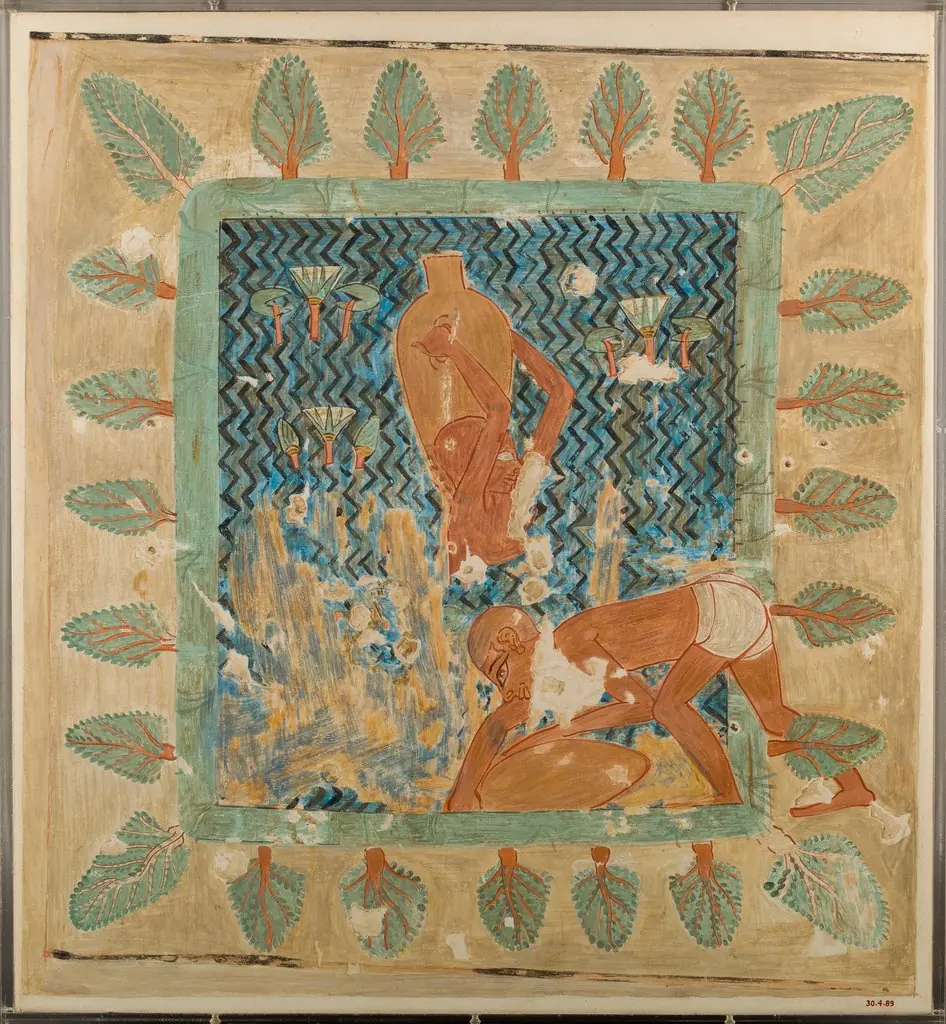 Brickmakers Getting Water from a Pool, Tomb of Rekhmire