Artwork
Funeral Ritual in a Garden, Tomb of Minnakht
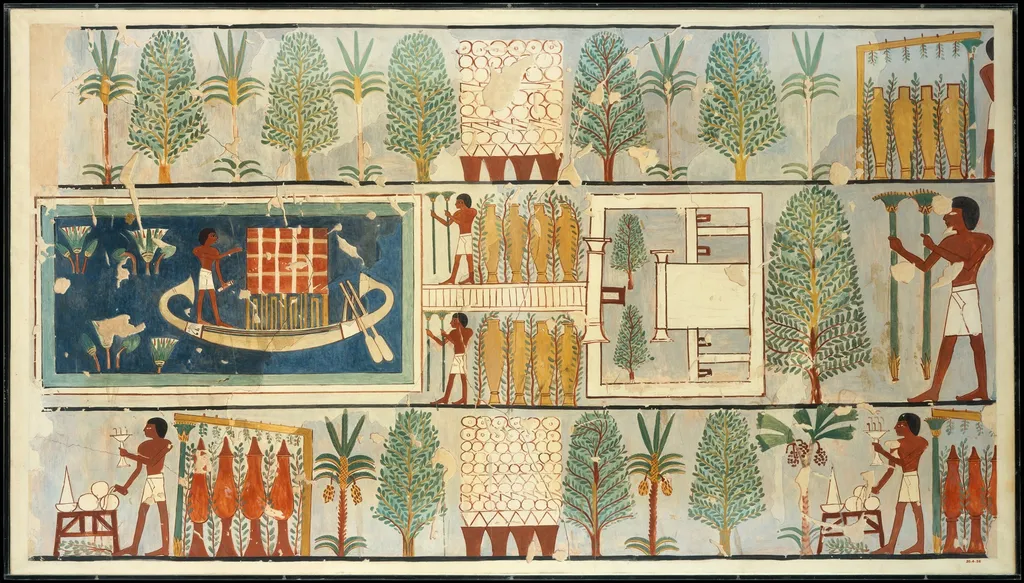
Funeral Ritual in a Garden, Tomb of Minnakht is an unspecified painting by Charles Wilkinson. It is held in the collection of the Metropolitan Museum of Art.
About this work
Overview
The composition is framed by vivid background hues of blue, red and yellow, punctuated with decorative motifs resembling woven mats and stacked jars.
The work titled “Funeral Ritual in a Garden, Tomb of Minnakht” is a painted scene that stretches horizontally across a flat plane. Figures in white garments with darkened skin are arranged in orderly rows beneath a canopy of leafy trees, their postures rigid and frontal despite varied activities. The composition is framed by vivid background hues of blue, red and yellow, punctuated with decorative motifs resembling woven mats and stacked jars.
Subject & Meaning
The painting depicts a funerary procession set in a garden, likely illustrating the rites performed for the deceased individual named Minnakht. Participants are shown handling tools, baskets, and engaging with boats or structures, suggesting the preparation and transport of offerings. The uniform forward gaze of each figure emphasizes collective participation in the ritual, reinforcing communal responsibility toward the afterlife.
Technique & Style
Executed in a linear, almost two‑dimensional manner, the figures appear as flat silhouettes with limited modeling, a characteristic of certain Egyptian tomb paintings. The artist employed a limited palette for the foreground while reserving bright, saturated colors for the background, creating a visual hierarchy that separates the ritual participants from decorative elements.
History & Provenance
The piece originates from an ancient Egyptian tomb, specifically the burial chamber of Minnakht, whose identity is known from accompanying inscriptions. It entered the collection of the Metropolitan Museum of Art through acquisition in the early twentieth century, where it has been conserved and displayed as part of the museum’s Egyptian antiquities.
Context
Funerary scenes in Egyptian tombs served both a religious function and a record of the deceased’s status. Gardens, boats, and offering tables were common motifs symbolizing rebirth and the journey to the afterlife. The depiction of workers and ritual participants reflects the organized nature of Egyptian mortuary practices during the period.
Artist & collection
Artist
Egyptian artists carved lively scenes on tomb walls to keep the dead company. Wilkinson’s bundle offers five such reliefs, from a falcon guarding a pharaoh to wine presses and chariots left behind for the next world.…

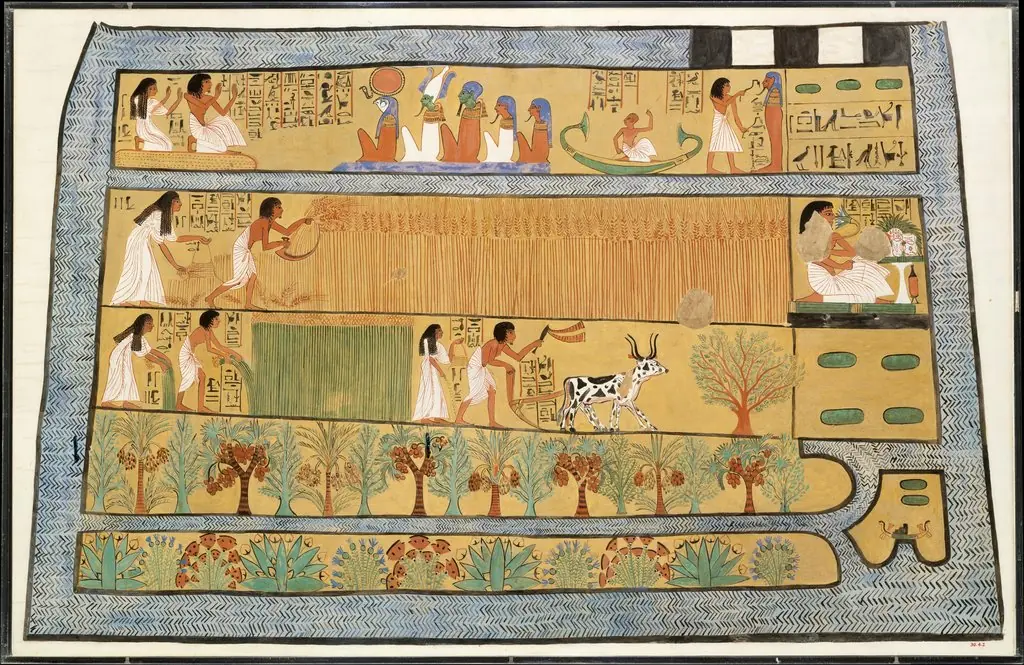 Sennedjem and Iineferti in the Fields of Iaru
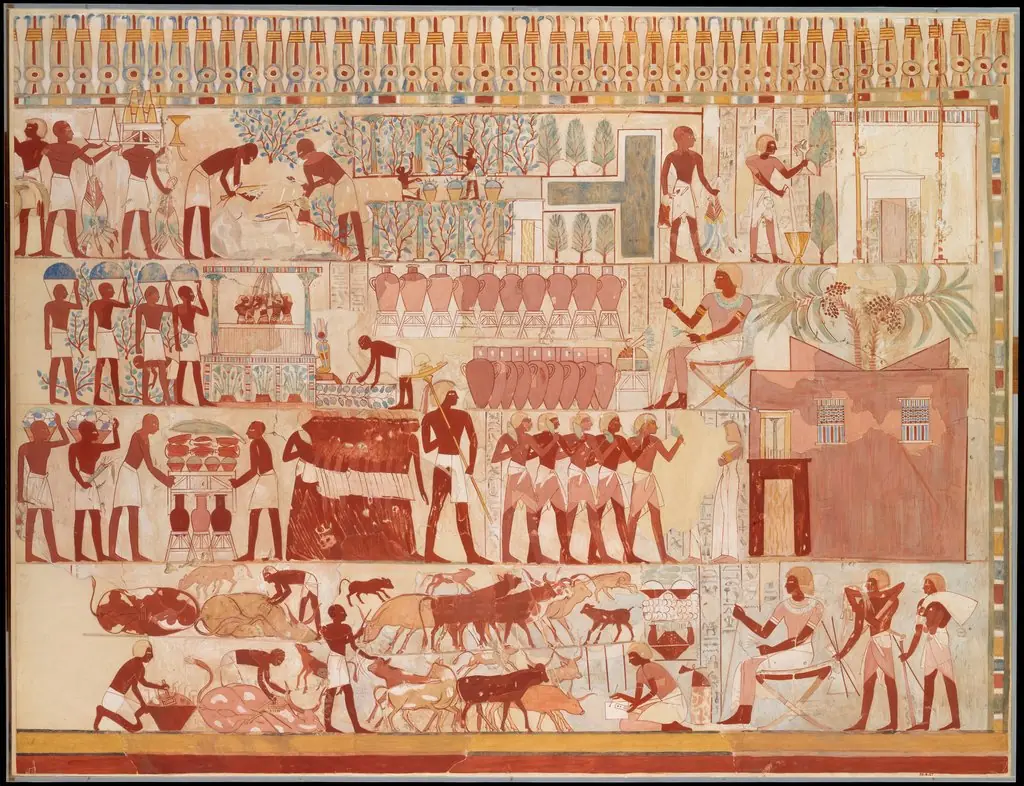 Nebamun Supervising Estate Activities, Tomb of Nebamun
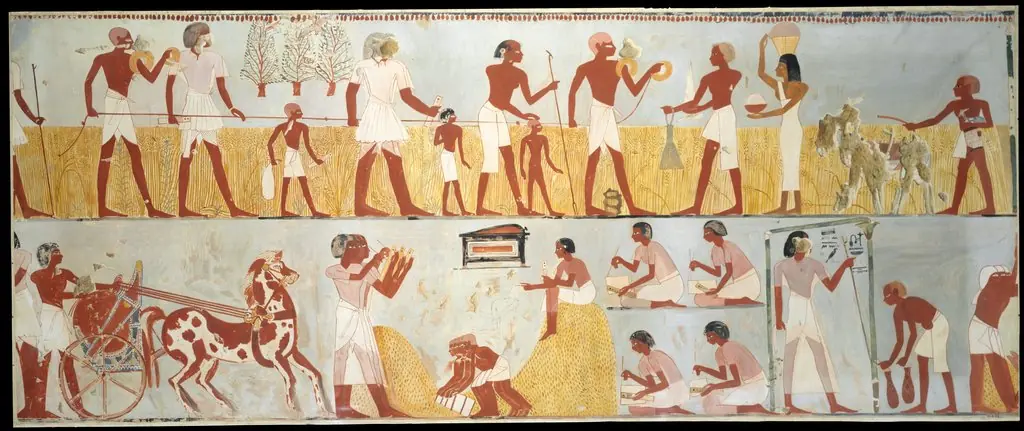 Harvest Scenes, Tomb of Menna
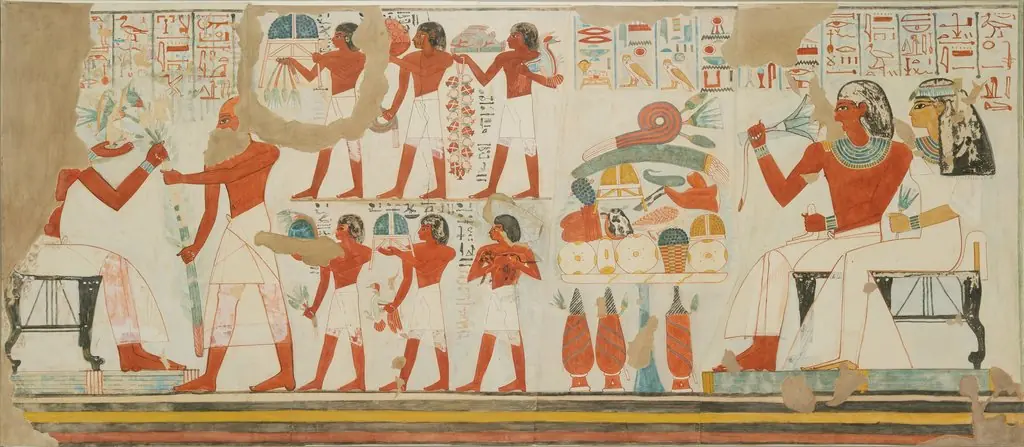 Offerings Made to the Deceased and his Wife, Tomb of Djehutyemheb
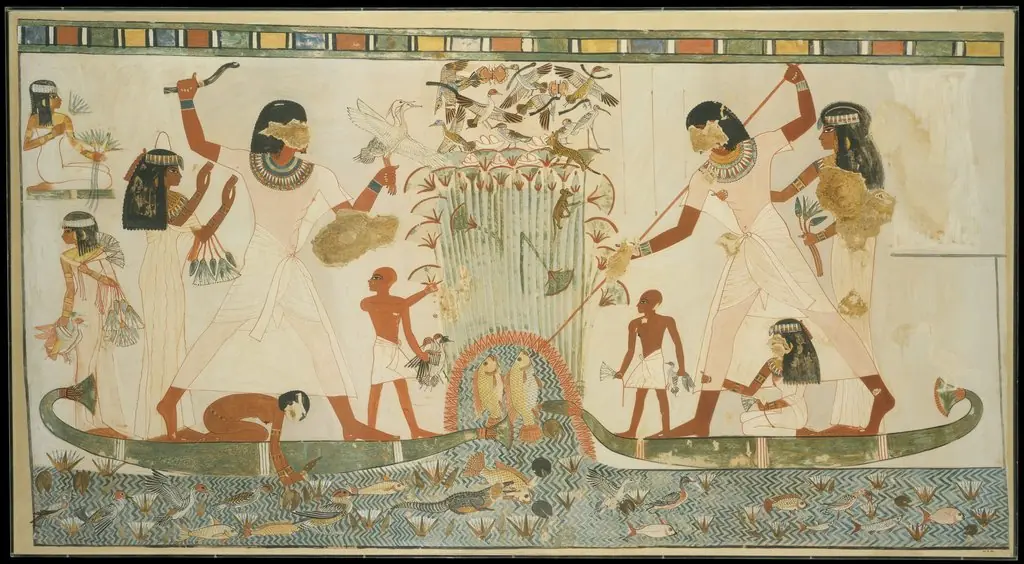 Menna and Family Hunting in the Marshes, Tomb of Menna
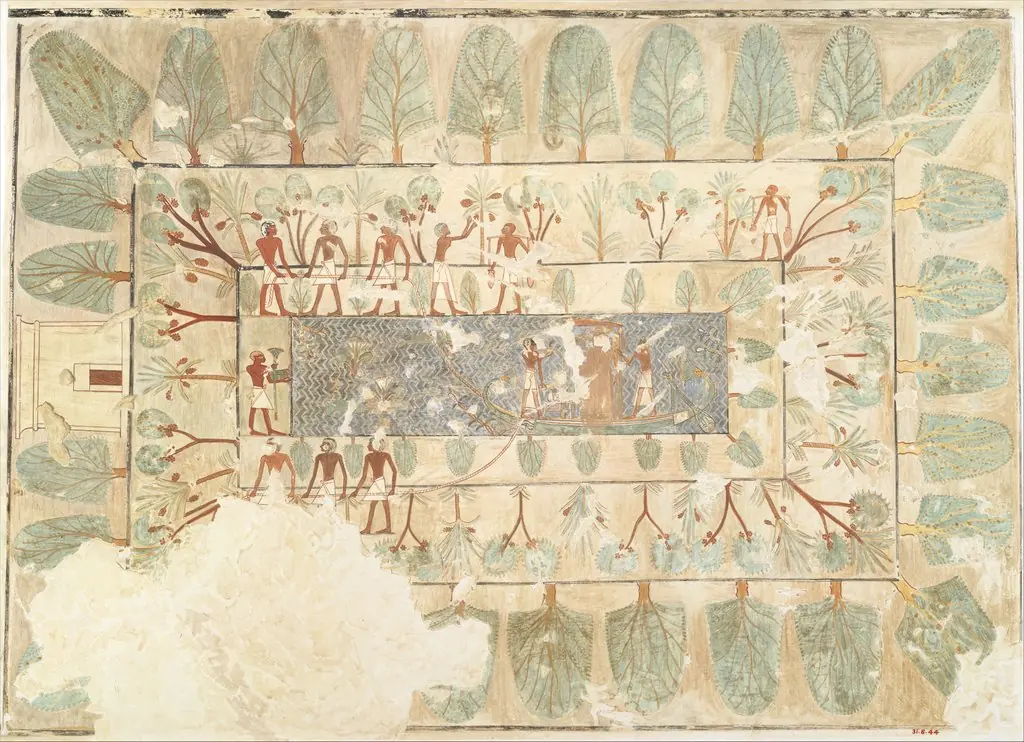 Deceased Being Towed in a Boat, Tomb of Rekhmire
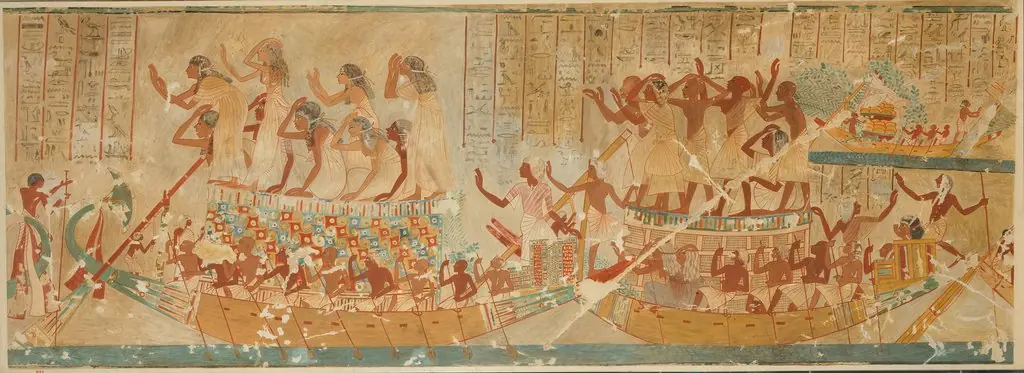 Boats with Mourners and Provisions, Tomb of Neferhotep
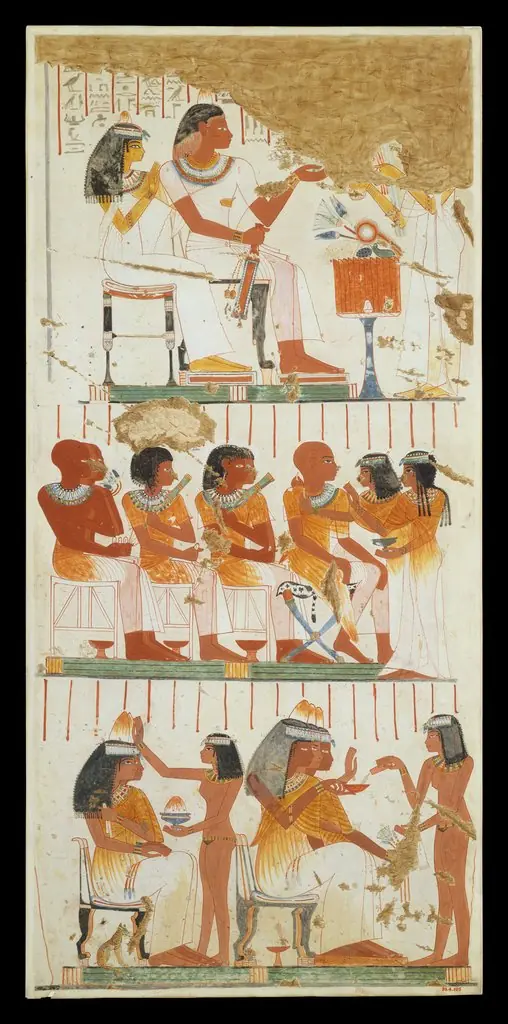 Guests at a Banquet