Artwork
Devant la rampe
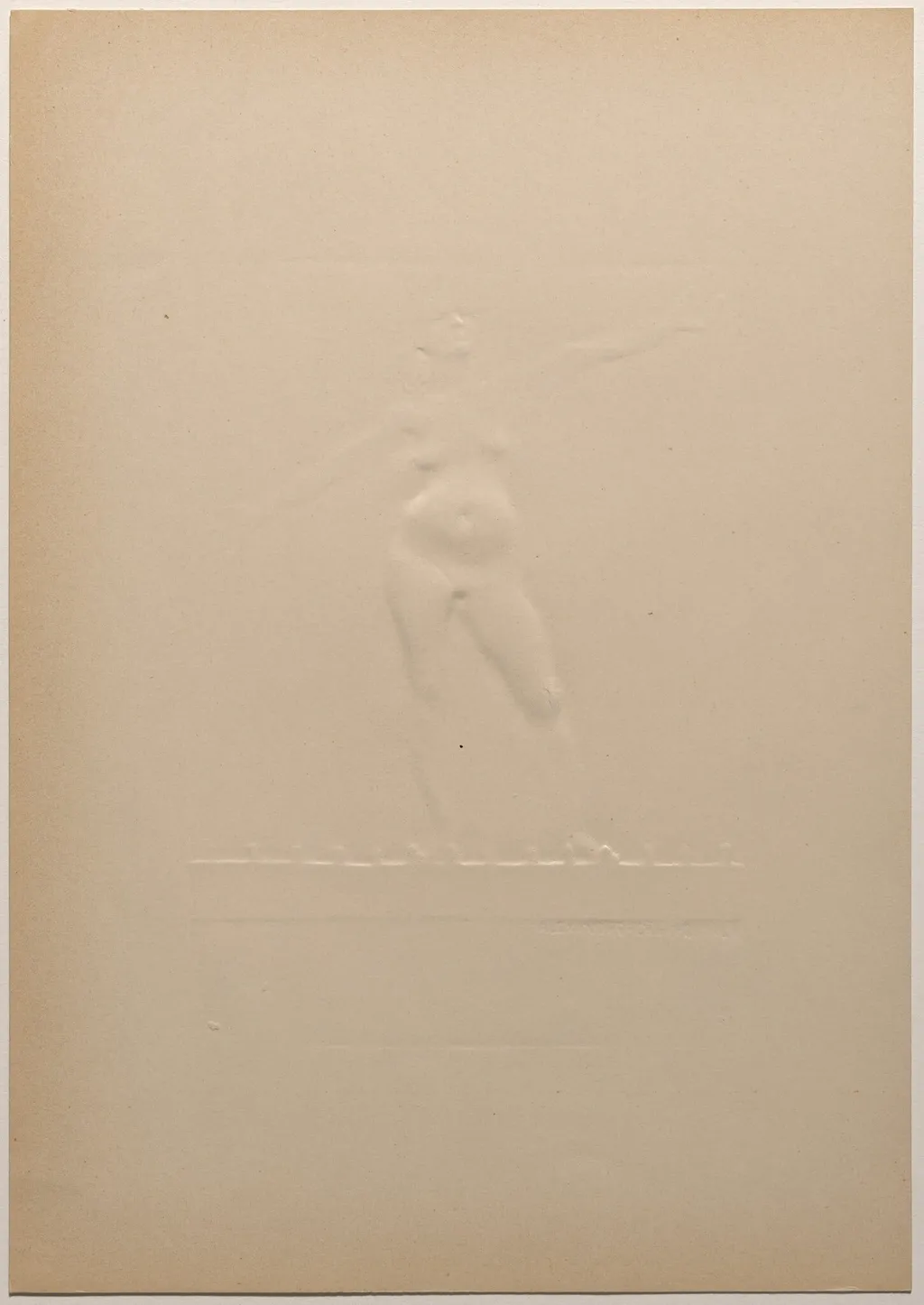
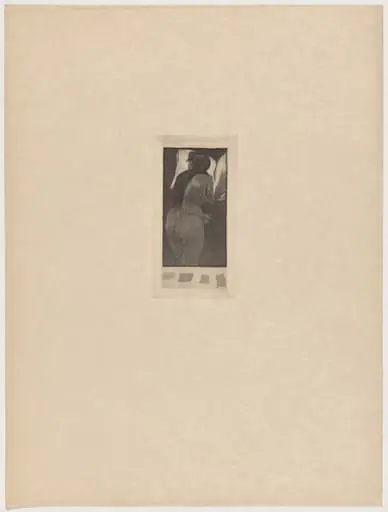
Devant la rampe is an ink print by the Impressionist artist Alexandre Charpentier. It dates from 1895 and is held in the collection of the National Gallery of Art.
About this work
Overview
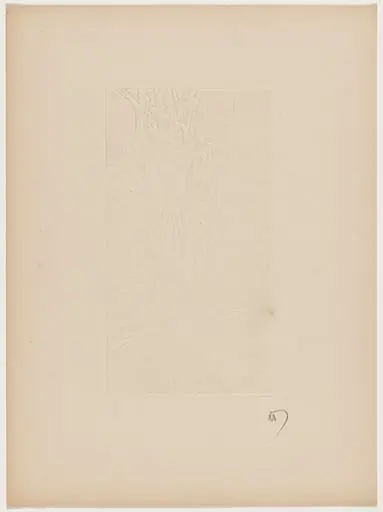
Created in 1895 by Alexandre Charpentier, Devant la rampe is an inkless embossing on heavy wove paper. The technique relies solely on physical pressure to raise the image from the surface, producing a tactile, low-relief form without ink or color. This method emphasizes texture and contour, transforming the paper into a sculptural plane that captures motion through subtle elevation.
Subject & Meaning
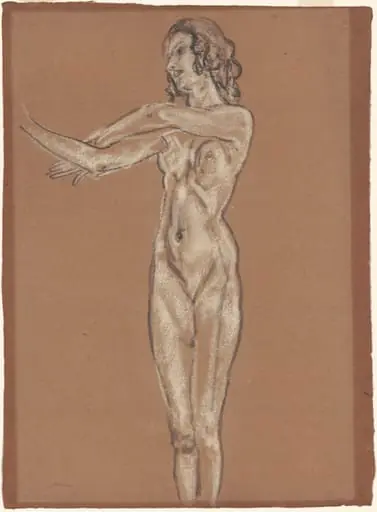
The head faces right while the torso leans left, arms extended and one leg bent, suggesting a moment of transition—neither fully still nor fully in flight.
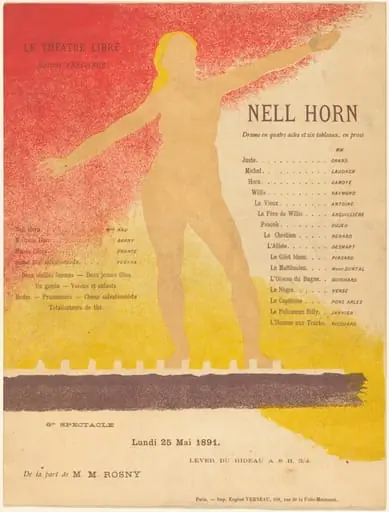
The composition centers on a nude figure in mid-motion, turned diagonally across the frame. The head faces right while the torso leans left, arms extended and one leg bent, suggesting a moment of transition—neither fully still nor fully in flight. The ambiguity of the pose invites interpretation as a gesture of balance, anticipation, or release, rooted in classical ideals of bodily expression without narrative context.
Technique & Style
Charpentier employed gaufrage, a form of embossing that manipulates paper through pressure alone. The absence of ink heightens focus on form and volume, with the figure emerging through delicate ridges and depressions. A faint horizontal line at the base suggests a ledge or threshold, enhancing spatial depth. The style favors economy of line and tactile precision over detail, aligning with Symbolist interests in suggestion over declaration.
History & Provenance
The work was produced during Charpentier’s active period in Paris, when he was engaged with avant-garde printmaking circles. Though not widely exhibited in his lifetime, Devant la rampe was preserved in private collections and later entered institutional holdings. Its survival reflects niche appreciation for embossed prints among collectors of fin-de-siècle graphic arts, distinct from mainstream printmaking trends.
Context
In the 1890s, French artists explored non-traditional print methods as alternatives to lithography and etching. Charpentier’s use of embossing aligned with broader Symbolist and Art Nouveau interests in materiality and sensory experience. The nude figure, while classical in form, avoids academic idealism, instead conveying psychological tension and physical immediacy characteristic of the era’s experimental figuration.
Legacy
Devant la rampe remains a rare example of inkless embossing in late 19th-century French art. It contributed to the recognition of gaufrage as a legitimate medium for expressive figuration, influencing later artists who sought to merge sculpture and print. Though not widely reproduced, it endures in scholarly discussions of print innovation and the boundaries of graphic art.
Artist & collection


![Standing Figure [verso], by James McNeill Whistler](https://artifactworldgallery.com/img/james-mcneill-whistler--standing-figure-verso--3089b1e67635ba44-w320.webp)