Artwork
L'École des veufs; Au Temps de la ballade
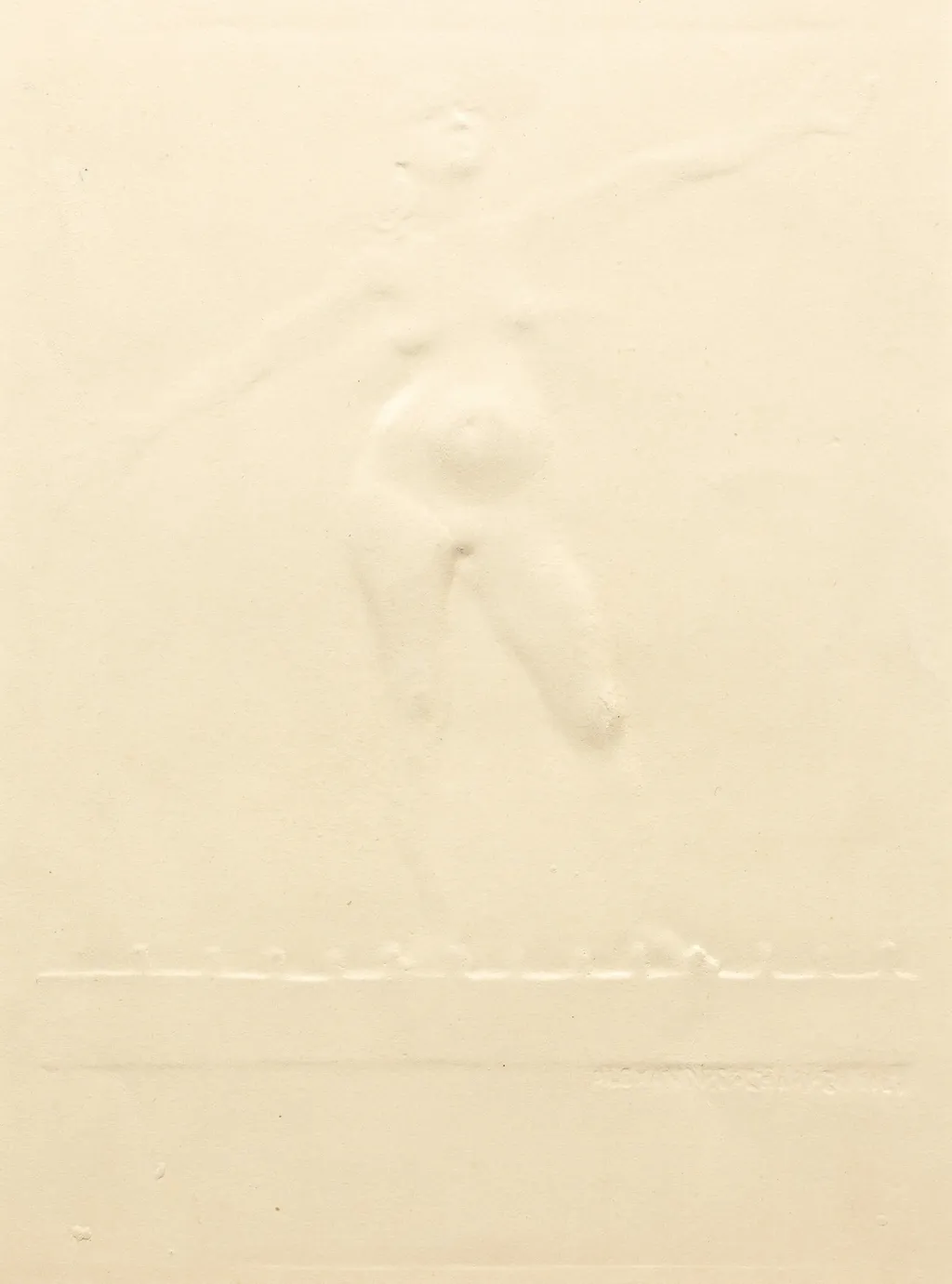
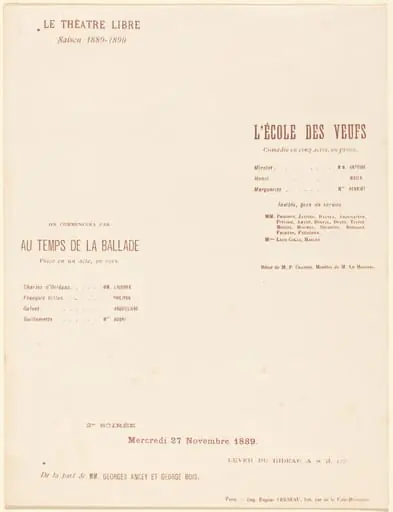
L'École des veufs; Au Temps de la ballade is an ink print by the Impressionist artist Alexandre Charpentier. It dates from 1889 and is held in the collection of the National Gallery of Art.
About this work
Overview
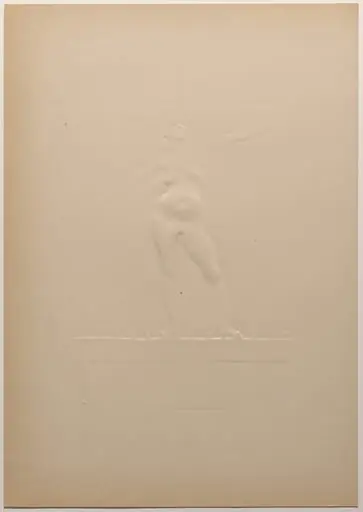
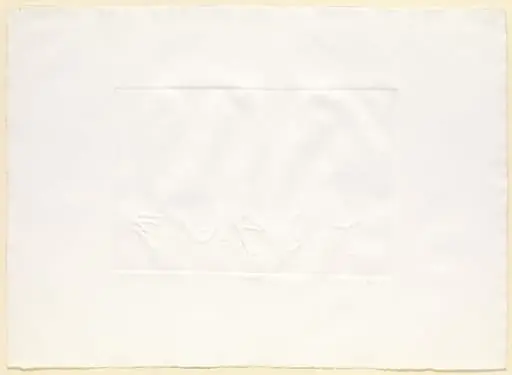
Created in 1889 by French artist Alexandre Charpentier, Lécole des veufs; Au Temps de la ballade is an inkless embossing print executed on wove paper. The work belongs to the late nineteenth‑century French printmaking tradition and exemplifies Charpentier’s interest in experimental surface techniques.
Subject & Meaning
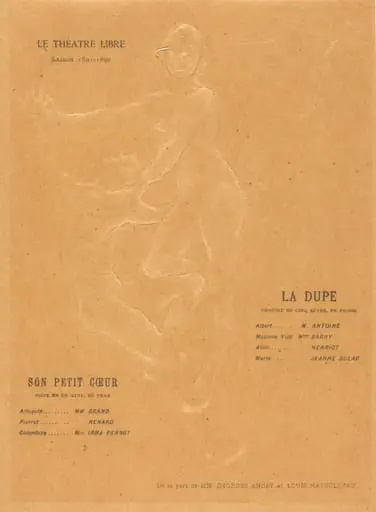
The composition presents a faint, ghostly silhouette that suggests a human figure in motion, evoking the atmosphere of a ballade. The minimal visual information invites contemplation of anonymity and the fleeting nature of performance, resonating with the title’s reference to a school of widowers and the era of song.
Technique & Style
Charpentier employed gaufrage, an embossing process that presses the paper without ink, producing raised, blurred shapes. The subtle gradations of light and dark arise from the depth of the relief, while cross‑hatching-like textures are suggested by the interplay of raised and recessed areas, creating a delicate sense of volume.
History & Provenance
The print was produced in the artist’s workshop in Paris during a period when Charpentier was exploring non‑traditional print media. It later entered private collections before being acquired by a museum in the early twentieth century, where it has been displayed as part of exhibitions on French graphic arts.
Context
At the end of the 1880s, French printmakers were experimenting with new materials and processes, moving beyond traditional etching and lithography. Charpentier’s use of inkless embossing reflects this broader shift toward tactile, surface‑focused works that challenge conventional notions of print as purely pictorial.
Legacy
Lécole des veufs; Au Temps de la ballade remains a notable example of Charpentier’s contribution to the development of embossing as an artistic medium. Its subtle visual language continues to inform contemporary practices that explore the interplay of light, shadow, and texture without pigment.
Artist & collection