Artwork
L'École des veufs; Au Temps de la ballade
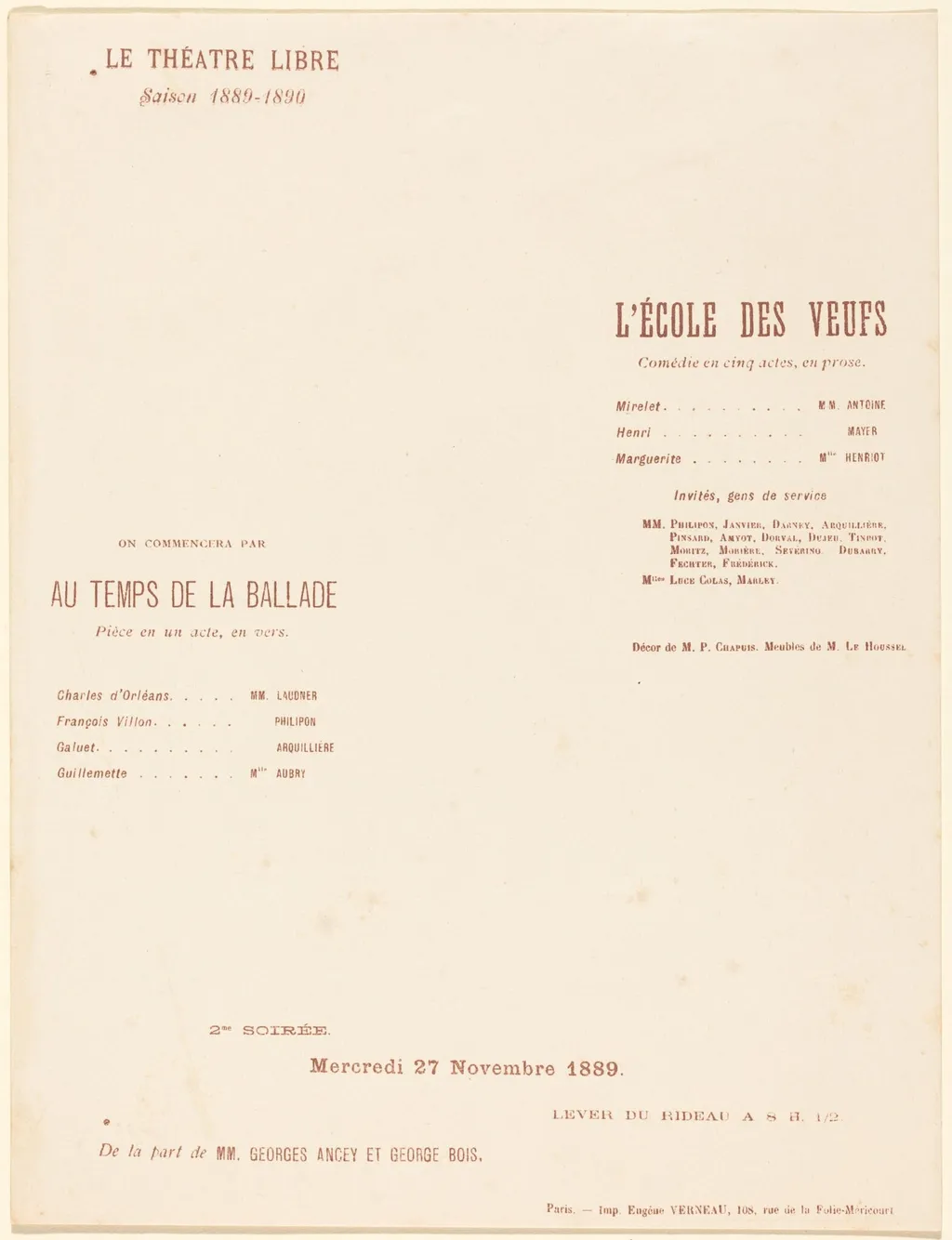
L'École des veufs; Au Temps de la ballade is an ink print by the Impressionist artist Alexandre Charpentier. It dates from 1889 and is held in the collection of the National Gallery of Art.
About this work
Overview
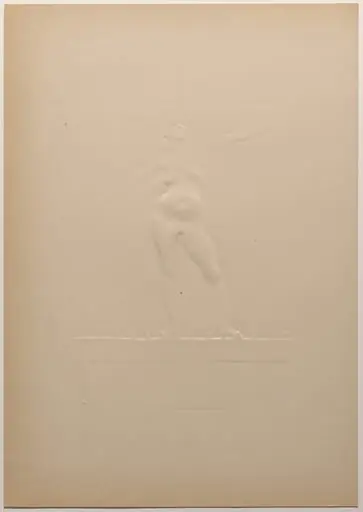
This technique, known as gaufrage, produces subtle tonal variations through light interacting with the paper's texture, offering a quiet, sculptural presence.
Created in 1889 by Alexandre Charpentier, L'École des veufs; Au Temps de la ballade is an inkless embossing on wove paper. The work relies entirely on raised and depressed surfaces to form its image, eliminating pigment in favor of tactile contrast. This technique, known as gaufrage, produces subtle tonal variations through light interacting with the paper's texture, offering a quiet, sculptural presence.
Subject & Meaning
The print depicts a group of men, dressed in worn coats and hats, standing in a loose, uniform line. Their postures suggest waiting or ritualized stillness, evoking themes of solitude and collective endurance. The title, referencing widows and a bygone ballad, implies a mourning ritual or social memory, though the figures remain anonymous, their individual stories obscured by the group's somber cohesion.
Technique & Style
Charpentier employed gaufrage, a rare print method that presses paper into engraved plates without ink. The resulting image emerges through the physical relief of the surface, creating depth through shadow and contour. The style is minimalist yet precise, with forms rendered in delicate undulations. The absence of color focuses attention on texture and form, lending the work a sculptural, almost archaeological quality.
History & Provenance
Produced in 1889, this print belongs to a small body of works by Charpentier experimenting with embossing in the late 19th century. Few examples of his gaufrage prints survive, and this piece is among the better-documented. It was likely made for private circulation among artists and collectors interested in printmaking innovation, rather than mass distribution.
Context
In the late 1880s, French artists were exploring alternatives to traditional print media, seeking intimacy and material experimentation. Charpentier’s use of gaufrage aligned with broader Symbolist interests in suggestion over declaration. His work stood apart from commercial lithography, aligning instead with artisanal, hand-crafted aesthetics favored by avant-garde circles in Paris.
Legacy
Though Charpentier is not widely known today, this print remains a significant example of late 19th-century printmaking innovation. Gaufrage was rarely sustained as a primary medium, making this work a rare testament to its potential. It contributes to the historical record of artists who prioritized tactile experience and quiet expression over visual spectacle.
Artist & collection


 Untitled
 Le Chariot de terre cuite
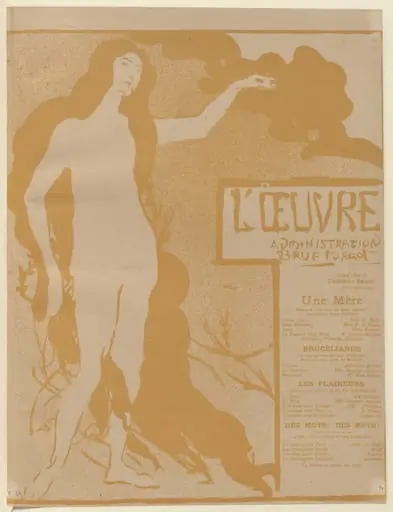 Untitled
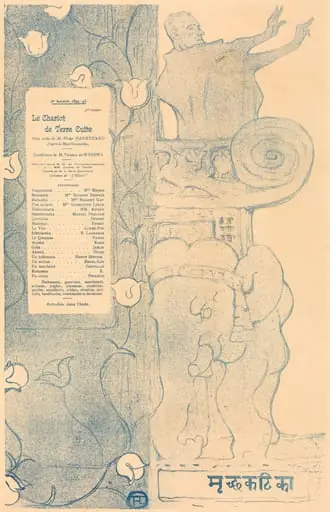 Le Chariot de terre cuite
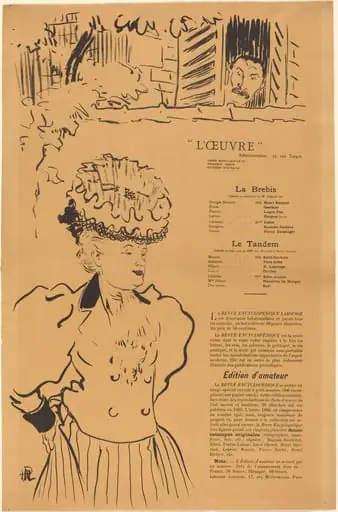 La Brebis; Le Tandem
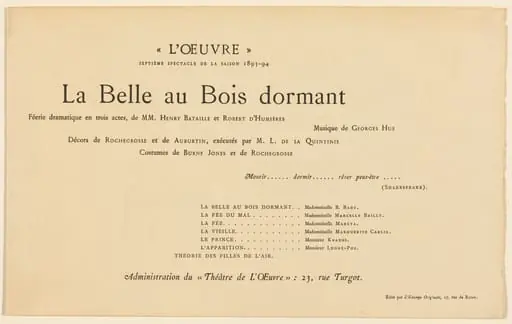 La Belle au bois dormant
 Ilda (Hilda)
 Homage to Moliere (Hommage à Molière)
 Dintre sute de catarge
 Le Bien d'autrui; Hors Les Lois
 Frédéric Mistral: Mémoires et Recits by Frédéric Mistral: man (page 211)
 Frédéric Mistral: Mémoires et Recits by Frédéric Mistral: bust of a child (page 30)