Artwork
Paintings after Ancient Masters: Scholar with Staff and Brush
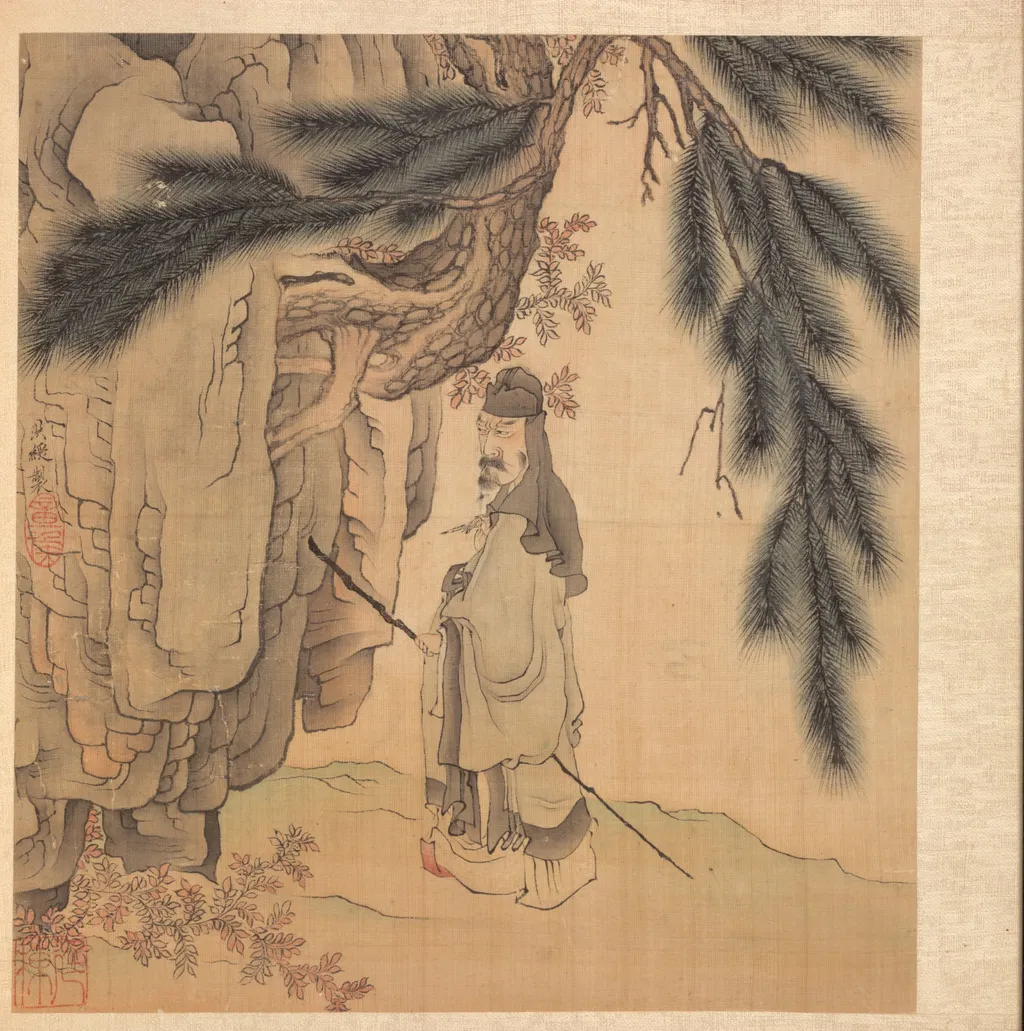
Paintings after Ancient Masters: Scholar with Staff and Brush is an unspecified painting by the Ming dynasty painting artist Chen Hongshou. It dates from 1625 and is held in the collection of the Cleveland Museum of Art.
About this work
You see an old man in robes holding a brush. His face is lined. One hand grips a long staff. The other holds a small ink pot.
Chen Hongshou painted this in the late Ming dynasty. His figures look both grand and a little odd. He liked sharp lines and odd proportions.
His work feels like a quiet joke. Try this next: Chen Hongshou (Chinese, 1598/99–1652).
Overview
The album exemplifies the artist’s mature phase, where his distinctive, highly refined style reaches a concise culmination.
The work belongs to a double album of twenty small paintings by Chen Hongshou, created in the late Ming period. The collection presents a variety of subjects—landscapes, figures, and floral studies—along with a single sheet depicting a woman, a motif rare in his later output. The album exemplifies the artist’s mature phase, where his distinctive, highly refined style reaches a concise culmination.
Subject & Meaning
The central image portrays an elderly scholar in traditional robes, his lined face conveying age and contemplation. He grips a long staff in one hand and holds a modest ink pot in the other, while a brush rests nearby, symbolizing his literary vocation. The composition subtly evokes the constrained existence of Ming loyalist officials, whose loss of status is hinted at through the figure’s modest, almost restrained demeanor.
Technique & Style
Chen employs sharp, precise lines and exaggerated proportions, giving the figures a slightly uncanny presence. The miniature scale of the scenes mirrors the aesthetic of Chinese scholar gardens and carefully selected table rocks, inviting viewers to contemplate a world reduced in size yet rich in detail. This archaic, hyper‑refined approach avoids sentimentality, instead offering a restrained, almost humorous visual tone.
History & Provenance
Painted between 1598/99 and 1652, the album reflects Chen Hongshou’s late career, a period marked by his loyalty to the fallen Ming dynasty. The work remained within scholarly circles before entering the museum’s collection, where it now serves as a representative example of his late‑period output and the broader cultural milieu of the era.
Context
The deliberate reduction of scale in Chen’s late works aligns with the psychological state of a disenfranchised scholarly class, expressing their diminished yet contemplative existence. By integrating traditional motifs with a personal, slightly satirical edge, the painting influences subsequent generations of Chinese artists who explore the tension between reverence for antiquity and individual expression.
Artist & collection


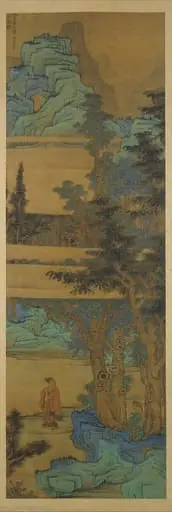 明 陳洪綬 樹下高士圖 軸|Scholar-recluse in blue-green landscape
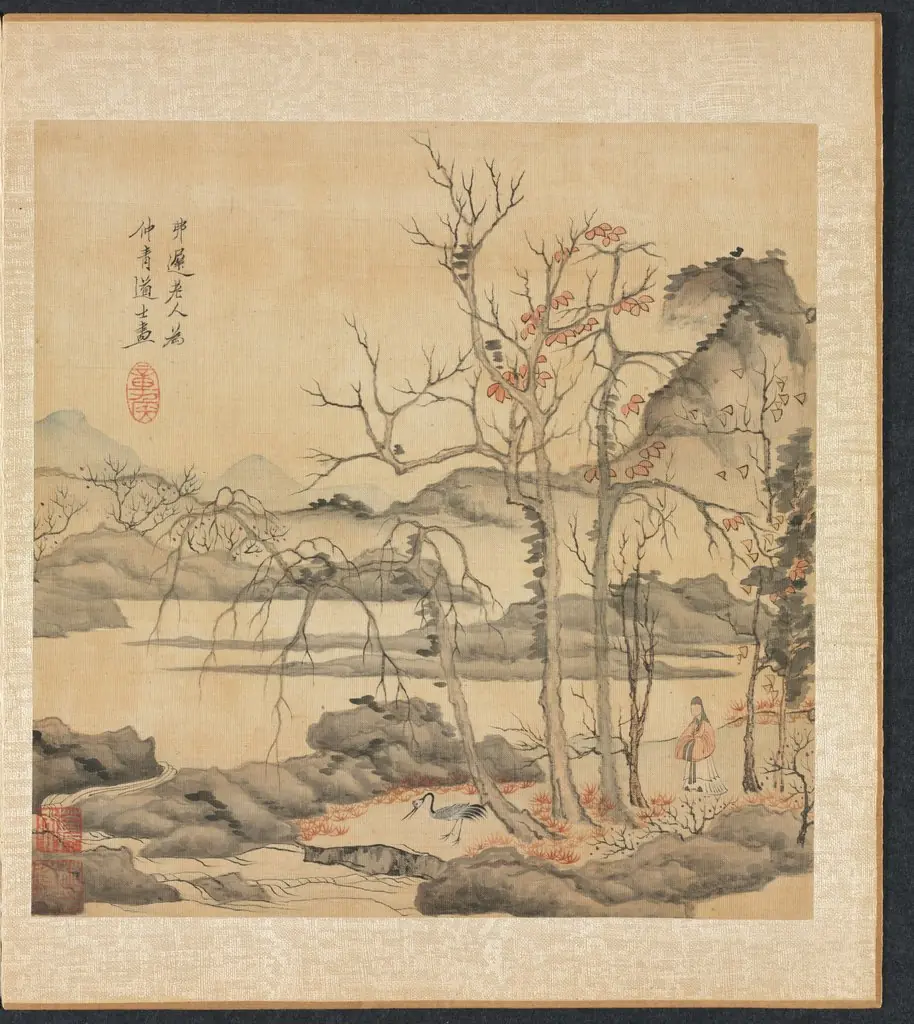 Paintings after Ancient Masters: Daoist and Crane in Autumn Landscape
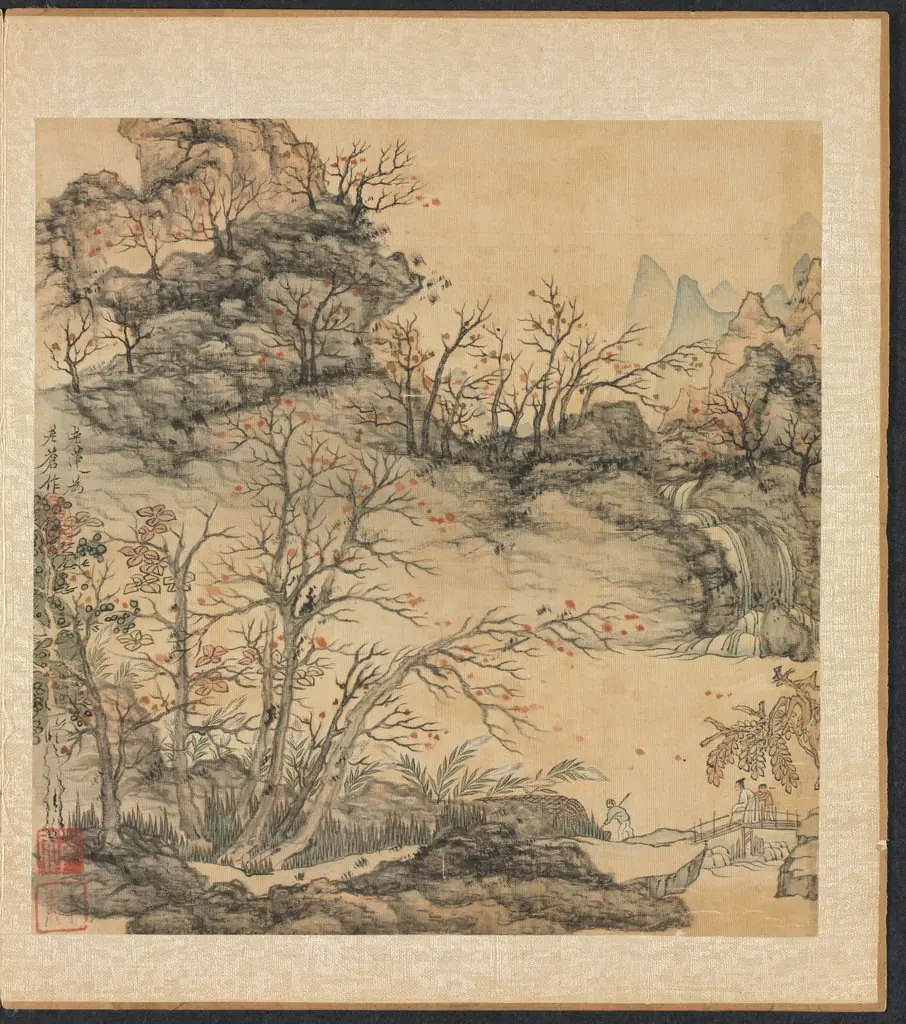 Paintings after Ancient Masters: Autumn Landscape
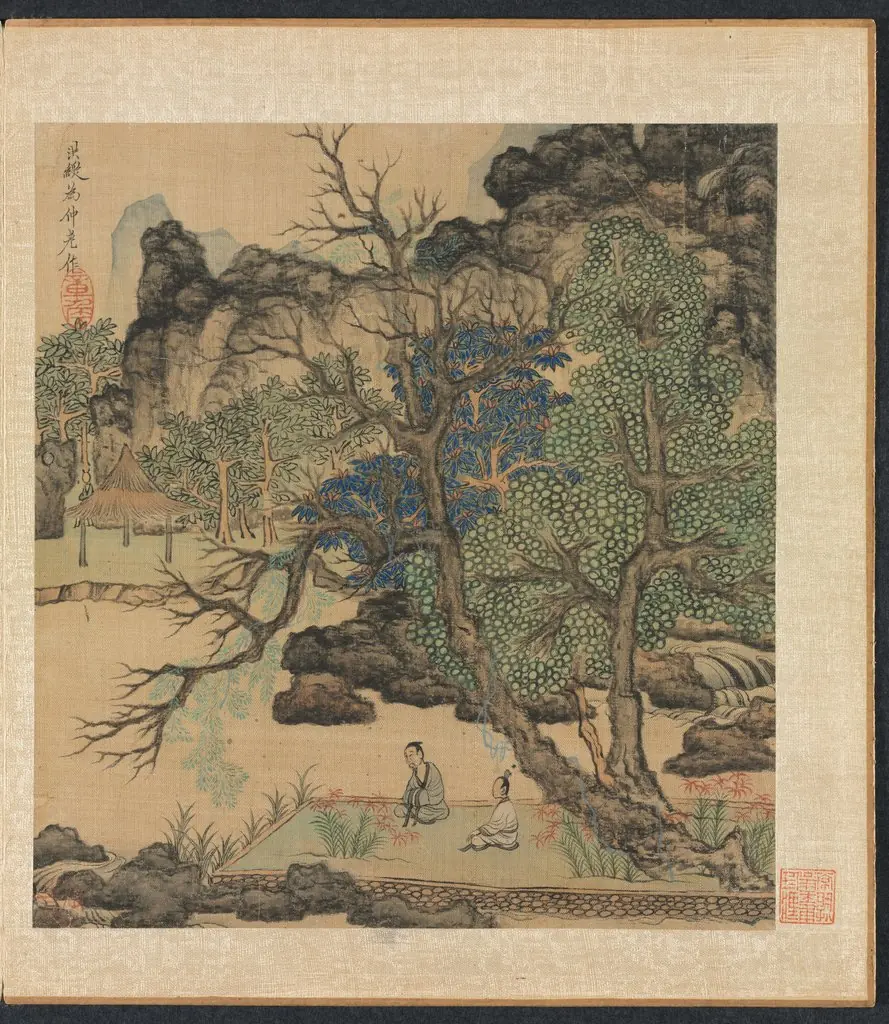 Paintings after Ancient Masters: Scholars in a Garden
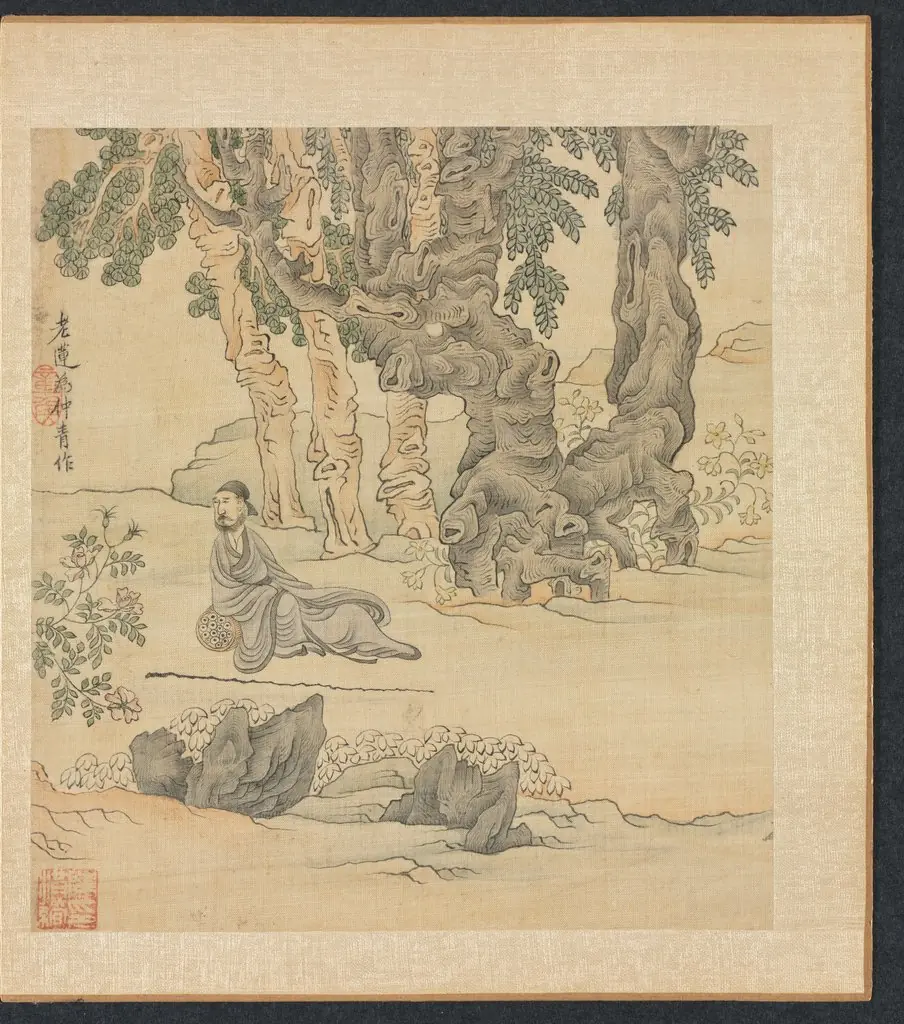 Paintings after Ancient Masters: Portrait of Zhongqing in a Landscape
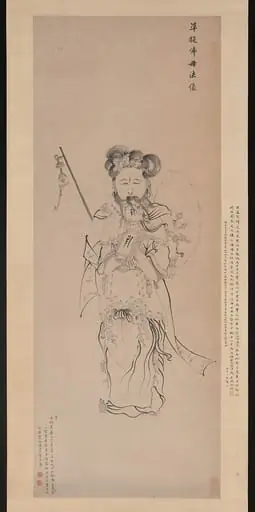 明 陳洪綬 準提佛母法像圖 軸|Bodhisattva Guanyin in the Form of the Buddha Mother
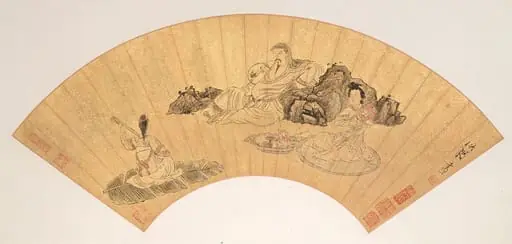 明 陳洪綬 山水花鳥人物圖 扇冊|Landscapes and Flowers
 明 陳洪綬 山水圖 扇|Landscape
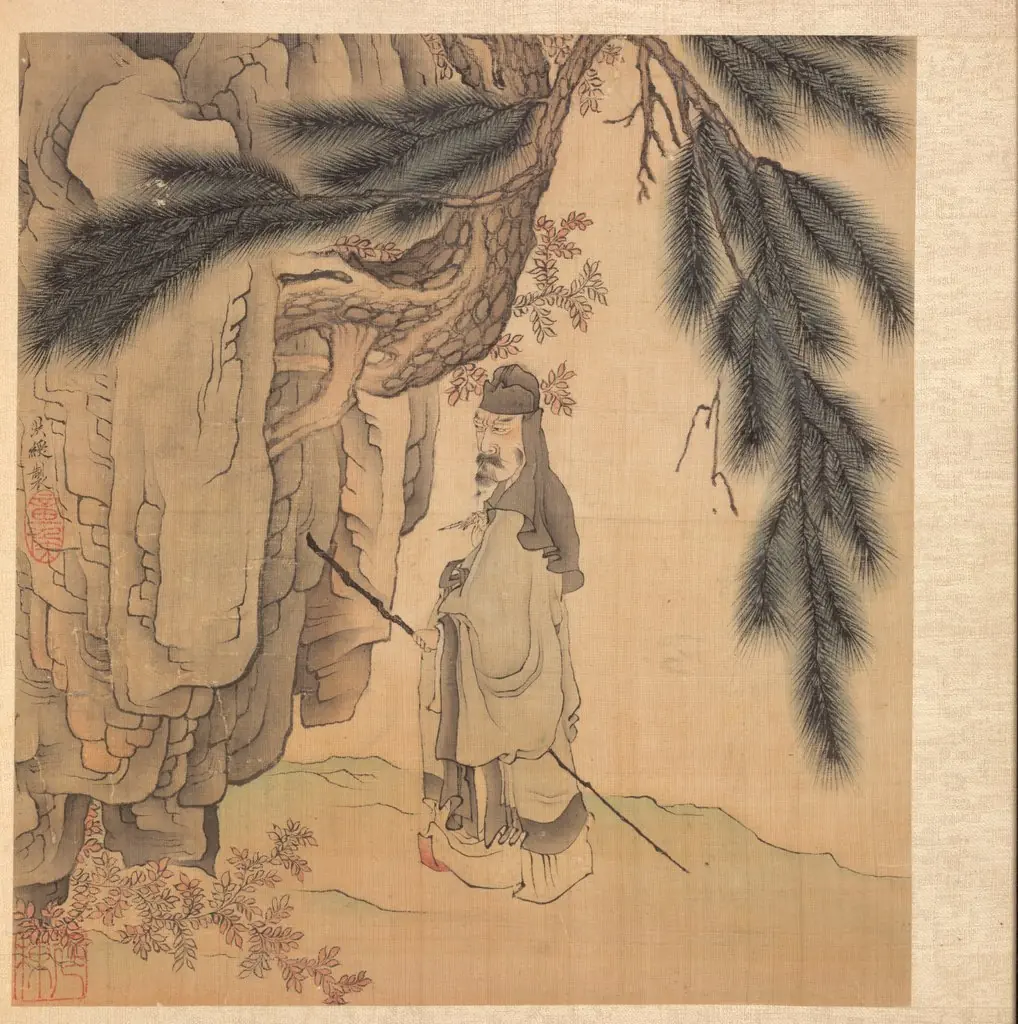 Paintings after Ancient Masters: Scholar with Staff and Brush
 Paintings after Ancient Masters: Scholars in a Garden
 Paintings after Ancient Masters: Portrait of Tao Yuanming
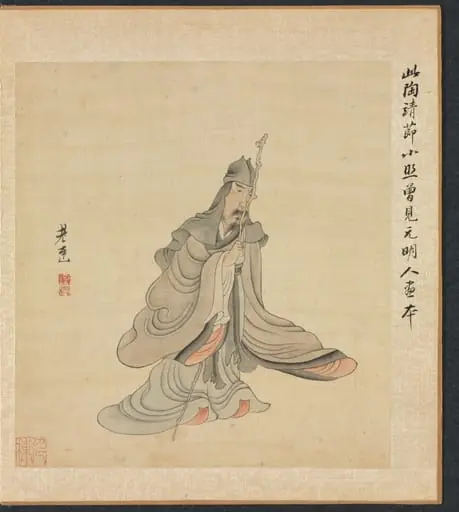 Paintings after Ancient Masters: Portrait of Tao Yuanming
![Paintings after Ancient Masters: A Lohan [after Guanxiu], by Chen Hongshou](https://artifactworldgallery.com/img/chen-hongshou--paintings-after-ancient-masters-a-lohan-after-guanxiu--92196fae80c7e0a7-w320.webp) Paintings after Ancient Masters: A Lohan [after Guanxiu]
Paintings after Ancient Masters: A Lohan [after Guanxiu]![Paintings after Ancient Masters: A Lohan [after Guanxiu], by Chen Hongshou](https://artifactworldgallery.com/img/chen-hongshou--paintings-after-ancient-masters-a-lohan-after-guanxiu--74d8f5a3d653f674-w320.webp) Paintings after Ancient Masters: A Lohan [after Guanxiu]
Paintings after Ancient Masters: A Lohan [after Guanxiu]