Artwork
Paintings after Ancient Masters: Portrait of Tao Yuanming
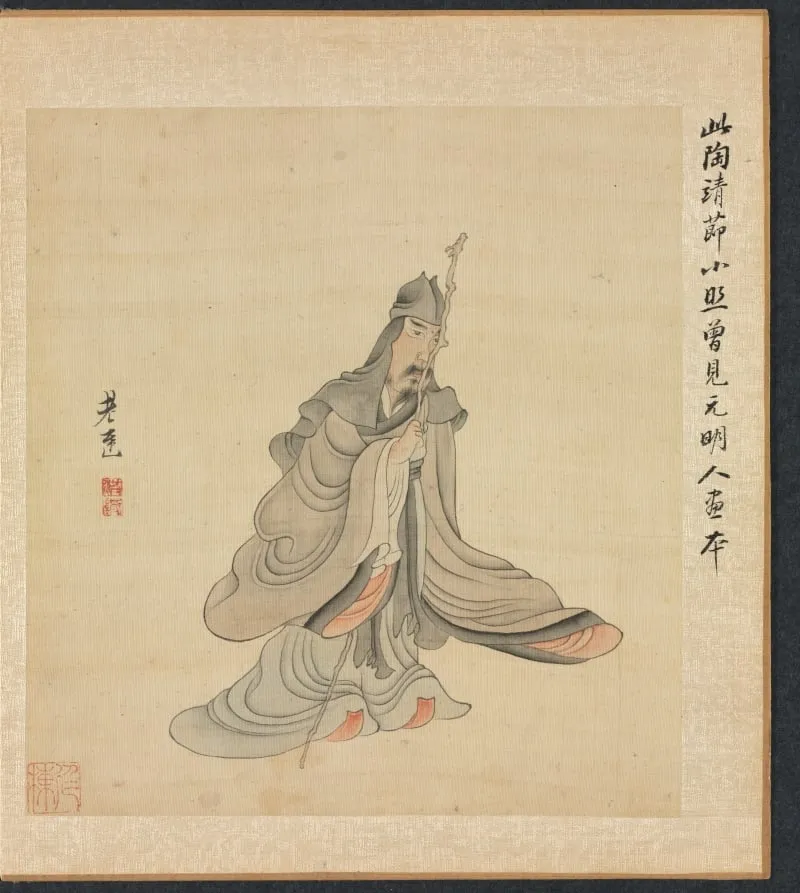
Paintings after Ancient Masters: Portrait of Tao Yuanming is an unspecified painting by the Chinese Orthodox School artist Chen Hongshou. It dates from 1625 and is held in the collection of the Cleveland Museum of Art.
About this work
Chen Hongshou painted him as a quiet rebel, someone who walked away from power to grow flowers and write.
You see an old Chinese poet leaning on a wooden staff, a single chrysanthemum tucked behind his ear.
This isn’t a photo of the real poet—Tao Yuanming lived over a thousand years before the artist. Chen Hongshou painted him as a quiet rebel, someone who walked away from power to grow flowers and write. The artist lived through war and dynasty change, so the calm face feels like a wish.
Look up more paintings of china, ming dynasty (1368–1644) to see how artists pictured their heroes.
Overview
The work depicts the celebrated Chinese poet Tao Yuanming, shown leaning on a wooden staff with a solitary chrysanthemum tucked behind his ear. Rendered in an intentionally archaic manner, the painting reflects a deliberate evocation of an earlier era. Though the poet lived in the fourth to fifth centuries, the image was created by the later artist Chen Hongshou, who lived during the mid‑seventeenth century.
Subject & Meaning
Tao Yuanming is portrayed as a contemplative recluse who abandoned official duties amid political unrest to return to his rural home near Mount Lu. The inclusion of the chrysanthemum, a flower he cultivated, underscores his affinity for simple, natural pleasures and his resilience despite physical infirmity, symbolized by his reliance on a staff or basket for mobility.
Technique & Style
Chen Hongshou employs a deliberately archaic visual language, echoing earlier painting conventions to align the poet with a timeless ideal. The composition is restrained, with muted brushwork and a limited palette that highlights the solitary figure and the delicate flower. The artist’s handling of line and texture conveys both the poet’s frailty and his inner calm.
Context
Created around the tumultuous period of the Ming‑Qing transition (circa 1644), the painting mirrors Chen’s own experience of war and regime change. By selecting a figure who withdrew from political chaos a millennium earlier, Chen subtly comments on the virtues of personal integrity and withdrawal from power during his own era of upheaval.
History & Provenance
The painting originates from Zhejiang province, where Chen Hongshou was active. It has been preserved as part of collections that document Ming and early Qing artistic responses to historical disruption, illustrating how later generations invoked classical scholars to articulate contemporary concerns.
Artist & collection


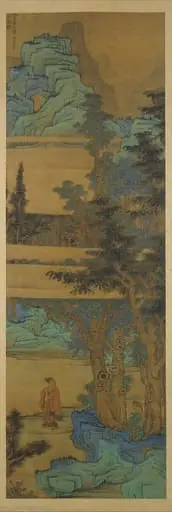 明 陳洪綬 樹下高士圖 軸|Scholar-recluse in blue-green landscape
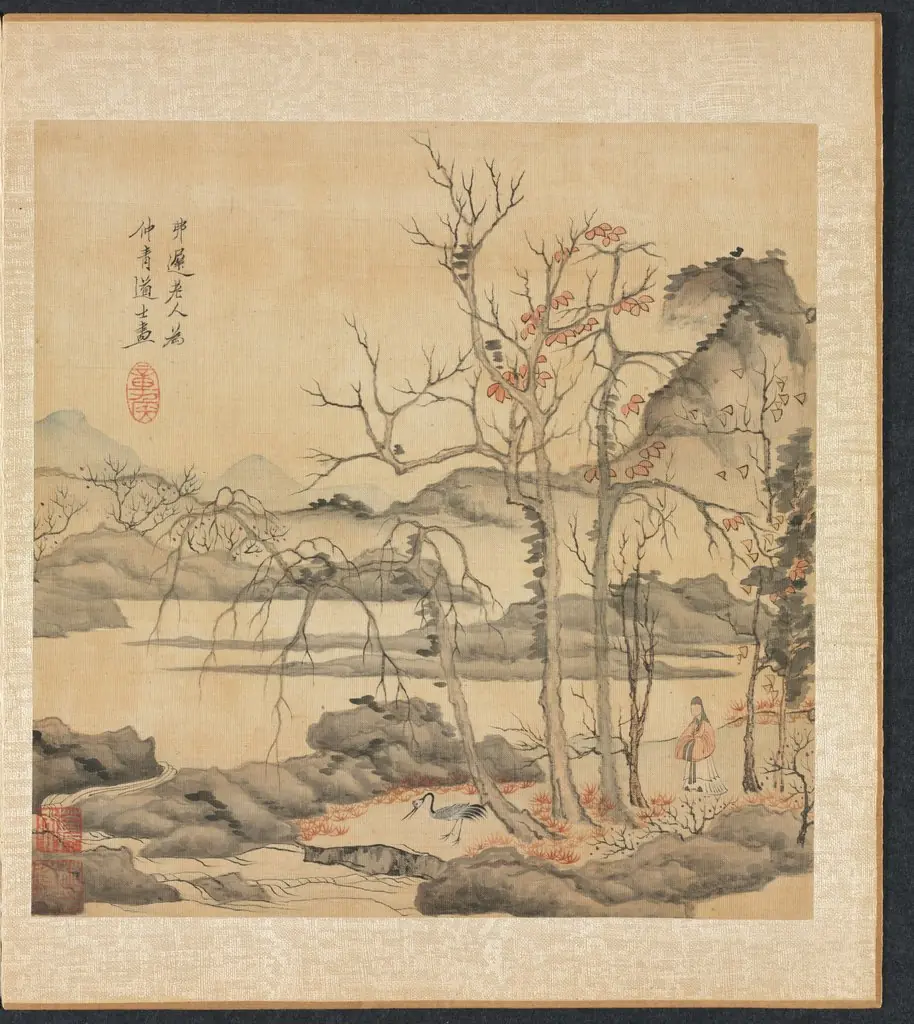 Paintings after Ancient Masters: Daoist and Crane in Autumn Landscape
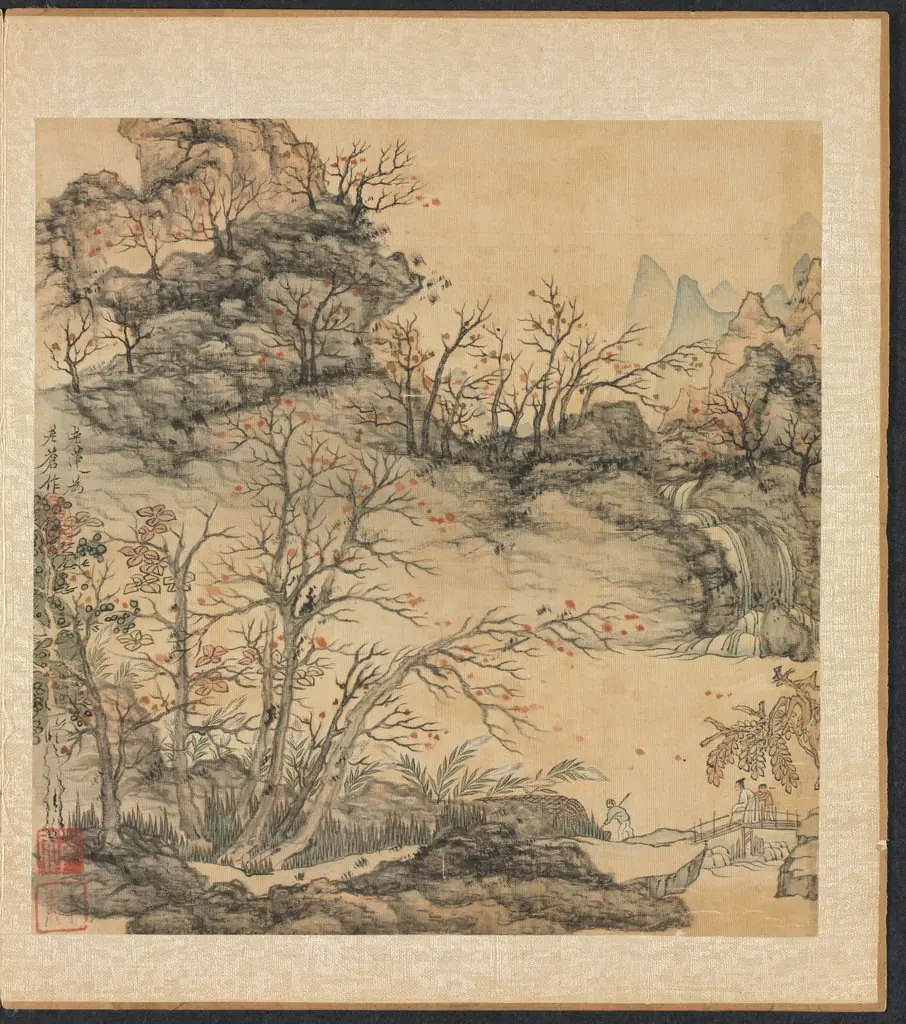 Paintings after Ancient Masters: Autumn Landscape
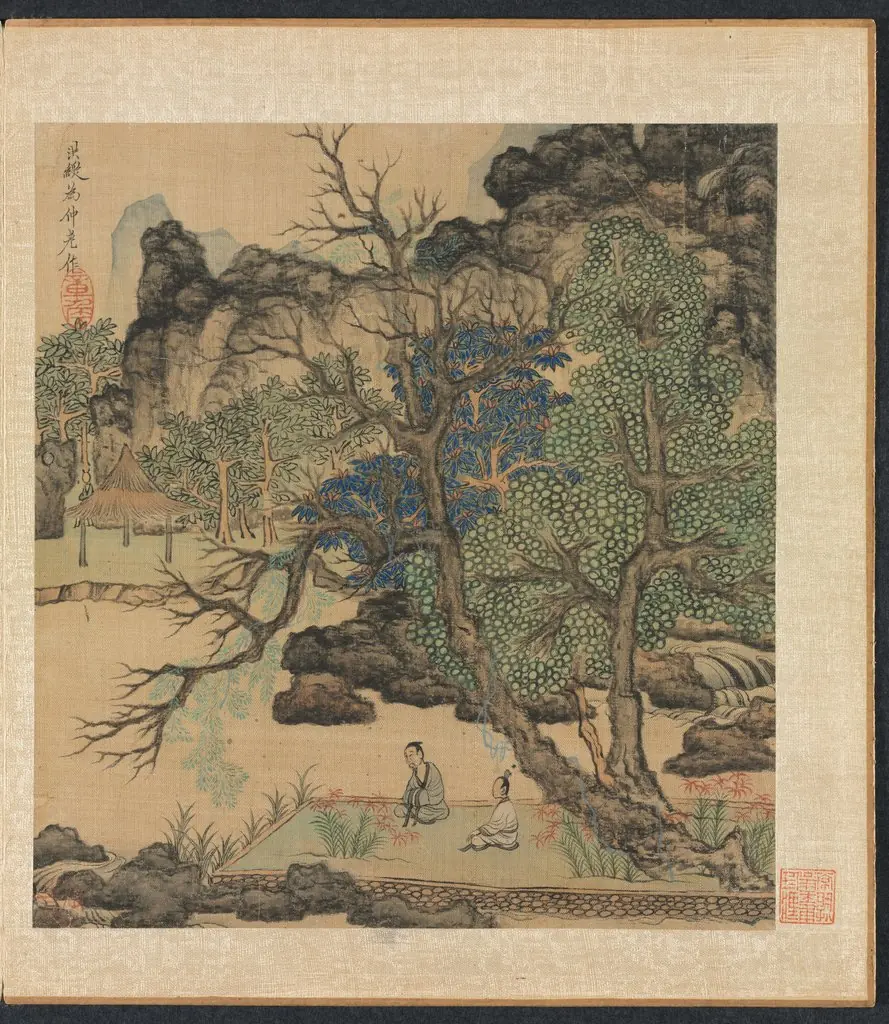 Paintings after Ancient Masters: Scholars in a Garden
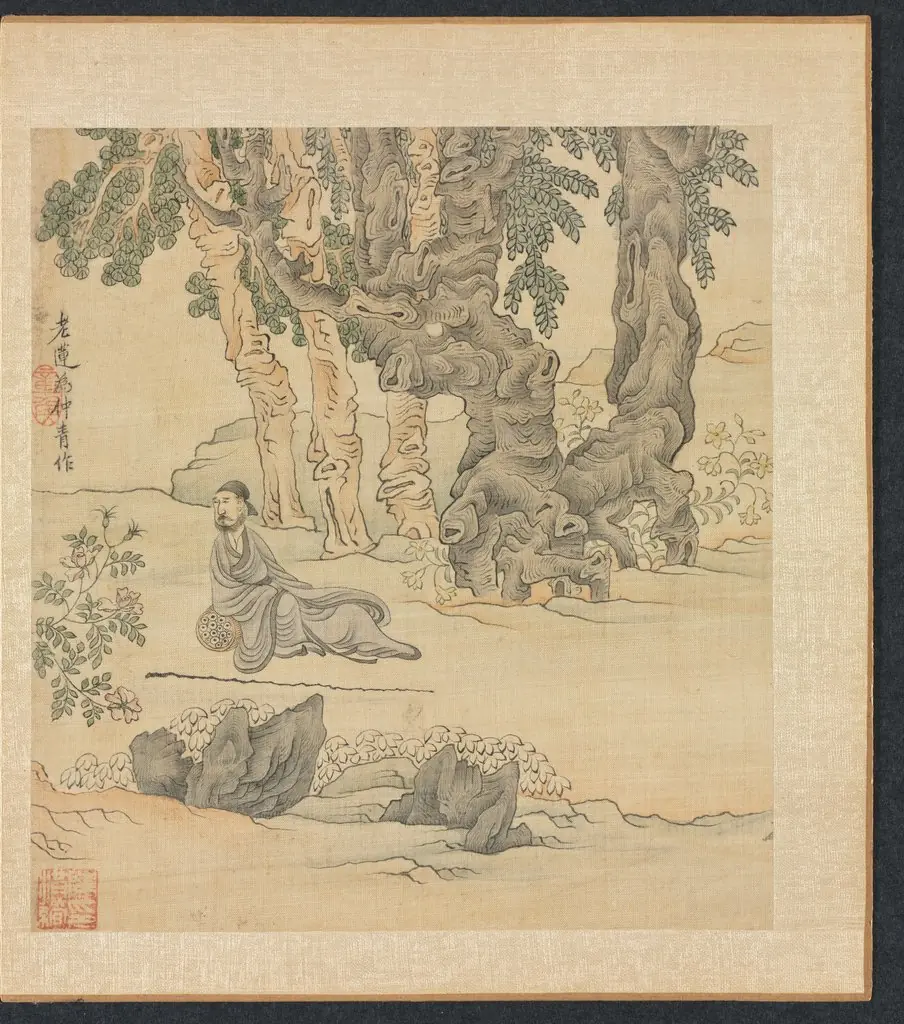 Paintings after Ancient Masters: Portrait of Zhongqing in a Landscape
 明 陳洪綬 準提佛母法像圖 軸|Bodhisattva Guanyin in the Form of the Buddha Mother
 明 陳洪綬 山水花鳥人物圖 扇冊|Landscapes and Flowers
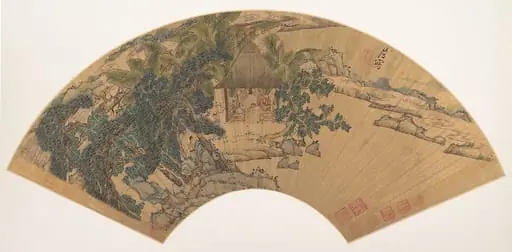 明 陳洪綬 山水圖 扇|Landscape
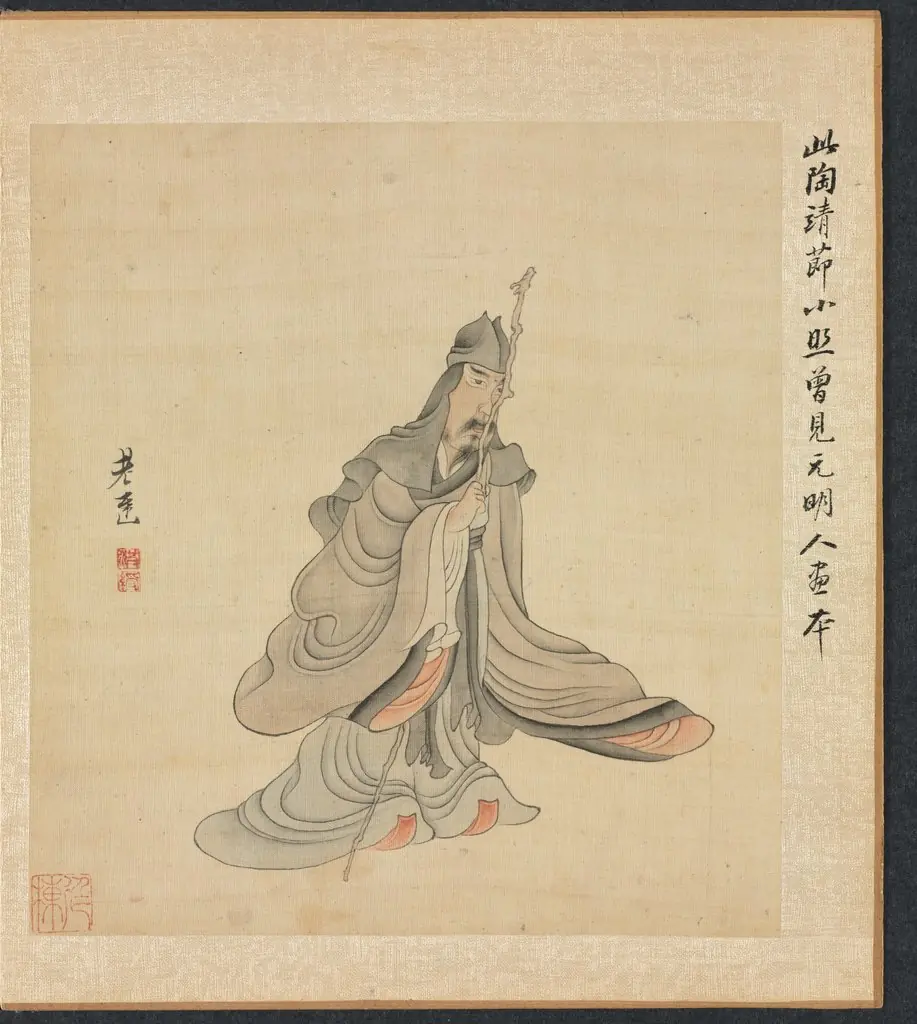 Paintings after Ancient Masters: Portrait of Tao Yuanming
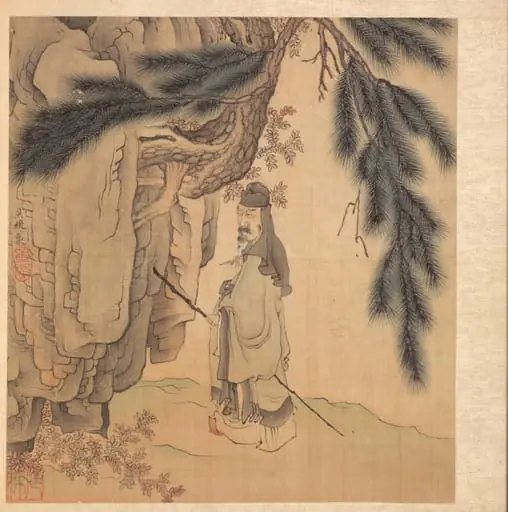 Paintings after Ancient Masters: Scholar with Staff and Brush
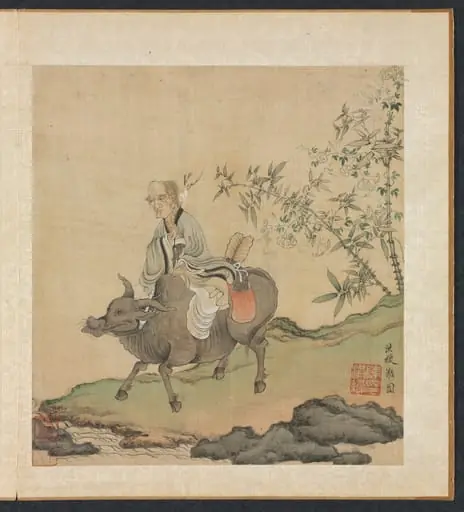 Paintings after Ancient Masters: Laozi Riding an Ox
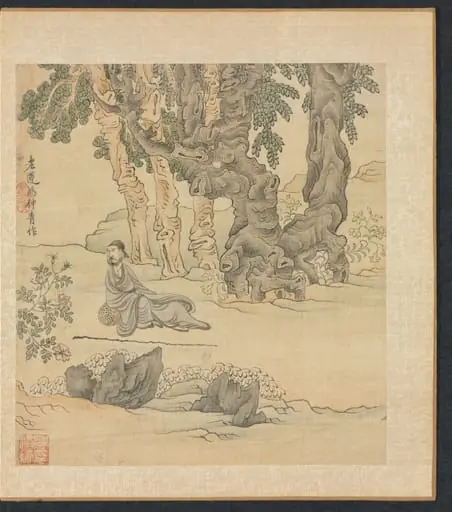 Paintings after Ancient Masters: Portrait of Zhongqing in a Landscape
![Paintings after Ancient Masters: A Lohan [after Guanxiu], by Chen Hongshou](https://artifactworldgallery.com/img/chen-hongshou--paintings-after-ancient-masters-a-lohan-after-guanxiu--92196fae80c7e0a7-w320.webp) Paintings after Ancient Masters: A Lohan [after Guanxiu]
Paintings after Ancient Masters: A Lohan [after Guanxiu]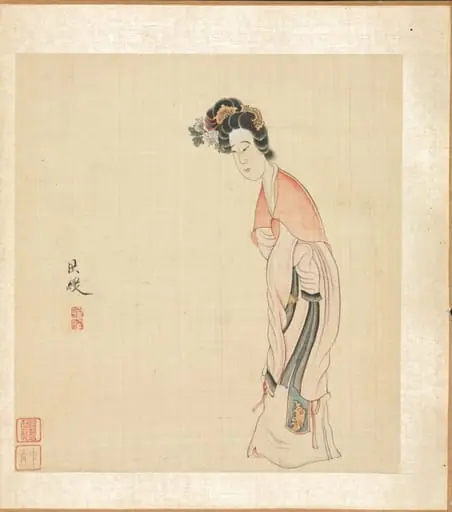 Paintings after Ancient Masters: A Lady
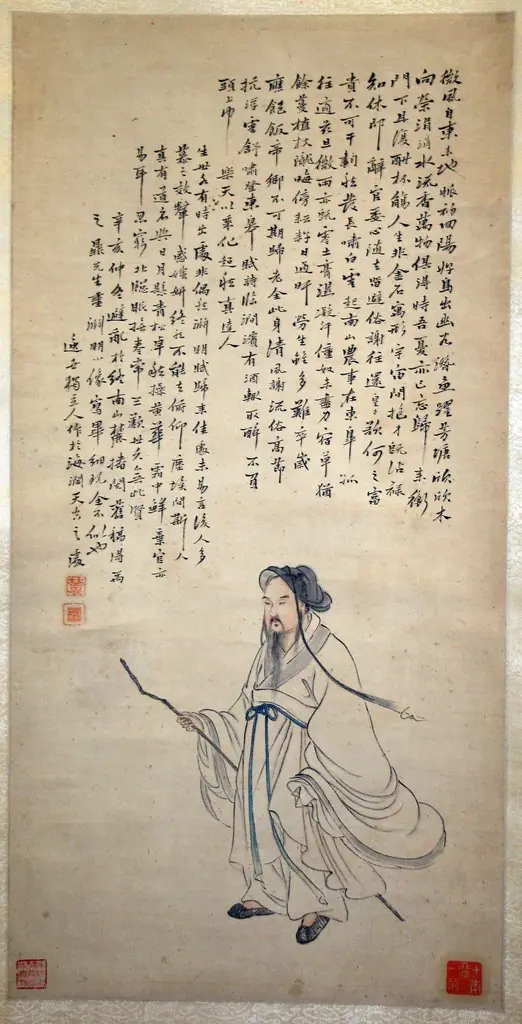 Portrait of Tao Yuanming