Artwork
A dilapidated Indian village dwelling
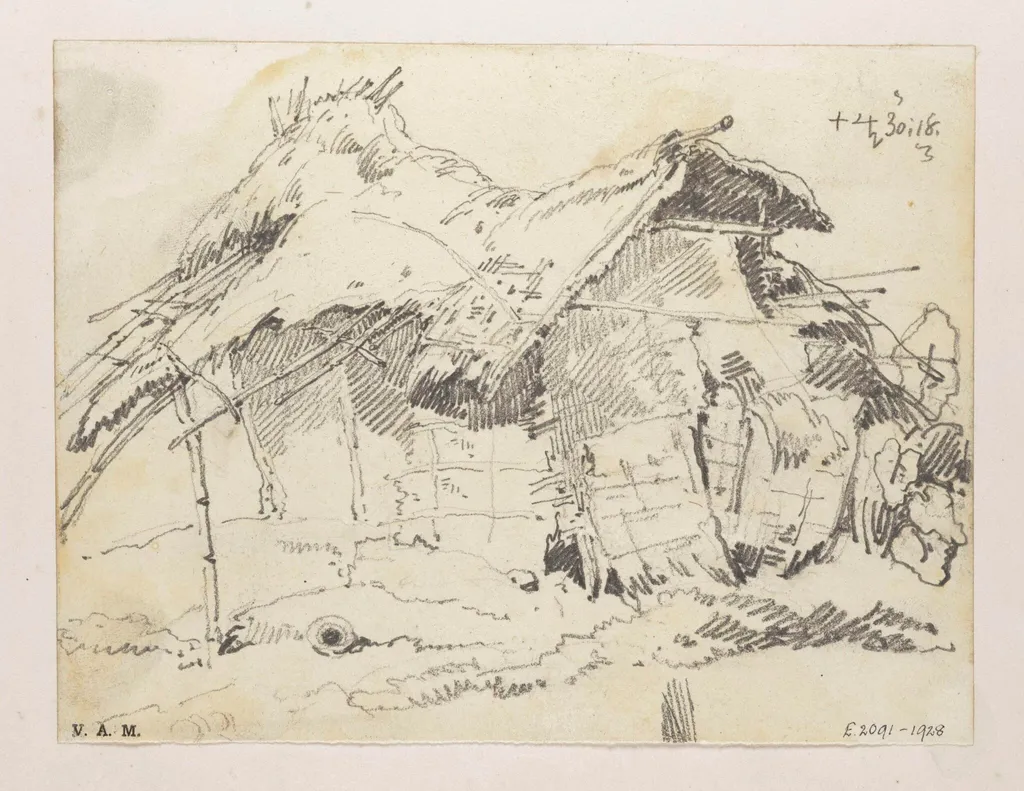
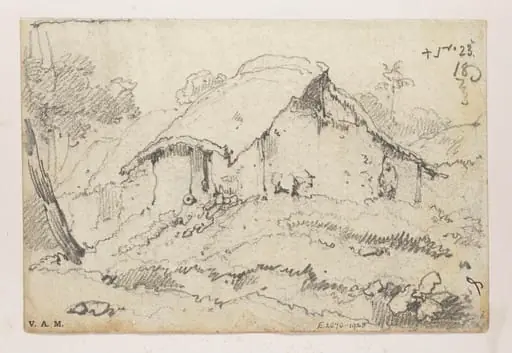
A dilapidated Indian village dwelling is a drawing by the Romanticist artist George Chinnery. It dates from 20 and is held in the collection of the Victoria and Albert Museum. A detailed drawing depicts a deteriorated village dwelling constructed from traditional Indian materials: bamboo, mud, and thatch.
About this work
Overview
A detailed drawing depicts a deteriorated village dwelling constructed from traditional Indian materials: bamboo, mud, and thatch. The structure appears on the verge of collapse.
Subject & Meaning
The drawing offers a glimpse into everyday rural life in India, highlighting the humble, organic architecture of a village home. The emphasis on decay may underscore the transience or hardships of village existence.
Technique & Style
The artist employed cross-hatching, a technique involving closely drawn parallel lines and shading, to achieve high detail and texture, particularly in rendering the thatch roof and mud walls.
Context
The work reflects an interest in documenting or romanticizing traditional Indian village life, possibly during a period of change or increased urbanization.
Legacy
While the drawing's impact on broader art movements is unclear, it remains a nuanced record of traditional Indian architecture and rural life, potentially informing later depictions of similar subjects.
Artist & collection

Artist
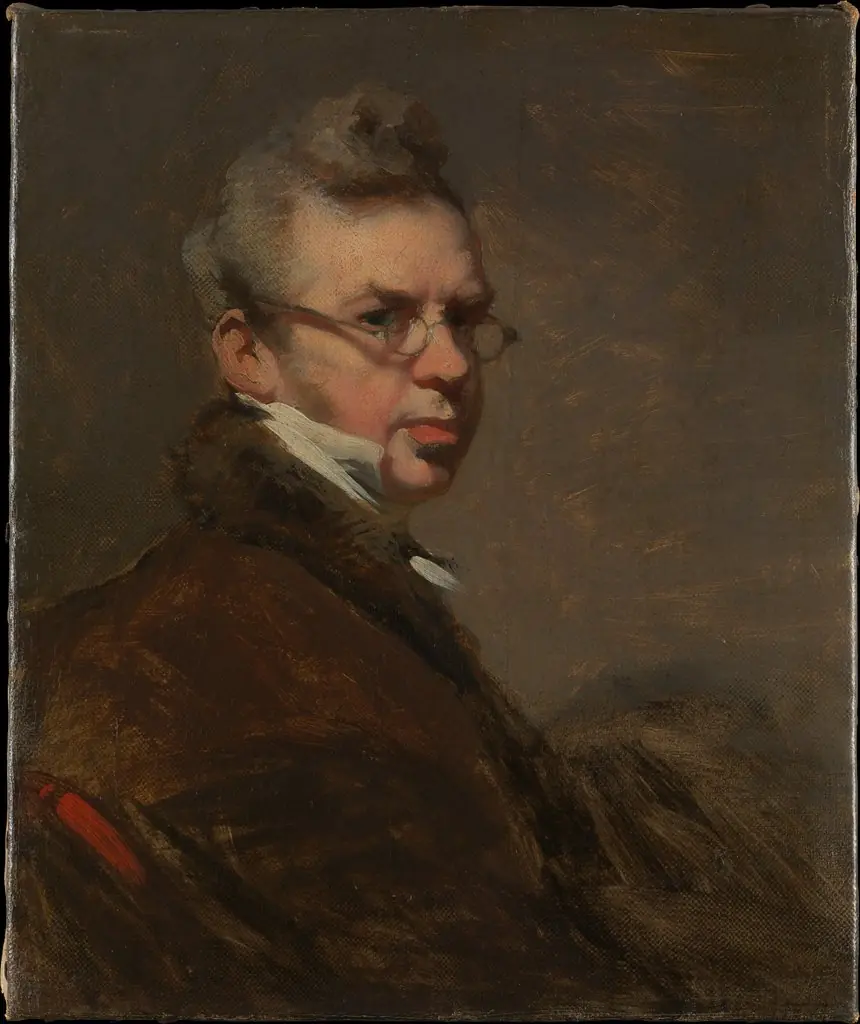
George Chinnery (Chinese: 錢納利; 5 January 1774 – 30 May 1852) was an English painter who spent most of his life in Asia, especially India and southern China.



 A village dwelling, Bengal
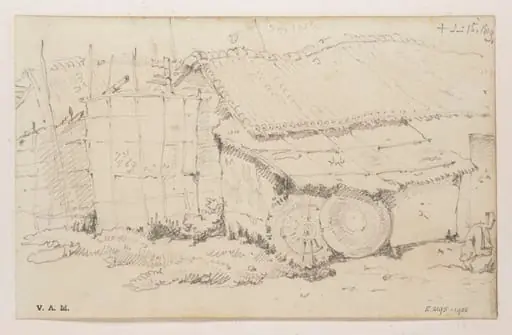 Thatched village dwellings, Bengal
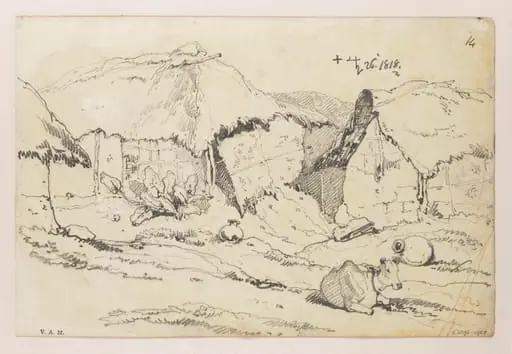 Indian village dwellings with a humped ox
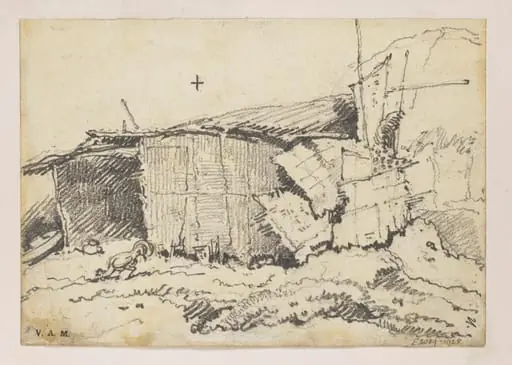 Indian village dwellings
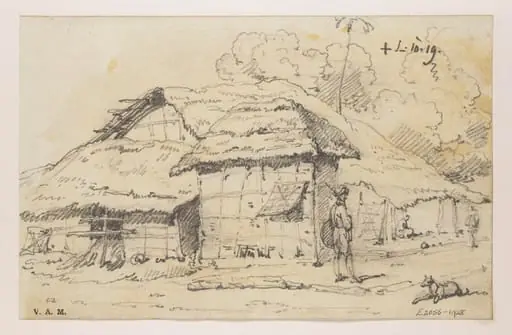 Village huts, Bengal
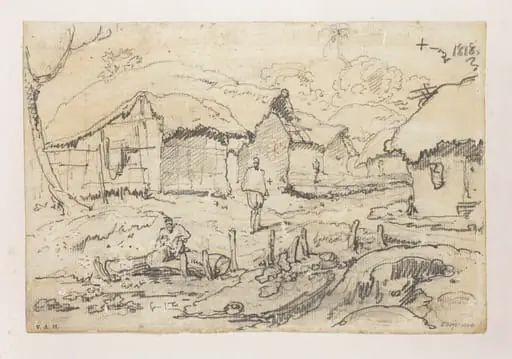 A village street, Bengal
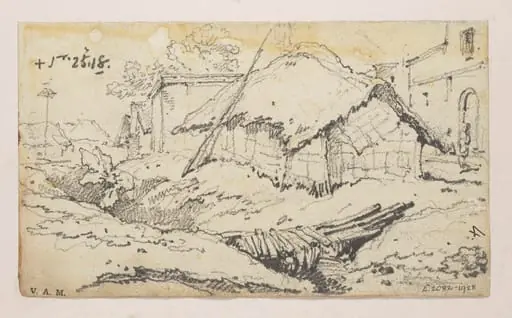 An Indian village
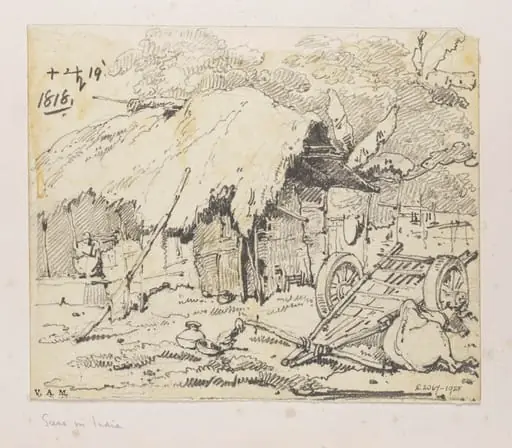 An ox and cart outside a Bengal village dwelling
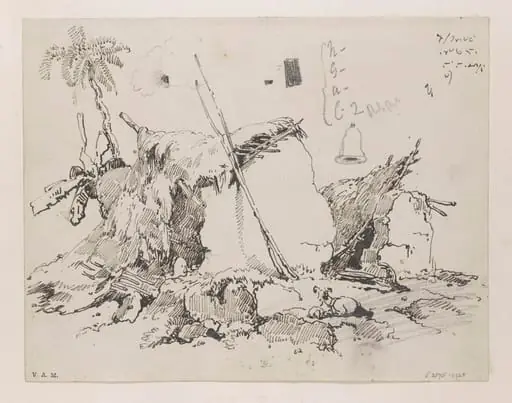 Ruinous village dwellings, Bengal
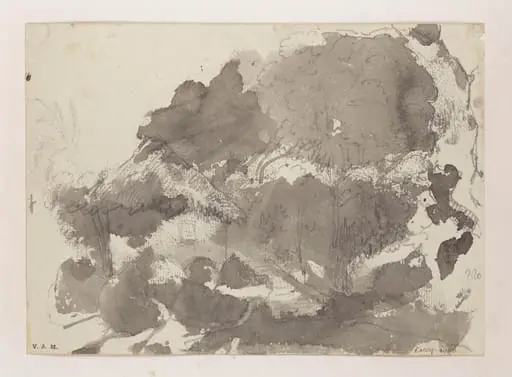 A thatched dwelling amid trees, Bengal
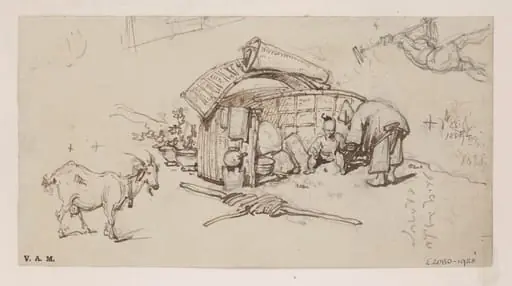 A beached Tanka boat adapted as a dwelling
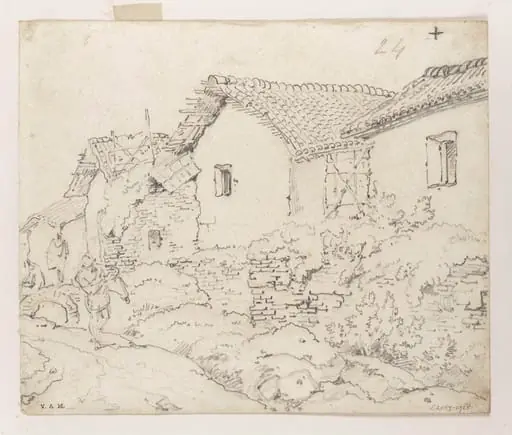 A village street, Bengal