Artwork
Ruinous village dwellings, Bengal
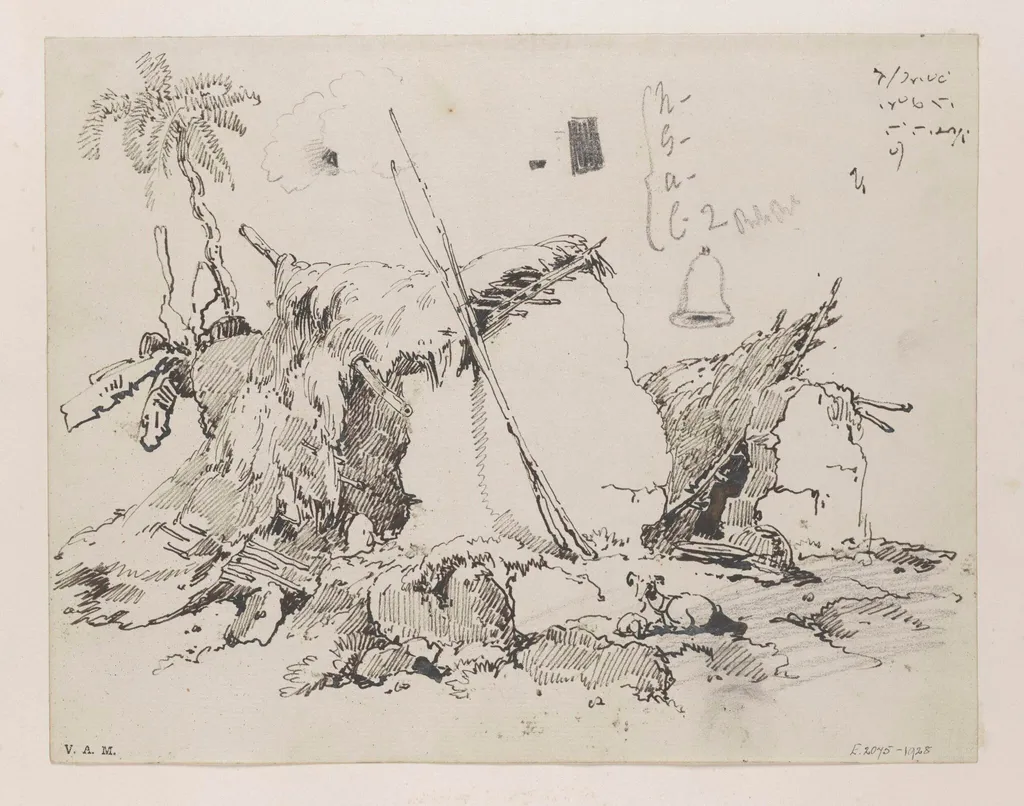
Ruinous village dwellings, Bengal is a drawing by the Romanticist artist George Chinnery. It dates from 16 and is held in the collection of the Victoria and Albert Museum.
About this work
Overview
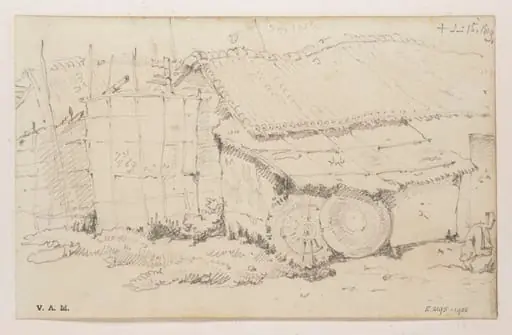
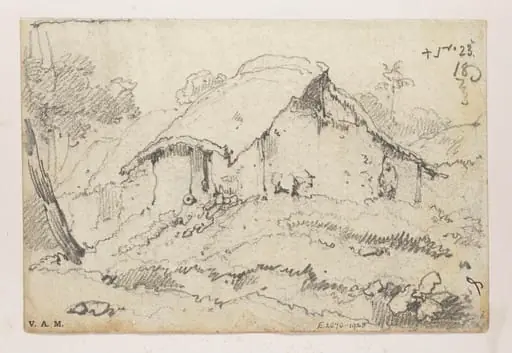
This drawing depicts the remnants of a village dwelling in Bengal, characterized by a largely dislodged thatched roof, surrounded by palm trees and a solitary goat.
Subject & Meaning
The subject is a ruined Bengal village scene, juxtaposing desolation with a hint of ongoing life through the inclusion of a goat, potentially commenting on the coexistence of decay and vitality.
Technique & Style
The drawing employs techniques akin to cross-hatching and stippling, suggesting a methodical approach to achieve detailed shading and textured visual depth.
Context
Created in a style reminiscent of detailed, shading-focused drawing techniques popular in various artistic traditions, the work reflects an interest in capturing everyday, possibly post-colonial or rural, Bengal life.
Legacy
Lacking specific attribution or date, the drawing's legacy is tied to its representation of a moment in Bengal's rural history, offering a glimpse into the region's architectural and environmental past.
Artist & collection
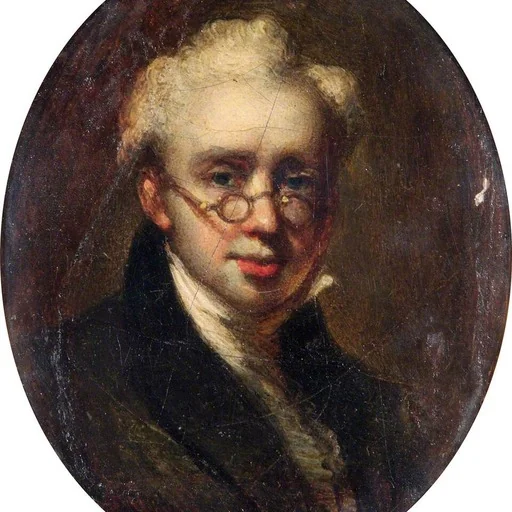
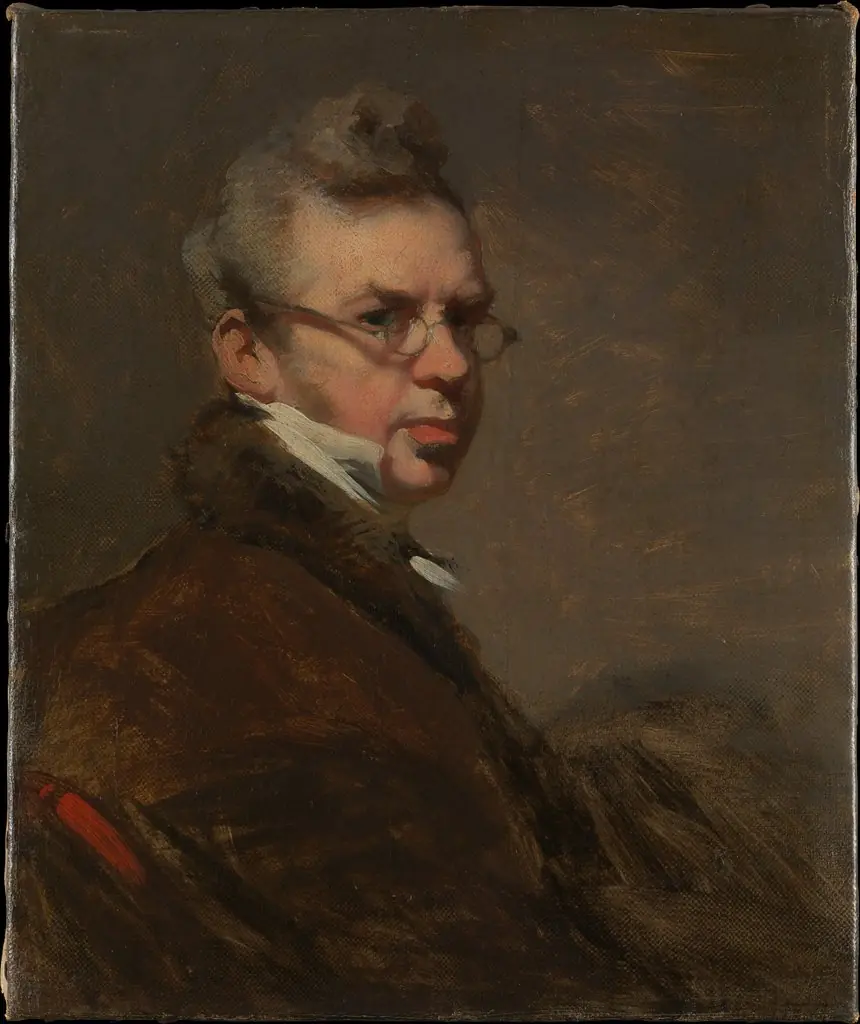
Artist
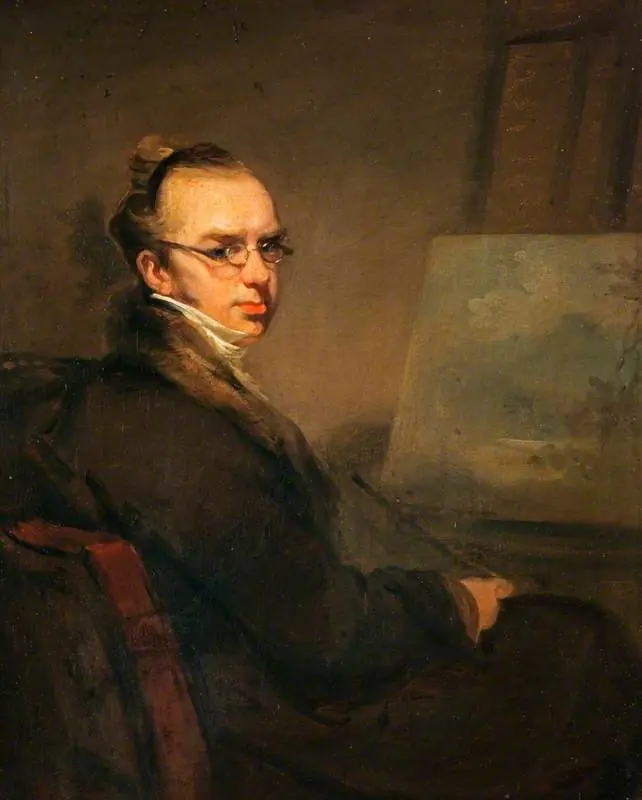
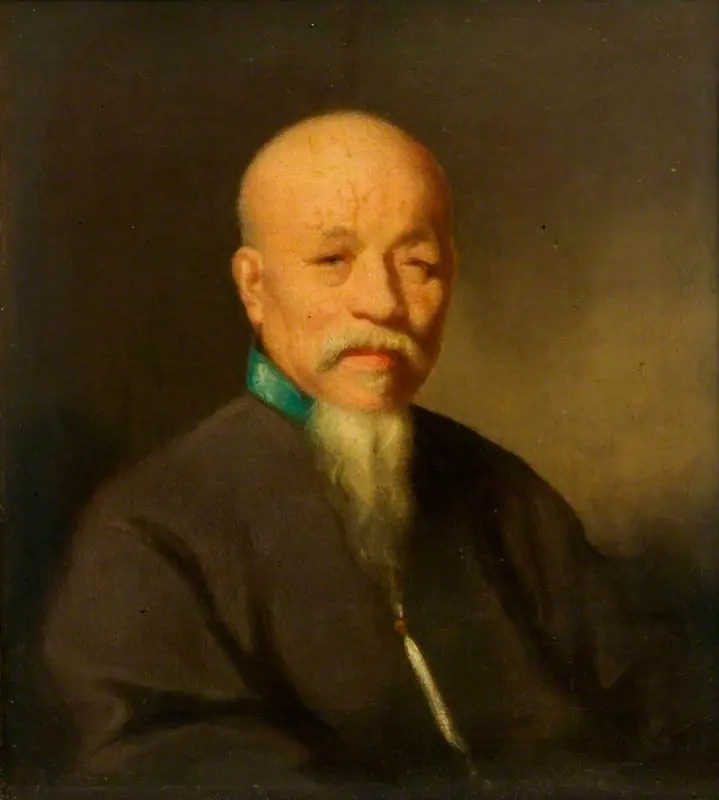
George Chinnery (Chinese: 錢納利; 5 January 1774 – 30 May 1852) was an English painter who spent most of his life in Asia, especially India and southern China.

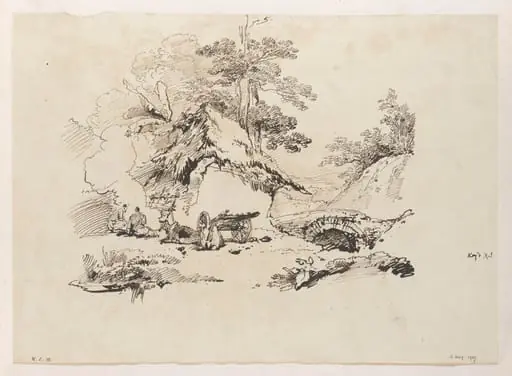 A Bengal landscape with a village dwelling
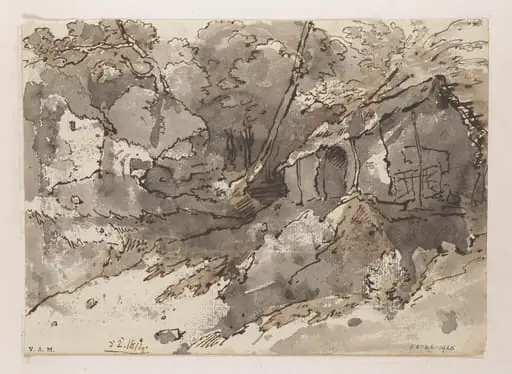 A ramshackle building amid trees and rocks, Bengal
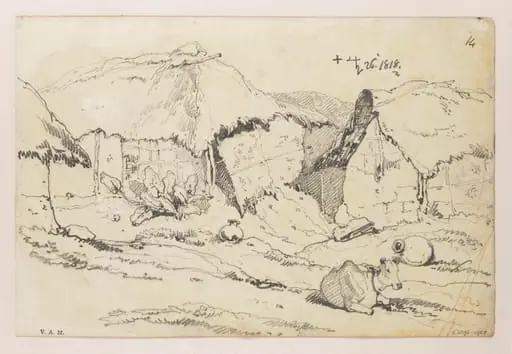 Indian village dwellings with a humped ox
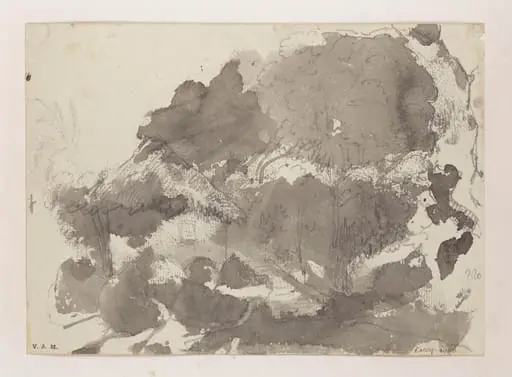 A thatched dwelling amid trees, Bengal
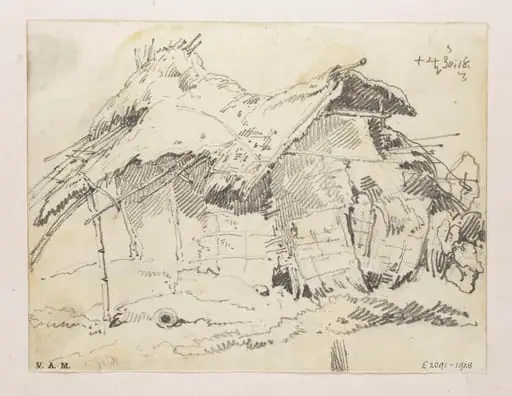 A dilapidated Indian village dwelling
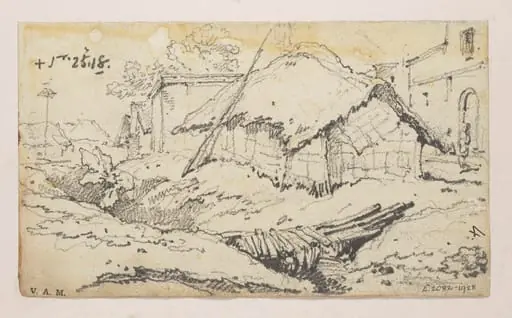 An Indian village
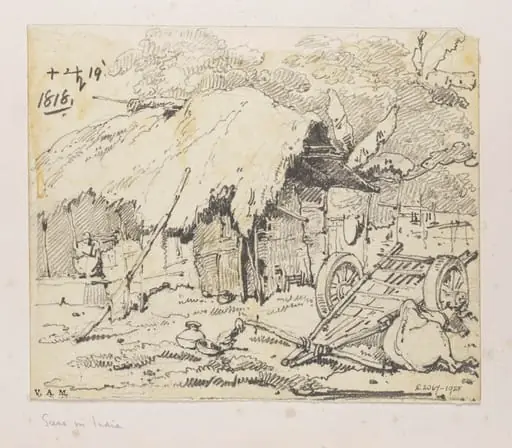 An ox and cart outside a Bengal village dwelling
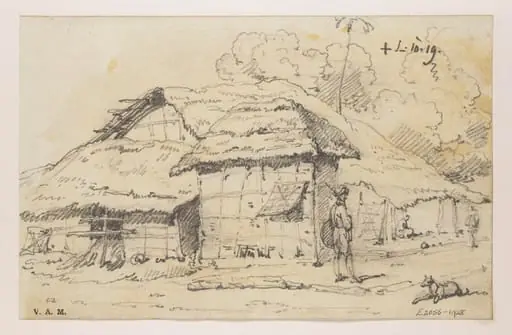 Village huts, Bengal
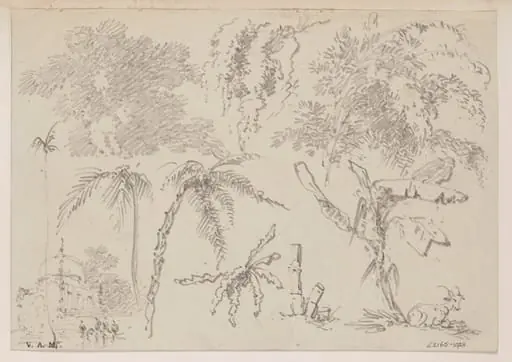 Studies of palms and other foliage, with a domed tomb and a goat
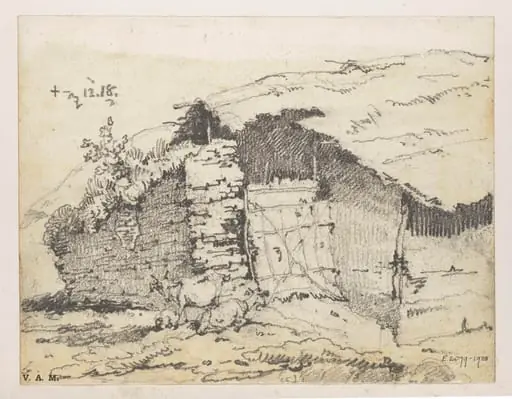 A Bengal village hut
 Thatched village dwellings, Bengal
 A village dwelling, Bengal