Artwork
An Indian village
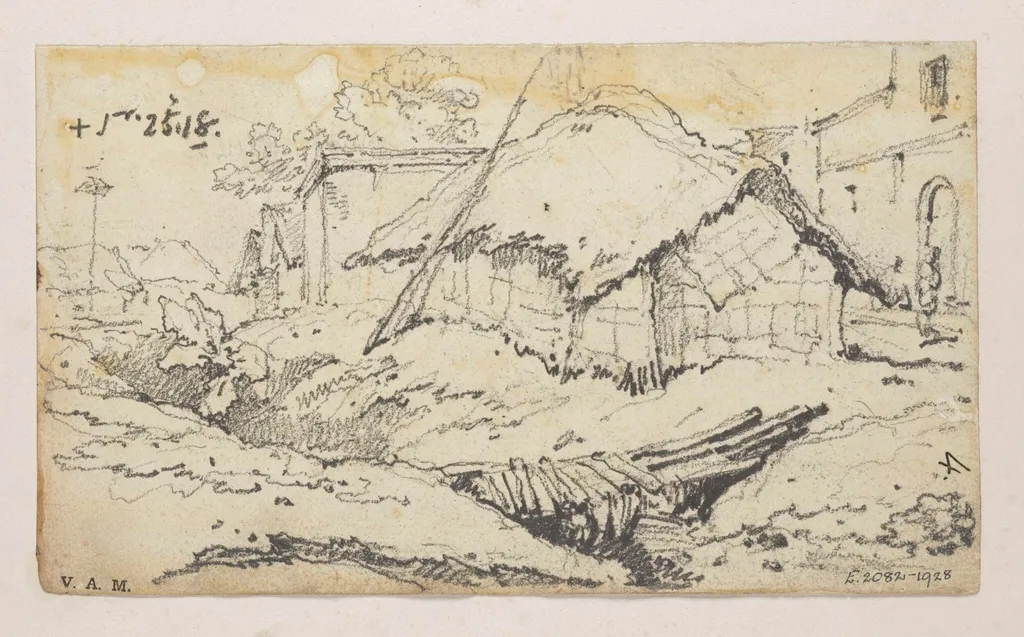
An Indian village is a drawing by the Romanticist artist George Chinnery. It dates from 13 and is held in the collection of the Victoria and Albert Museum.
About this work
Overview
An Indian village scene is depicted in this drawing, featuring a thatched hut in the foreground, with more substantial village buildings in the background, and a log bridge crossing a nearby gully.
Subject & Meaning
The drawing offers a glimpse into rural Indian life, contrasting a simple hut with larger, more substantial buildings, implying varying degrees of prosperity within the village.
Technique & Style
The artist employed cross-hatching, a technique involving closely drawn parallel lines, to achieve depth, texture, and shading in the composition.
Context
While specific contextual details about the village's location or the artist's intent are not provided, the work reflects observational attention to everyday village life and architecture.
Legacy
No specific information is given about the drawing's impact or legacy, though it contributes to a broader body of work documenting Indian village life through art.
Artist & collection
Artist
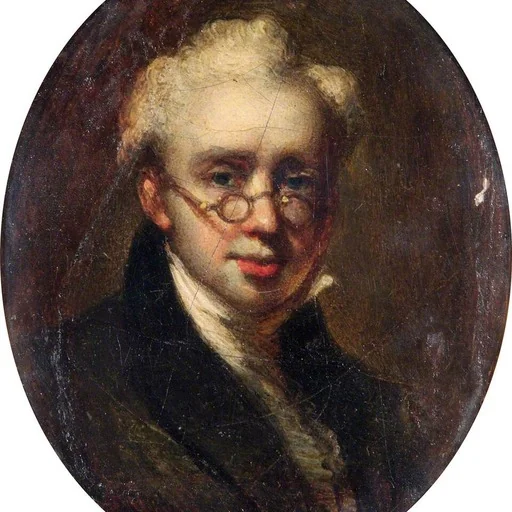
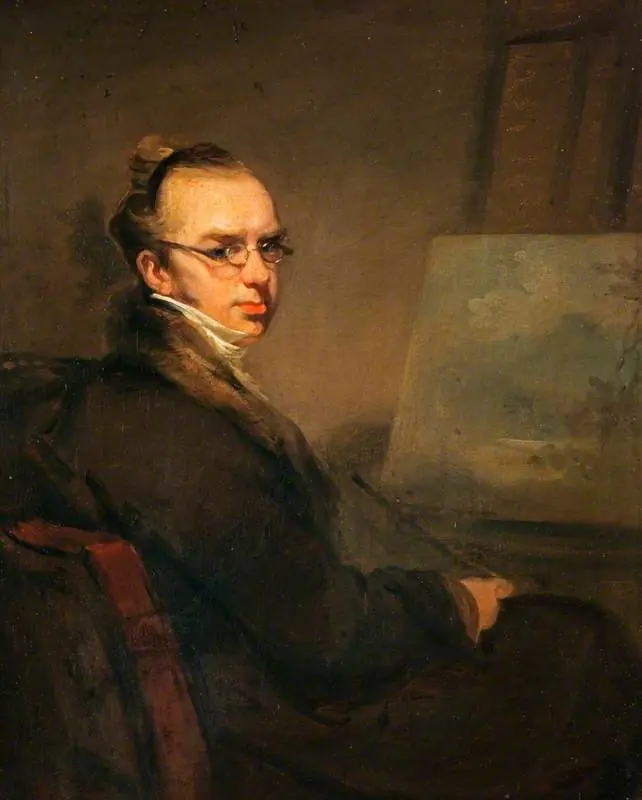
George Chinnery (Chinese: 錢納利; 5 January 1774 – 30 May 1852) was an English painter who spent most of his life in Asia, especially India and southern China.

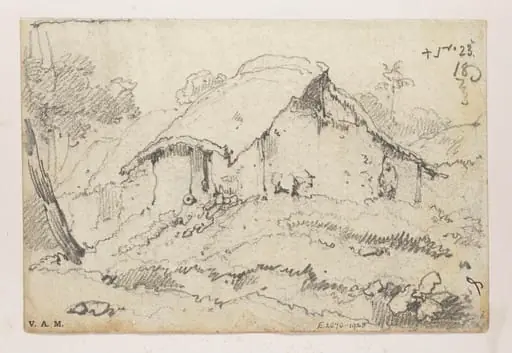 A village dwelling, Bengal
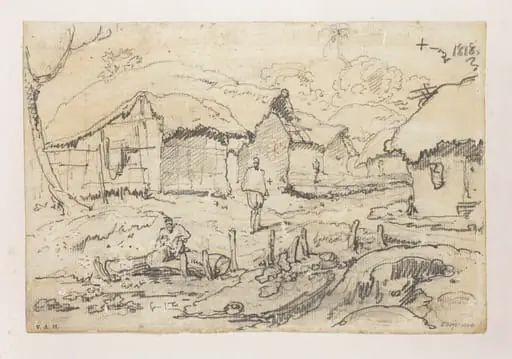 A village street, Bengal
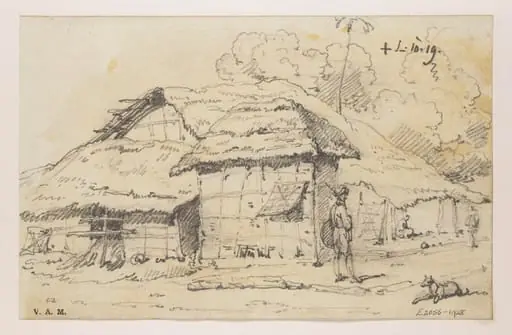 Village huts, Bengal
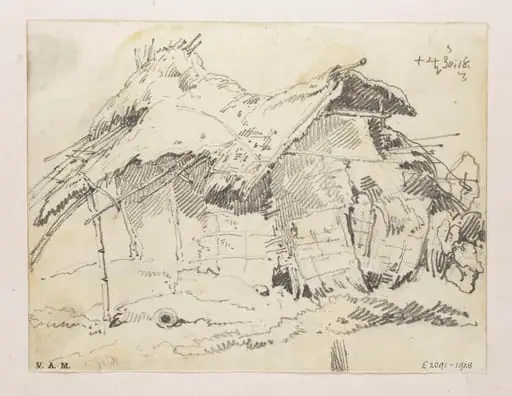 A dilapidated Indian village dwelling
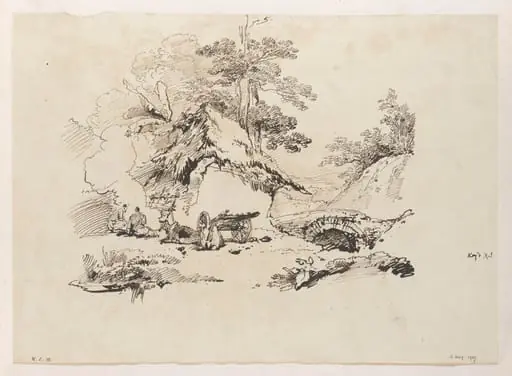 A Bengal landscape with a village dwelling
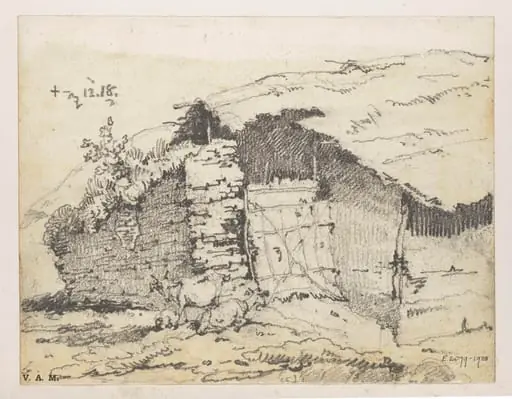 A Bengal village hut
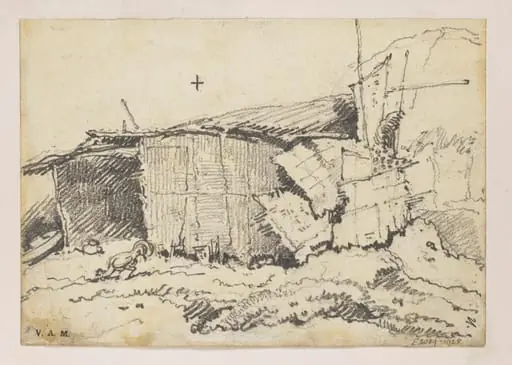 Indian village dwellings
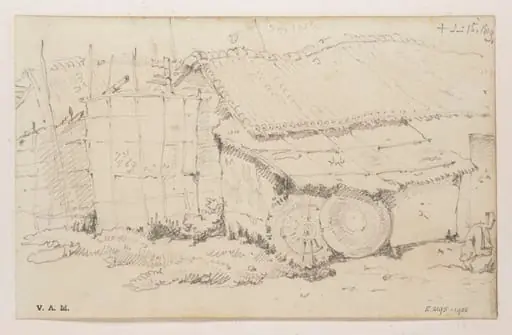 Thatched village dwellings, Bengal
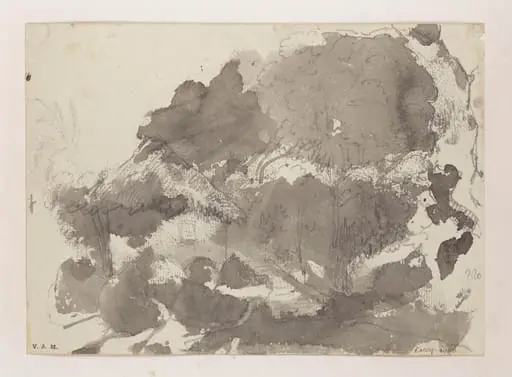 A thatched dwelling amid trees, Bengal
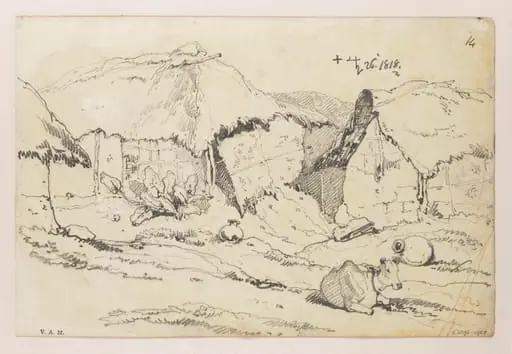 Indian village dwellings with a humped ox
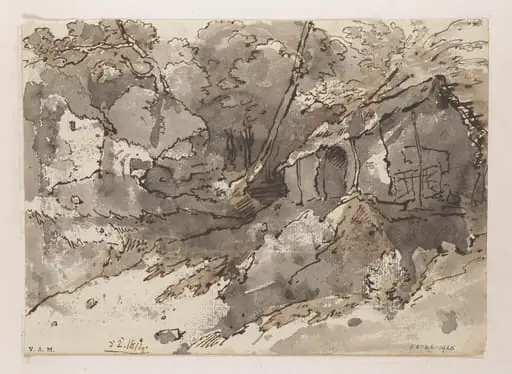 A ramshackle building amid trees and rocks, Bengal
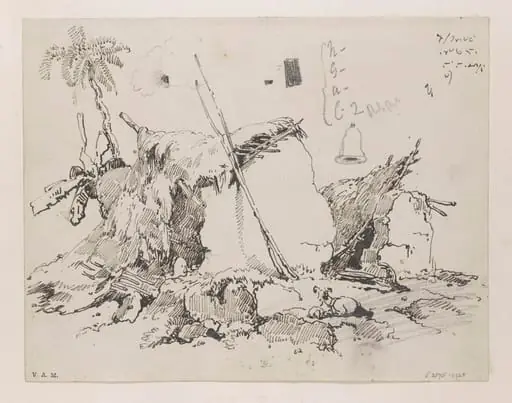 Ruinous village dwellings, Bengal