Artwork
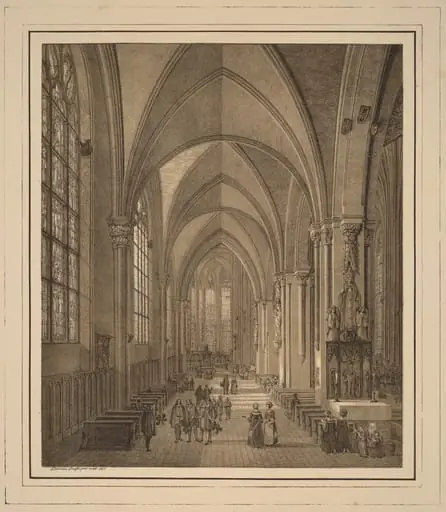
Kircheninneres
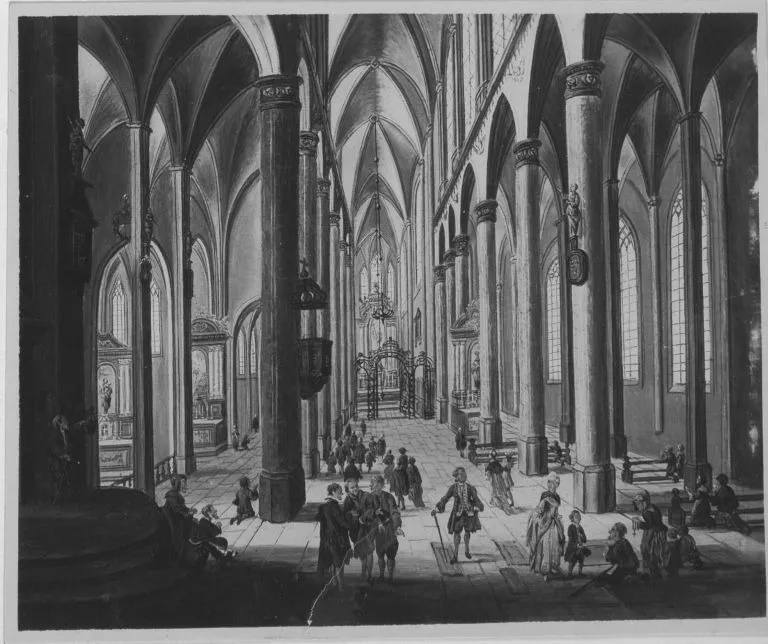
Kircheninneres is an unspecified painting by the Rococo painting artist Christian Stöcklin. It dates from 1768 and is held in the collection of the Bavarian State Painting Collections.
About this work
If you're interested in learning more about this style of painting, you might want to explore the work of Christian Stöcklin, who created this piece in 1768.
This painting depicts the interior of a grand church, with a high, vaulted ceiling and numerous arches. The floor is made of stone tiles, and the walls feature tall windows that allow natural light to enter. In the foreground, people are gathered, some standing and others sitting on benches.
The artist has used a range of colors to create a sense of depth and atmosphere in the scene. The overall effect is one of grandeur and solemnity, capturing the essence of a place of worship.
If you're interested in learning more about this style of painting, you might want to explore the work of Christian Stöcklin, who created this piece in 1768.
Overview
Created in 1768 by the Swiss painter Christian Stöcklin, this oil work portrays the spacious interior of a baroque church. The composition is held in the collection of Munich’s Alte Pinakothek, where it is displayed among other eighteenth‑century European paintings.
Subject & Meaning
The scene captures a liturgical space defined by a soaring vaulted ceiling, a series of arches, and tall windows that admit daylight. Figures are arranged in the foreground, some standing, others seated on benches, suggesting a congregation gathered for worship and emphasizing the solemn atmosphere of the sacred setting.
Technique & Style
Stöcklin employs a restrained palette of muted tones to model architectural depth, while subtle variations of light and shadow convey the volume of the stone floor and walls. The careful rendering of perspective and the delicate handling of atmospheric effects reflect the academic approach to interior genre painting prevalent in mid‑eighteenth‑century Central Europe.
History & Provenance
The painting entered the Alte Pinakothek’s holdings as part of the museum’s acquisition of works representing the Germanic baroque tradition. Its documented provenance traces back to the artist’s workshop in 1768, and it has remained in public collections since the late nineteenth century, providing scholars with a clear example of Stöcklin’s ecclesiastical subjects.
Artist & collection
Artist

 Gothic Church Interior
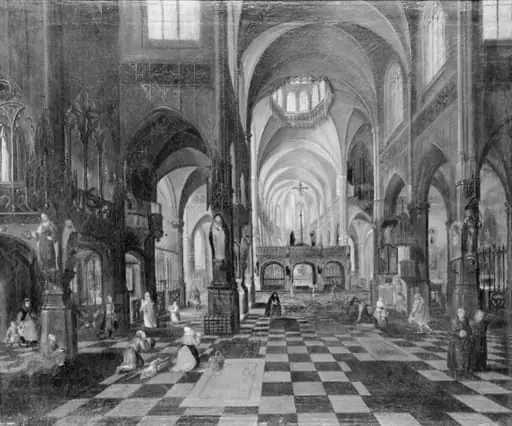 Interior of a Catholic Church
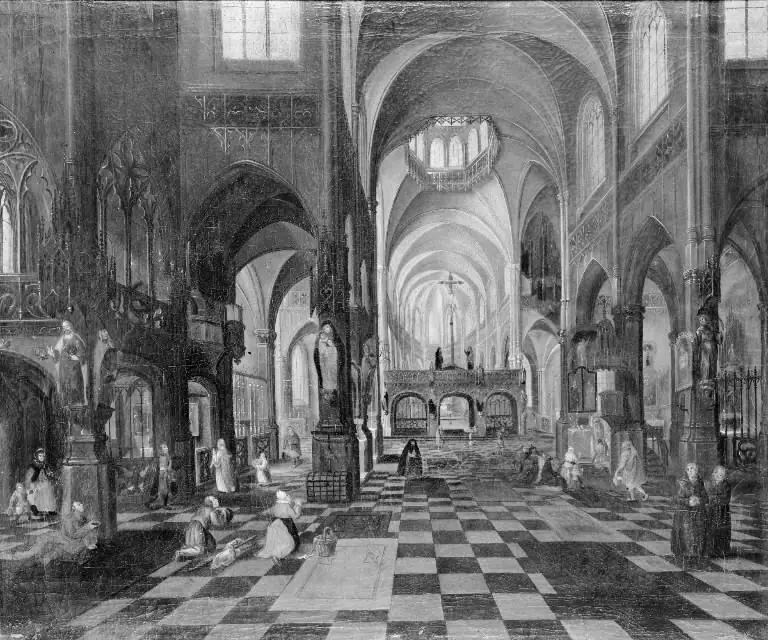 Interior of a Catholic Church
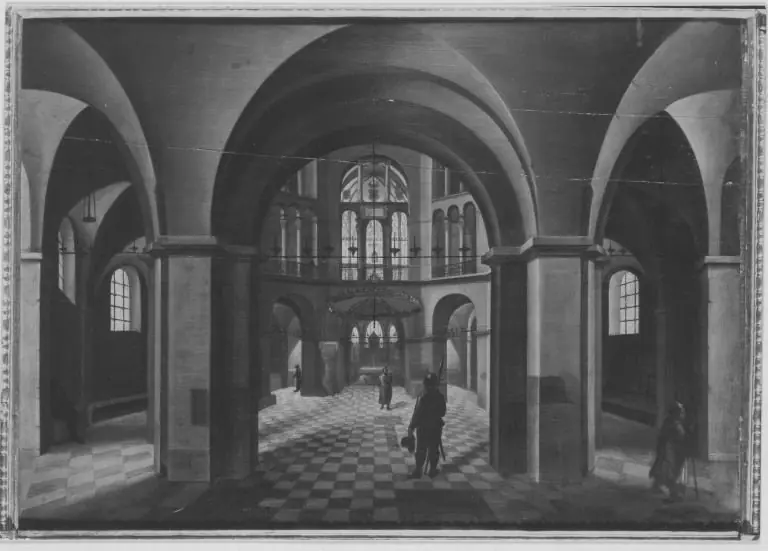 The Interior of Aachen Cathedral
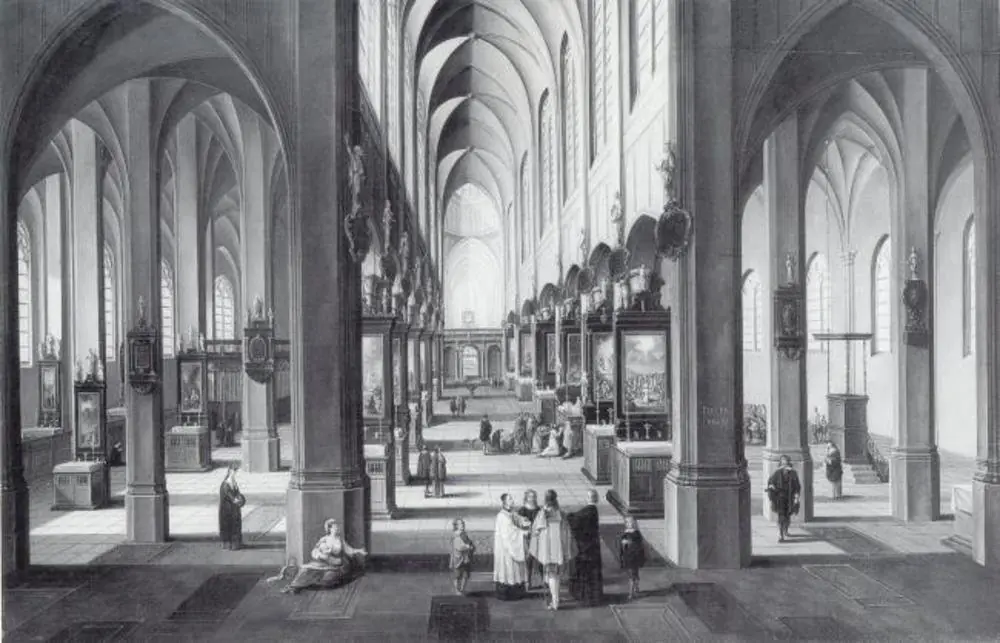 Interior of Antwerp Cathedral
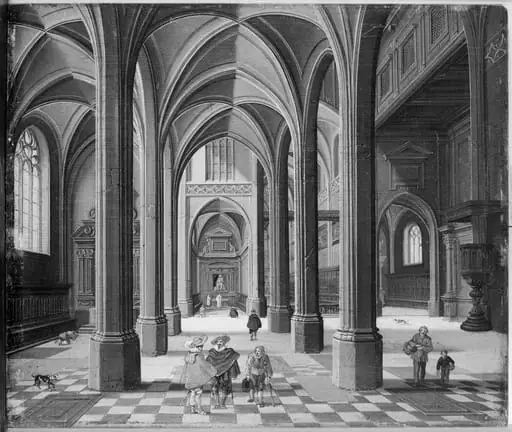 Interior of a Church
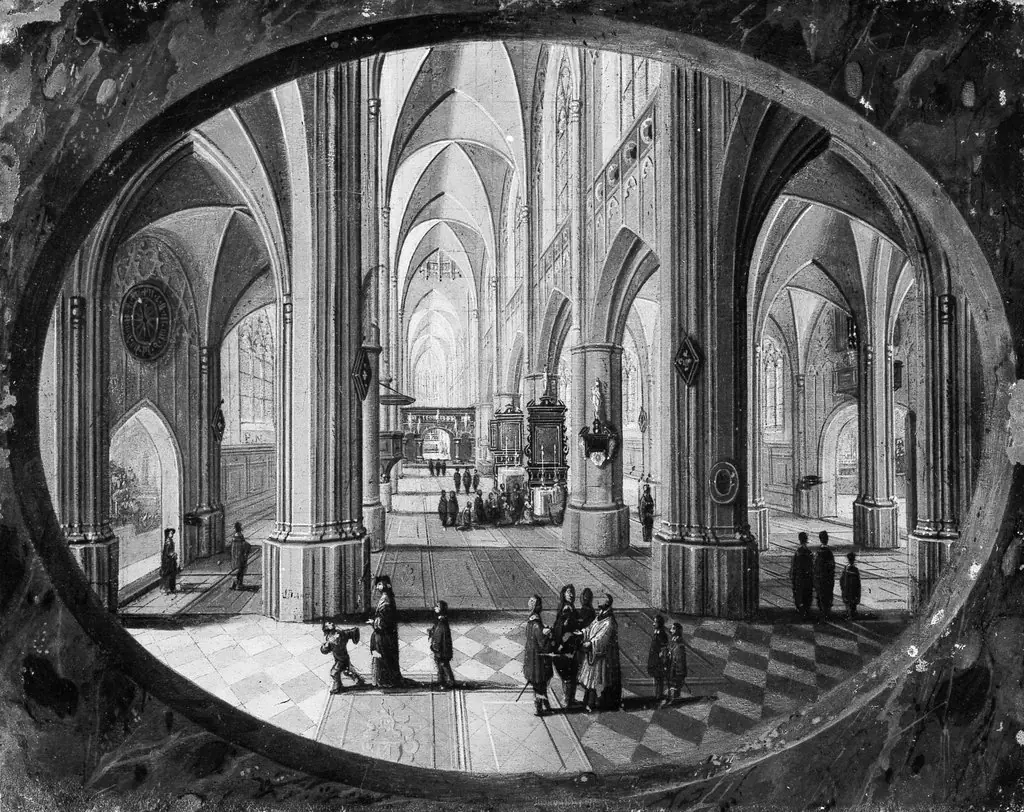 Interior of a Gothic Church by Day
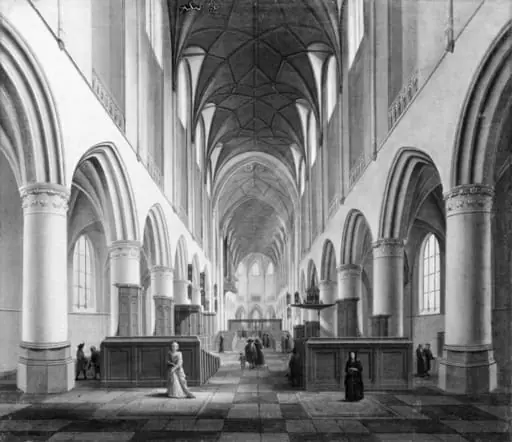 St Bavokerk, Haarlem, Viewed from West to East
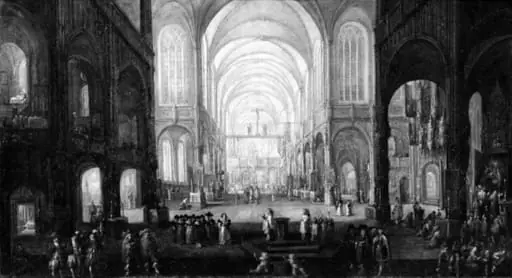 Baptism in a Church
 View of the Interior of the Church of St Sebald in Nuremberg