Artwork
Italian Landscape with Shepherds (in front of a Grotto)
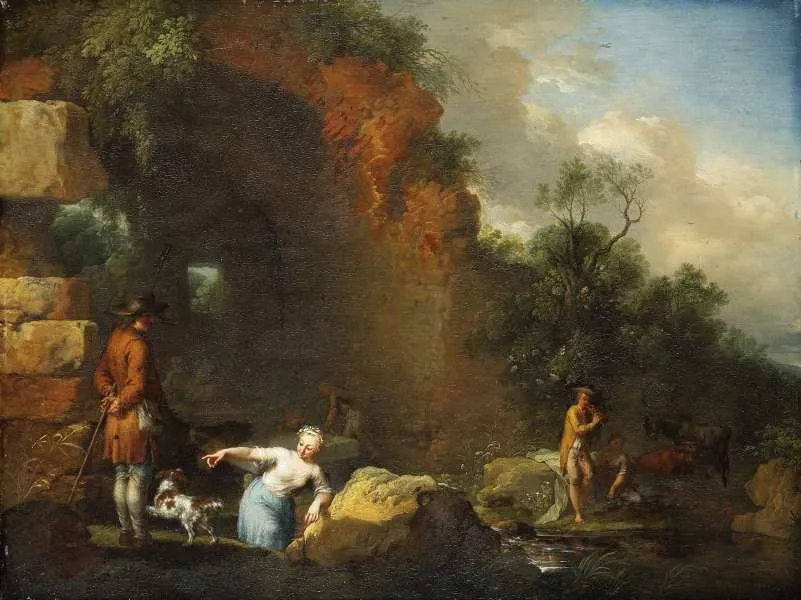
Italian Landscape with Shepherds (in front of a Grotto) is a paint painting by the Rococo painting artist Christian Wilhelm Ernst Dietrich. It dates from 1745 and is held in the collection of the Gemäldegalerie Berlin.
About this work
Overview
Though German by birth, Dietrich was deeply influenced by Italianate scenery popular among Northern European artists of the time.
Christian Wilhelm Ernst Dietrich painted this landscape in 1745, capturing a quiet moment in an idealized Italian countryside. Though German by birth, Dietrich was deeply influenced by Italianate scenery popular among Northern European artists of the time. The work belongs to the Rococo tradition, favoring gentle naturalism over dramatic narrative. It resides today in the Gemäldegalerie Berlin, part of a broader collection of 18th-century European landscapes.
Subject & Meaning
The scene centers on two figures—a standing shepherd and a crouching woman—engaged in quiet observation near a stream. Their interaction with a small dog suggests a moment of stillness amid pastoral life. The grotto in the background introduces an element of mystery, evoking classical associations with hidden sanctuaries. No overt symbolism is present; instead, the painting conveys a contemplative mood, aligning with Rococo sensibilities that valued harmony and subtle emotion.
Technique & Style
Dietrich employed soft, layered brushwork to render atmospheric depth, using muted greens and earth tones to unify the landscape. Light filters gently through the trees, casting delicate shadows that define form without harsh contrast. The grotto is rendered with subtle tonal shifts, enhancing its enigmatic presence. His technique reflects an intentional emulation of 17th-century Italian landscape painters, adapted to the lighter, more decorative aesthetic of the Rococo period.
History & Provenance
Commissioned or created during Dietrich’s tenure as an art administrator in Dresden, the painting likely served as a demonstration of his skill in replicating Italianate themes. It entered the Gemäldegalerie Berlin’s collection in the 19th century, possibly through state acquisitions or transfers from royal collections. Its documented history remains modest, consistent with many works of its type that were valued for aesthetic rather than historical significance.
Context
In mid-18th-century Germany, artists like Dietrich responded to the popularity of Italian scenery among aristocratic patrons. Travel to Italy was limited, so painters relied on prints and memory to construct idealized views. This work reflects a broader trend: Northern European artists constructing imagined landscapes that blended real topography with poetic invention, catering to tastes for tranquility and refined beauty.
Legacy
Dietrich’s work contributed to the dissemination of Italianate landscape conventions in Northern Europe. While not widely celebrated in his lifetime, his paintings helped sustain interest in pastoral themes through the Rococo era. Today, this piece stands as a quiet example of how artists synthesized observation, tradition, and imagination to create serene, emotionally restrained visions of nature.
Artist & collection
Artist
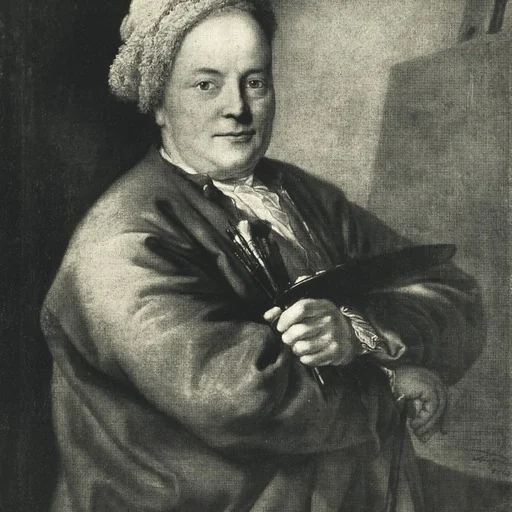
Christian Wilhelm Ernst Dietrich
Christian Wilhelm Ernst Dietrich (30 October 1712 – 23 April 1774) was a German painter and art administrator. In his own works, he was adept at imitating many earlier artists, but never developed a style of his own.

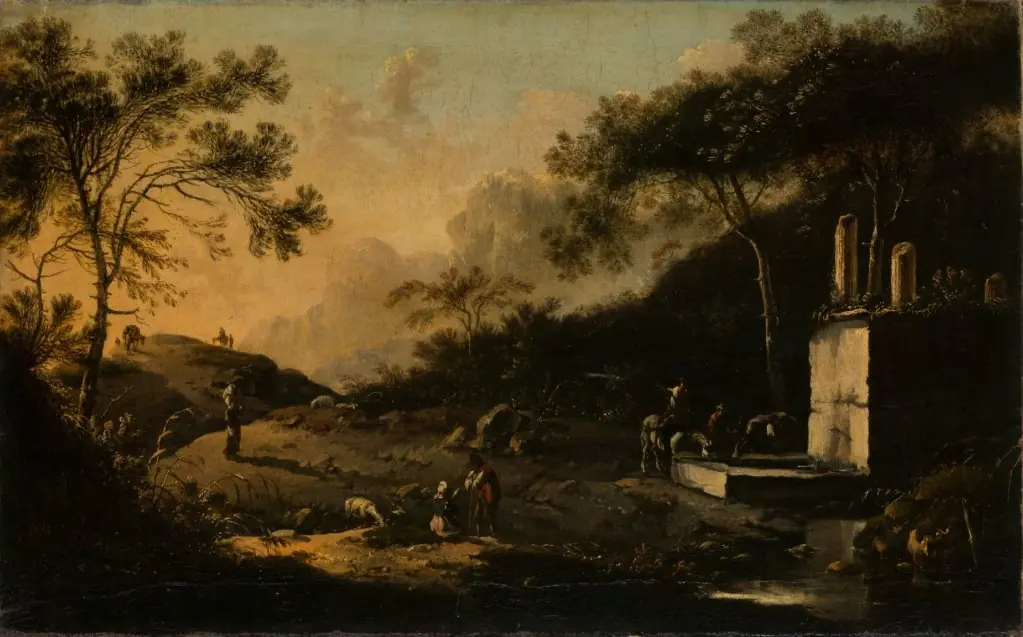 Italian Mountain Landscape with Travelers at a Well
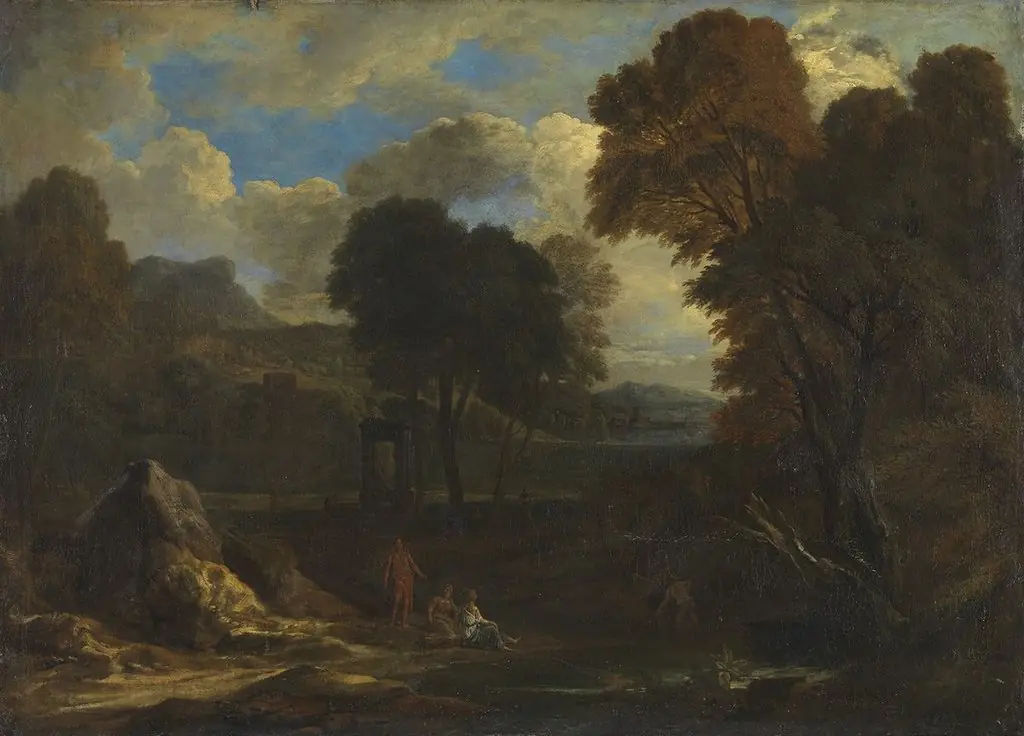 Landschaft
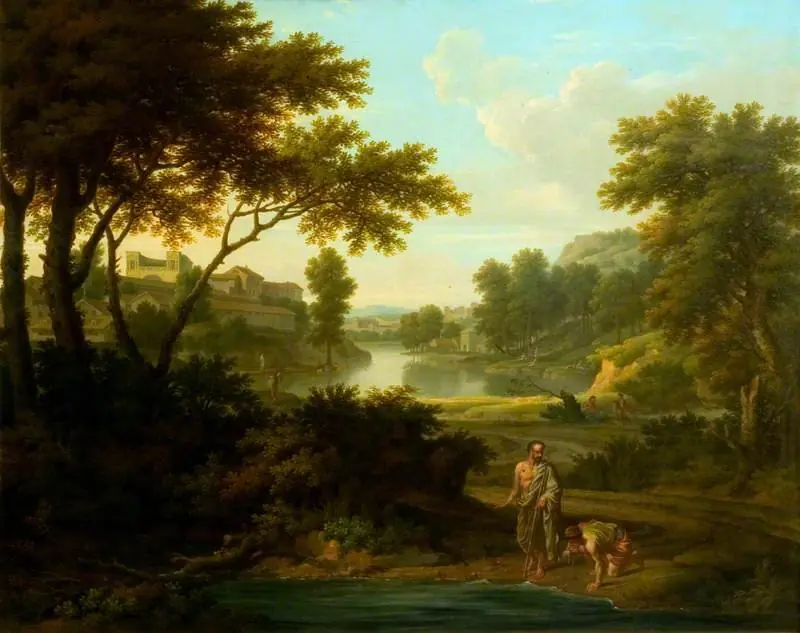 Diogenes Throwing away His Bowl (after Nicolas Poussin)
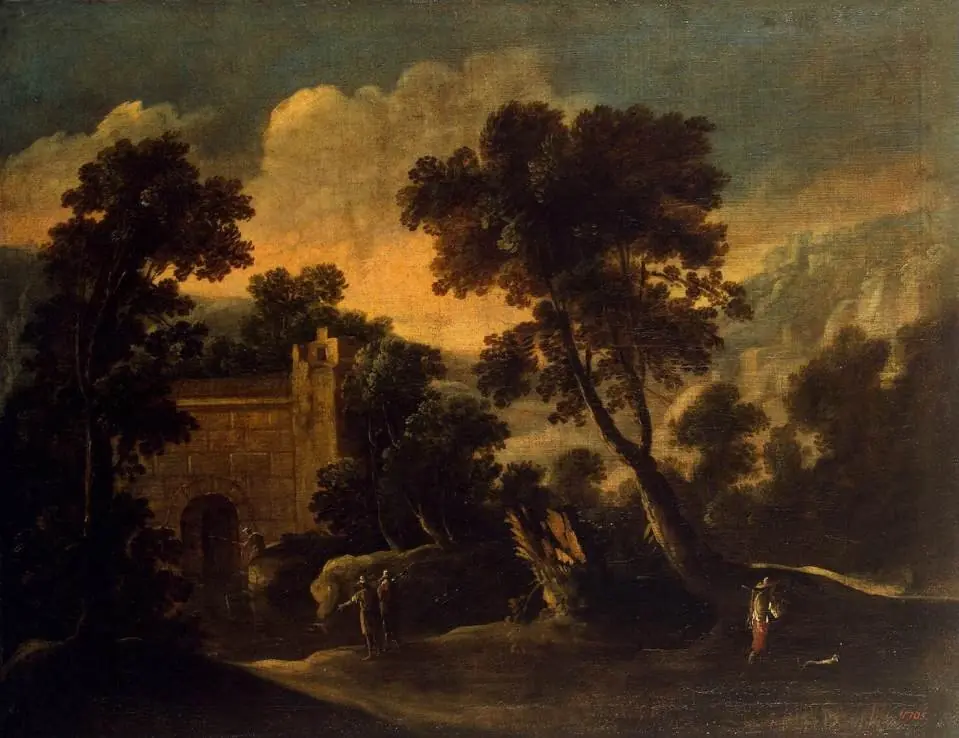 Landscape with Ruins
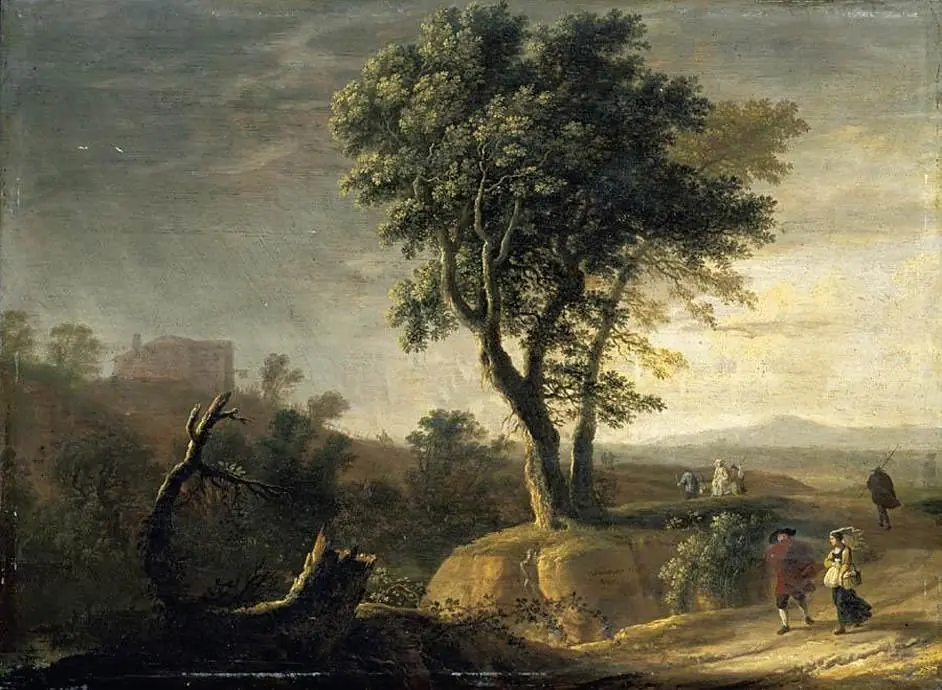 Thunderstorm
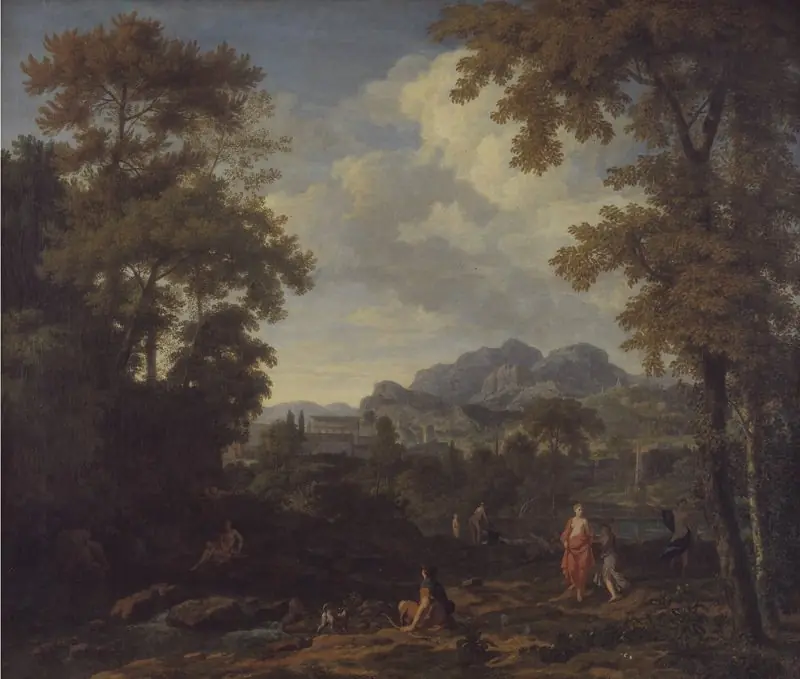 Classical Landscape with Diana (?) and her Nymphs
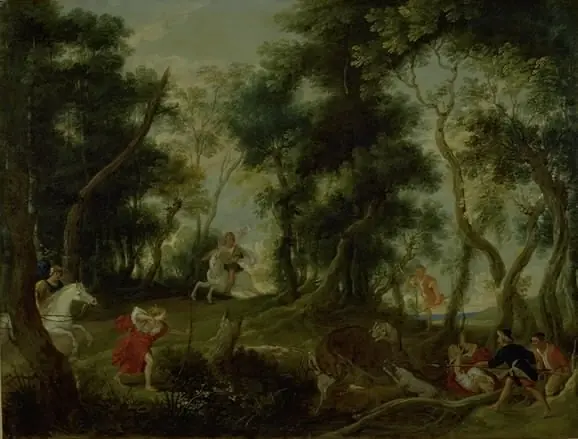 Landscape with Atalanta and Meleager Hunting the Calydonian Boar
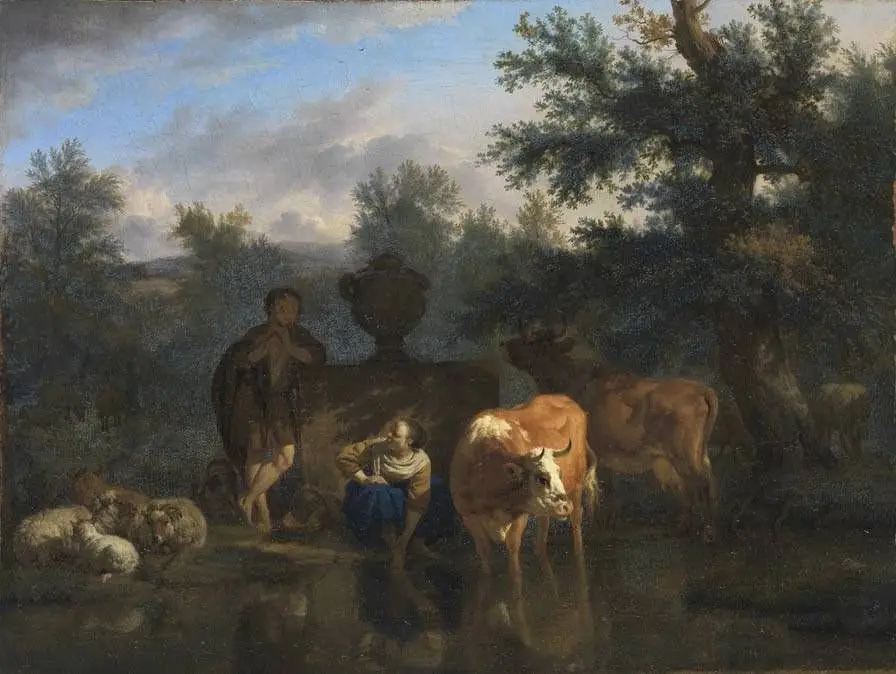 Landscapes with cattle and shepherds
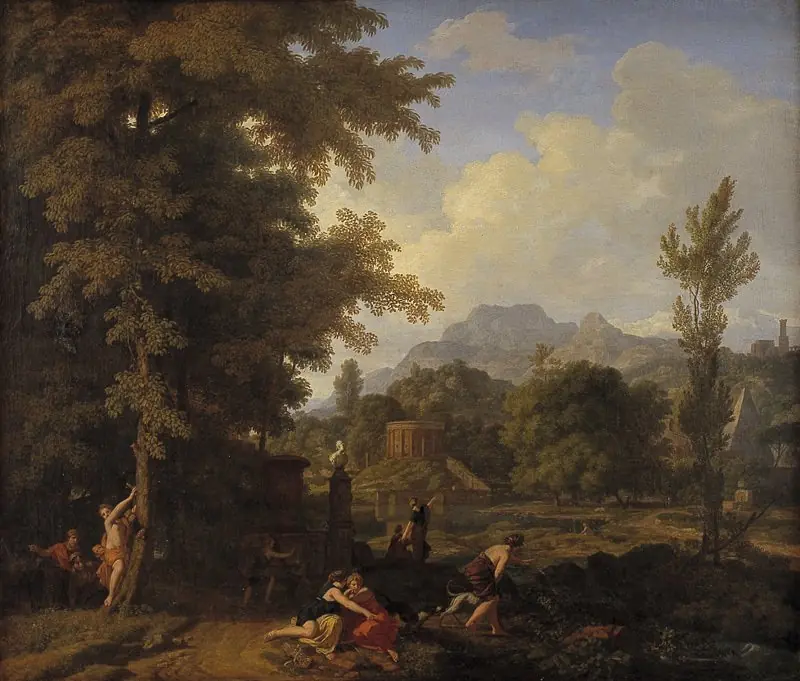 Classical Landscape with Diana (?) and her Nymphs
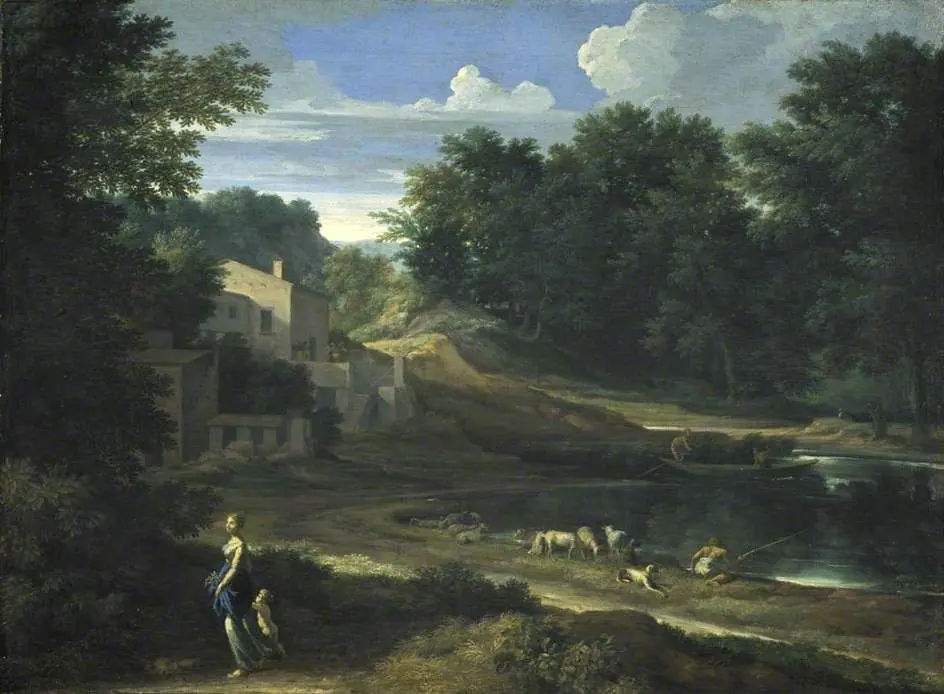 Classical Landscape with a Lake