Artwork
Classical Landscape with Diana (?) and her Nymphs
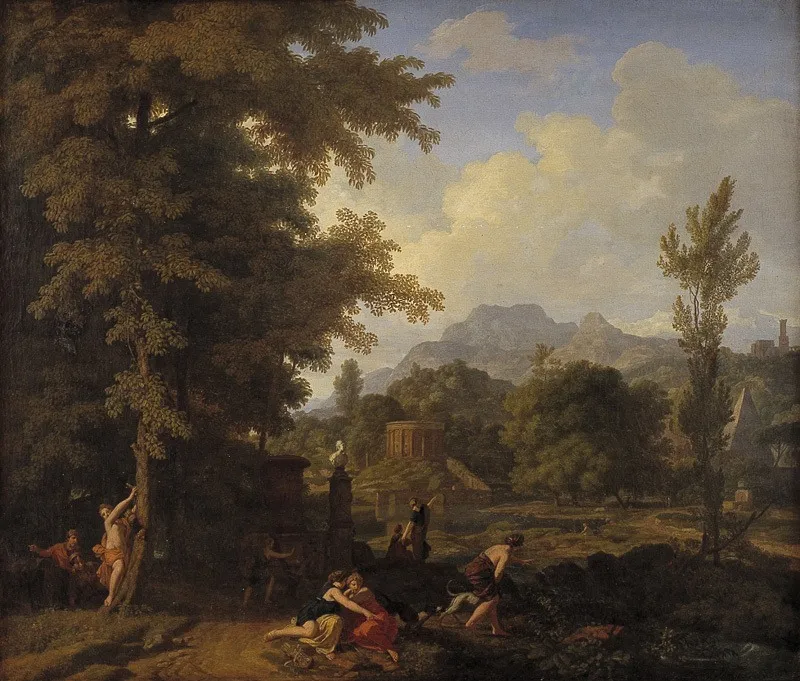
Classical Landscape with Diana (?) and her Nymphs is an oil painting by the Dutch Golden Age artist Johannes Glauber. It dates from 1693 and is held in the collection of the Statens Museum for Kunst. Painted in 1693, Classical Landscape with Diana (?
About this work
Overview
Glauber employs a bright, luminous palette characteristic of his mature style, featuring lush green foliage and a sky filled with fluffy, illuminated clouds.
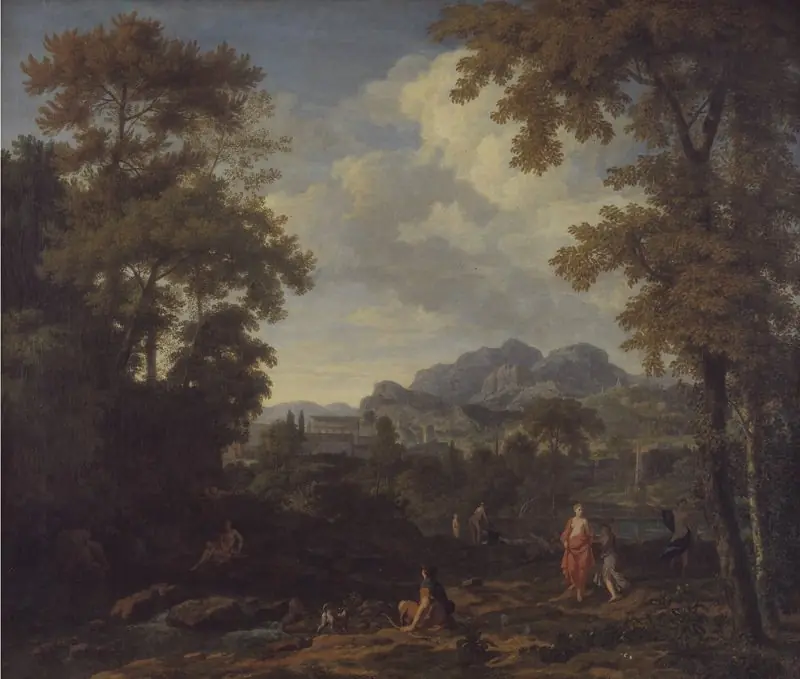
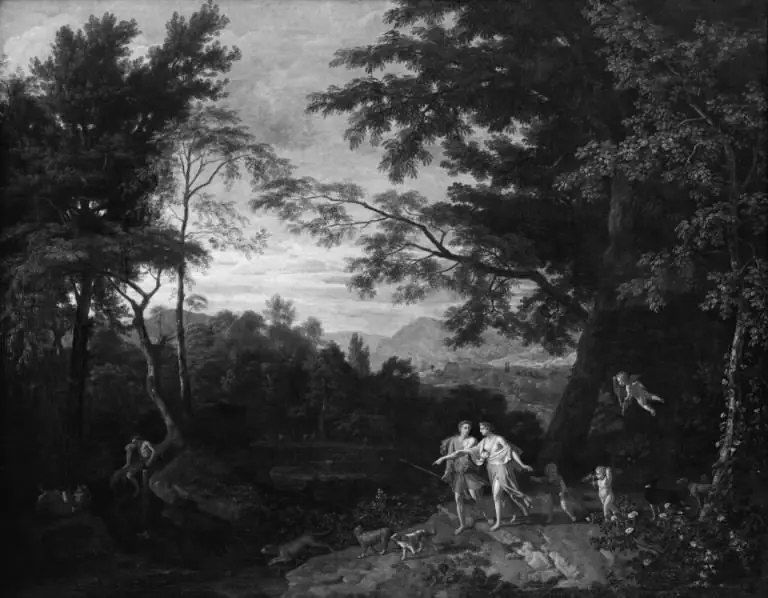
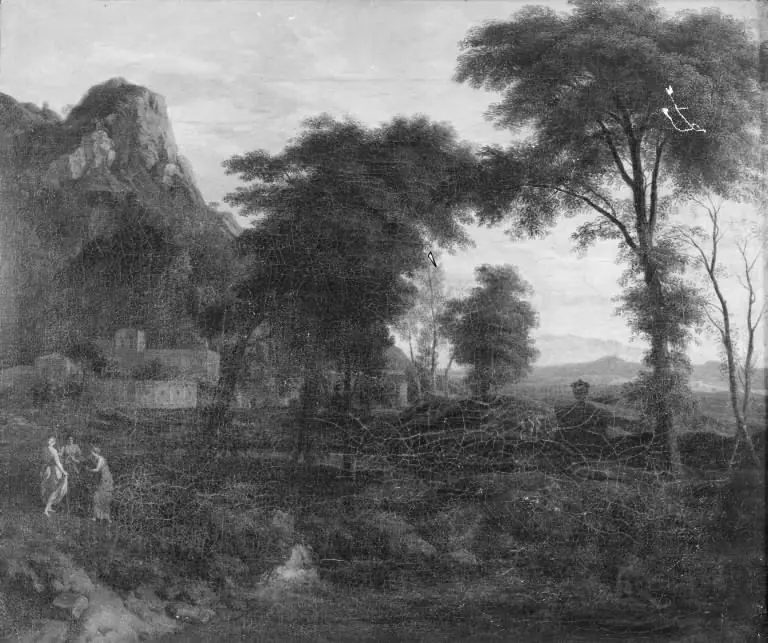
Painted in 1693, Classical Landscape with Diana (?) and her Nymphs is an oil on canvas work by the Dutch artist Johannes Glauber. The composition depicts a mythological scene set within an idealized, verdant woodland environment. A group of figures, identified by the title as the goddess Diana and her attendants, are arranged near a classical temple structure that anchors the middle ground. The figures are dressed in flowing robes and tunics, engaging in leisurely activities such as standing, walking, and resting on the grass. Glauber employs a bright, luminous palette characteristic of his mature style, featuring lush green foliage and a sky filled with fluffy, illuminated clouds. The lighting is carefully managed to create a serene atmosphere, highlighting the figures against the dense vegetation and architectural elements. This work exemplifies Glauber's contribution to the Dutch tradition of classical landscape painting, where he synthesized Italianate compositional principles with a distinct Northern attention to naturalistic detail. The painting reflects the late 17th-century fascination with antiquity and the pastoral ideal, positioning the artist as a significant figure who bridged the gap between the earlier Italianate masters and the evolving landscape traditions of the Netherlands.
Subject & Meaning
The composition centres on a group of figures gathered near a temple‑like structure within a verdant forest. While the identification is tentative, the presence of a huntress and accompanying women suggests the Roman goddess Diana and her nymphs. Their relaxed poses—some standing, others reclining—convey a moment of tranquil leisure amid nature.
Technique & Style
Glauber employs a clear, luminous sky dotted with soft clouds and a richly coloured foliage that recedes into the distance. Light falls across the scene, producing pronounced contrasts between illuminated surfaces and shadowed areas, a chiaroscuro effect that enhances depth and draws attention to the central figures. The brushwork balances detailed rendering of foliage with broader, atmospheric passages.
History & Provenance
Executed in 1693, the painting entered the collection of the Statens Museum for Kunst, Denmark’s national gallery, where it remains. Its acquisition reflects the museum’s interest in Dutch and Flemish Baroque landscape painting, a genre in which Glauber was a prominent practitioner during the late seventeenth century.
Context
Glauber, a Dutch painter active in the late 1600s, was known for integrating classical mythology into expansive natural settings. This work exemplifies the period’s fascination with idealised landscapes that serve as stages for mythic narratives, aligning with contemporary tastes for decorative, allegorical art that combined scholarly references with visual pleasure.
Artist & collection

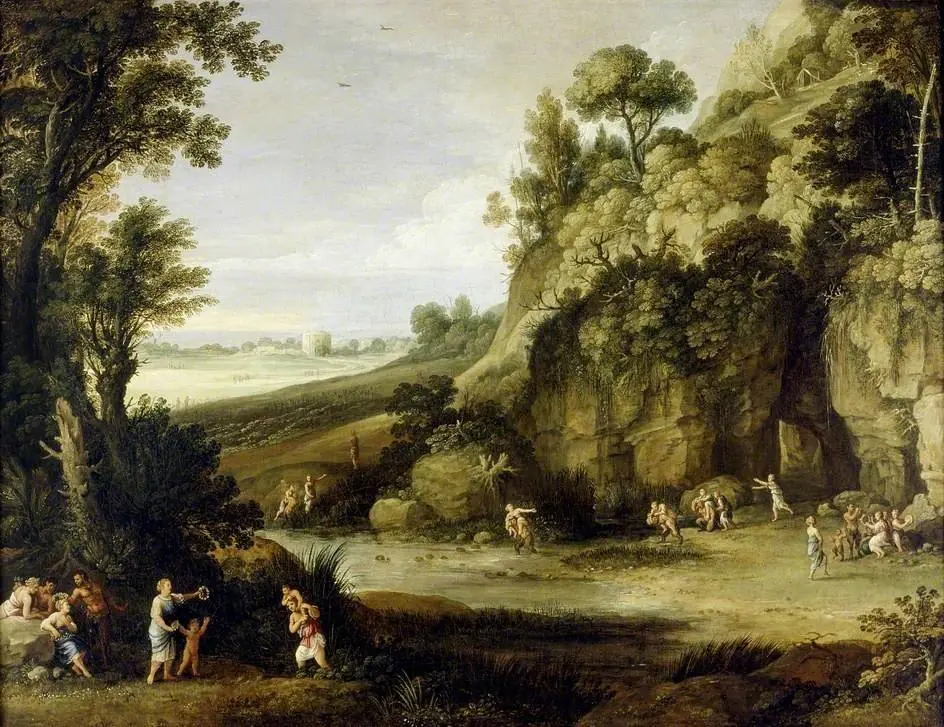 Mythological Landscape with Nymphs and Satyrs
 Mythological Landscape with Nymphs and Satyrs
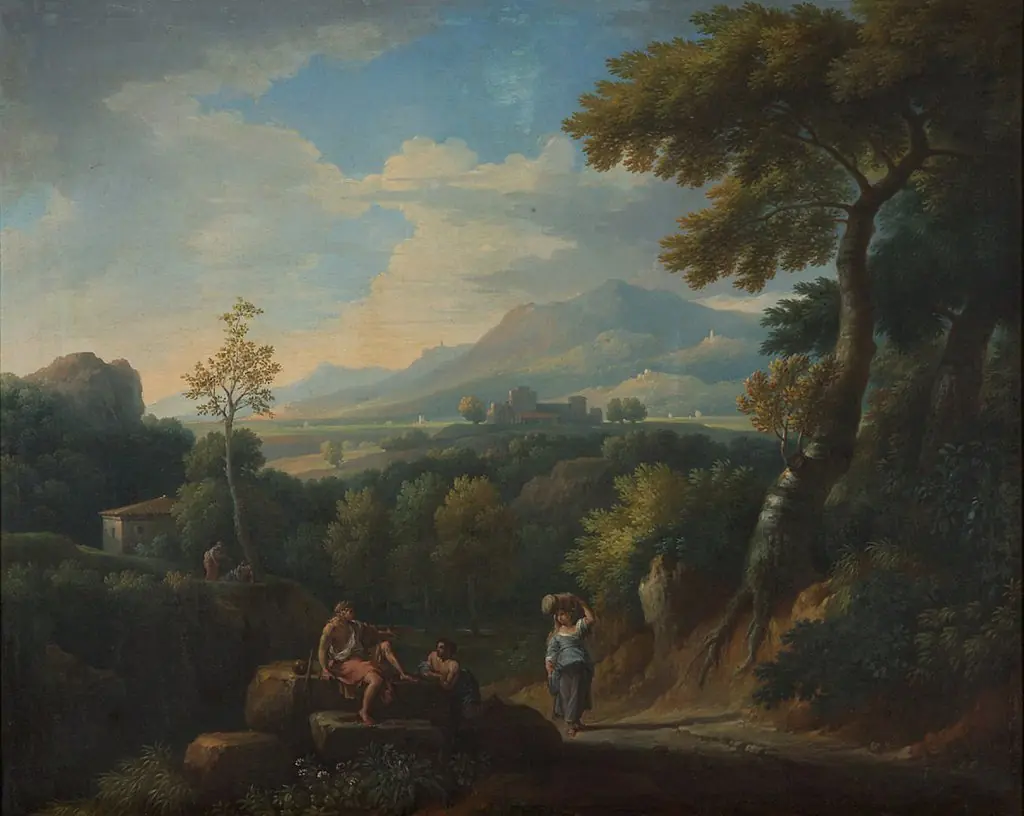 Italian Landscape
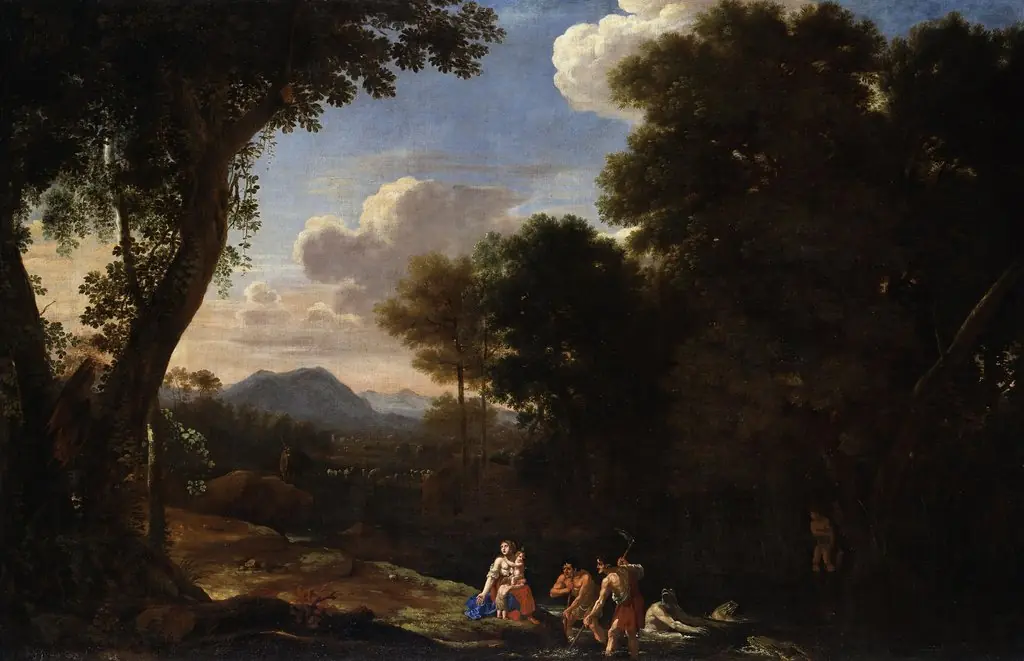 An Italian Landscape with Staffage from the Latona Story
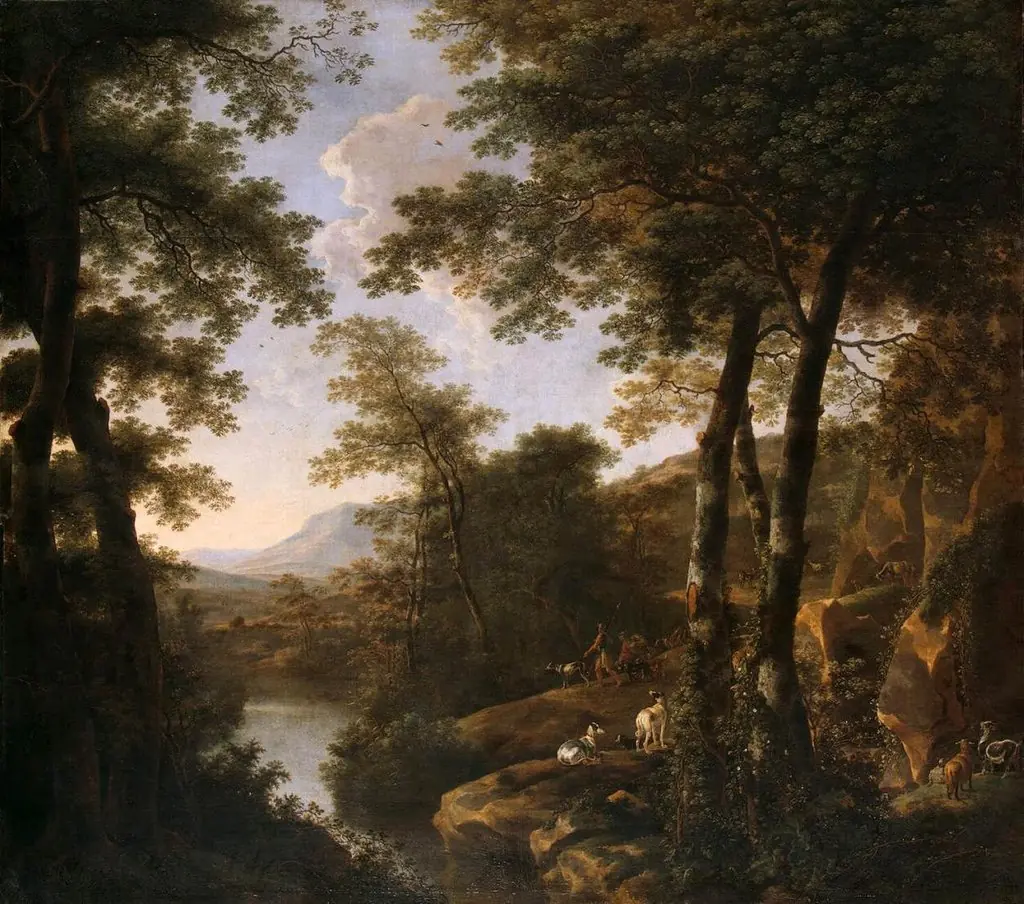 Italian Landscape with Roman Warriors
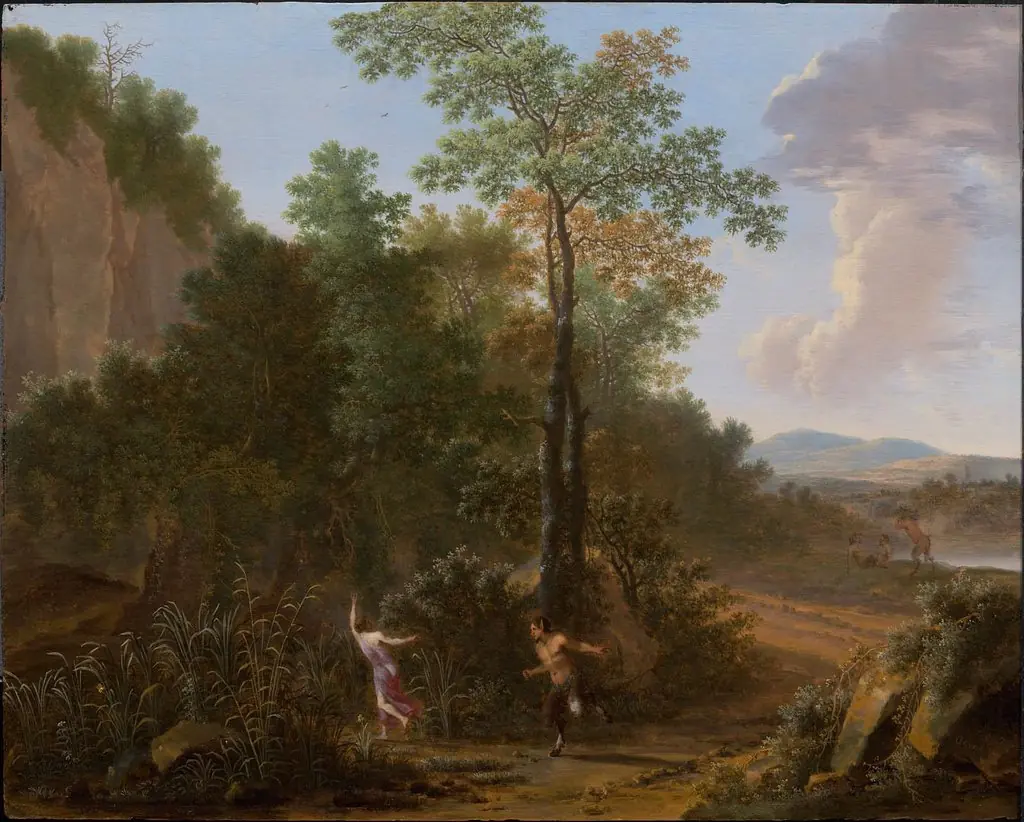 Pan and Syrinx
 Landscape of the Roman "Compagna"
 Landscape with Travelers
 Taufe Christi
 Italienische Landschaft mit musizierenden Hirten und ziehender Herde