Artwork
Der arme Lazarus und der reiche Prasser
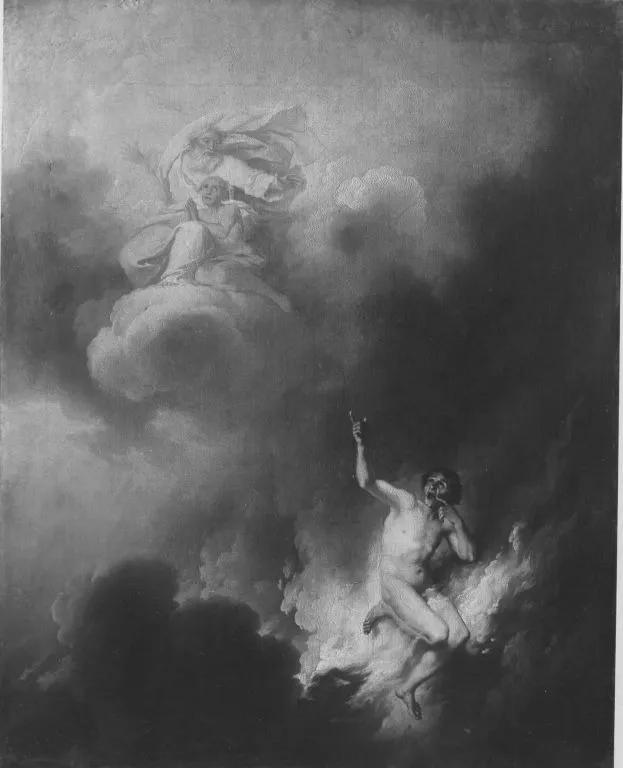
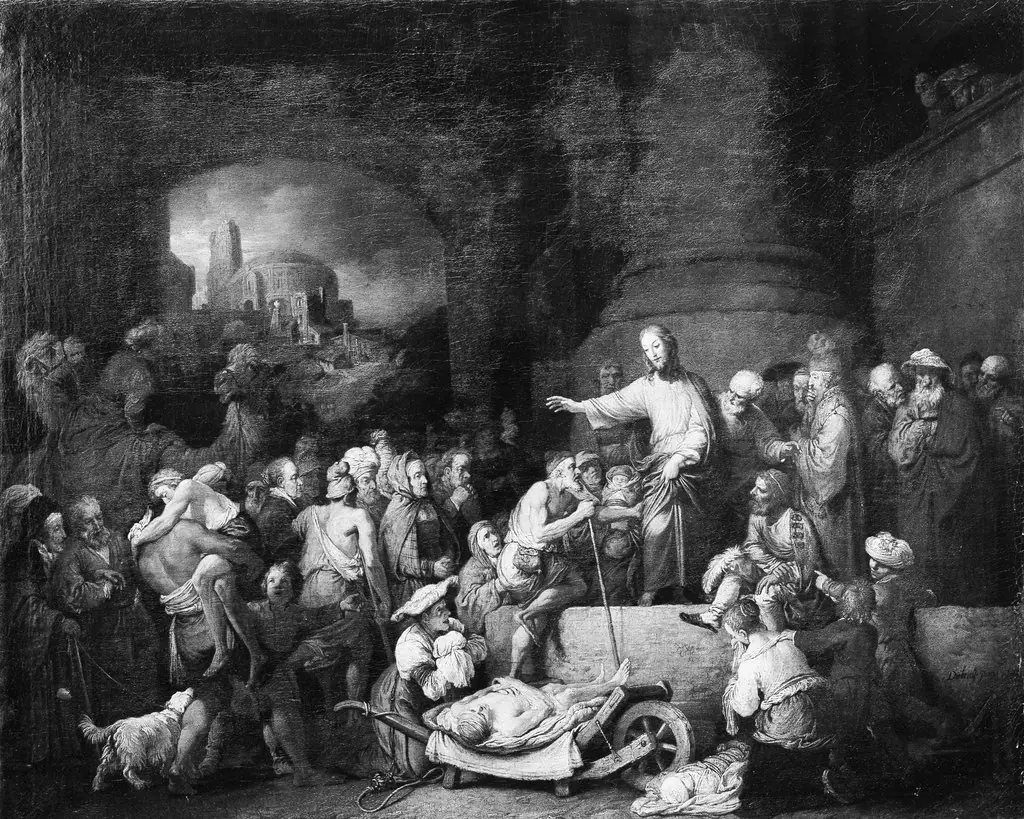
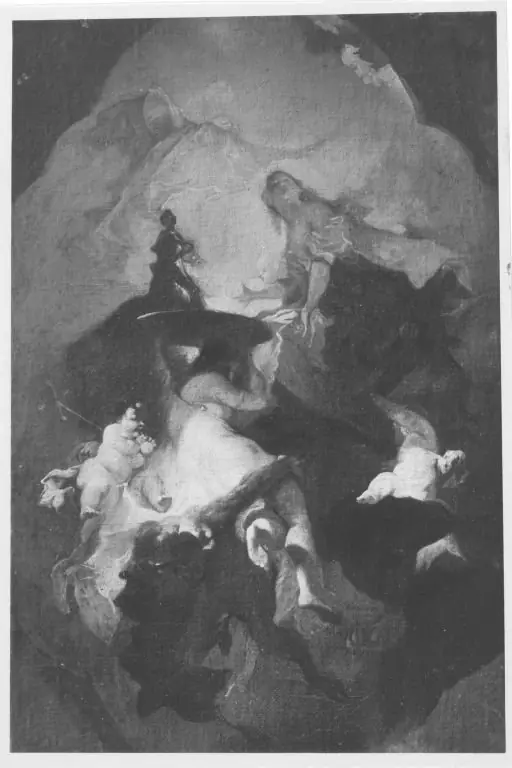
Der arme Lazarus und der reiche Prasser is an unspecified painting by Christian Wilhelm Ernst Dietrich. It dates from 1753 and is held in the collection of the Bavarian State Painting Collections.
About this work
Overview
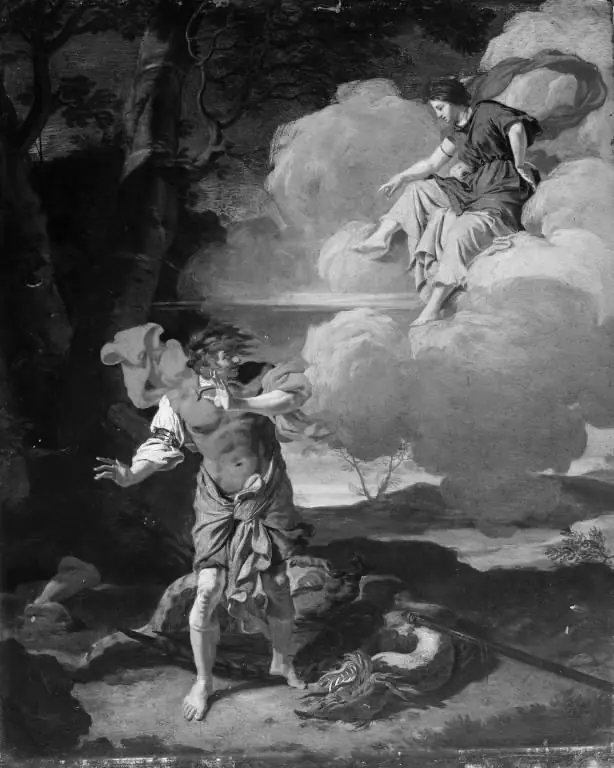
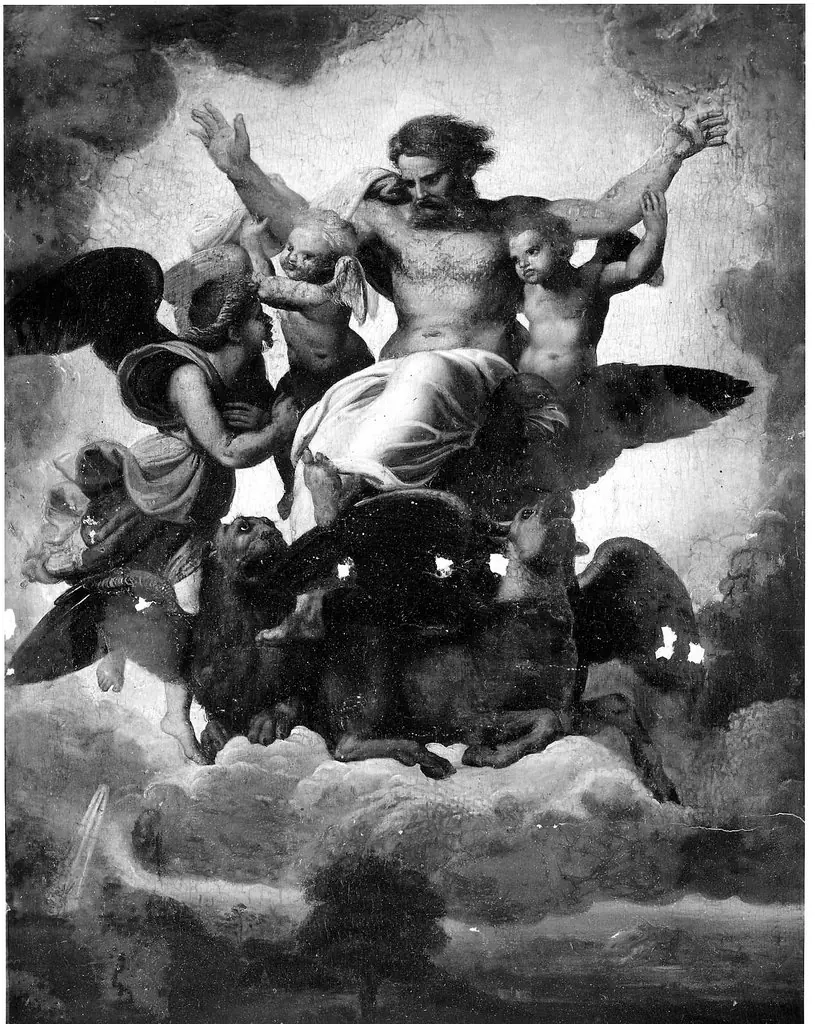
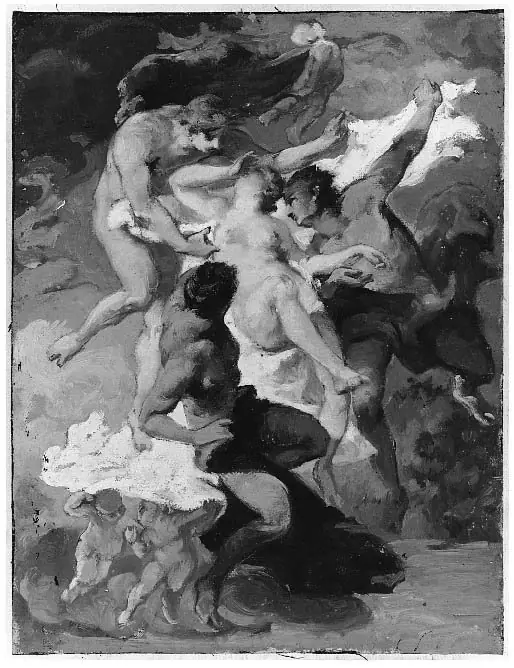
Christian Wilhelm Ernst Dietrich painted *Der arme Lazarus und der reiche Prasser* circa 1753. The oil work, now in Munich’s Alte Pinakothek, visualises the biblical parable of the rich man and the beggar Lazarus. A dramatic sky of clouds and smoke frames two central figures, one gesturing upward, the other suspended above, creating a tense, energetic composition.
Subject & Meaning
The scene interprets the New Testament story in which a wealthy man lives in excess while Lazarus suffers in poverty. Dietrich places the two characters in a celestial setting, emphasizing the moral reversal after death: the rich figure points upward, perhaps pleading, while the humble woman hovers in a softer, ethereal space, underscoring themes of judgment and redemption.
Technique & Style
Dietrich employs strong chiaroscuro to model the figures against the luminous sky, generating depth and volume. The contrast of bright white robes with darkened surroundings heightens the drama. Though adept at copying earlier masters, his handling of light and atmospheric effects reflects the Baroque tradition while lacking a fully individualized style.
History & Provenance
Created during Dietrich’s tenure as court painter and director of the Dresden Academy, the canvas entered the Bavarian collection in the 19th century and has been displayed at the Alte Pinakothek since. Its acquisition reflects the museum’s interest in German Baroque narrative painting and Dietrich’s reputation as a prolific, though stylistically imitative, artist.
Artist & collection
Artist
Christian Wilhelm Ernst Dietrich
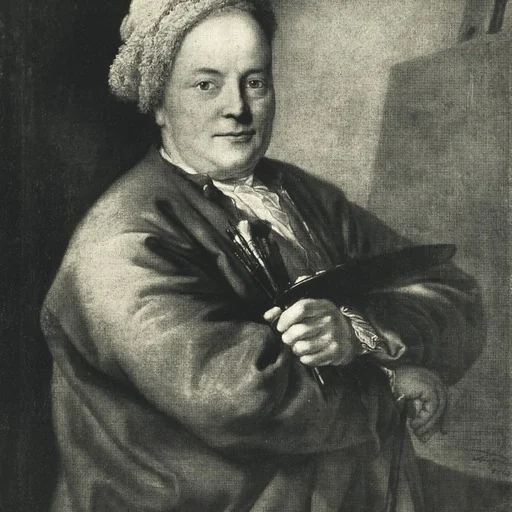
Christian Wilhelm Ernst Dietrich (30 October 1712 – 23 April 1774) was a German painter and art administrator. In his own works, he was adept at imitating many earlier artists, but never developed a style of his own.