Artwork
The Triumph of Truth Over Envy
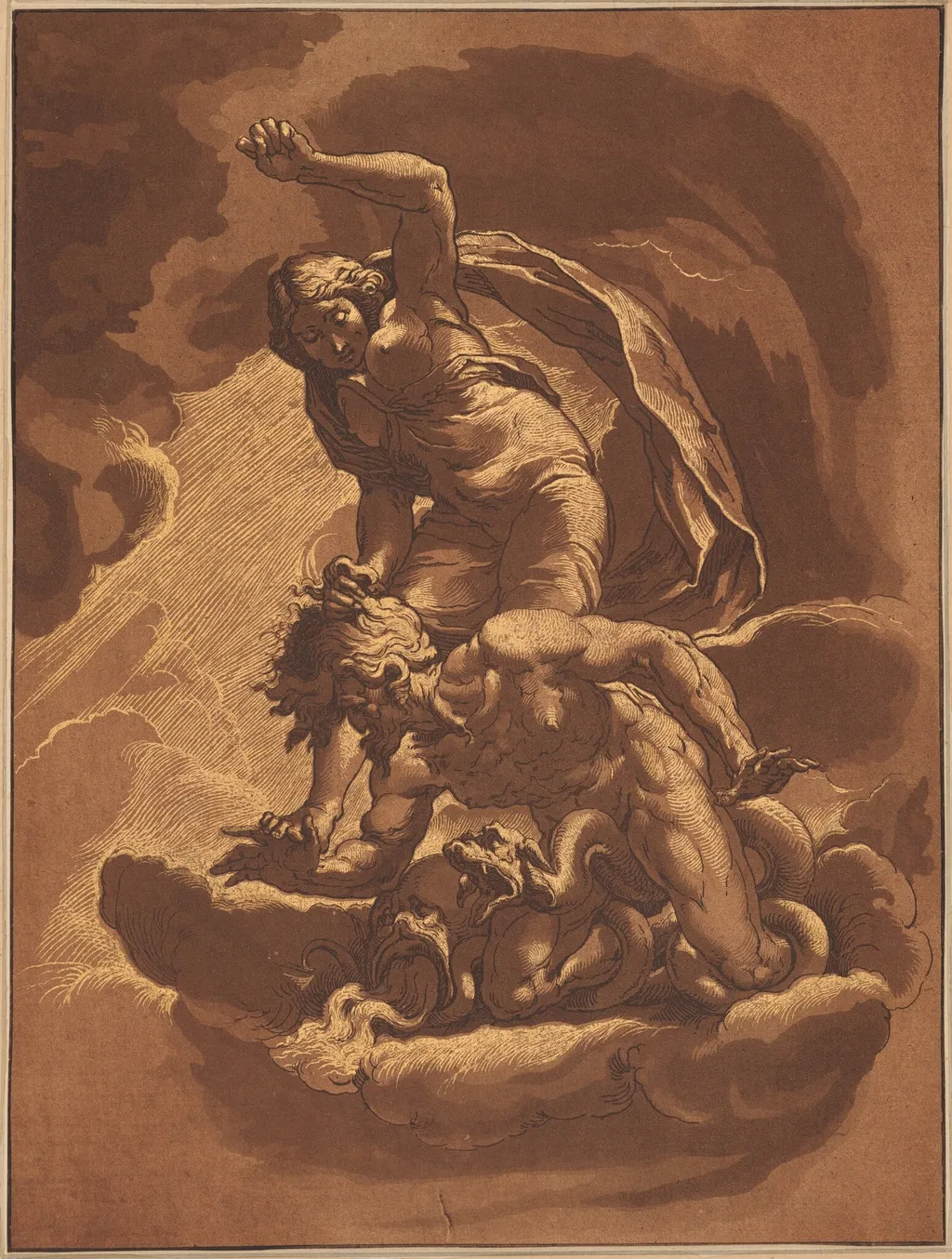
The Triumph of Truth Over Envy is an ink print by the Romanticist artist Maria Catharina Prestel. It dates from 1781 and is held in the collection of the National Gallery of Art.
About this work
Overview
Created in 1781 by Maria Catharina Prestel, this print combines etching and aquatint techniques with applied gold leaf to produce a luminous allegorical scene.
Created in 1781 by Maria Catharina Prestel, this print combines etching and aquatint techniques with applied gold leaf to produce a luminous allegorical scene. Printed in brown ink, the work stands out through its subtle use of metallic accents, enhancing its symbolic weight. Prestel, a German-born artist active in London, demonstrated advanced printmaking skills rare for women of her time, blending technical precision with narrative clarity.
Subject & Meaning
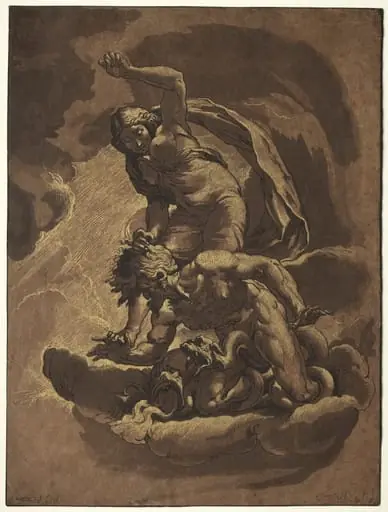
The image portrays Truth as a serene, upright figure towering above Envy, a contorted, multi-limbed entity writhing in shadow. Truth’s calm expression and elevated position suggest moral superiority, while Envy’s tangled form and pained posture convey defeat. The composition follows classical allegorical traditions, using physical hierarchy to express the victory of virtue over vice, a common theme in Enlightenment-era visual culture.
Technique & Style
Prestel employed etching for fine lines and aquatint for gradated tones, creating atmospheric depth in the cloud-filled background. Gold leaf was selectively applied to highlight Truth’s form, producing a radiant contrast against the muted brown ink. The interplay of light and shadow heightens the drama, with the metallic sheen drawing the eye upward, reinforcing the narrative of ascent and moral clarity.
History & Provenance
Born Maria Katharina Höll in Nuremberg in 1747, Prestel moved to London where she worked as an engraver and painter. This print, dated 1781, is among her few known works and reflects her engagement with British print culture. Its survival suggests it was circulated among collectors interested in moral allegories, though its early ownership remains undocumented.
Context
In late 18th-century Europe, allegorical imagery was widely used to convey philosophical and ethical ideas. Prestel’s print aligns with Enlightenment ideals emphasizing reason and virtue over passion and deceit. The use of gold leaf, though rare in prints, echoes decorative traditions in religious and royal imagery, lending the work a sense of solemn authority.
Legacy
Prestel’s work remains a rare example of a woman’s contribution to printmaking during a period dominated by male artists. While not widely reproduced, her technical command and symbolic clarity have drawn scholarly attention as evidence of women’s participation in intellectual visual culture. The print endures as a quiet testament to skill and conviction in a medium often overlooked for its expressive potential.
Artist & collection
Artist
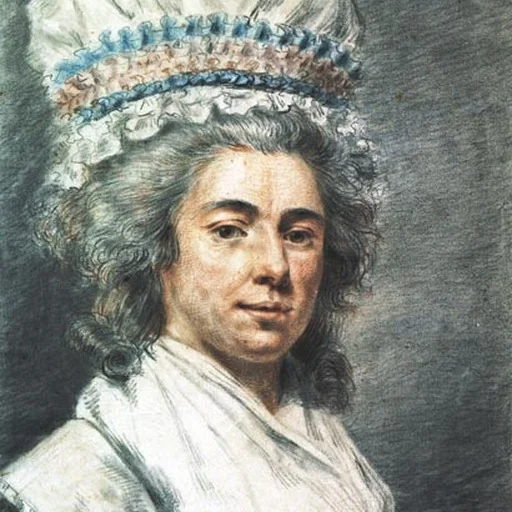
Maria Katharina Prestel (22 July 1747 – 16 March 1794) née Maria Katharina Höll, was an engraver and painter from Nuremberg, and active in London.

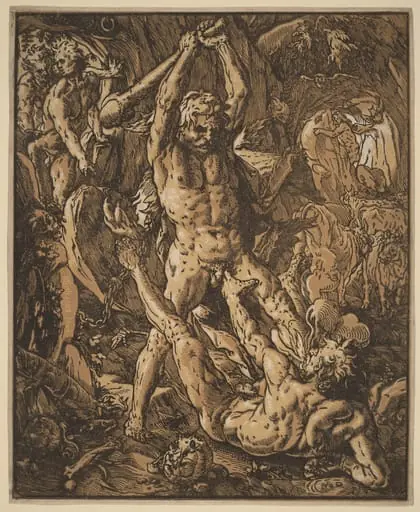 Hercules Killing Cacus
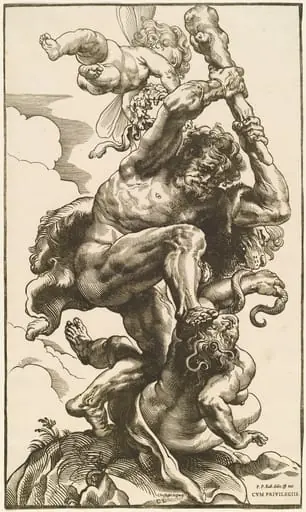 Hercules Fighting the Fury and the Discord
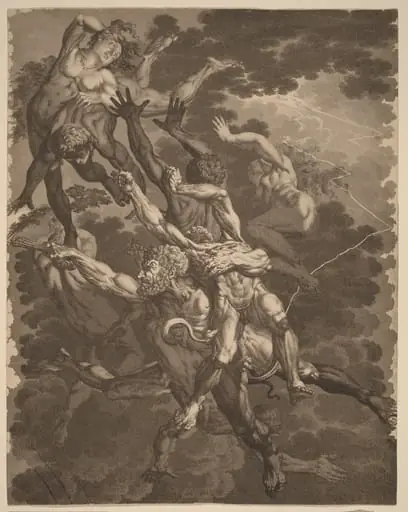 The Damned
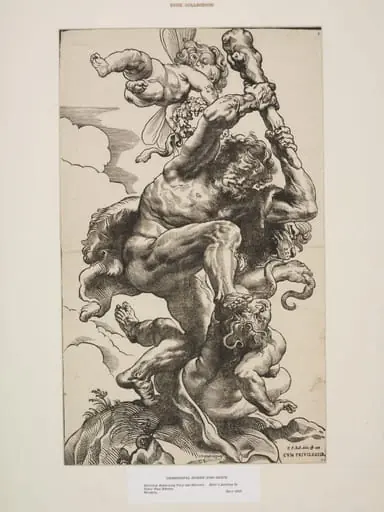 Hercules Exterminating Fury and Dischord
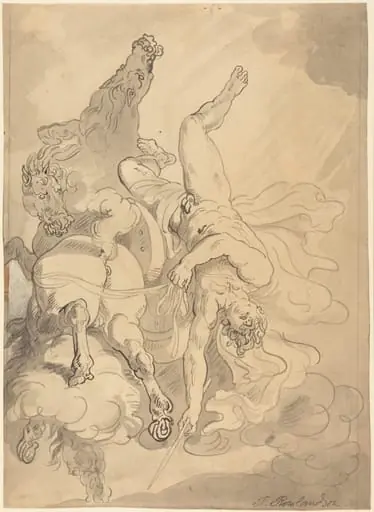 The Fall of Phaeton
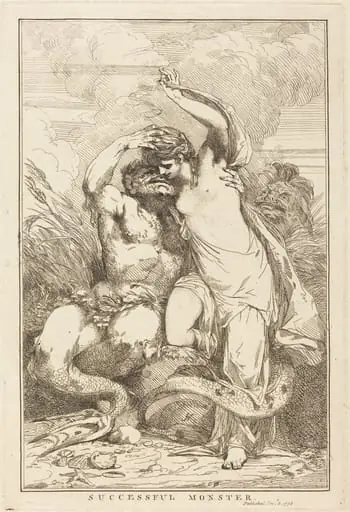 Successful Monster
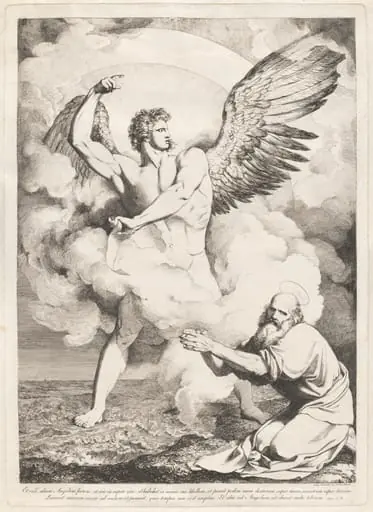 Et vidi alium angelum fortem... (The Angel of the Apocalypse Appearing to Saint John)
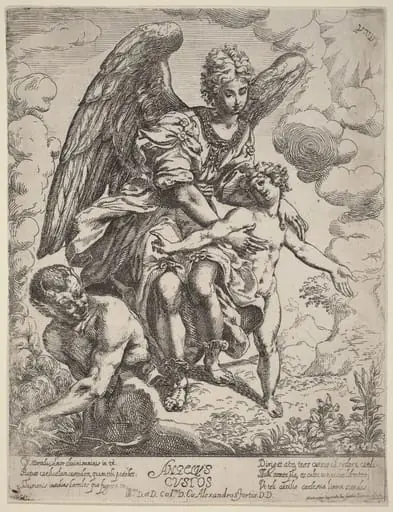 Guardian Angel
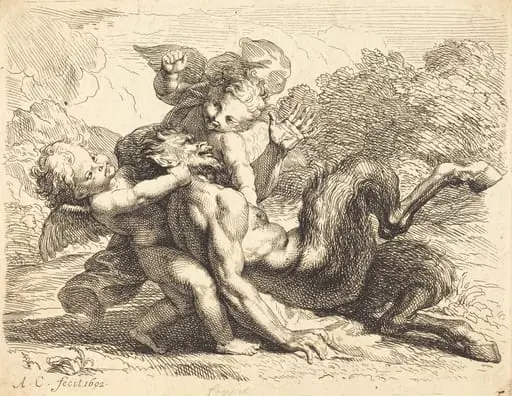 Pan Overcome by Putti
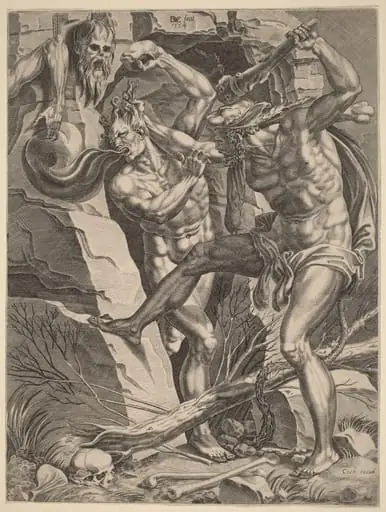 Hercules Killing Cacus
 Saint Jerome