Artwork
Dancing Party in an Interior
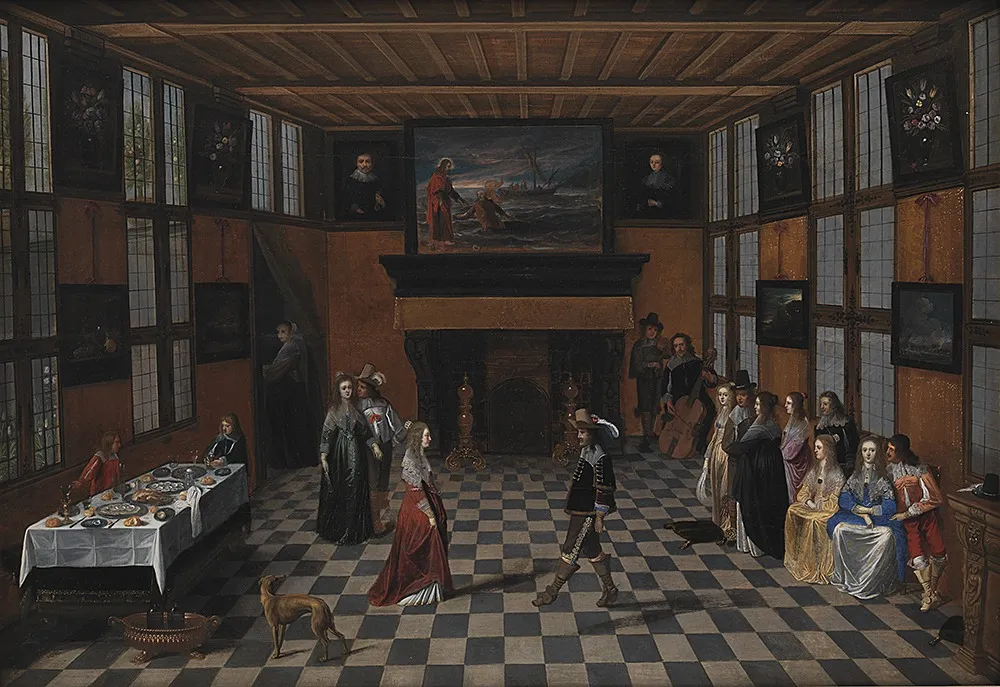
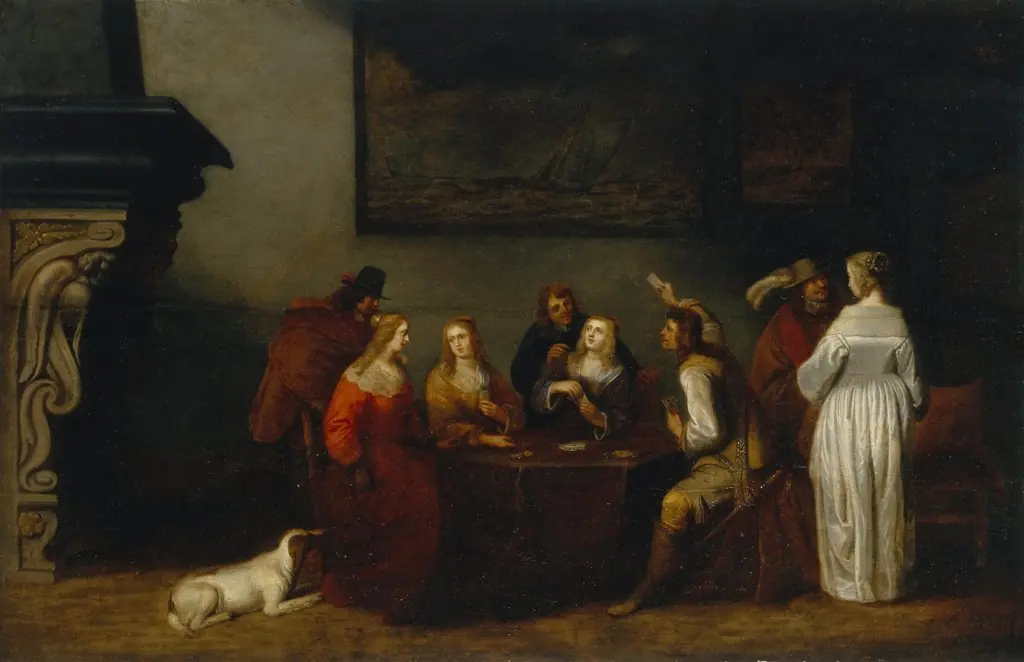
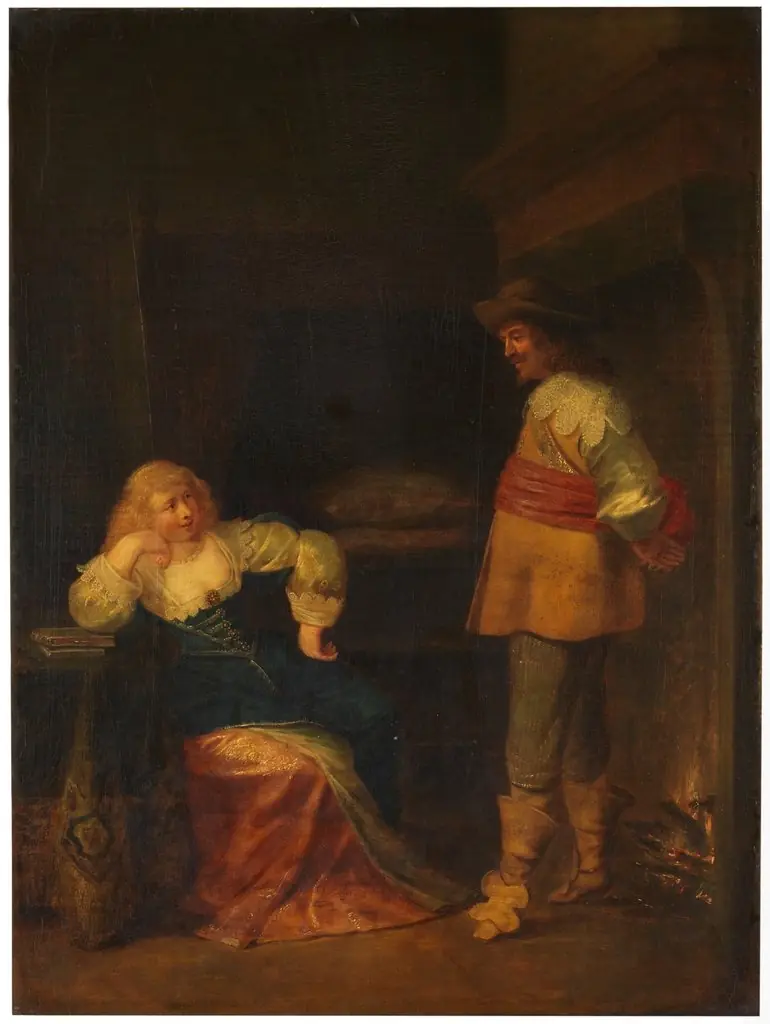
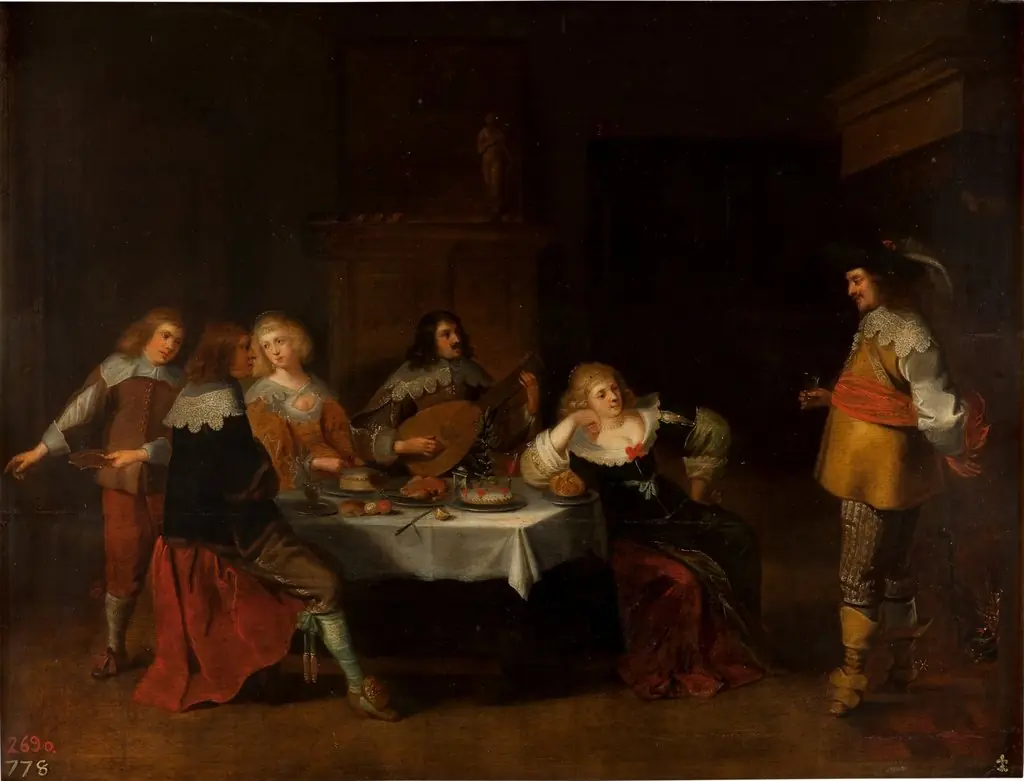
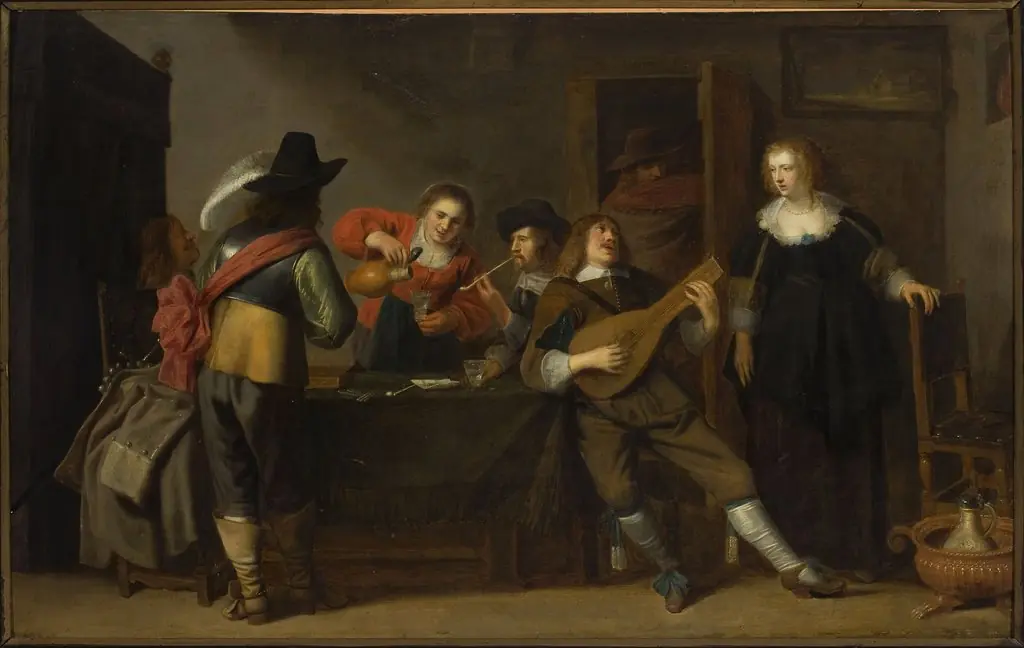
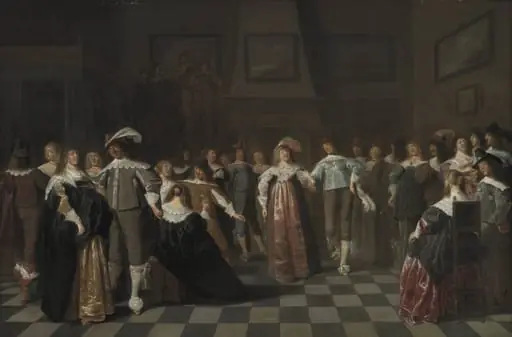
Dancing Party in an Interior is an oil painting by the Dutch Golden Age artist Christoffel Jacobsz van der Laemen. It dates from 1650 and is held in the collection of the Statens Museum for Kunst.
About this work
To learn more about the artist who created this scene, look up Christoffel Jacobsz van der Laemen.
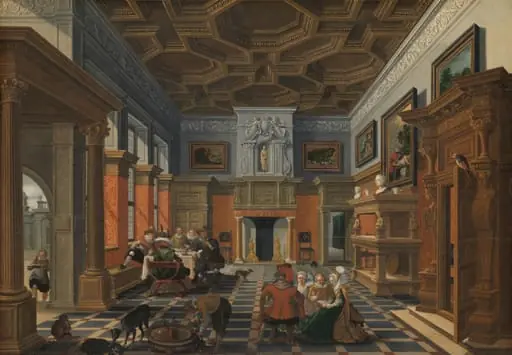
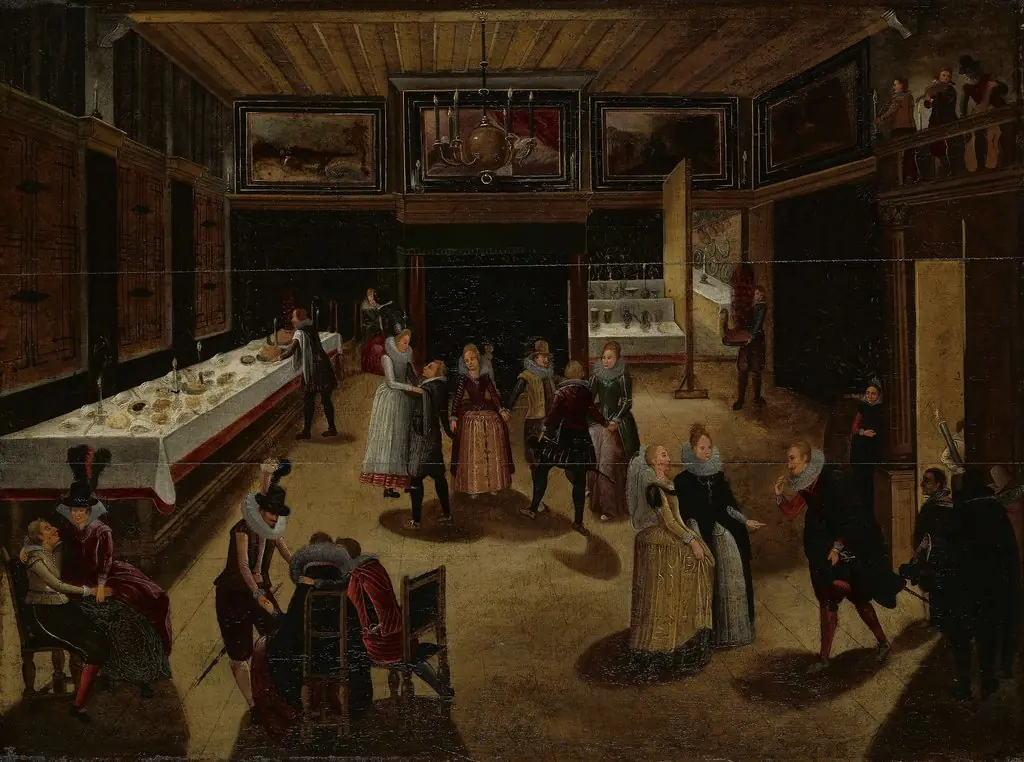
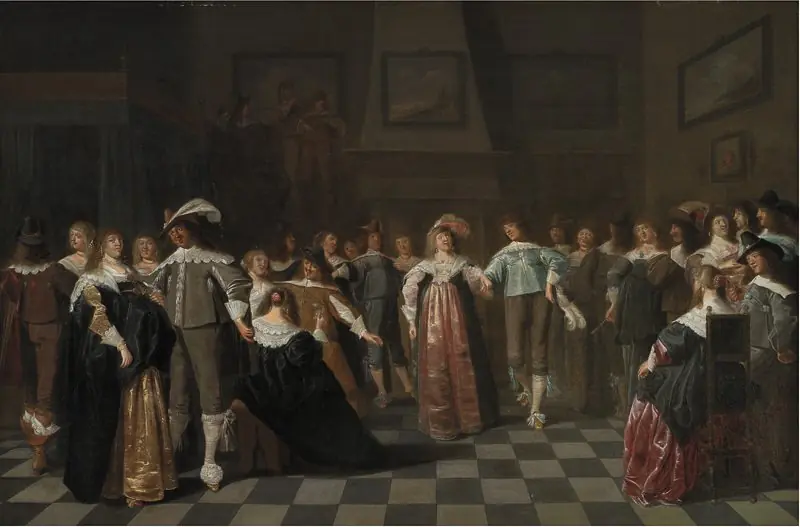
This painting shows a lively interior scene. In the center, a man and woman dance together, while other people stand around them. The room has a large fireplace, a long table with food and dishes, and many windows. The floor is checkered, and the walls are decorated with paintings.
A dog walks across the floor, and a musician plays a cello near the fireplace. The people are dressed in 17th-century clothing, and the atmosphere seems joyful.
This painting is a great example of Dutch art from the 17th century. To learn more about the artist who created this scene, look up Christoffel Jacobsz van der Laemen.
Overview
Painted around 1650 by Christoffel Jacobsz van der Laemen, this oil-on-canvas work captures a domestic celebration in a Flemish interior. It reflects the artist’s focus on scenes of social interaction among the urban middle class, a common theme in Northern European art of the period. The painting is part of the collection at Statens Museum for Kunst in Copenhagen, where it exemplifies the genre of merry company imagery popular in the Dutch Golden Age.
Subject & Meaning
The scene centers on a couple dancing, surrounded by guests engaged in conversation, music, and dining. A cello player near the fireplace and a dog moving across the floor add quiet vitality to the composition. The presence of food, drink, and leisure suggests a moment of cultivated enjoyment, possibly a wedding or festive gathering. These elements convey ideals of domestic harmony and social refinement rather than overt narrative.
Technique & Style
Van der Laemen employed fine brushwork to render textures of fabric, wood, and stone with quiet precision. The checkered floor and framed wall paintings create rhythmic structure, while soft light enters through multiple windows, illuminating faces and surfaces without dramatic contrast. Figures are arranged in a loose, naturalistic grouping, avoiding theatricality in favor of observed everyday motion and quiet interaction.
History & Provenance
The painting has remained in institutional hands since at least the 19th century, entering the collection of Statens Museum for Kunst in Denmark. Its attribution to van der Laemen is consistent with his known oeuvre, which includes similar interior scenes of revelry. No significant alterations or major ownership changes are documented, suggesting stable preservation through centuries.
Context
In mid-17th-century Flanders and the Dutch Republic, depictions of domestic leisure flourished as urban prosperity grew. Artists like van der Laemen catered to a market that valued art reflecting personal comfort, social order, and moral restraint disguised as merriment. Such works contrasted with religious or mythological subjects, offering instead a secular vision of civilized life.
Legacy
Van der Laemen’s work contributed to the broader tradition of genre painting in Northern Europe, influencing later artists who depicted intimate social moments. While not widely celebrated today, his paintings remain valuable for their documentation of material culture, dress, and domestic architecture. This piece continues to serve as a quiet record of how ordinary people lived and celebrated in the 17th century.
Artist & collection
Artist
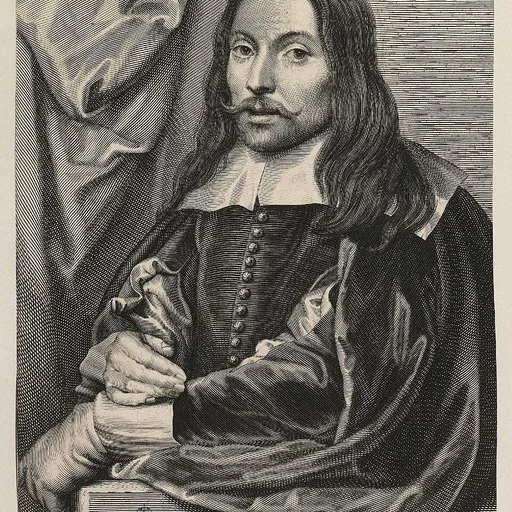
Christoffel Jacobsz van der Laemen
Christoffel Jacobsz van der Laemen or Christoffel van der Laemen (1607/1620 – c. 1651) was a Flemish painter who specialized in merry company scenes with elegant figures. His favorite themes were card and backgammon…