Artwork
Gesellschaftsszene
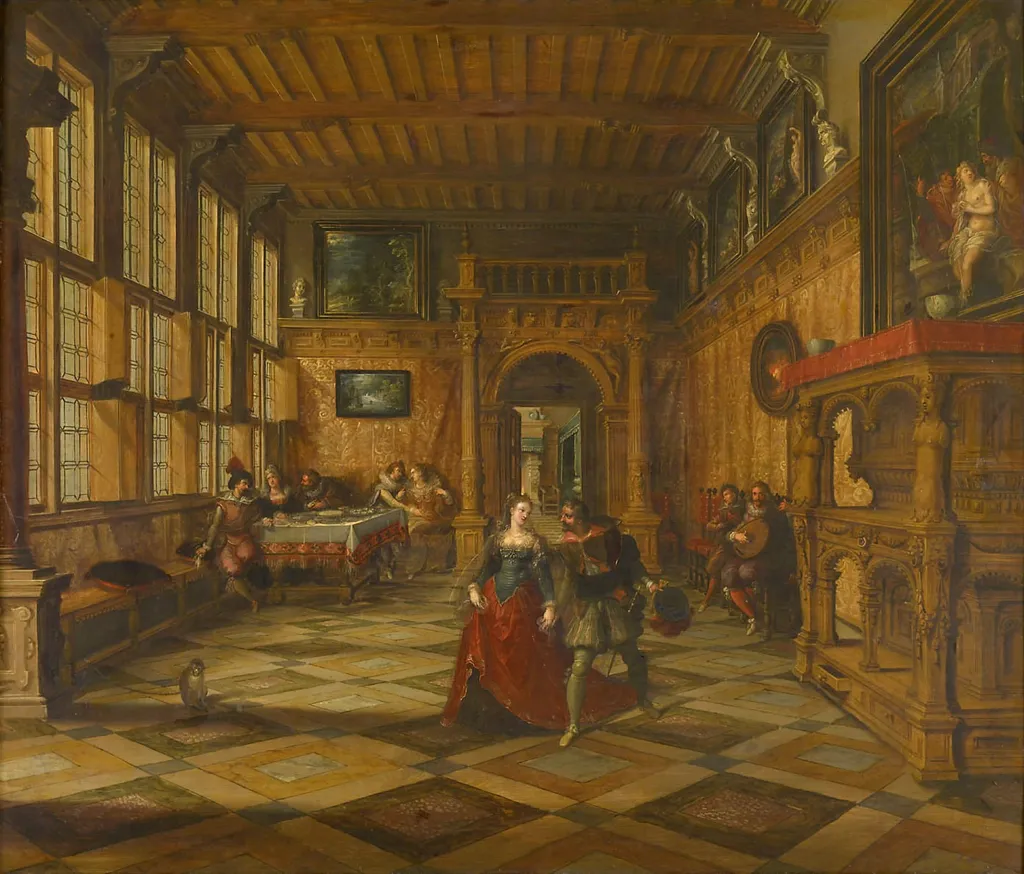
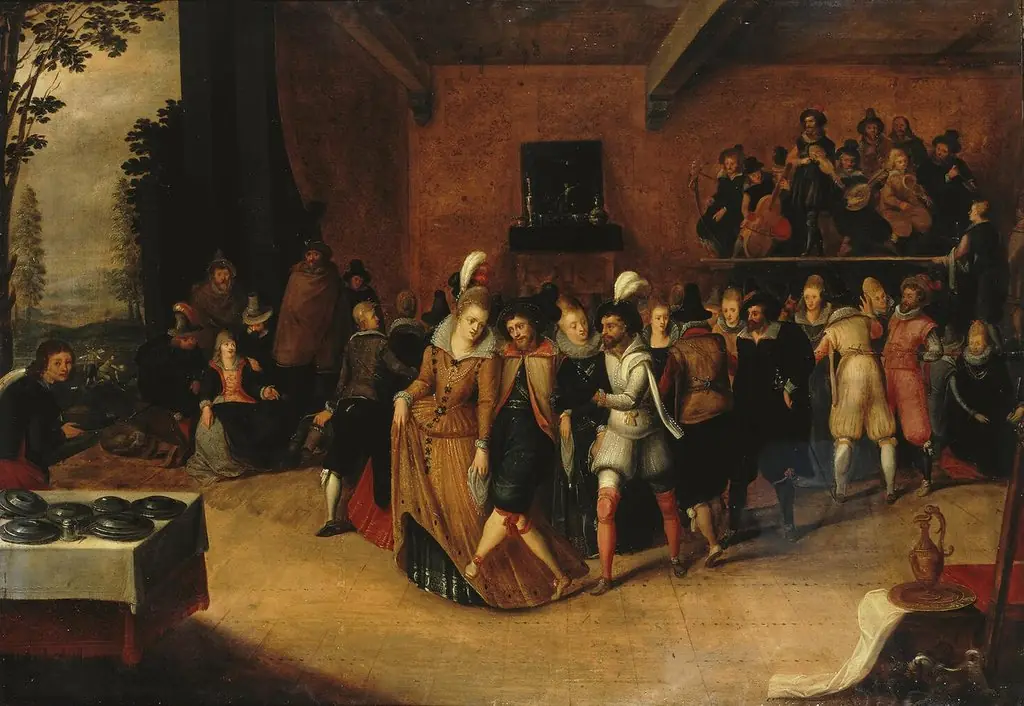
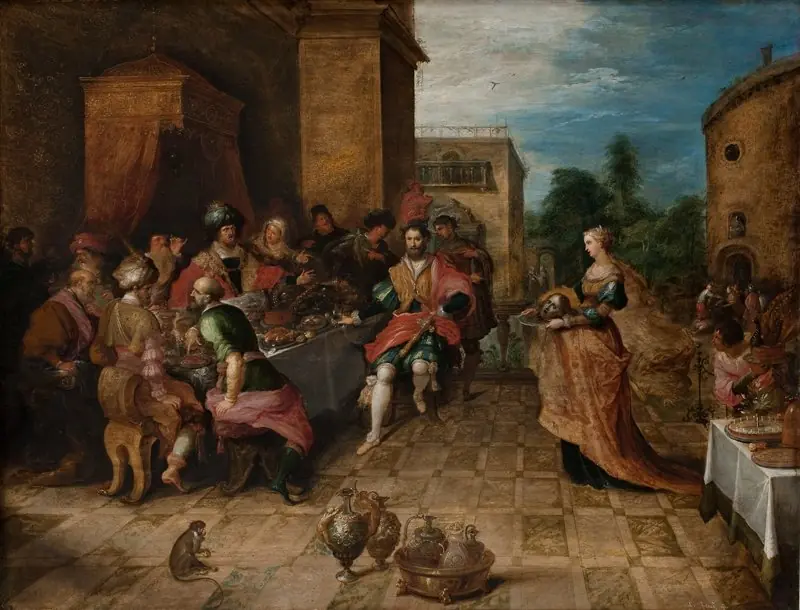
Gesellschaftsszene is an unspecified painting by the Flemish Baroque painting artist Hieronymous Francken II. It dates from 1600 and is held in the collection of the Kunsthistorisches Museum.
About this work
Overview
Francken, active in Antwerp during the early Baroque period, was known for his versatility across religious, allegorical, and domestic subjects.
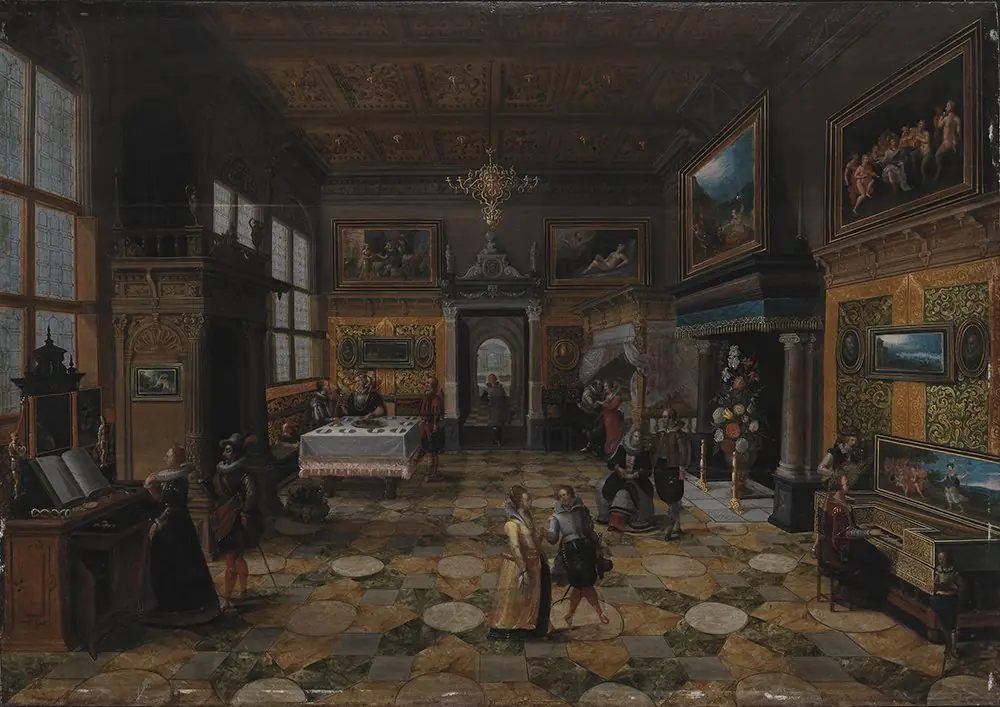
Painted in 1600 by Hieronymus Francken the Younger, *Gesellschaftsszene* is a Flemish genre scene capturing an interior social gathering. Francken, active in Antwerp during the early Baroque period, was known for his versatility across religious, allegorical, and domestic subjects. This work exemplifies his engagement with everyday life, rendered with meticulous detail and a keen sense of spatial composition. It resides today in the Kunsthistorisches Museum in Vienna.
Subject & Meaning
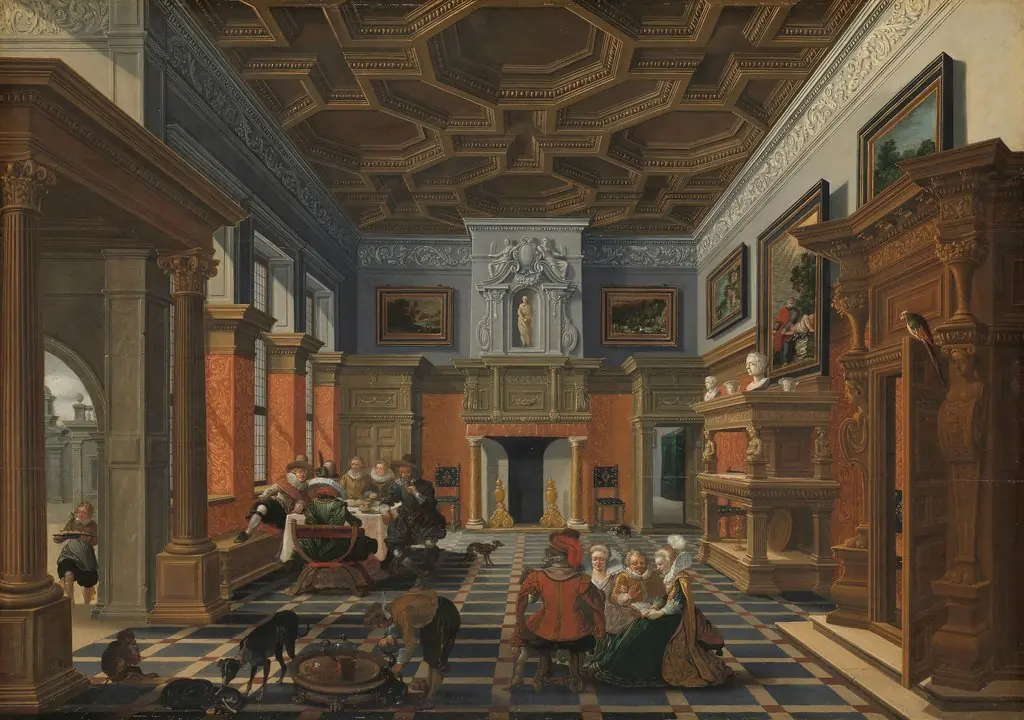
The painting portrays a group of well-dressed individuals in a richly furnished room, engaged in quiet conversation or idle presence. No single narrative dominates; instead, the scene suggests the quiet rituals of aristocratic or bourgeois leisure. The woman in red draws attention without disrupting the overall calm, hinting at social hierarchy or personal distinction. The work reflects contemporary interests in domesticity and class performance rather than moralizing or allegory.
Technique & Style
Francken employed fine brushwork to render textures—fabric, wood, stone—with precise realism. The checkered floor and ornate fireplace anchor the composition, while light filters through multiple windows, casting subtle shadows that model forms and deepen spatial recession. His handling of light avoids dramatic contrasts, favoring a soft, even illumination that enhances the quiet intimacy of the scene. Details like jewelry and embroidery suggest close observation of contemporary dress and material culture.
History & Provenance
Created around 1600, the painting entered the Habsburg collections likely during the early 17th century, given Francken’s connections to imperial patrons in Vienna. It has remained in the Kunsthistorisches Museum since its founding, with no documented changes in ownership. Its preservation reflects its early recognition as a representative example of Flemish genre painting, though it was never widely reproduced or publicly exhibited until modern times.
Context
In early 17th-century Antwerp, genre scenes of domestic interiors gained popularity as civic wealth expanded and collectors sought relatable imagery. Francken, alongside his brother Frans, helped define this trend, moving away from purely religious themes. *Gesellschaftsszene* aligns with broader Netherlandish traditions of interior painting but distinguishes itself through its restrained atmosphere and attention to architectural detail, contrasting with the more theatrical scenes of later Baroque artists.
Legacy
Though not as widely studied as his brother’s allegorical works, Francken’s genre scenes like this one contributed to the institutionalization of domestic subjects in Flemish art. The painting’s quiet realism influenced later Dutch painters who refined similar themes. Its continued presence in a major European collection underscores its role as a documented example of how early Baroque artists captured the nuances of daily life without overt narrative or symbolism.
Artist & collection
Artist
Hieronymus Francken the Younger or Hieronymus II (Antwerp, 1578 – Antwerp, 1623) was a Flemish painter and one of the most prominent members of the large Francken family of artists.

 Party Scene
 Sumptuous renaissance interior with a banquet
 Party Scene
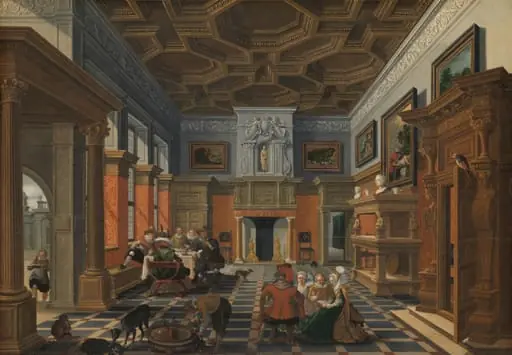 Gezelschap in een interieur
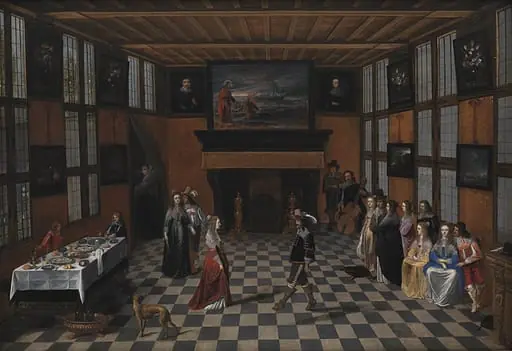 Dancing Party in an Interior
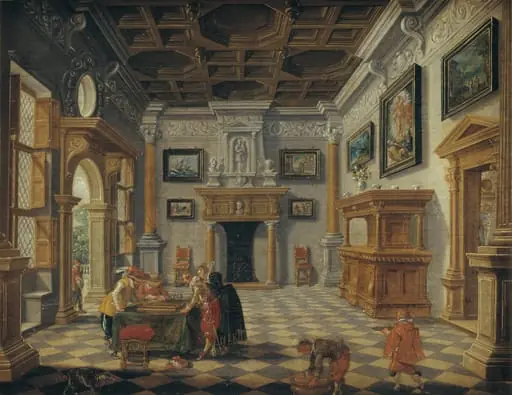 Sumptuous Renaissance Interior with Tric-Trac Players
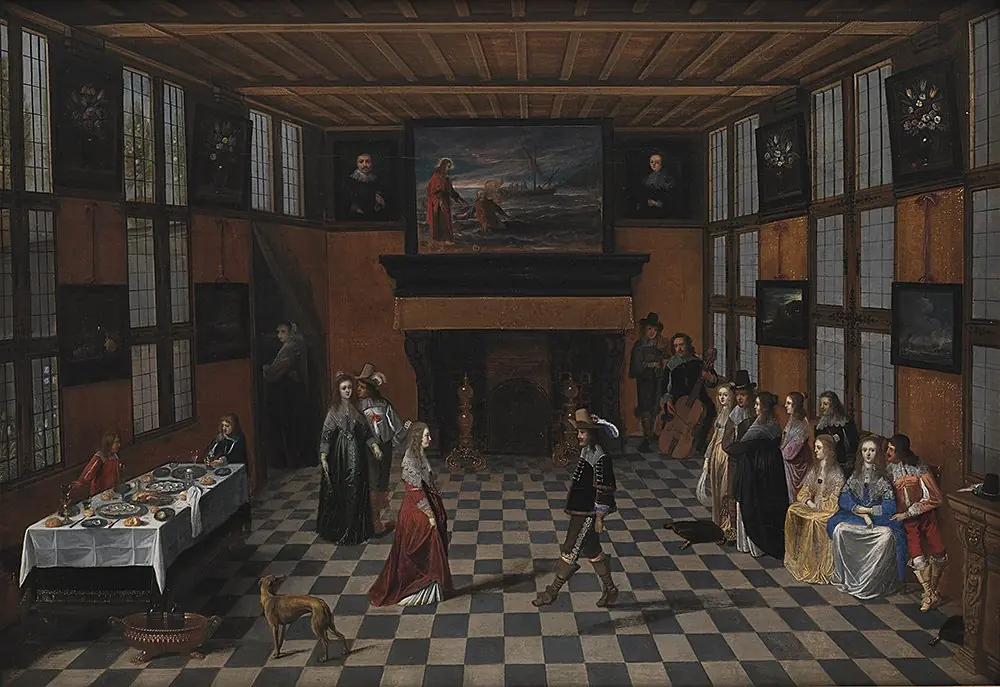 Dancing Party in an Interior
 Interior with a Company
 Return of the Prodigal Son
 Evening Party
 Palaces
 The Banquet of Herod. Salome Presents the Head of John the Baptist