Artwork
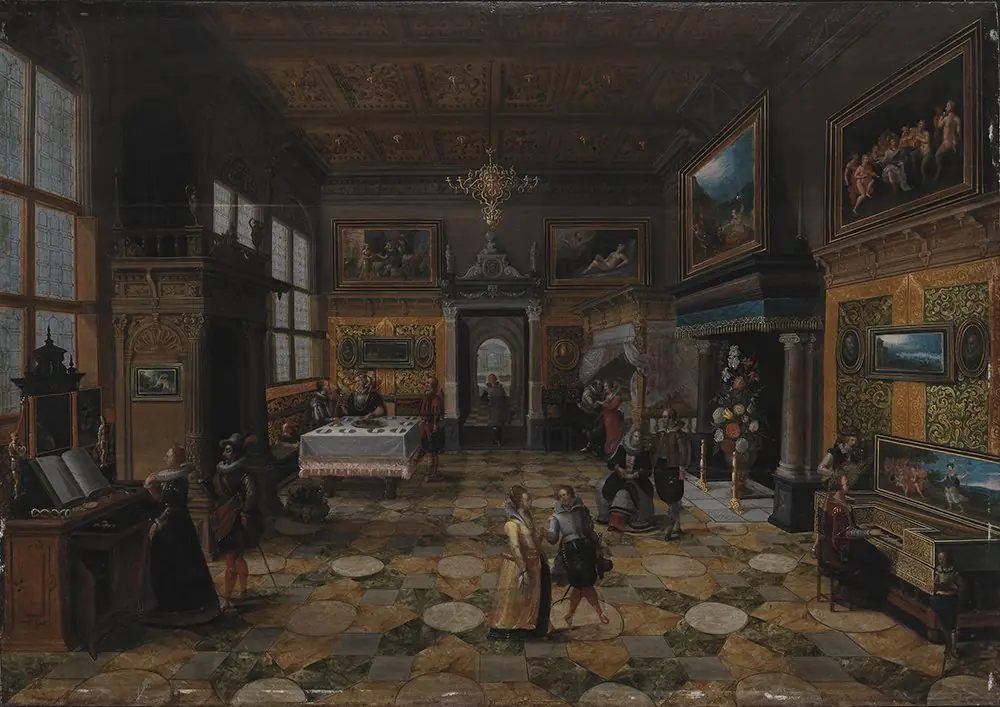
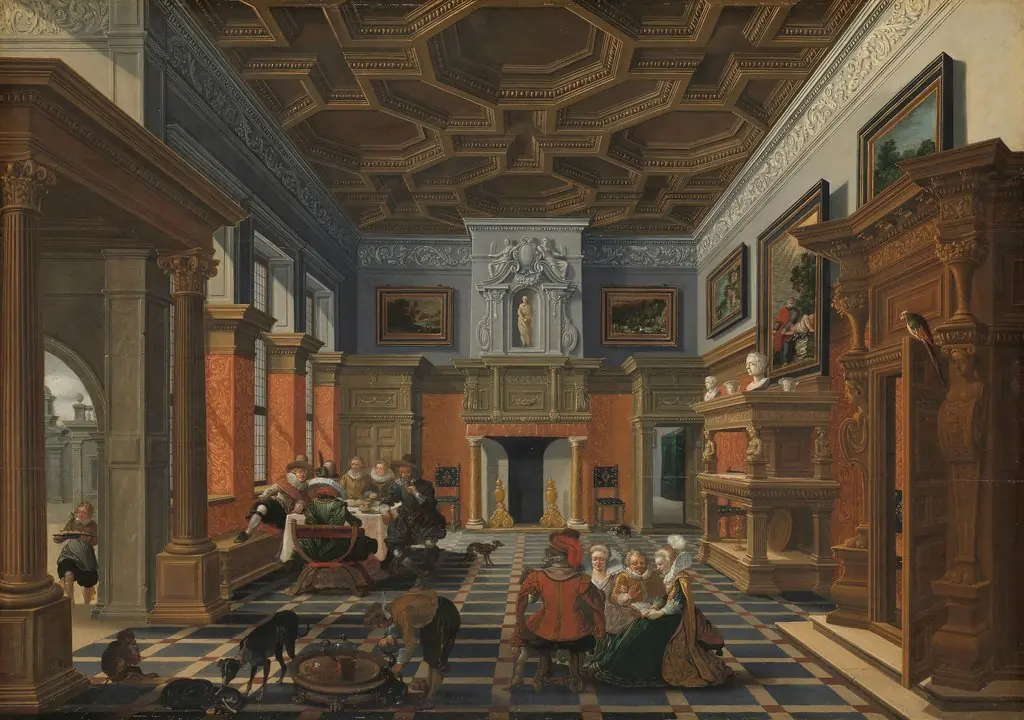
Gezelschap in een interieur
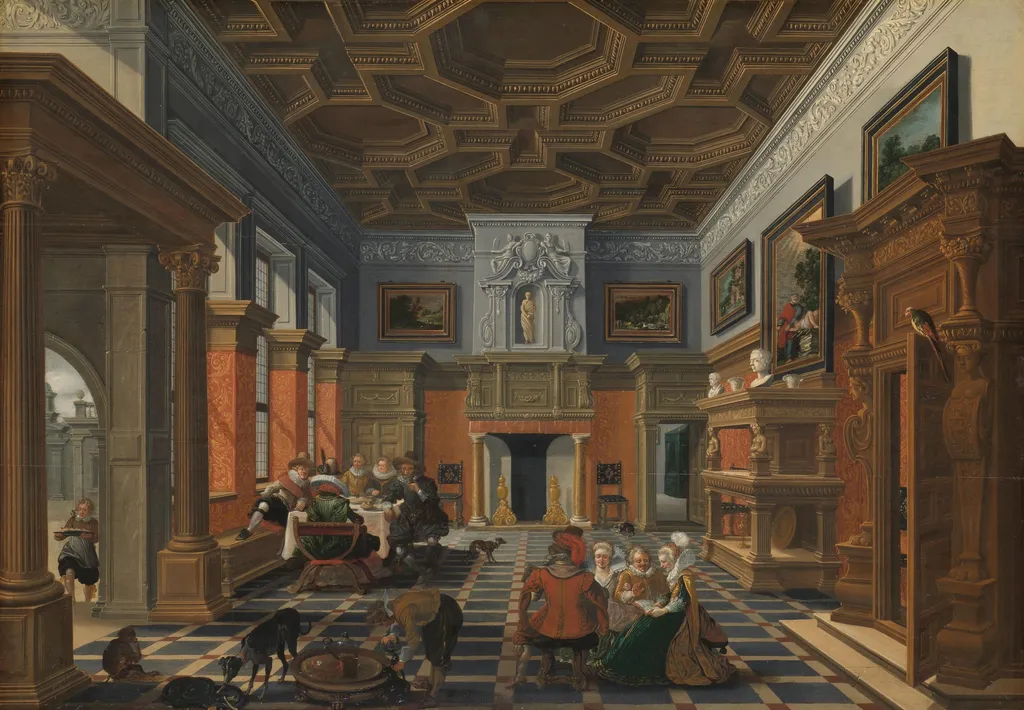
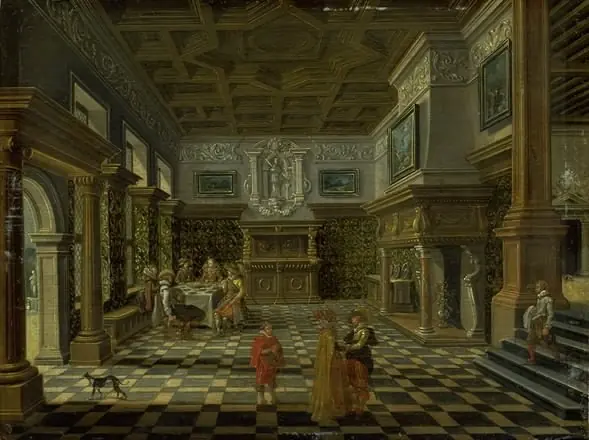
Gezelschap in een interieur is an unspecified painting by the Dutch Golden Age artist Bartholomeus van Bassen. It dates from 1622 and is held in the collection of the Rijksmuseum.
About this work
Overview
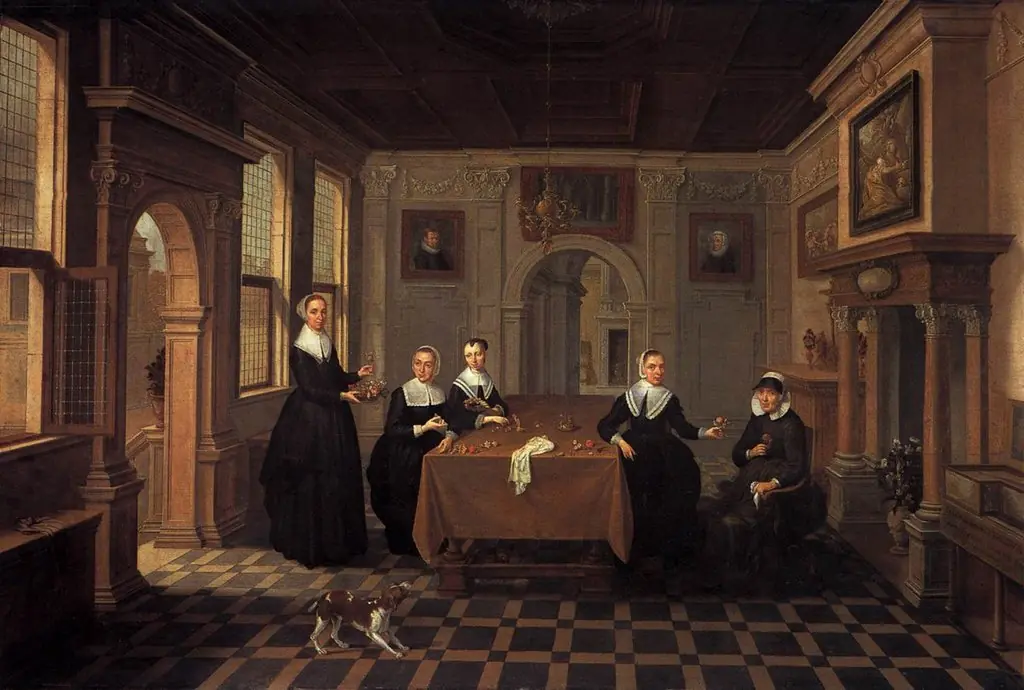
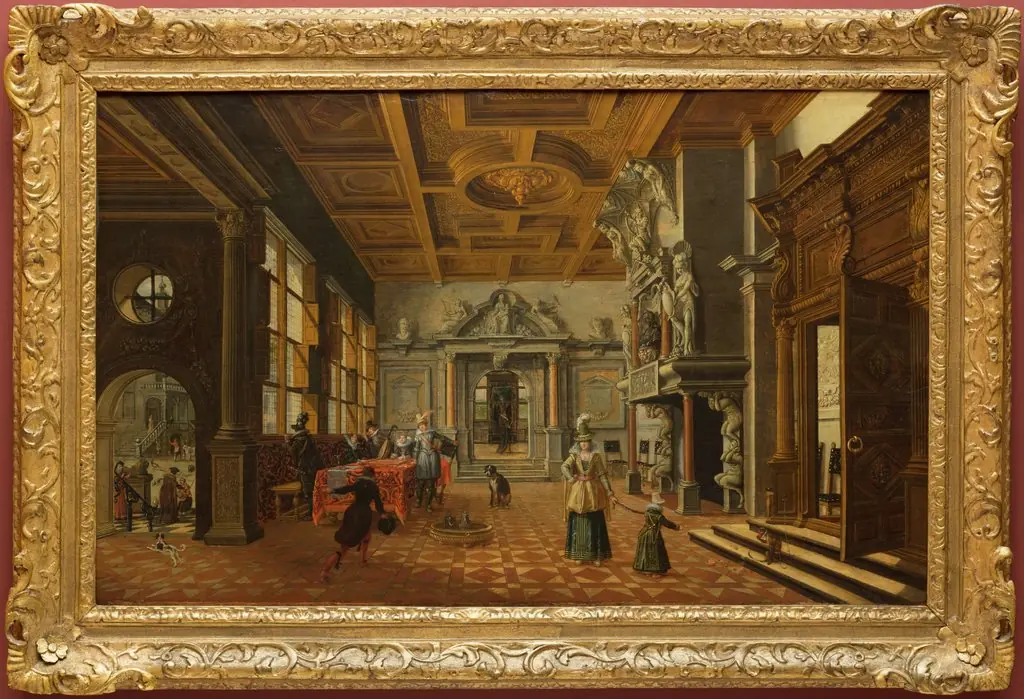
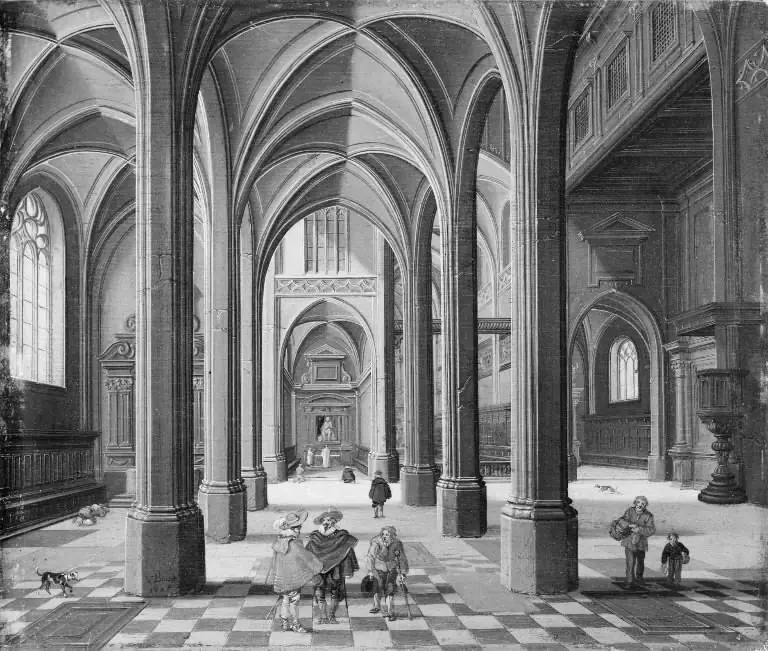
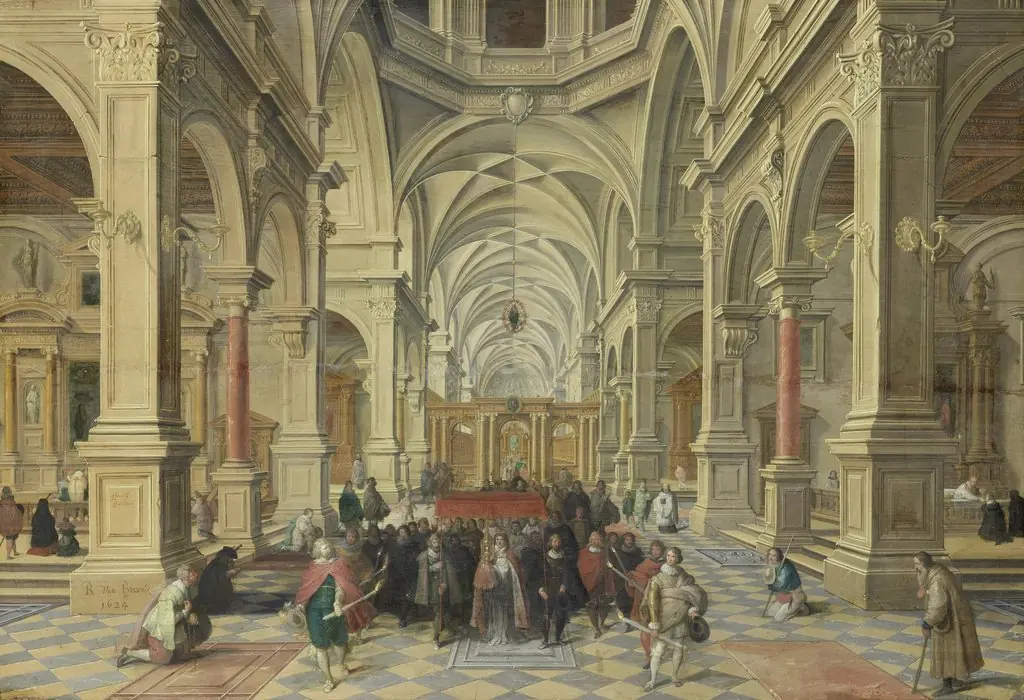
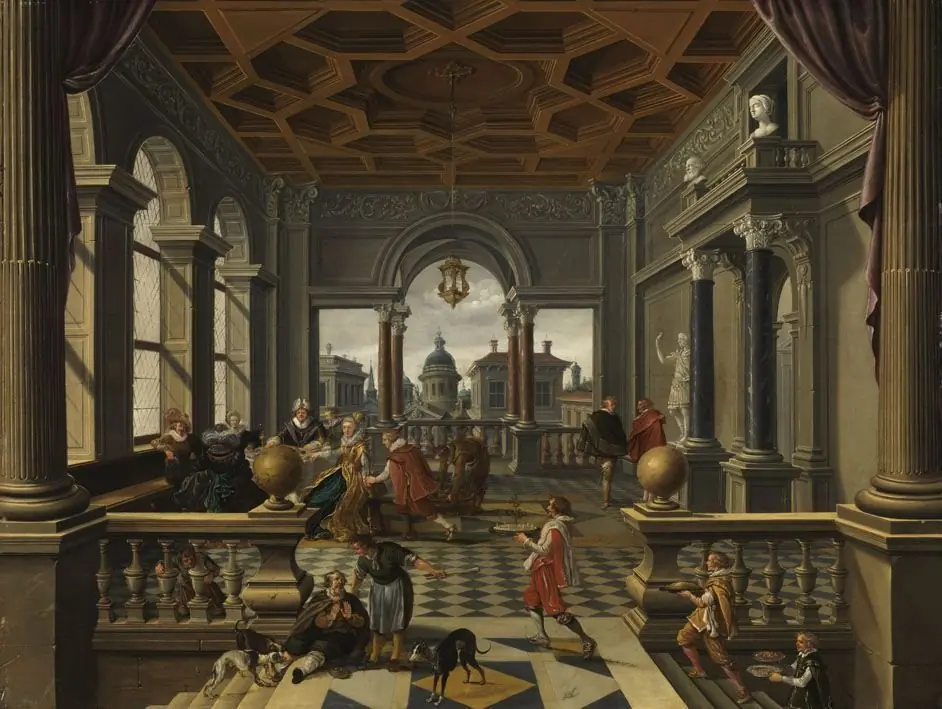
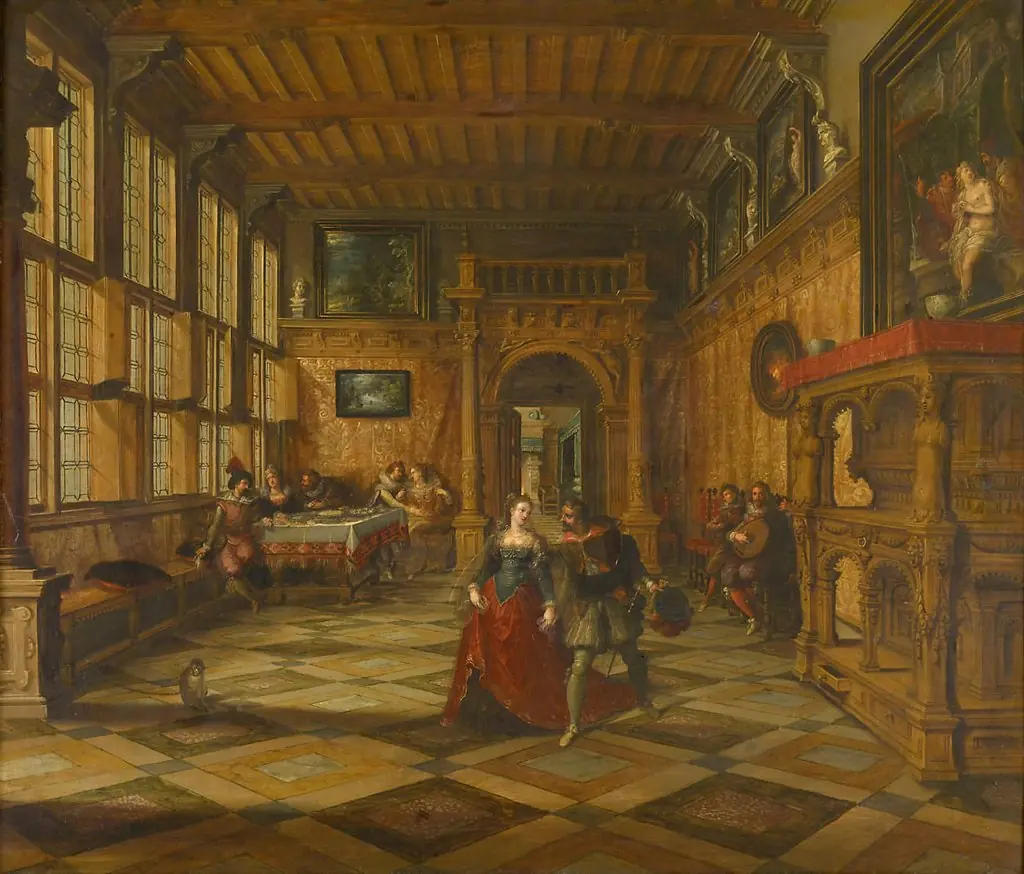
This painting depicts an idealized interior scene, the result of collaboration between two artists: Bassen rendered the architectural setting while Van de Velde added the figures. The space is not a real location but a constructed vision of refinement, combining elements drawn from architectural treatises to create a harmonious, luxurious environment that never existed in reality.
Subject & Meaning
The scene portrays an affluent gathering engaged in quiet social rituals—conversation, dining, and leisure. Figures are arranged with poise, their attire and gestures signaling status. A dog at the feet of one guest adds a touch of domestic ease. The composition emphasizes decorum and cultivated taste, reflecting ideals of aristocratic life rather than documenting actual behavior.
Technique & Style
The architectural details—coffered ceiling, ornate fireplace, wall panels, and display cabinets—are rendered with precise linear clarity, suggesting a fascination with spatial order. Figures are painted with softer modeling, contrasting the rigid geometry of the room. The style merges meticulous craftsmanship with a theatrical sense of arrangement, prioritizing visual balance over naturalism.
History & Provenance
The work emerged from a Dutch artistic practice in which specialists often collaborated on single compositions. Bassen and Van de Velde were among those who regularly partnered, dividing labor between architecture and figures. The design motifs derive from Hans Vredeman de Vries’s architectural engravings, widely circulated in the early 17th century as references for idealized interiors.
Context
During the Dutch Golden Age, depictions of luxurious interiors served as expressions of cultural aspiration rather than documentary records. Such paintings catered to a rising merchant class seeking to align themselves with aristocratic aesthetics. The use of Vredeman de Vries’s designs signaled erudition, linking the viewer to Renaissance ideals of proportion and ornament.
Legacy
This collaborative approach influenced later genre painters who combined architectural precision with social observation. The fantasy interior became a recurring motif in Dutch art, shaping how wealth and refinement were visually imagined. Though not documentary, these works preserved contemporary tastes and the period’s fascination with controlled, orderly beauty.
Own this work as a print
Artist & collection
Artist
Bartholomeus van Bassen (1590–1652) was an artist, born in The Hague.