Artwork
Summer Landscape
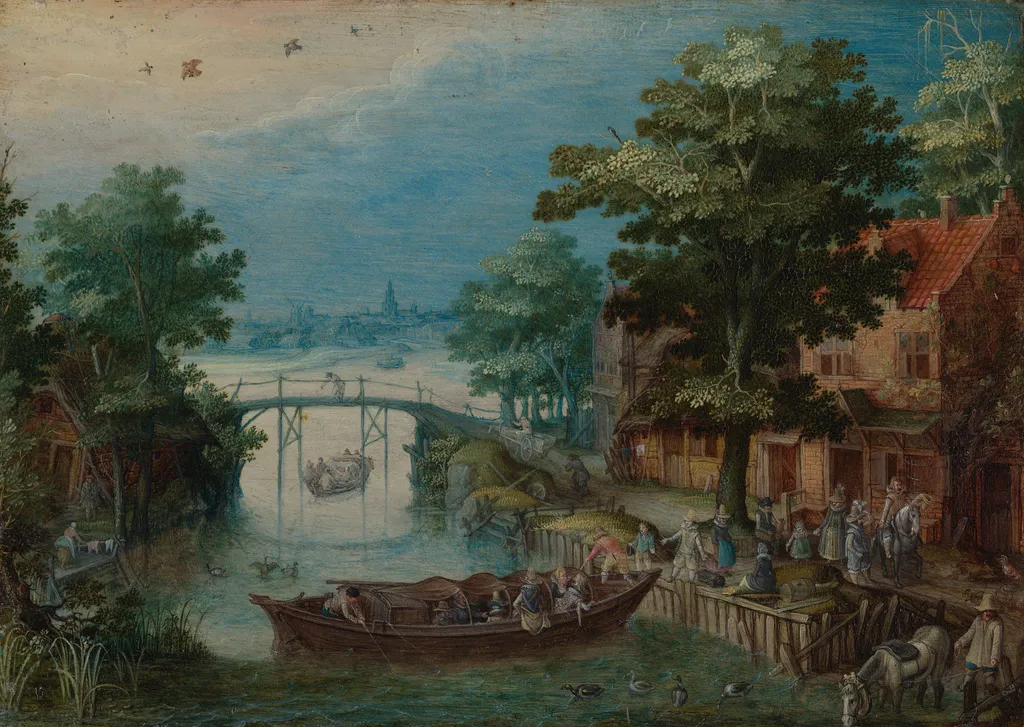
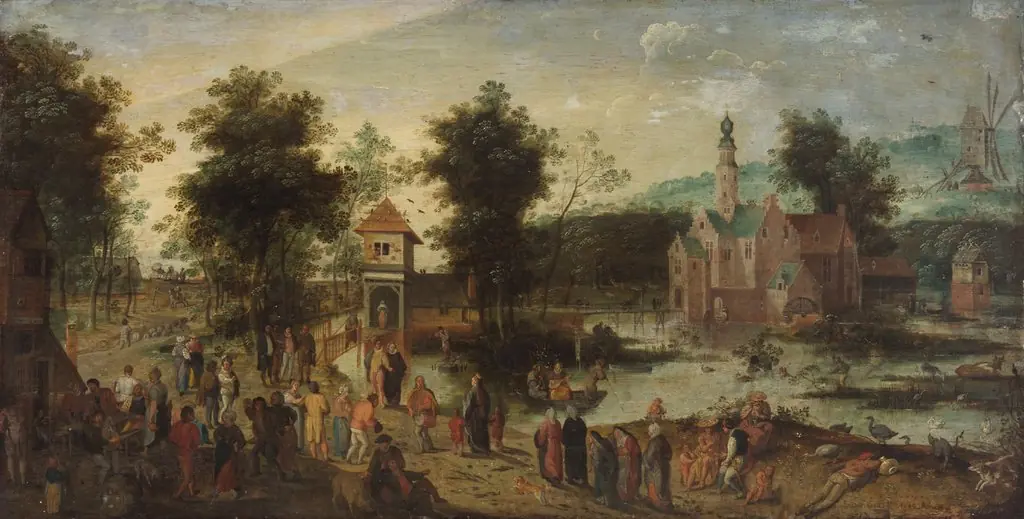
Summer Landscape is an oil painting by the Dutch Golden Age artist Christoffel van den Berghe. It dates from 1610 and is held in the collection of the Mauritshuis.
About this work
Overview
Christoffel van den Berghe, a Flemish artist active in the early 17th century, painted this landscape on a copper panel in 1610.
Christoffel van den Berghe, a Flemish artist active in the early 17th century, painted this landscape on a copper panel in 1610. His work, signed with the monogram CvB, reflects the growing interest in secular natural scenes during the Dutch Golden Age. The small-scale painting is part of the Mauritshuis collection, where it exemplifies the meticulous attention to detail characteristic of Northern European landscape traditions of the period.
Subject & Meaning
The scene depicts a tranquil rural summer day along a winding river, with figures resting, walking, and crossing a stone bridge beneath a small boat. Trees frame the composition, their foliage rendered with careful observation. There is no overt narrative or symbolic intent; instead, the painting offers a quiet celebration of everyday life in the countryside, emphasizing harmony between people and their environment.
Technique & Style
Van den Berghe applied oil paint with precision on a copper support, which allowed for fine detail and luminous color. The palette favors muted greens, browns, and soft blues, with subtle variations in tone to suggest depth and atmosphere. Individual leaves, clothing textures, and architectural elements are rendered with delicate brushwork, reflecting a preference for naturalism over idealization.
History & Provenance
The painting has remained in institutional hands since at least the 19th century, entering the Mauritshuis collection through documented acquisitions. Its copper support and signed monogram align with known works by van den Berghe, helping to confirm attribution. No major alterations or restorations are recorded, preserving its original surface and tonal balance.
Context
During the early 1600s, landscape painting emerged as an independent genre in the Low Countries, moving away from religious or mythological themes. Artists like van den Berghe contributed to this shift by capturing local scenery with observational accuracy. His work reflects the influence of earlier Netherlandish traditions while anticipating the more expansive landscapes of later Dutch painters.
Legacy
Van den Berghe’s oeuvre, though limited in surviving works, represents an important phase in the development of Dutch landscape painting. His focus on intimate, detailed scenes helped establish a visual language that emphasized the quiet dignity of rural life. While not widely known today, his contributions are recognized in scholarly studies of early 17th-century Northern European art.
Own this work as a print
Artist & collection
Artist
Christoffel van den Berghe (he used the monogram CvB) (c. 1590, Antwerp – c. 1645, Middelburg) was a Flemish-born Dutch Golden Age painter of landscapes and flower still lifes.

 River Bank
 River Landscape
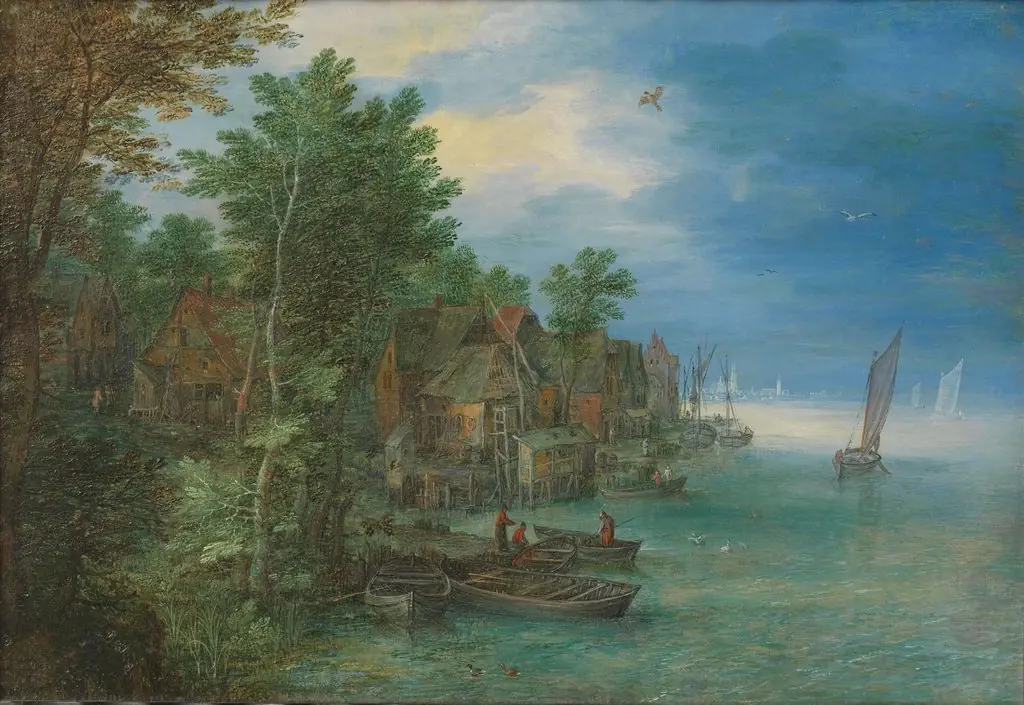 View of a Village along a River
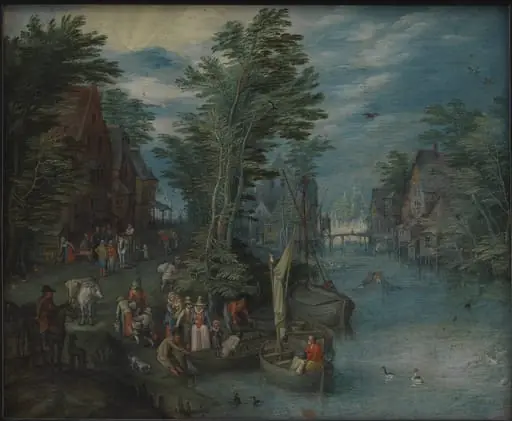 Village at a River
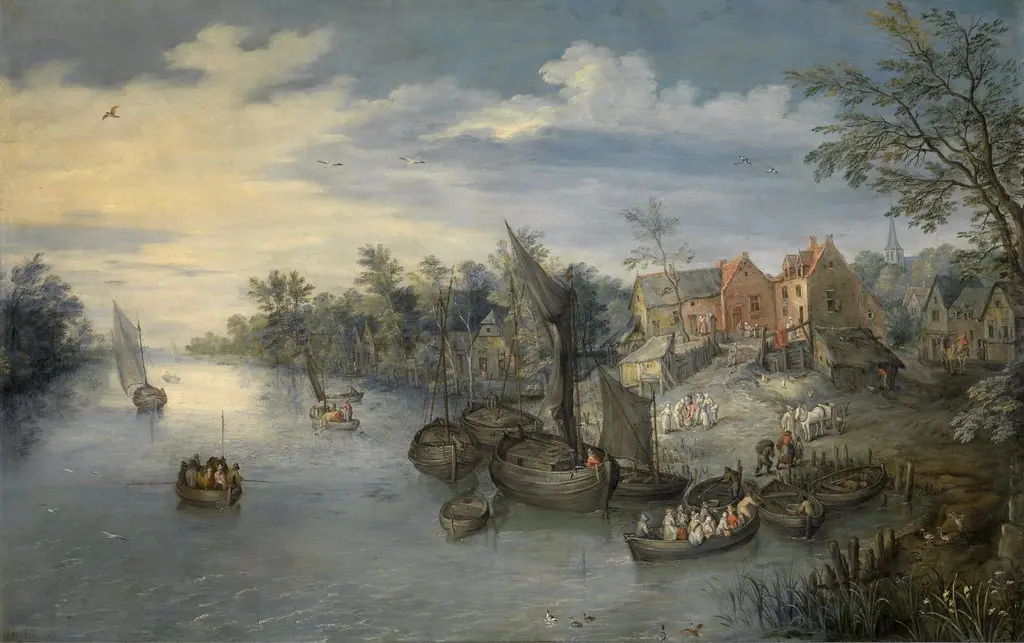 A River Landscape
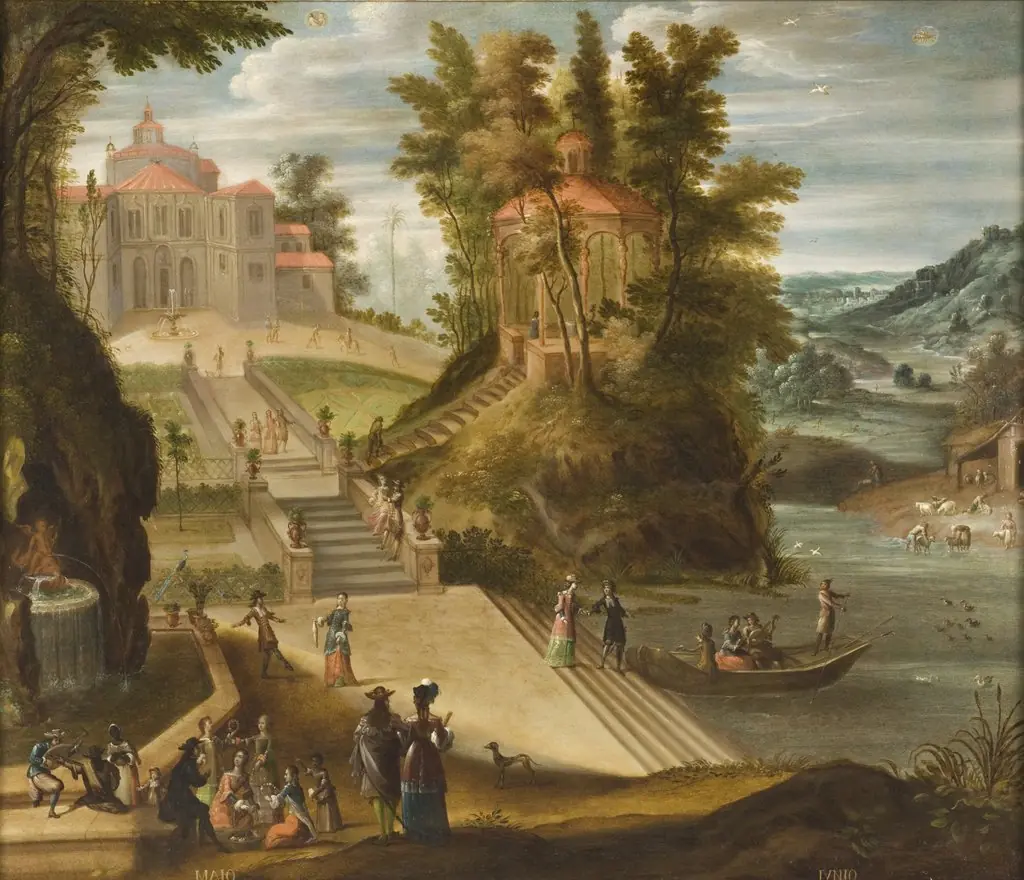 The Twelve Months of the Year (Los doce meses del año)
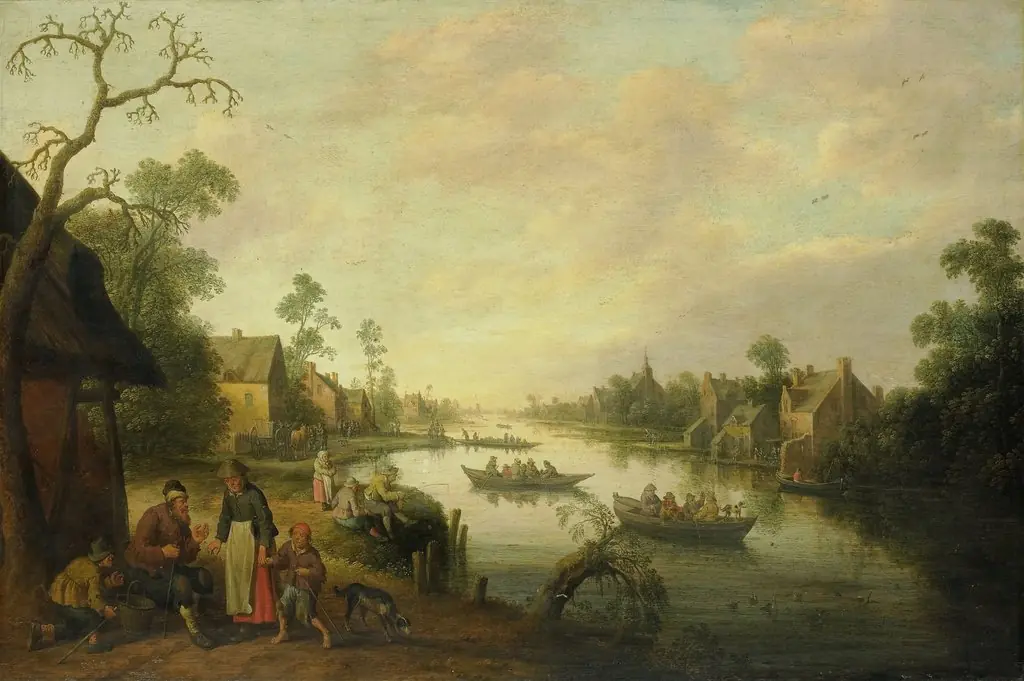 River view
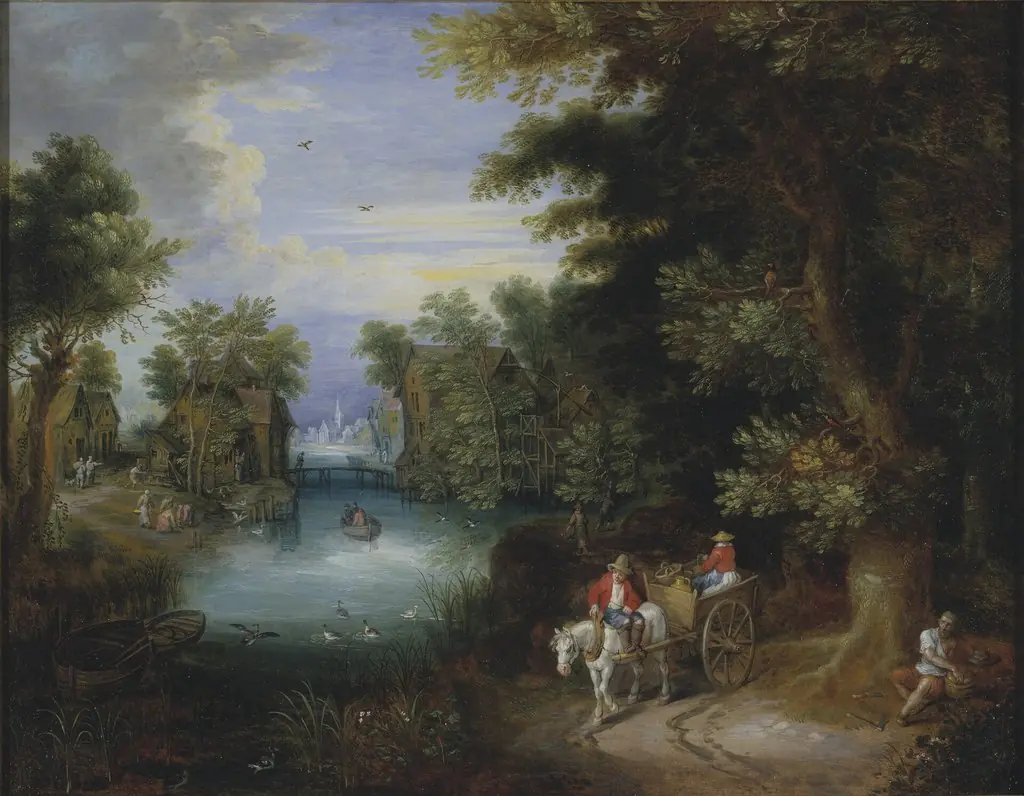 River Landscape with Peasants
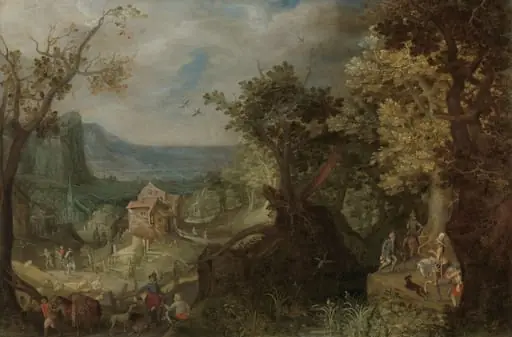 Hunter and Horsemen on a Wooded Road, with a Village in a Valley beyond
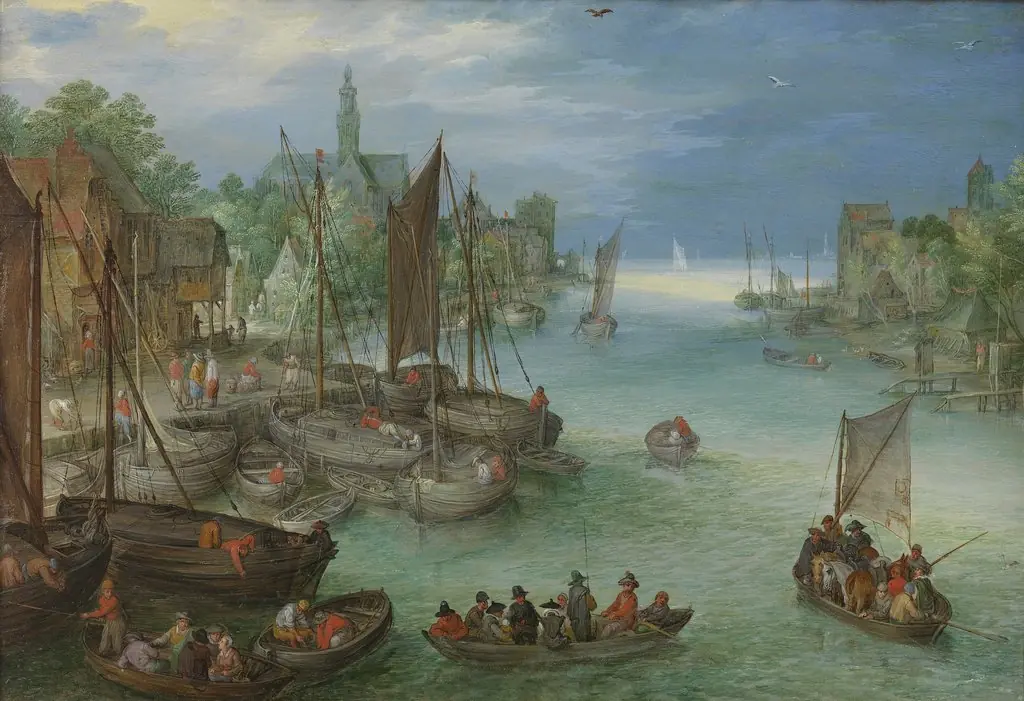 View of a City along a River
 Landscape with castle and tavern
 Village Kermis in Schelle with Self Portrait