Artwork
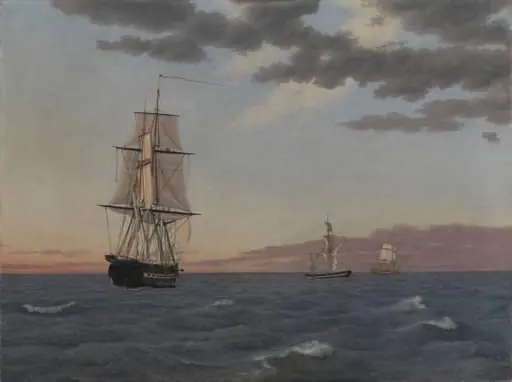
The Corvette "Galathea" Lying to in order to Send Help to the Brig "St Jean"
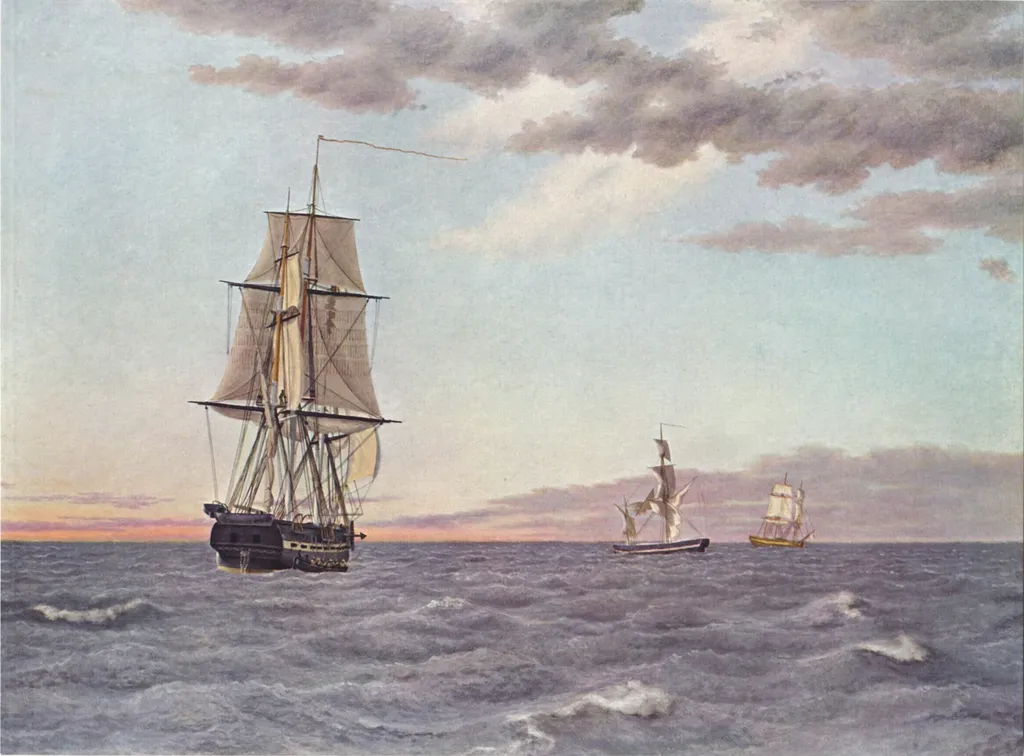
The Corvette "Galathea" Lying to in order to Send Help to the Brig "St Jean" is an oil painting by Christoffer Wilhelm Eckersberg. It dates from 1839 and is held in the collection of the Statens Museum for Kunst.
About this work
Overview
Christoffer Wilhelm Eckersberg painted *The Corvette “Galathea” Lying to in order to Send Help to the Brig “St Jean”* in 1839. Executed in oil on canvas, the work belongs to the marine genre and is part of the Statens Museum for Kunst’s collection. It records a moment in which the Danish vessel HDMS Galathea is positioned to assist another ship.
Subject & Meaning
The central focus is the barque Galathea, rendered with its sails full and its hull angled as if awaiting a signal. In the background a smaller vessel, identified as the brig St Jean, appears, suggesting a narrative of maritime aid and cooperation between ships during the age of sail.
Technique & Style
Eckersberg employs a restrained palette of muted blues and greys, allowing the sky’s soft tones to reflect on a calm sea surface. The composition balances light and shadow, creating a gentle chiaroscuro that models the hull and rigging while preserving the scene’s overall serenity.
History & Provenance
Completed in 1839, the painting entered the holdings of Denmark’s national gallery, Statens Museum for Kunst, where it remains on view. Its provenance reflects the museum’s early acquisition of works by Eckersberg, who is regarded as a foundational figure in Danish art.
Context
The work exemplifies early 19th‑century Danish interest in naval subjects, a period when the nation’s fleet played a prominent role in trade and defense. Eckersberg’s precise rendering aligns with the academic training he received in Copenhagen and later in Paris, where he refined his approach to marine scenes.
Own this work as a print
Artist & collection
Artist
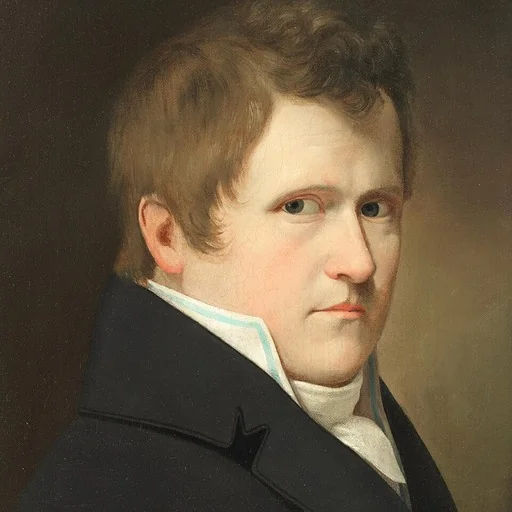
Christoffer Wilhelm Eckersberg
Christoffer Wilhelm Eckersberg (2 January 1783 – 22 July 1853) was a Danish painter.

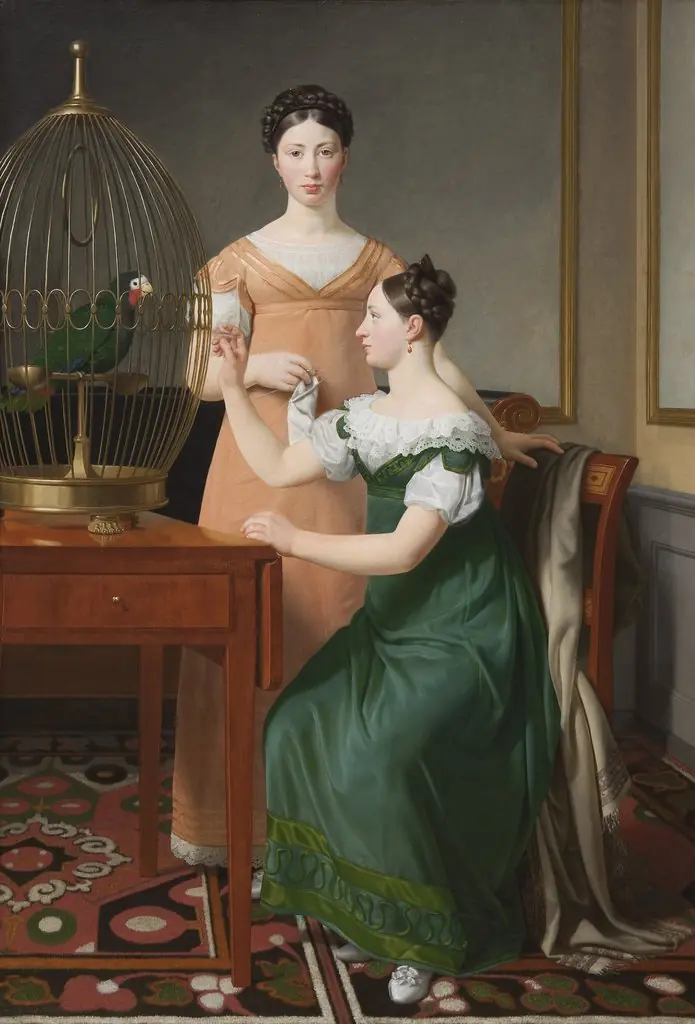 Bella and Hanna. The Eldest Daughters of M. L. Nathanson
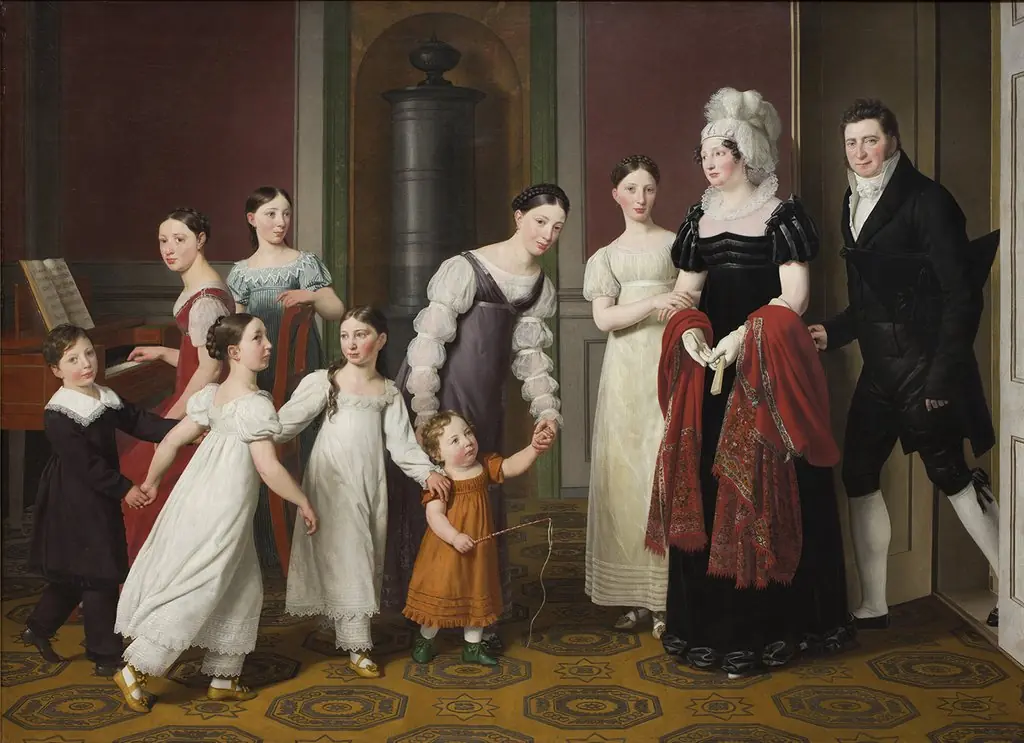 Familien Nathanson
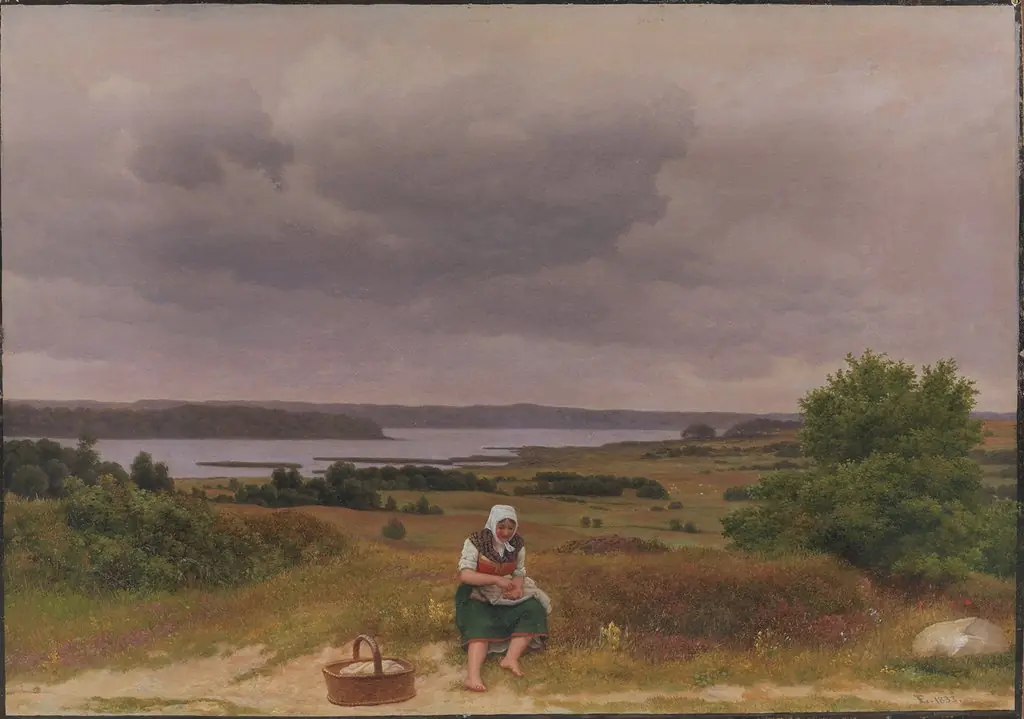 View of Lake Fure near Rudersdal, North Sealand.
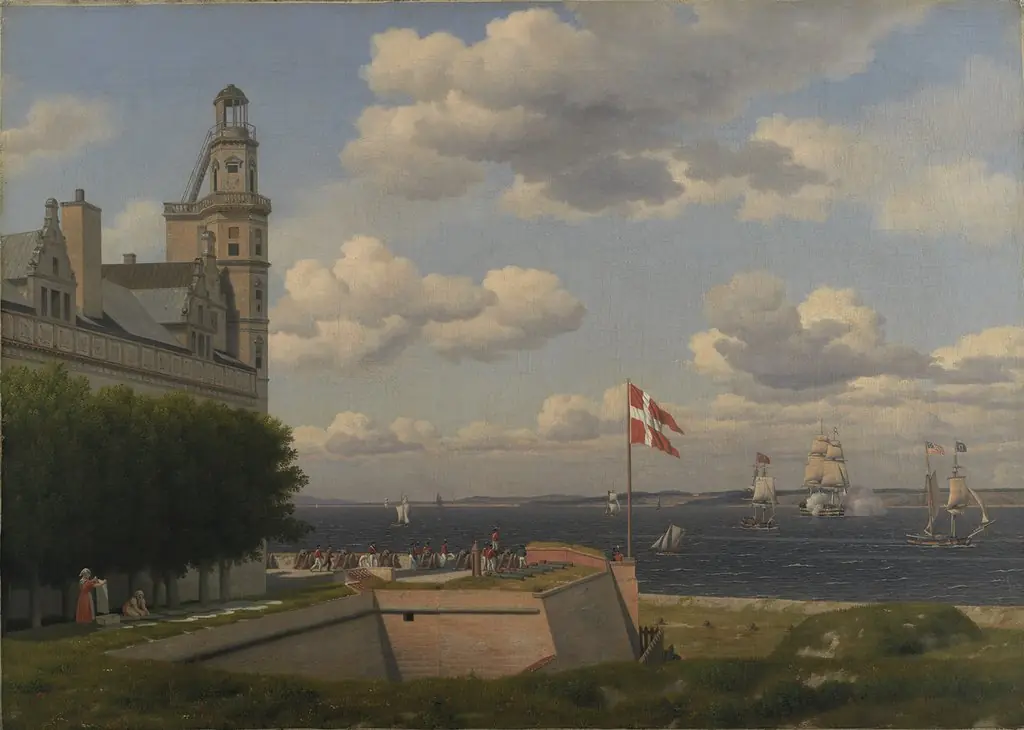 A View towards the Swedish Coast from the Ramparts of Kronborg Castle
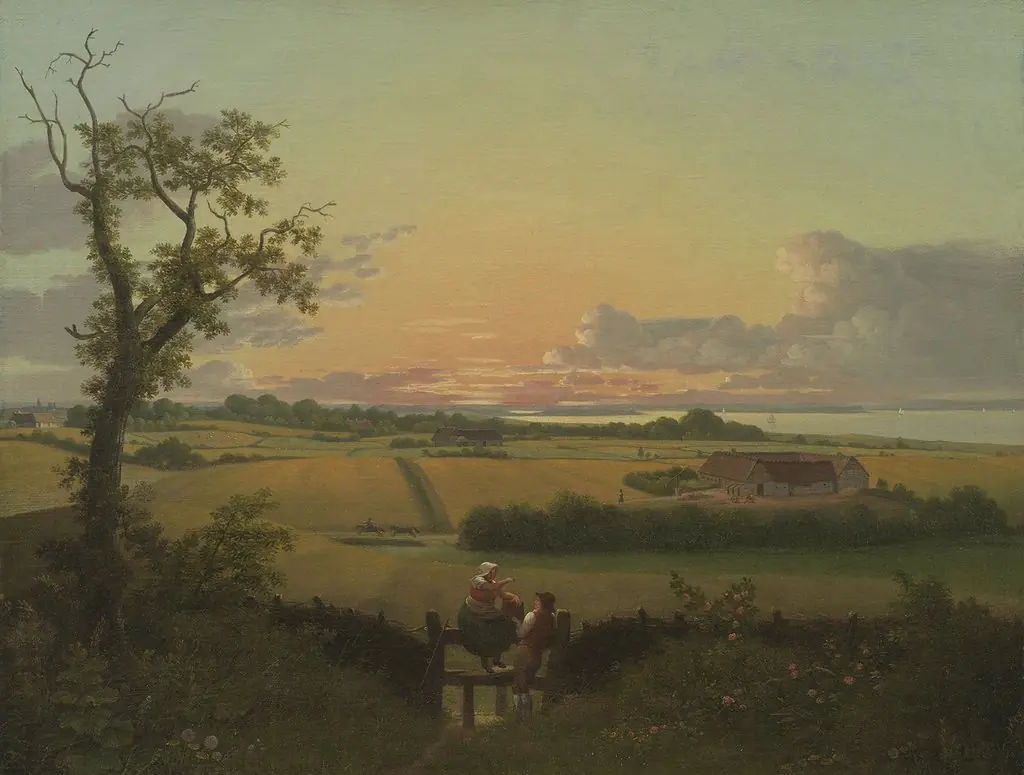 Landscape with a Stile. The Isle of Møn
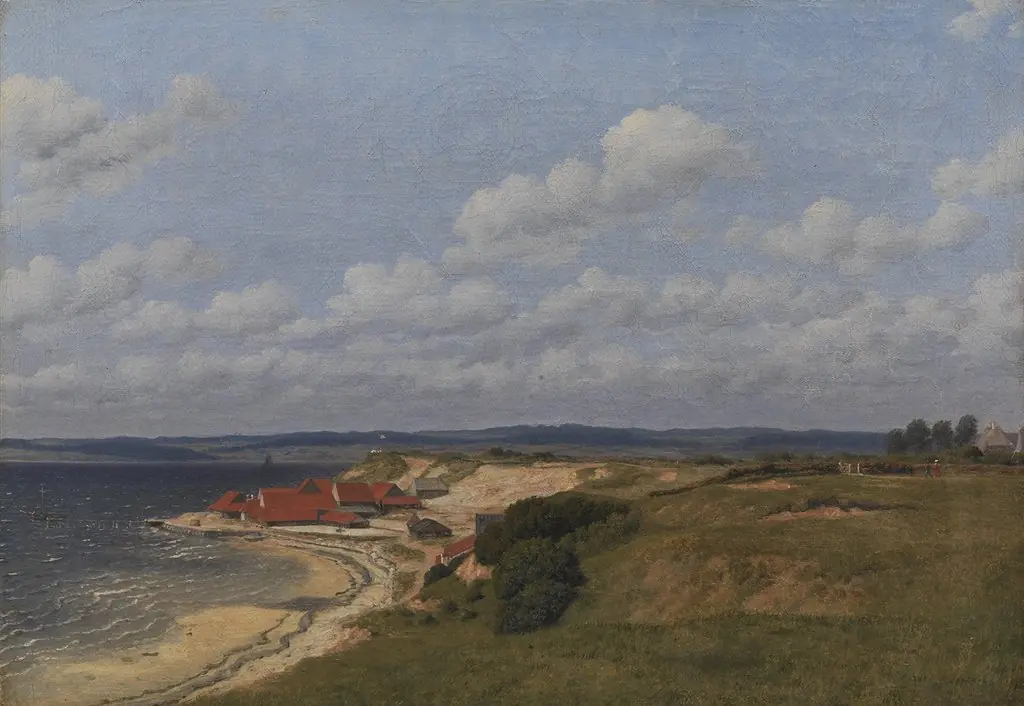 Renbjærg Tileworks by Flensburg Fiord
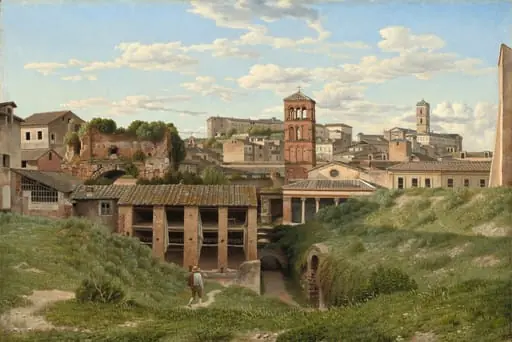 View of the Cloaca Maxima, Rome
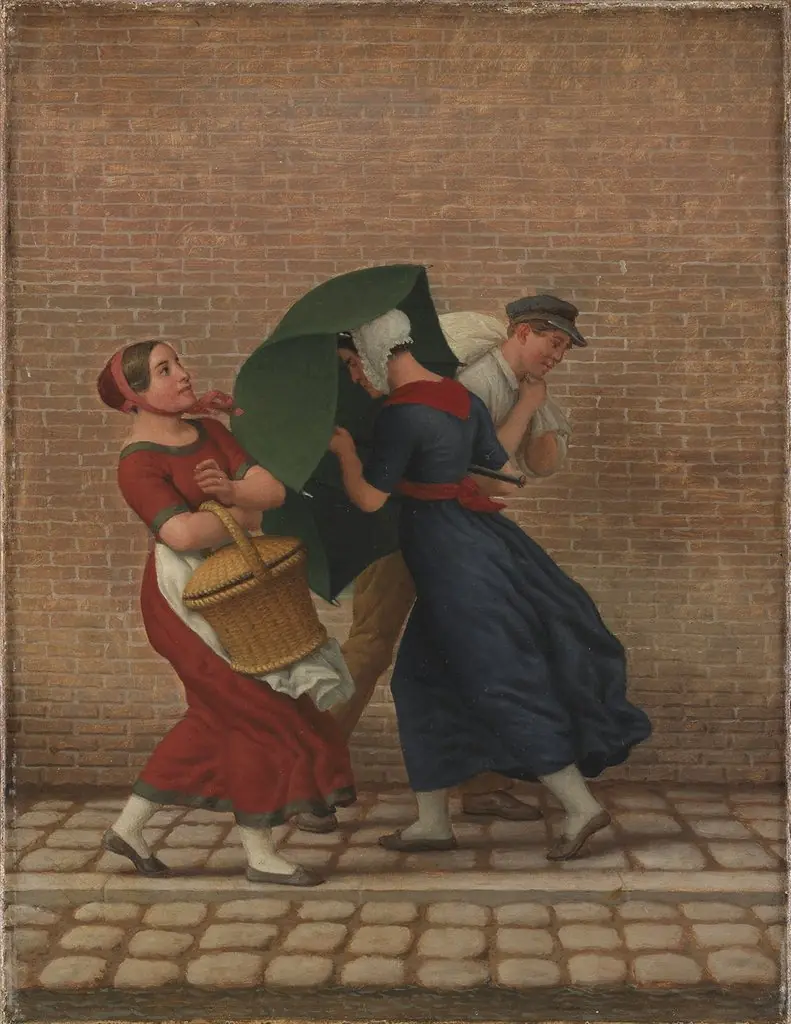 Street Scene in Windy and Rainy Weather
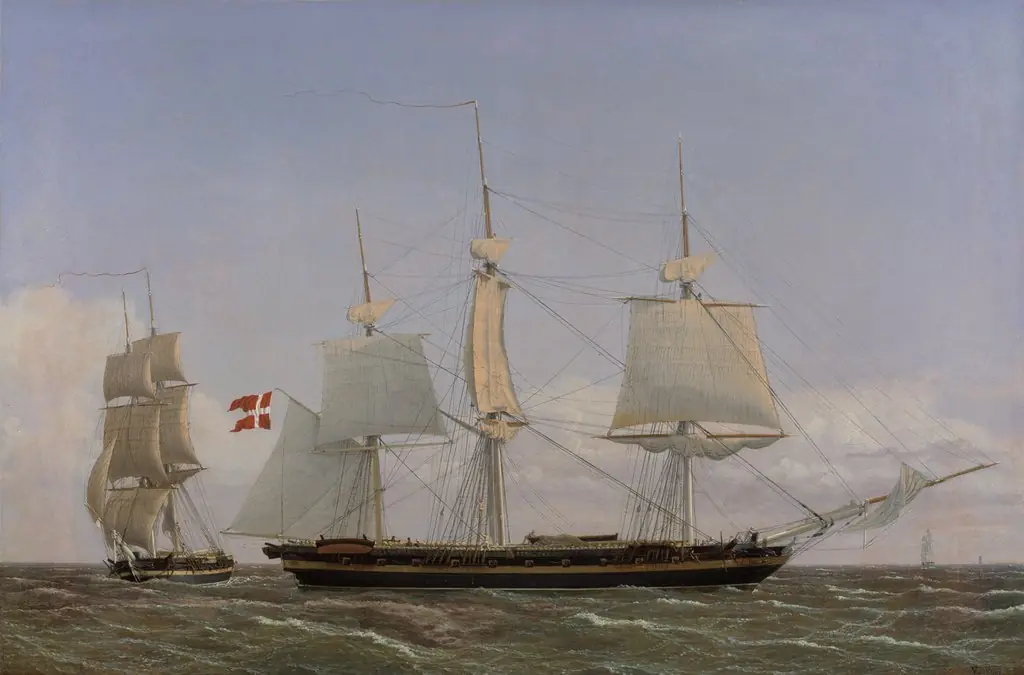 A Danish Corvette Laying t in order to Confer with a Danish Brig: The Scene Being Set in West Indian Waters
 The Corvette "Galathea" Lying to in order to Send Help to the Brig "St Jean"
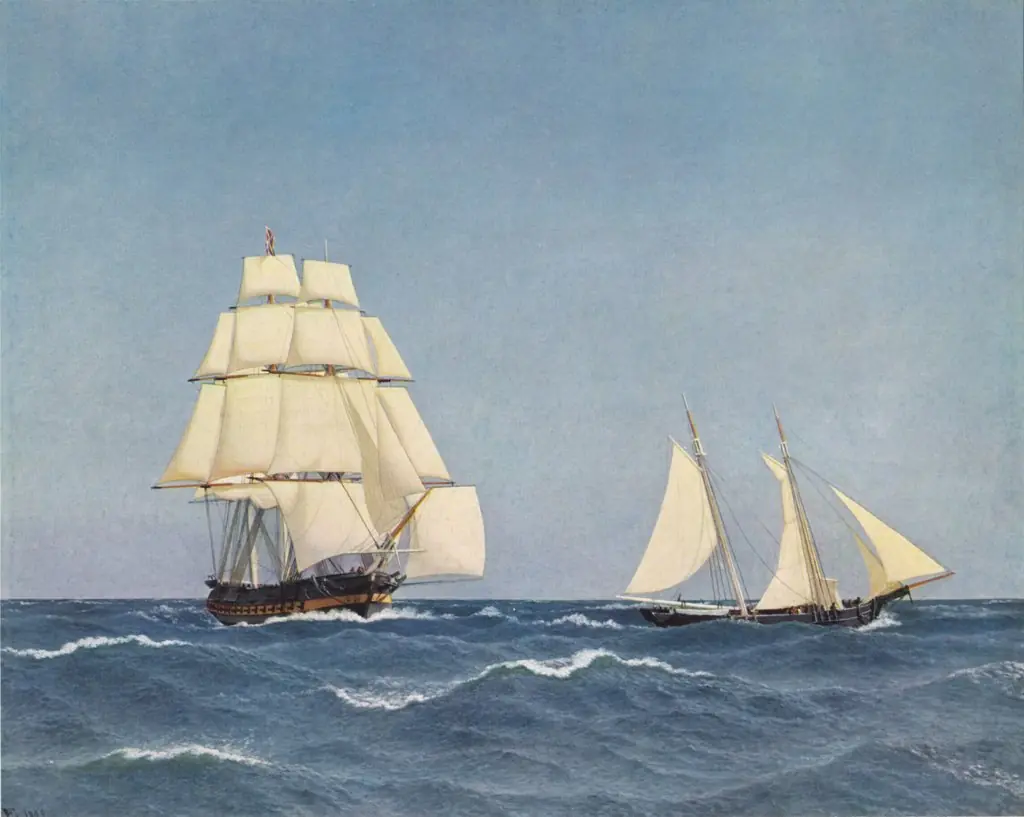 A Privateer Outsailing a Pursuing Frigate
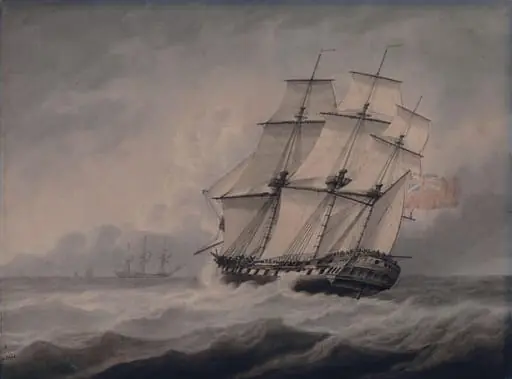 The Frigate
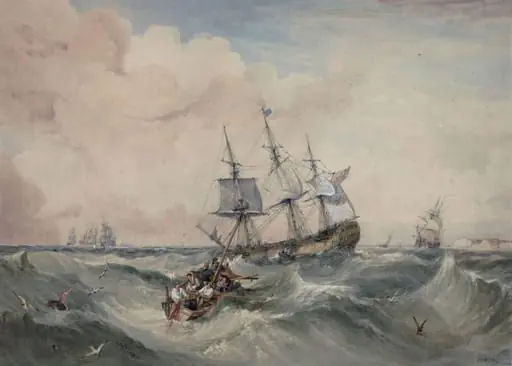 Indiaman lying-to for a pilot
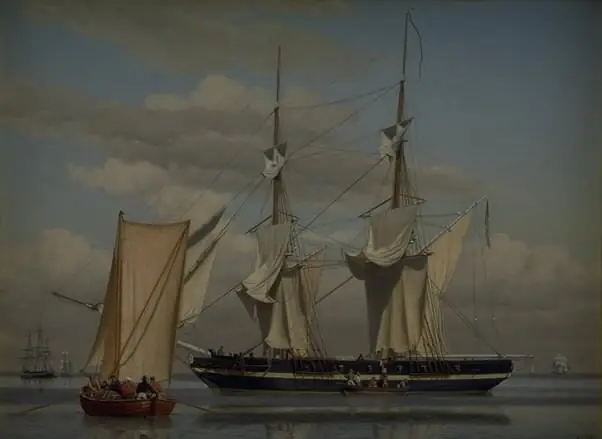 An American Naval Brig Lying at Anchor while Her Sails Are Drying