Artwork
Christus im Limbus
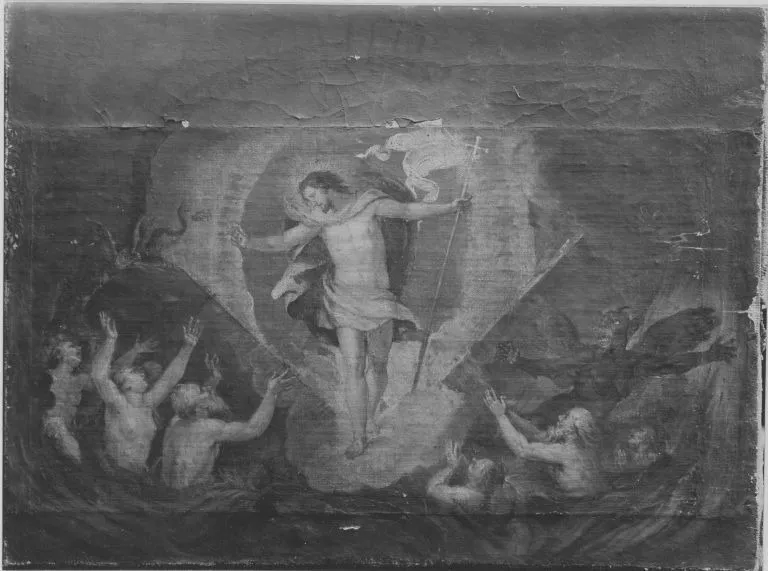
Christus im Limbus is an unspecified painting by the Mannerist artist Christoph Schwarz. It dates from 1592 and is held in the collection of the Bavarian State Painting Collections.
About this work
Overview
Christoph Schwarz’s 1592 oil painting, titled *Christus im Limbus*, is part of the collection at Munich’s Alte Pinakothek. The work presents a solitary, illuminated figure—identified as Christ—standing amid a tumultuous, shadow‑filled setting that suggests a realm of suffering and disorder.
Subject & Meaning
At the composition’s centre, Christ holds a staff in his right hand and emits a radiant glow that contrasts with the surrounding darkness. Encircling him are a mixture of anguished human figures and grotesque, demonic presences, evoking the theological concept of the limbo where souls await redemption.
Technique & Style
Schwarz employs a pronounced chiaroscuro, using stark light‑dark juxtapositions to heighten the drama. The background is dominated by deep shadows tinged with reddish‑orange hues, hinting at fire or infernal heat, while the luminous figure is rendered with fine, almost ethereal brushwork that draws the eye.
History & Provenance
Created in the late sixteenth century, the painting entered the Alte Pinakothek’s holdings as part of the museum’s early acquisitions of German religious art. Its provenance prior to the museum’s collection remains undocumented, but the work has been consistently attributed to Schwarz since its first cataloguing.
Context
*Christus im Limbus* reflects the Counter‑Reformation’s emphasis on vivid, didactic imagery intended to inspire piety and convey the triumph of Christ over evil. The composition’s turbulent atmosphere and the stark contrast between divine light and infernal darkness align it with contemporaneous Northern European works that explored similar theological themes through dramatic visual language.
Artist & collection