Artwork
Untitled
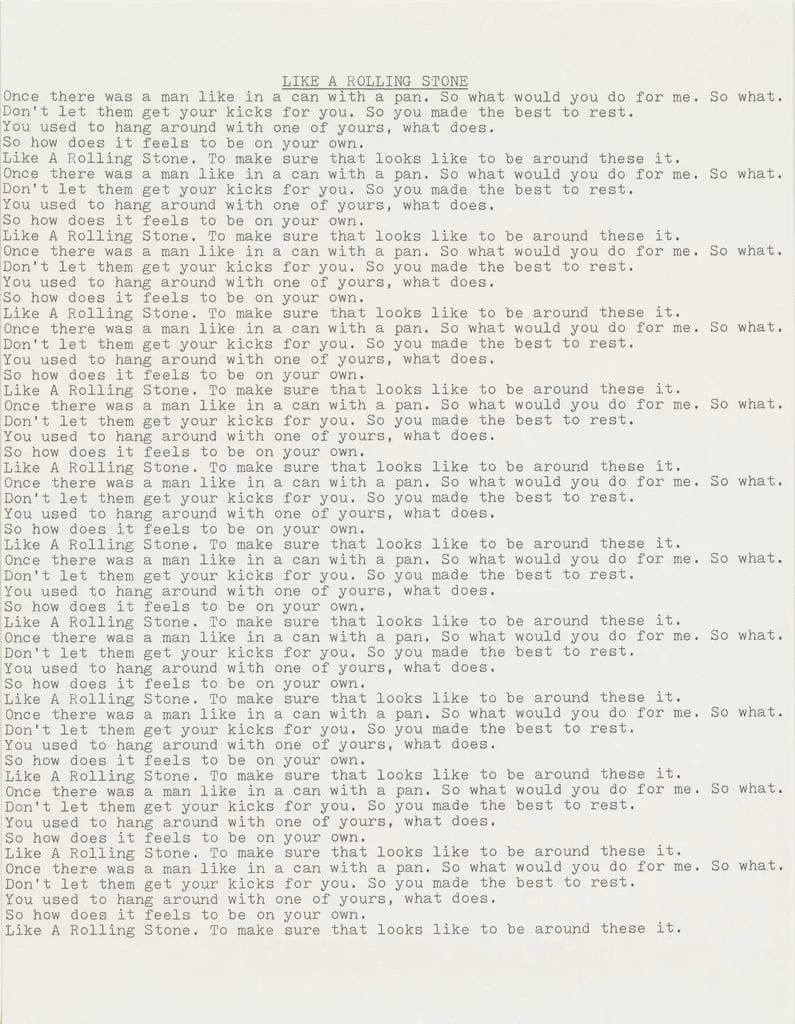
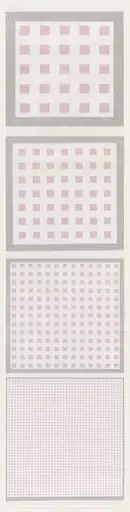
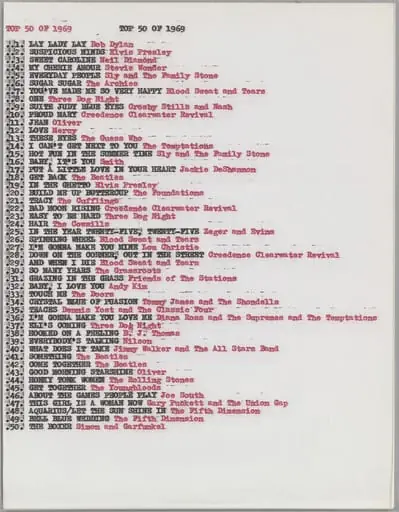
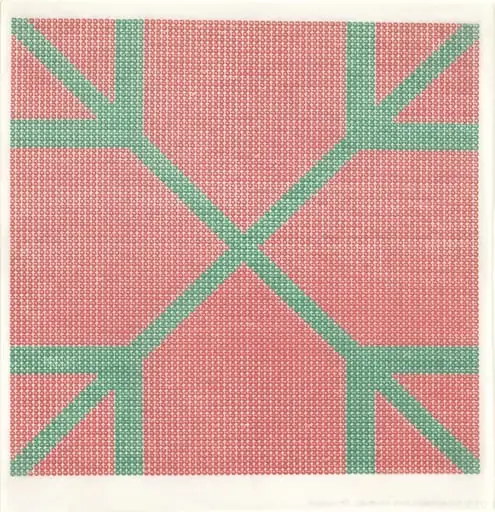
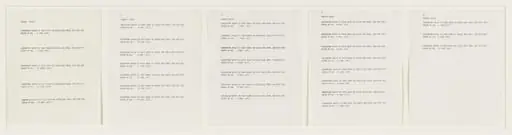
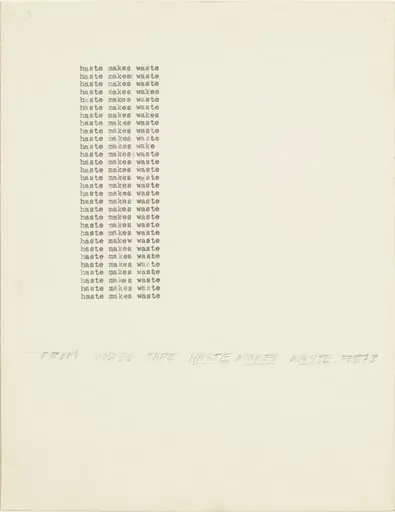
Untitled is a drawing by Christopher Knowles. It dates from 1981 and is held in the collection of the Museum of Modern Art. Created around 1981, this work is a sheet of paper densely covered in repeated typewritten lines.
About this work
Overview
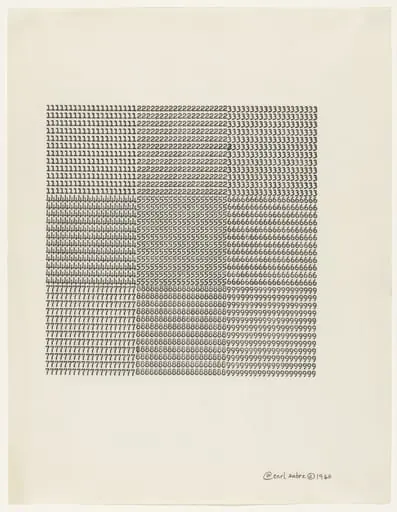
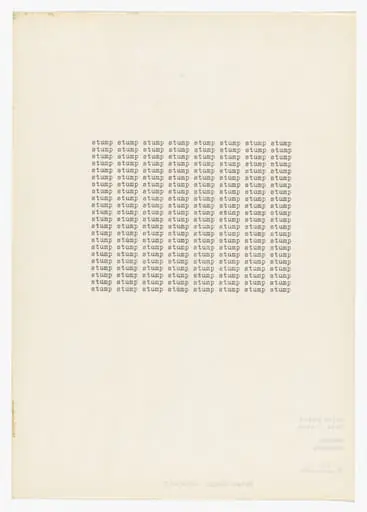
Created around 1981, this work is a sheet of paper densely covered in repeated typewritten lines. Made by Christopher Knowles, an American artist and poet from New York City, it belongs to a body of work that emerged from his unique linguistic patterns. The medium—typewriting on paper—elevates a mundane act into a visual field, blurring boundaries between writing, drawing, and performance.
Subject & Meaning
Its nonsensical phrasing resembles a child’s chant or a fragmented memory, evoking internal rhythms rather than narrative.
The text, 'Once there was a man like in a can with a pan,' repeats without variation across the entire surface. Its nonsensical phrasing resembles a child’s chant or a fragmented memory, evoking internal rhythms rather than narrative. The meaning resists interpretation; instead, the work emphasizes the physicality of language and the compulsion behind its repetition, suggesting a private logic made visible.
Technique & Style
Knowles used a manual typewriter to imprint the phrase hundreds of times, pressing keys with force that caused ink to smudge and characters to overlap. The page is filled uniformly, with no margins or visual breaks. The result is a dense, rhythmic texture where legibility gives way to pattern. The mechanical nature of the tool contrasts with the organic, almost obsessive quality of the output.
History & Provenance
Knowles gained recognition in the mid-1970s after his poetry was integrated into Robert Wilson’s opera *Einstein on the Beach*. This work, produced several years later, reflects his continued exploration of language as a visual and sonic material. It entered museum collections through its association with the downtown New York art scene, where performance, poetry, and visual art intersected in the late 1970s and early 1980s.
Context
Emerging from the post-minimalist and conceptual art movements, Knowles’s work aligns with artists who treated language as a material rather than a vehicle for meaning. His process resonated with contemporaries exploring repetition, automation, and the body’s relationship to mechanical tools. Though often linked to autism, the work is best understood within its artistic milieu—not as a medical case but as a distinct creative practice.
Legacy
This piece remains a touchstone in discussions of outsider art and expanded poetry. Its presence in institutions like MoMA underscores a shift in how language-based works are valued as visual objects. It invites viewers to experience text not as information but as rhythm, texture, and repetition—challenging conventional hierarchies between writing and art.
Artist & collection
Artist
Christopher Knowles (born 1959) is an American poet and painter. He was born in New York City on May 4, 1959, and at an early age received a diagnosis of possible brain damage. He is often referred to as autistic. In…