Artwork
Returning to the Trenches
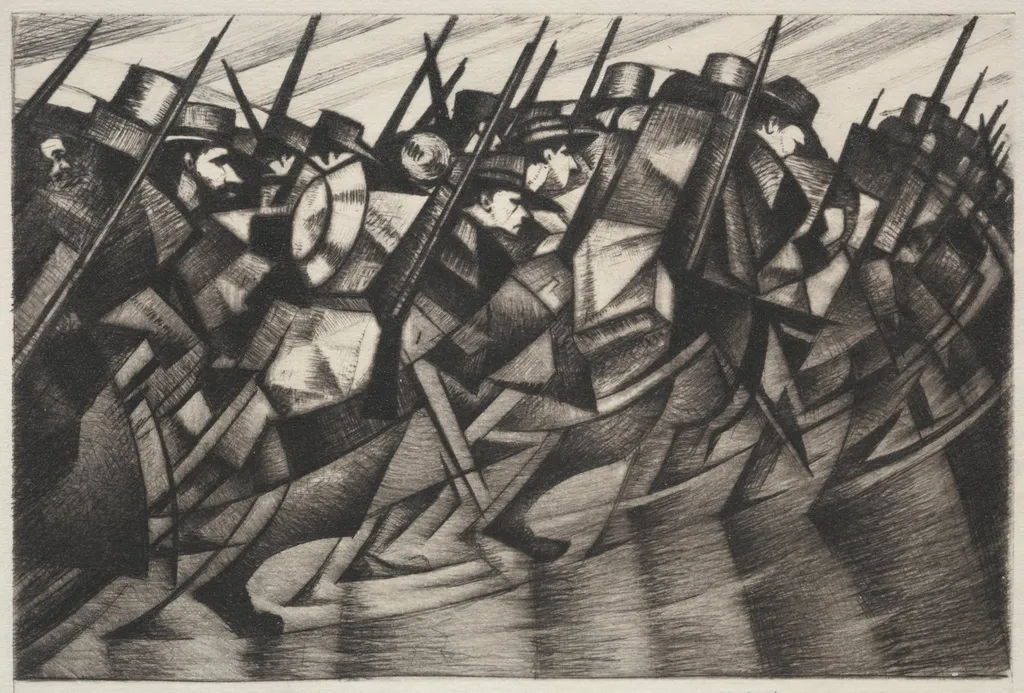
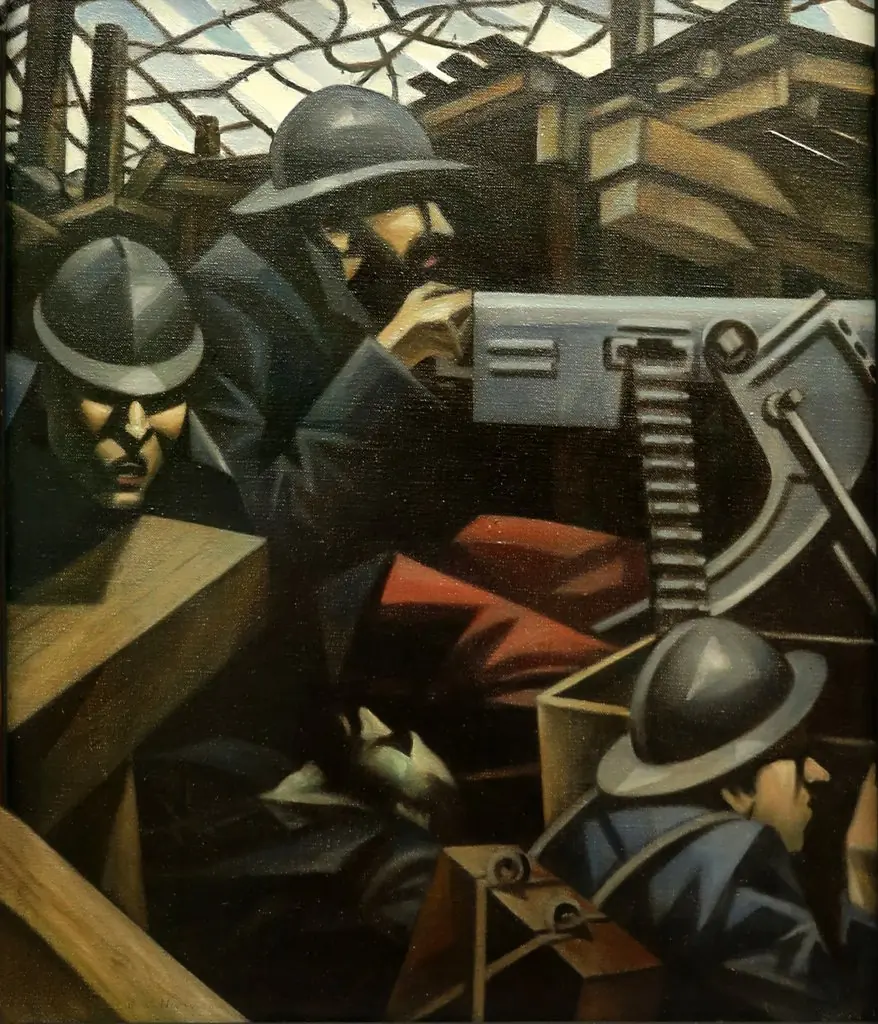
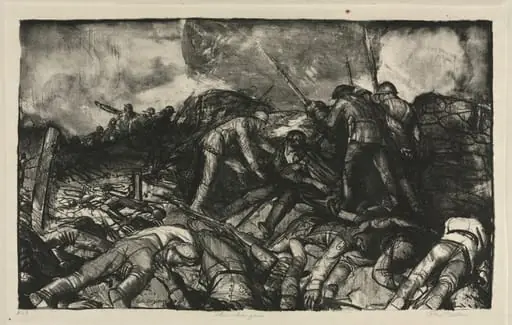
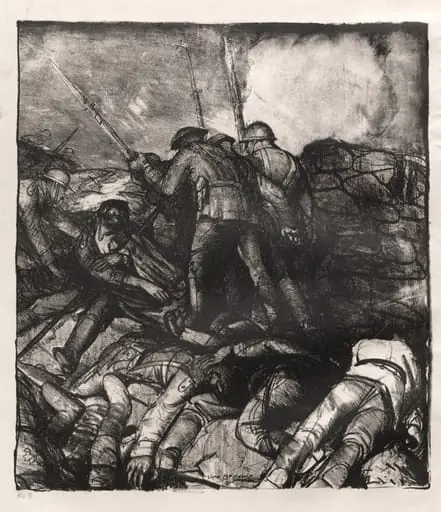
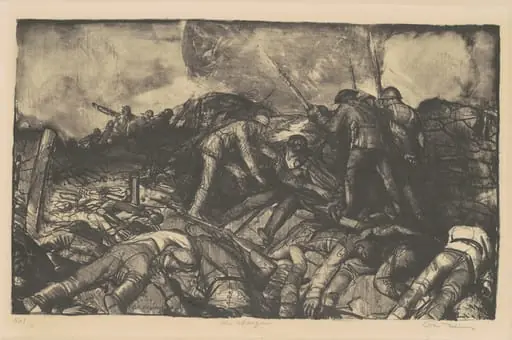
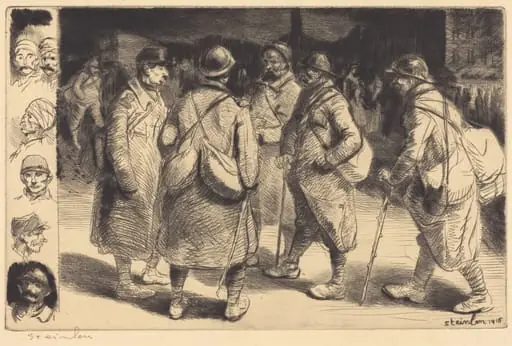
Returning to the Trenches is a print by C. R. W. Nevinson. It dates from 1916 and is held in the collection of the Cleveland Museum of Art.
About this work
Overview
Created in 1916 by British artist Christopher Nevinson, *Returning to the Trenches* is a print that captures a quiet, grim moment in the First World War.
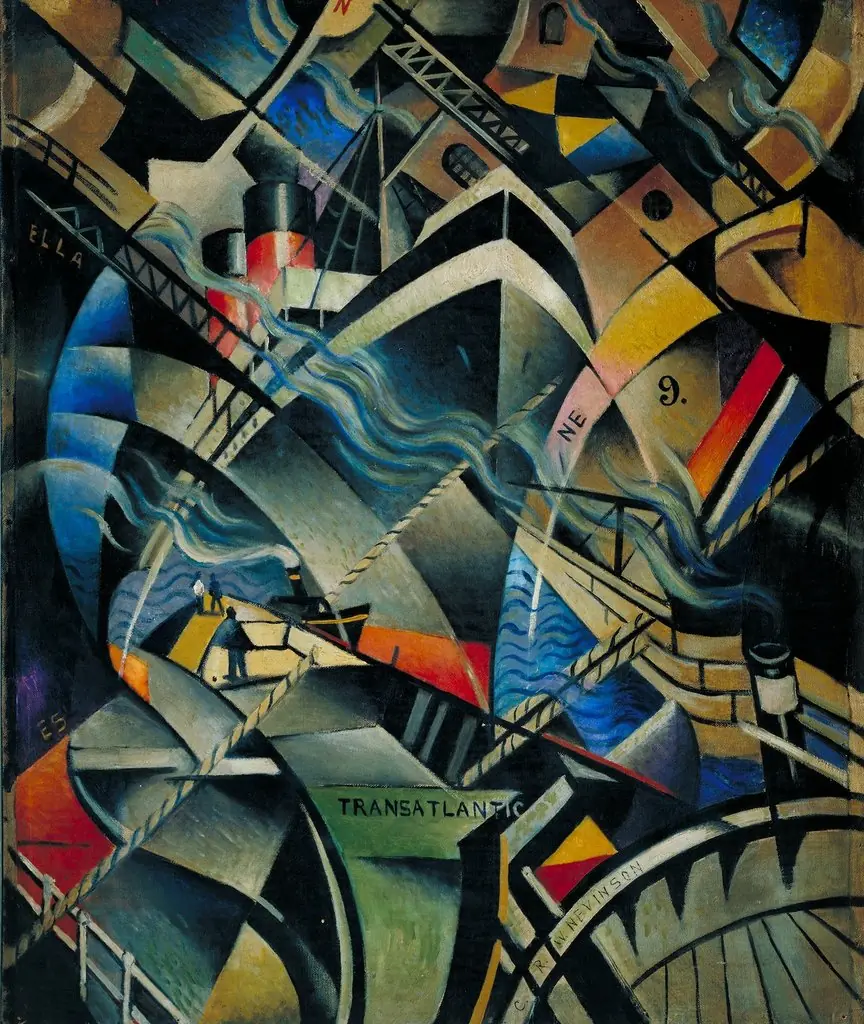
Created in 1916 by British artist Christopher Nevinson, *Returning to the Trenches* is a print that captures a quiet, grim moment in the First World War. Nevinson, trained at the Slade School and later appointed an official war artist, turned from early Futurist experimentation toward a more restrained realism as the war progressed. This work reflects his direct engagement with the front lines and his commitment to documenting the soldier’s experience without embellishment.
Subject & Meaning
The image portrays a line of soldiers trudging back to their trenches, heads bowed, bodies heavy with fatigue. There is no heroism or drama—only exhaustion and resignation. The absence of combat emphasizes the psychological weight of prolonged warfare. Nevinson avoids spectacle, instead focusing on the mundane, relentless rhythm of life in the trenches, underscoring the human cost of conflict through quiet, unadorned observation.
Technique & Style
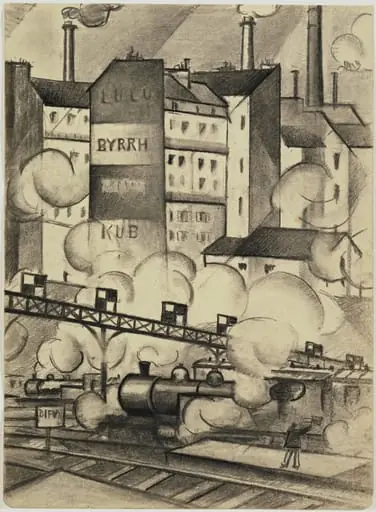
Nevinson employs a simplified, linear style with muted tones and minimal shading, rejecting the dynamism of his earlier Futurist phase. Forms are flattened and figures rendered with a deliberate austerity, enhancing the sense of emotional numbness. The composition is tightly controlled, guiding the viewer’s eye along the soldiers’ march without distraction. Unlike sfumato, which softens edges, here clarity and starkness serve the subject’s gravity.
History & Provenance
Commissioned as part of Britain’s official war art program, the work emerged from Nevinson’s time on the Western Front in 1916. It was produced during a period when the government sought to document the war through artists’ eyes, balancing propaganda with authenticity. The print was widely distributed to raise public awareness, though its unvarnished tone sometimes unsettled civilian audiences accustomed to more glorified imagery.
Context
In 1916, public perception of the war was shifting as casualty lists grew and morale waned. Nevinson’s work stood apart from patriotic posters and romanticized battle scenes, offering instead a sober counter-narrative. His shift from Futurist abstraction to documentary realism mirrored broader cultural disillusionment. Other artists, like Otto Dix and Paul Nash, pursued similar paths, but Nevinson’s proximity to the front gave his depictions a distinctive immediacy.
Legacy
Though less celebrated than some of his contemporaries, Nevinson’s wartime prints contributed to a lasting visual record of the soldier’s daily endurance. *Returning to the Trenches* influenced later generations of war artists who prioritized psychological truth over spectacle. Its restrained aesthetic helped redefine how conflict could be represented—not through glory, but through the quiet accumulation of fatigue, loss, and persistence.
Own this work as a print
Artist & collection
Artist
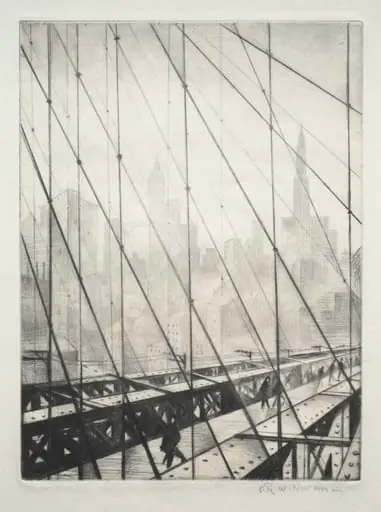
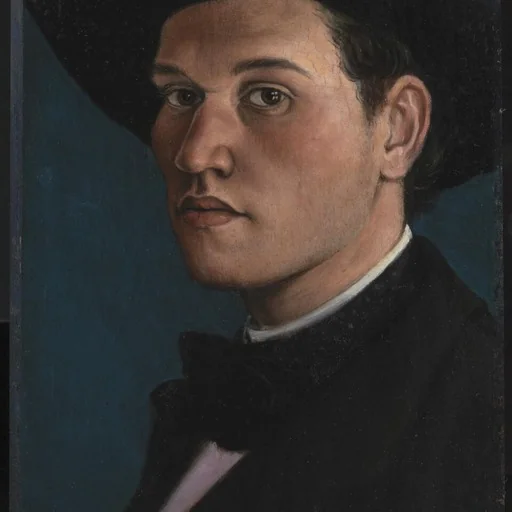
Christopher Richard Wynne Nevinson (13 August 1889 – 7 October 1946) was an English figure and landscape painter, etcher and lithographer, who was one of the most famous war artists of the First World War.