Artwork
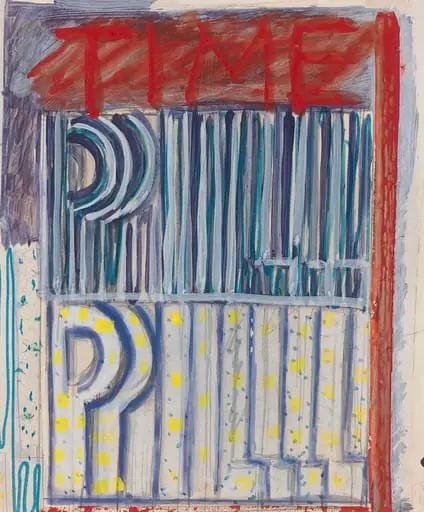
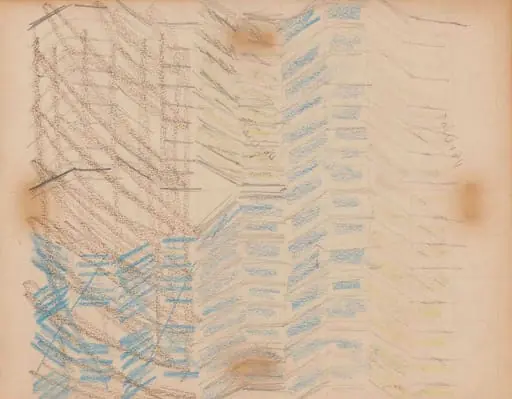
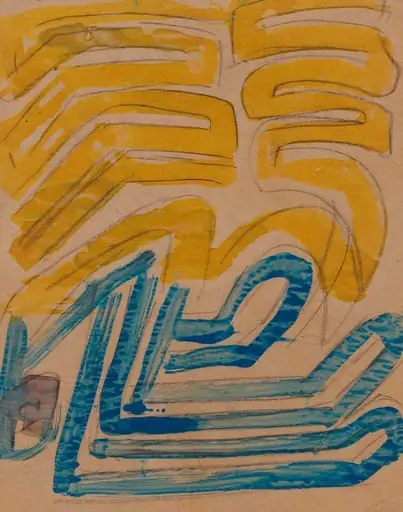
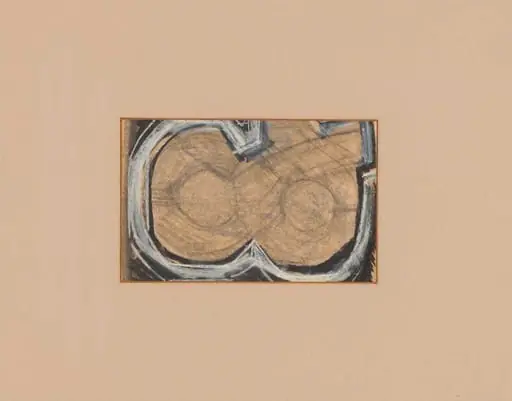
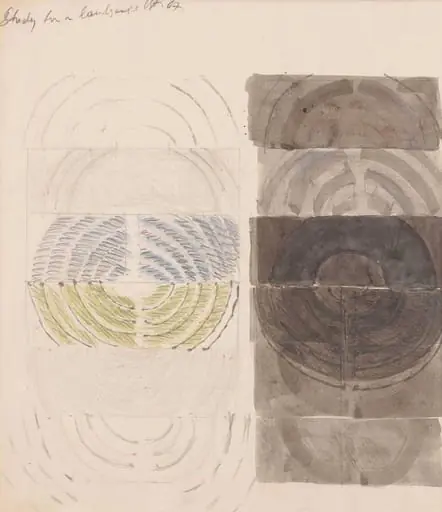
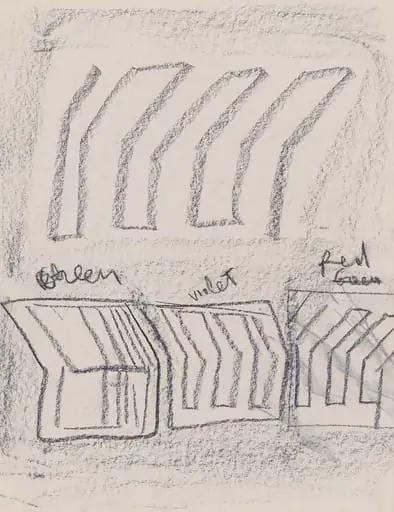
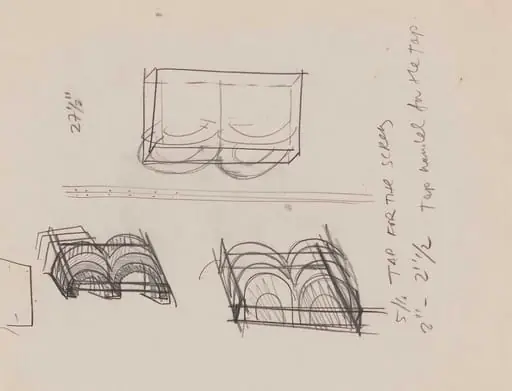
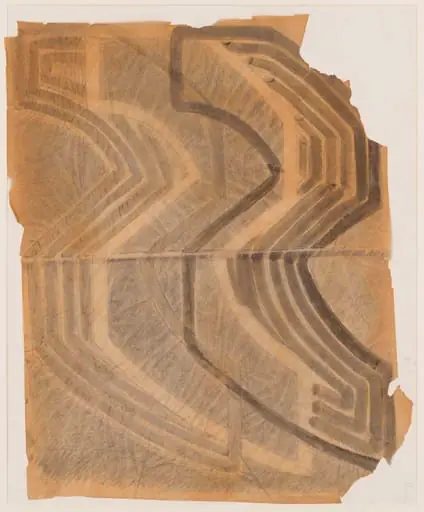
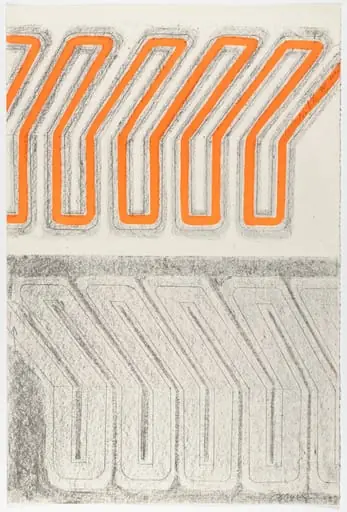
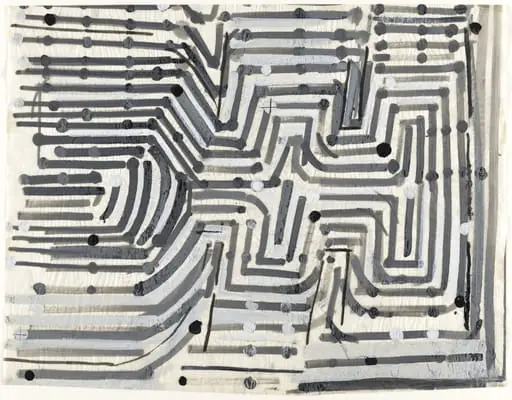
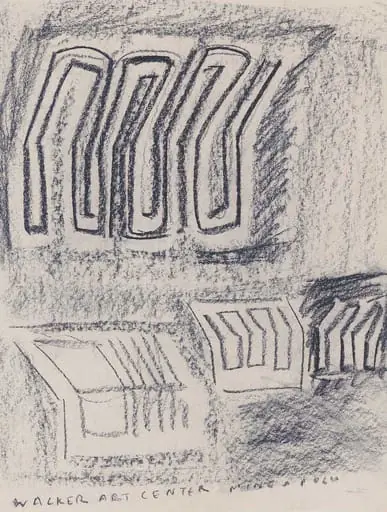
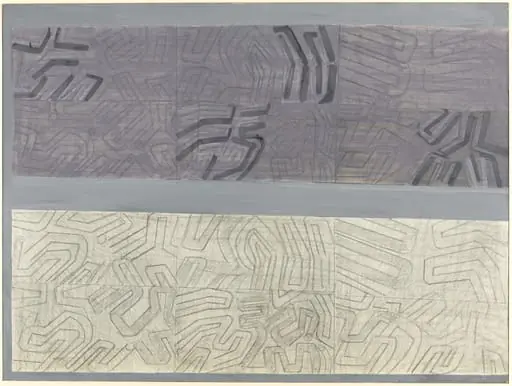
Μαίανδροι V - Μελέτη σύνθεσης με νέον που υποδεικνύει διαφορετικές φάσεις φωτεινότητας του σωλήνα που πρέπει να ρυθμίζεται από χρονοδιακόπτη
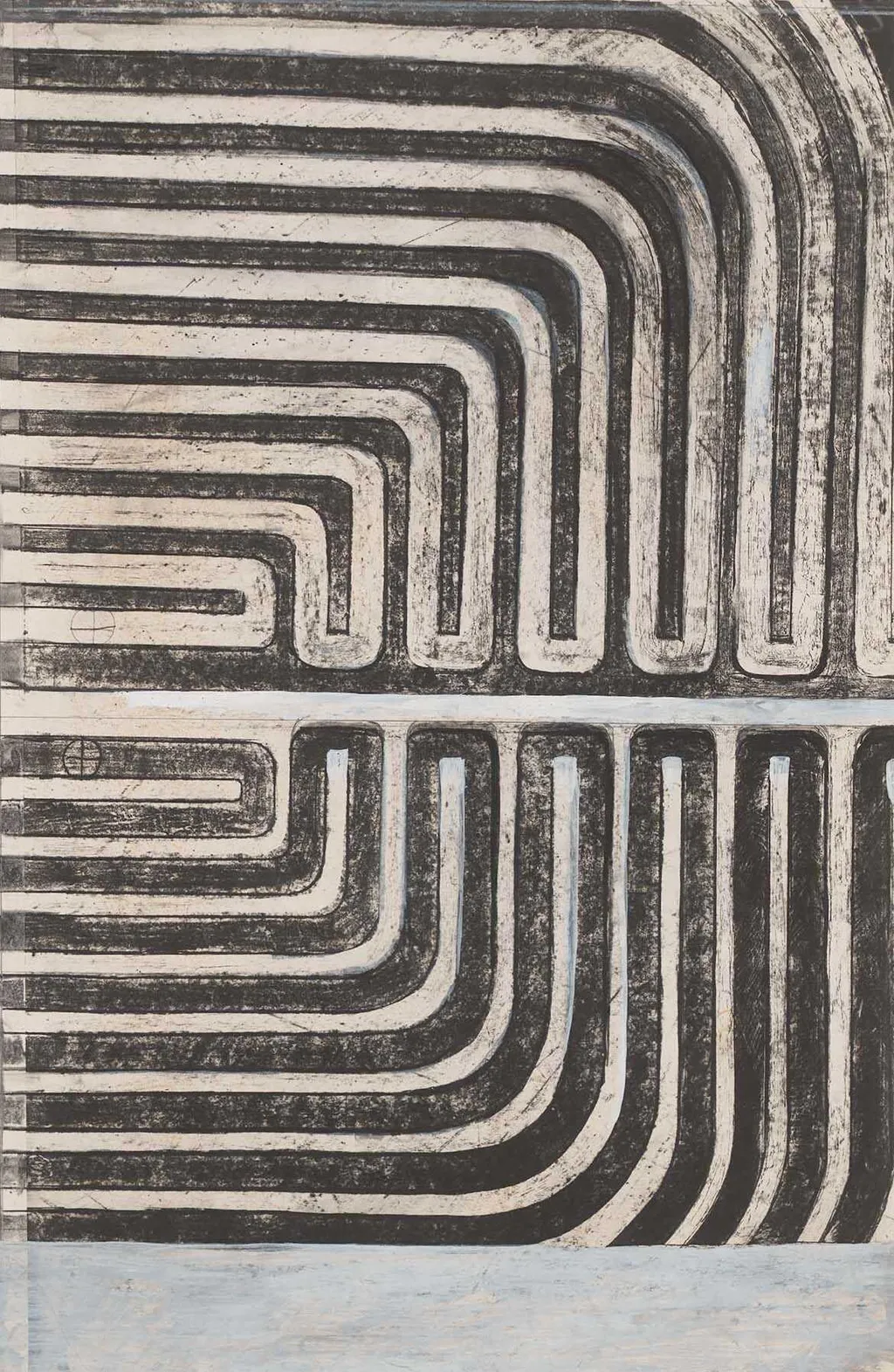
Μαίανδροι V - Μελέτη σύνθεσης με νέον που υποδεικνύει διαφορετικές φάσεις φωτεινότητας του σωλήνα που πρέπει να ρυθμίζεται από χρονοδιακόπτη is a drawing by Chryssa (Vardea-Mavromichali). It dates from 1983 and is held in the collection of the Metropolitan Organisation of Museums of Visual Arts of Thessaloniki – MOMus. Chryssa’s Μαίανδροι V is a study in compositional rhythm, using neon tubing to explore shifting intensities of light.
About this work
Overview
Created in the early 1960s, it belongs to a series where the artist isolates formal elements of written language to investigate perception and structure.
Chryssa’s Μαίανδροι V is a study in compositional rhythm, using neon tubing to explore shifting intensities of light. Created in the early 1960s, it belongs to a series where the artist isolates formal elements of written language to investigate perception and structure. The work combines industrial materials—neon, plexiglass, and electrical components—with deliberate aesthetic restraint, reflecting her interest in the intersection of urban signage and abstract form.
Subject & Meaning
The piece does not convey linguistic meaning through words but instead treats letters as visual rhythms. By fragmenting and rearranging alphabetic forms, Chryssa shifts focus from semantics to structure, emphasizing the physical presence of language in the urban landscape. The title, referencing ancient Greek meanders, suggests continuous, flowing patterns—mirroring the undulating paths of neon tubes and their varying luminosity as controlled by timers.
Technique & Style
Chryssa employed custom-manufactured neon tubes, carefully bent and arranged to trace linear sequences that suggest movement and modulation. The brightness of each segment is calibrated to create graduated phases of illumination, timed to cycle subtly. The neon is sealed within deep grey plexiglass boxes, their edges aligned with the underlying electrical hardware—transformers and dimmers—left exposed as essential components rather than concealed elements.
History & Provenance
After moving from Athens to San Francisco in 1954 and later to New York, Chryssa became immersed in the visual culture of city signage. Her early neon works emerged from this environment, evolving from studies of storefront lettering into sculptural investigations. Μαίανδροι V was developed during a period of intense experimentation with light and form, following her transition from painting to three-dimensional assemblage, and remains part of her foundational neon series from the early 1960s.
Context
Chryssa’s work emerged alongside minimalism and light art movements, yet diverged by anchoring abstraction in the vernacular of commercial signage. While contemporaries explored pure geometry or ambient glow, she rooted her practice in the legibility and decay of urban text. Her use of the Latin alphabet, despite her Greek heritage, reflects a deliberate engagement with the globalized visual language of postwar American cities.
Legacy
Chryssa’s integration of functional electrical systems into the aesthetic of her sculptures expanded the definition of light art beyond mere illumination. By preserving the visible infrastructure—wiring, transformers, timers—she challenged the notion of art as self-contained object. Her approach influenced later artists who treated technology not as hidden mechanism but as expressive material, bridging industrial design and poetic abstraction.
Artist & collection
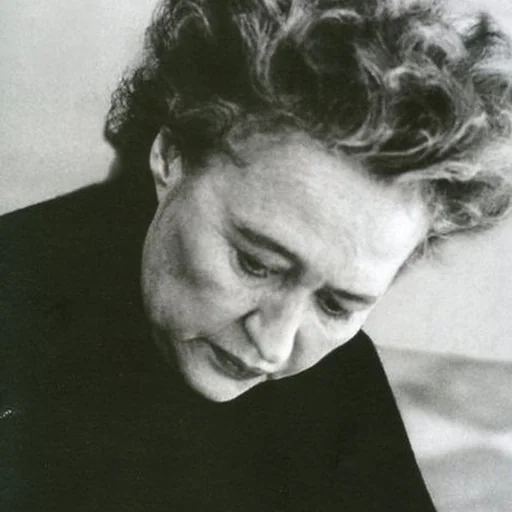
Artist
Chryssa Vardea-Mavromichali (Greek: Χρυσά Βαρδέα-Μαυρομιχάλη; December 31, 1933 – December 23, 2013) was a Greek American artist who worked in a wide variety of media.
Museum
Metropolitan Organisation of Museums of Visual Arts of Thessaloniki – MOMus
Continue through works from the same source collection.