Artwork
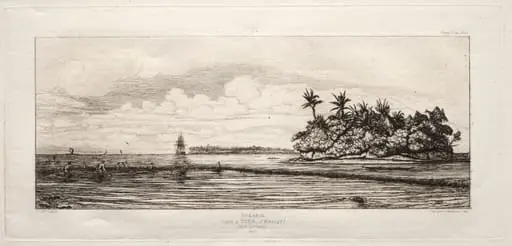
Océanie, ilots à Uvea (Wallis); Peche aux palmes, 1845 (Oceania: Fishing, Near Islands with Palms in the Uea or Wallis Group)
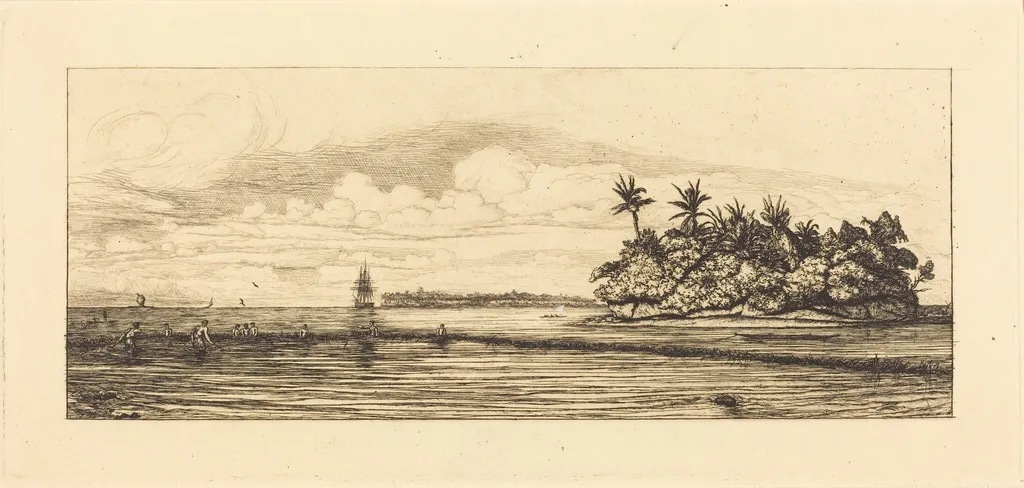
Océanie, ilots à Uvea (Wallis); Peche aux palmes, 1845 (Oceania: Fishing, Near Islands with Palms in the Uea or Wallis Group) is an ink print by the Impressionist artist Charles Meryon. It dates from 1863 and is held in the collection of the National Gallery of Art.
About this work
Overview
Océanie, ilots à Uvea (Wallis); Peche aux palmes, 1845 is an etching on laid paper by French artist Charles Meryon, created in 1863. Despite the title's 1845 date, the work was produced nearly two decades later.
Subject & Meaning
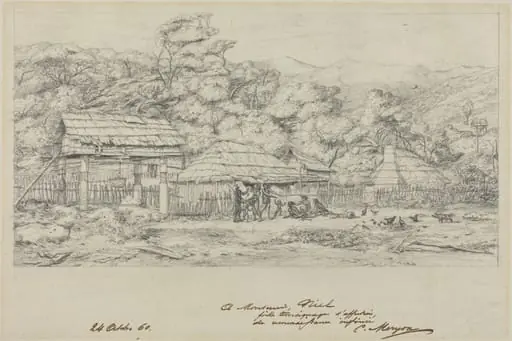
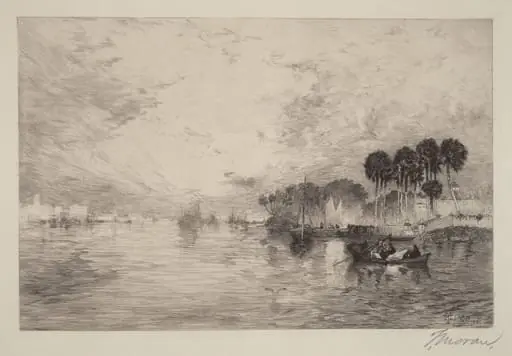
The etching portrays a serene Oceania scene, specifically the Wallis or Uea islands, focusing on figures engaged in palm fishing in shallow waters, contrasted with a distant ship and a palm-tree island.
Technique & Style
Meryon's etching showcases meticulous details, such as textured palm fronds and gentle water ripples, characteristic of his unique Gothic-inspired vision, adapted here to a tropical setting.
History & Provenance
Originally titled with a 1845 date, the piece was actually etched in 1863 by Meryon, who predominantly worked in etching due to his colour blindness.
Context
This work diverges from Meryon's more common subject matter of Parisian Gothic scenes, instead capturing a tranquil, exotic locale, reflecting 19th-century European fascination with Oceania.
Legacy
While differing from his Parisian themes, Océanie, ilots à Uvea contributes to Meryon's broader legacy as a meticulous etcher with a distinctive visual approach, applicable across diverse subjects.
Artist & collection
Artist
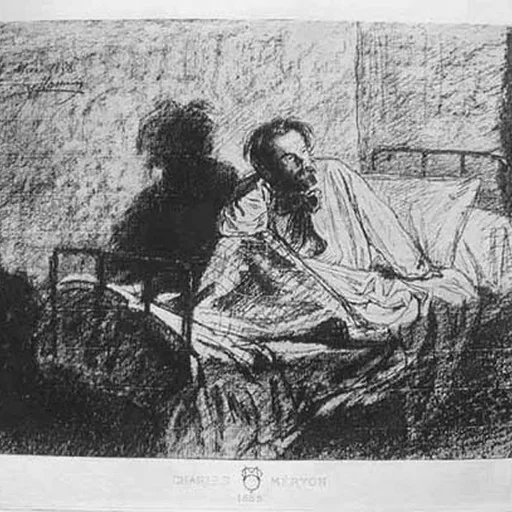
Charles Meryon (sometimes Méryon, 23 November 1821 – 14 February 1868) was a French artist who worked almost entirely in etching, as he had colour blindness.