Artwork
The Mermaid
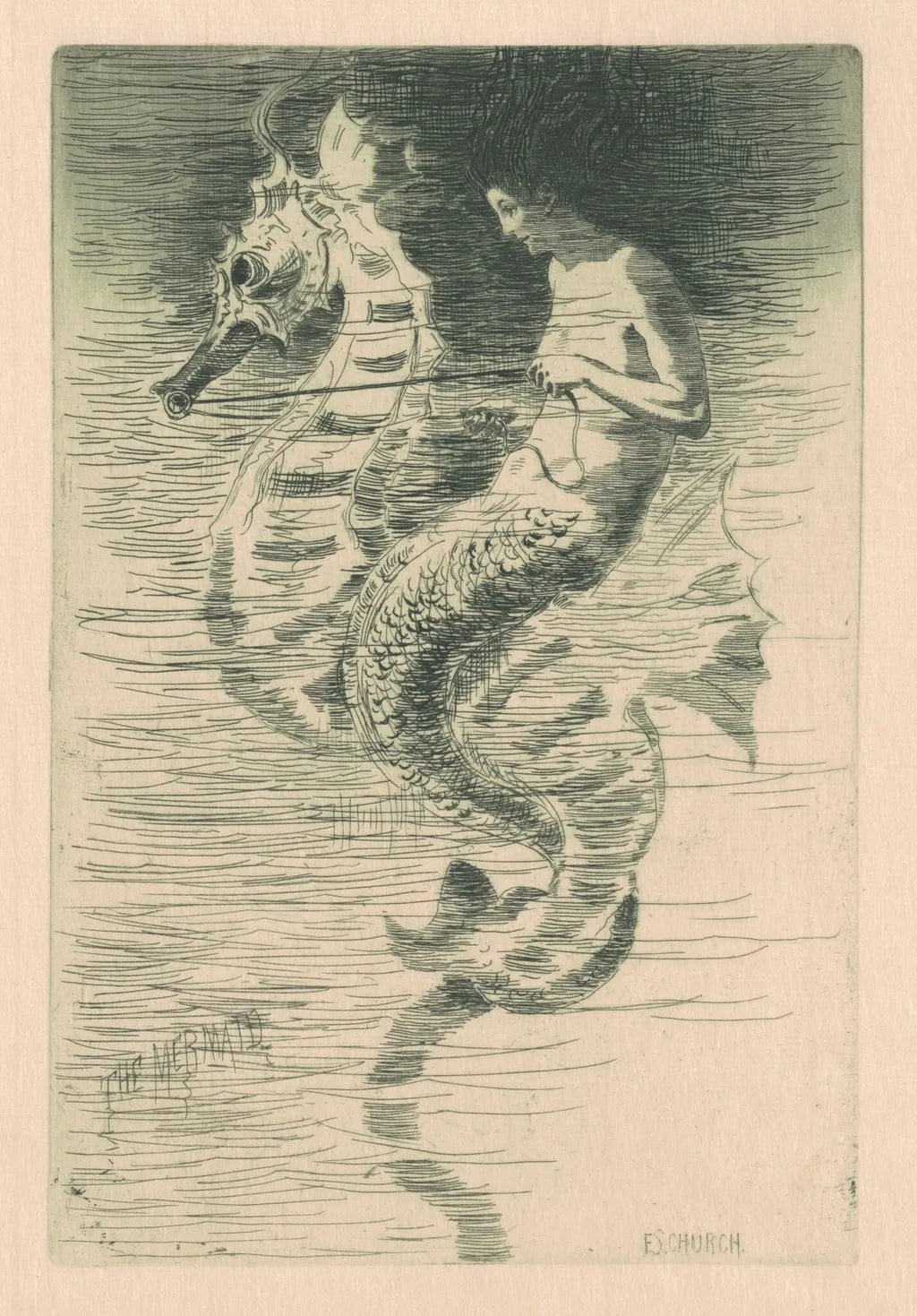
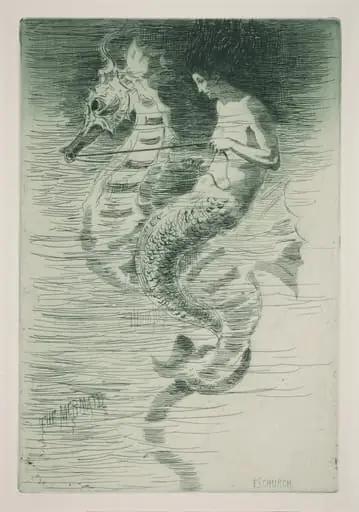
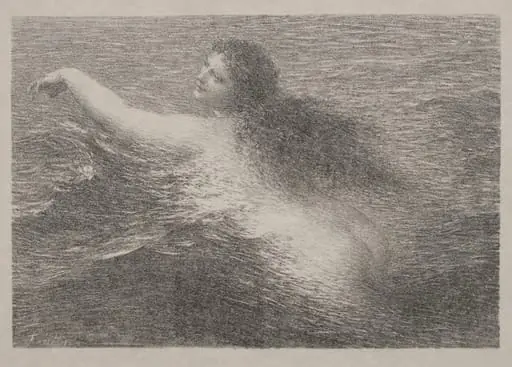
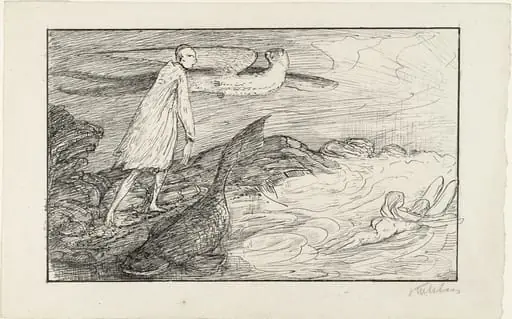
The Mermaid is an ink print by the Impressionist artist Frederic Stuart Church. It dates from 1881 and is held in the collection of the National Gallery of Art.
About this work
Overview
Created in 1881 by Frederic Stuart Church, this etching depicts a mermaid rendered in green ink on laid paper. The work belongs to the printmaking tradition, using incised lines to transfer an image. Its unfinished appearance and spontaneous line quality suggest a focus on process over refinement, distinguishing it from more polished contemporary prints.
Subject & Meaning
The figure combines human and aquatic traits, with flowing hair merging into undulating waves. Her face is indistinct, shadowed and ambiguous, evoking mystery rather than narrative clarity. The composition resists idealization, presenting the mermaid as an elemental force rather than a mythic beauty, aligning with late 19th-century explorations of the uncanny in natural forms.
Technique & Style
Church employed etching to create a textured, irregular surface, with uneven lines suggesting rapid execution. The green ink contrasts with the paper’s natural tone, enhancing the work’s rawness. Background waves are suggested through gestural strokes rather than modeled forms, emphasizing movement over realism. The lack of smoothing or burnishing preserves the immediacy of the artist’s hand.
History & Provenance
The print was produced in 1881 during Church’s active period as a printmaker and illustrator. It was likely made as a standalone work or for a limited circulation, possibly intended for private collectors interested in experimental graphic art. No major institutional acquisition records exist from the period, suggesting it remained in private hands.
Context
In the 1880s, American artists increasingly turned to etching as a medium for personal expression, moving away from commercial illustration. Church’s work reflects this trend, embracing spontaneity and atmospheric suggestion. The mermaid motif, while rooted in folklore, was also being reinterpreted by Symbolist and Pre-Raphaelite circles as a vessel for psychological or emotional states.
Legacy
The print stands as an example of late 19th-century American etching that prioritized expressive line over technical polish. Though not widely exhibited or reproduced, it contributes to the broader recognition of printmaking as a legitimate medium for artistic experimentation. Its raw aesthetic anticipates later modernist interests in process and imperfection.
Artist & collection