Artwork
Ila e le ninfe (Hylas and the Nymphs)
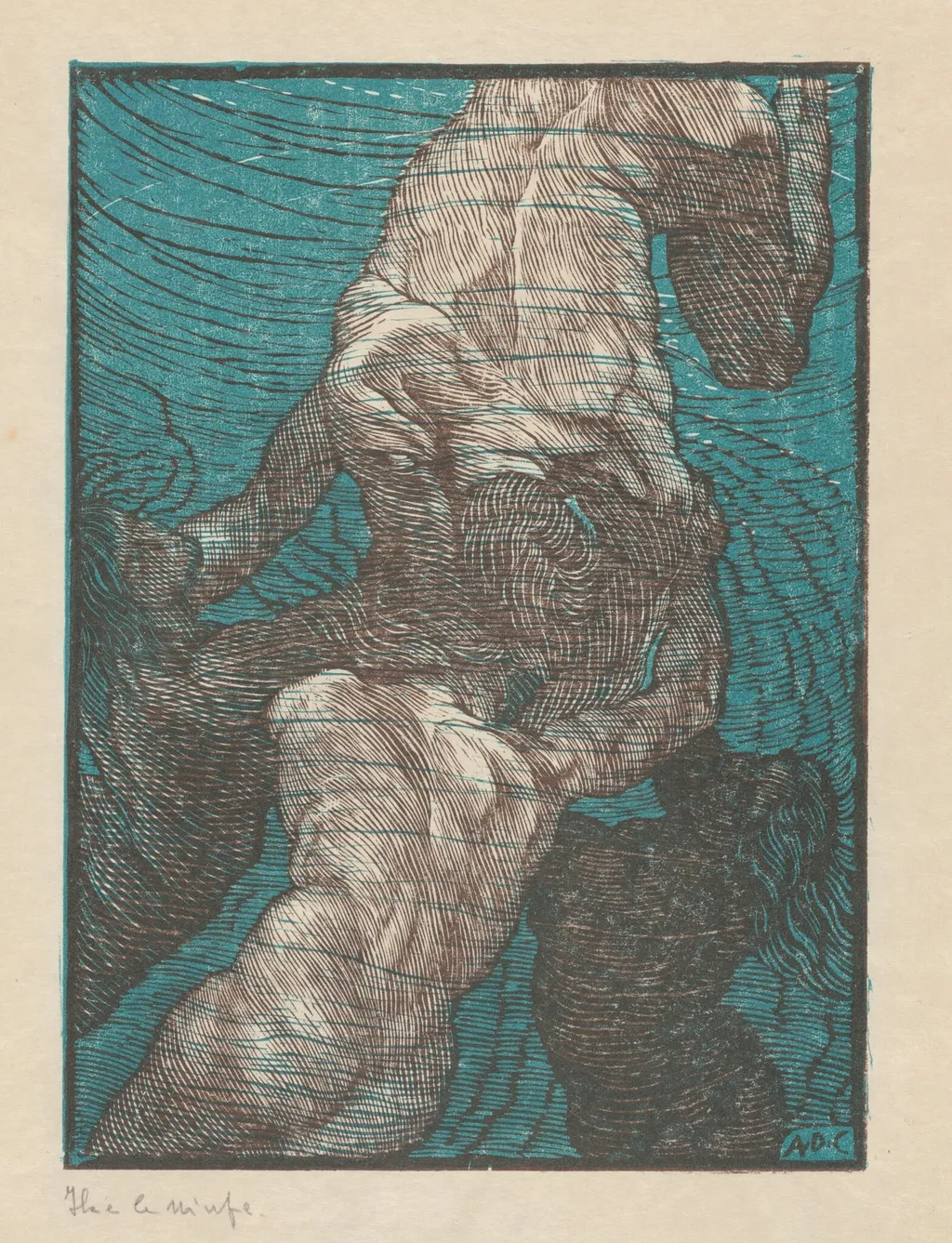
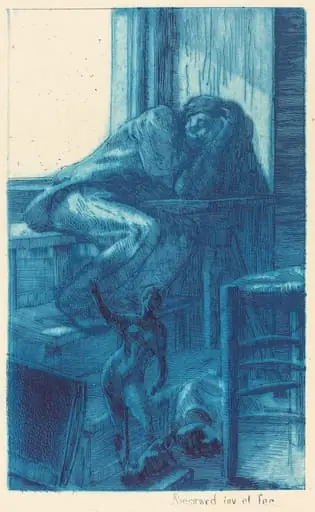
Ila e le ninfe (Hylas and the Nymphs) is an ink print by Adolfo De Carolis. It dates from 1916 and is held in the collection of the National Gallery of Art.
About this work
Overview
Adolfo De Carolis’s 1916 print, titled Ila e le ninfe (Hylas and the Nymphs), is a chiaroscuro woodcut executed on wove paper. The work combines teal and black inks to render a nocturnal scene in which a youthful figure leans over a pool, his torso half‑illuminated, while surrounding forms suggest water and unseen presences.
Subject & Meaning
The composition alludes to the classical myth of Hylas, a handsome youth lured by water nymphs and drawn beneath the surface. In De Carolis’s interpretation, the young man reaches toward the water, his gesture caught between curiosity and danger, while the ambiguous, dark shapes behind him evoke the seductive, potentially fatal presence of the nymphs.
Technique & Style
De Carolis employed the chiaroscuro woodcut method, layering separate blocks of teal and black ink to achieve depth. By carving varying tonal planes, he created a textured surface where light falls on the figure’s torso and shadows coalesce into tangled, wave‑like forms. The resulting effect is a sculptural relief of light and darkness, emphasizing movement and atmosphere.
History & Provenance
The print was produced in 1916, during the artist’s mature period when he explored mythological themes through printmaking. Though specific ownership records are scarce, the work is documented in catalogues of De Carolis’s oeuvre and appears in collections focusing on early‑20th‑century Italian graphic art.
Artist & collection


![The Archer [L'Arciere], by Adolfo De Carolis](https://artifactworldgallery.com/img/adolfo-de-carolis--the-archer-l-arciere--b650690ed1f11c5e-w320.webp)
 Choral
 Unknown subject (Let Him look up into the Heaven and laugh in the bright air)
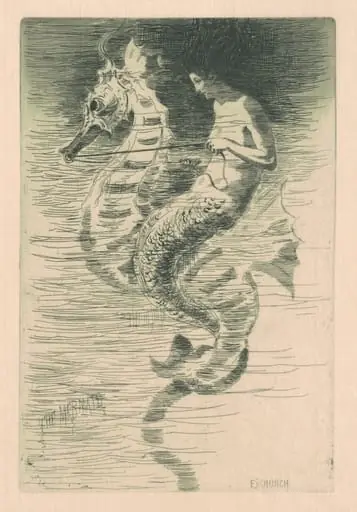 The Mermaid
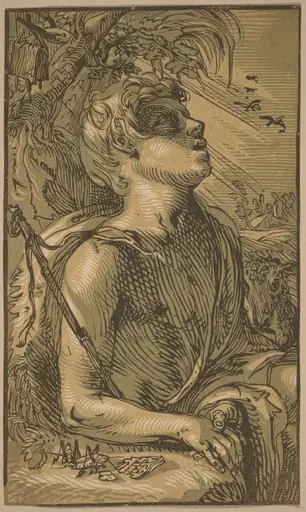 The Young Saint John the Baptist
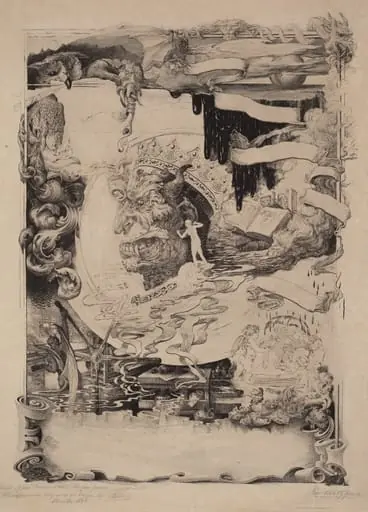 The Bookplate of the Printer's Devil
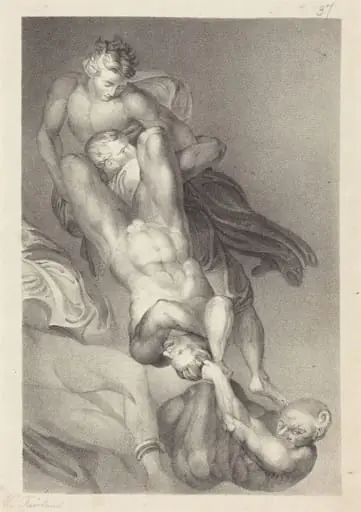 Part of the Last Judgment from Michael Angelo
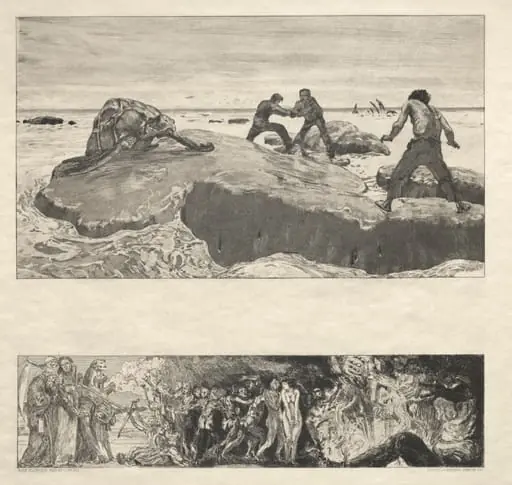 Vom Tode I, (Opus II, 1889) No. 2
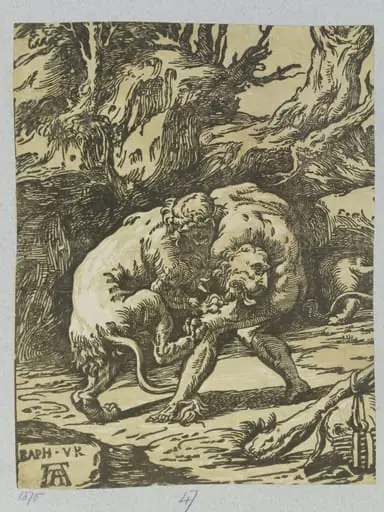 Hercules Strangling the Nemean Lion
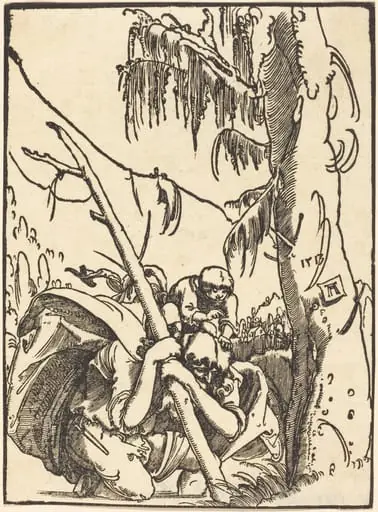 Saint Christopher
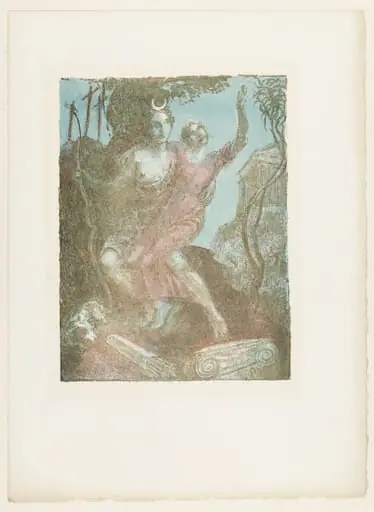 Untitled
 The Roman Studio (L'Atelier de Rome)