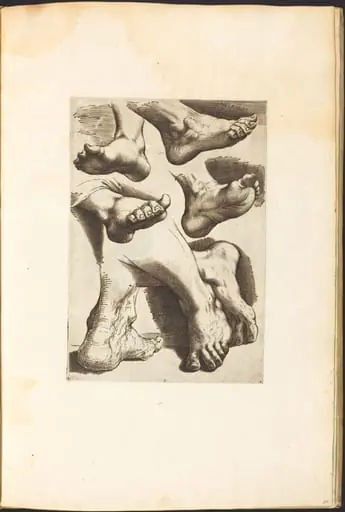
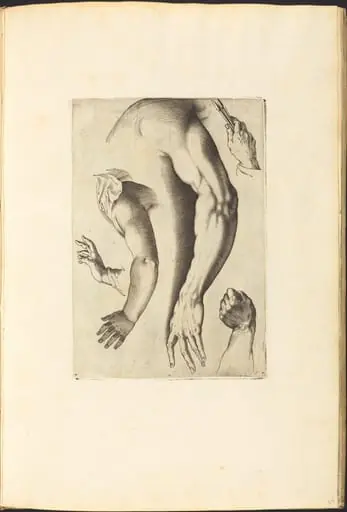
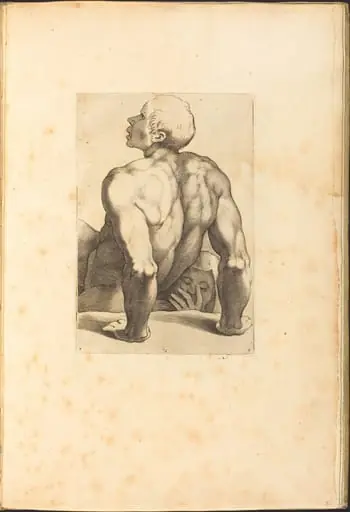
Artwork
Print from Drawing Book
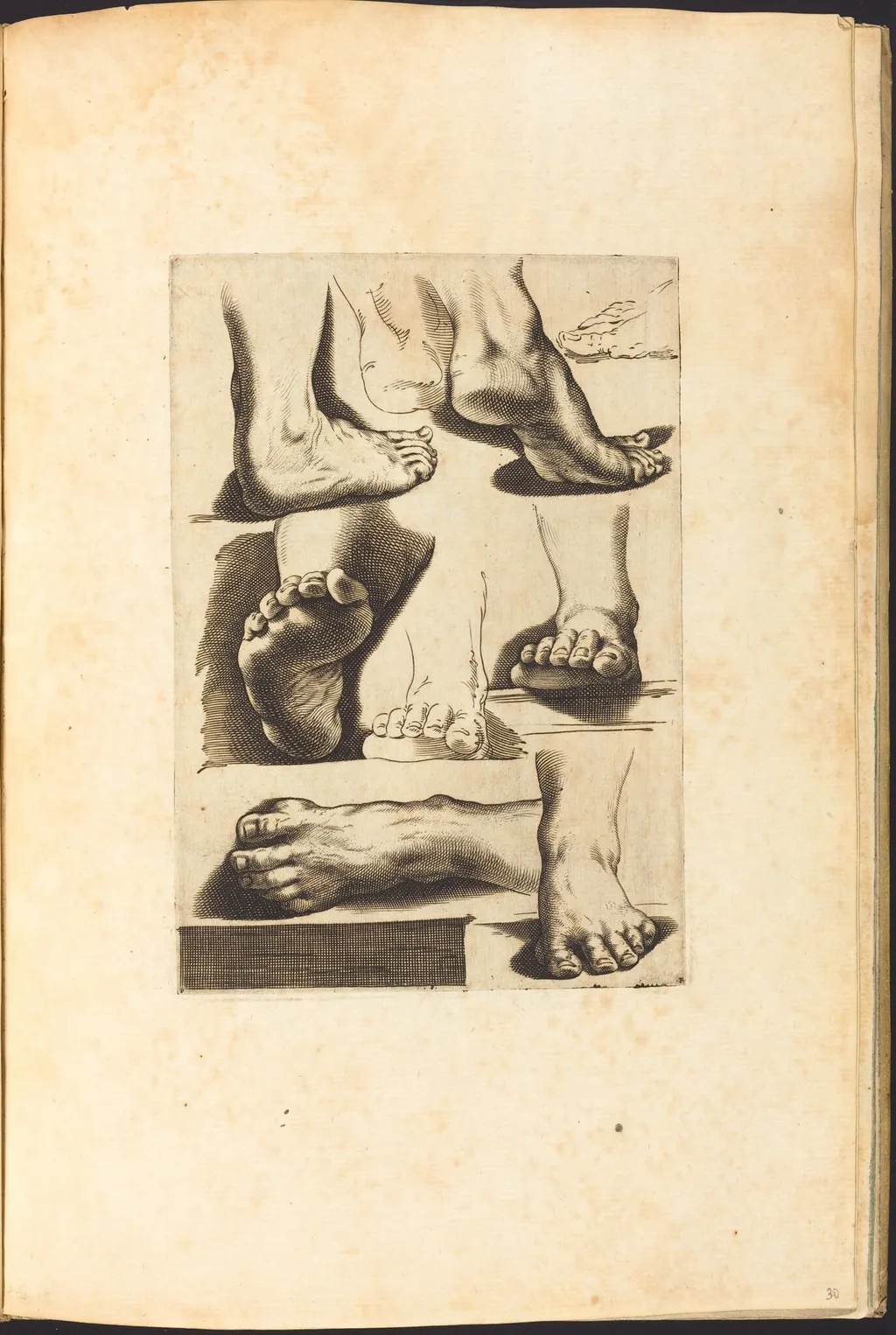
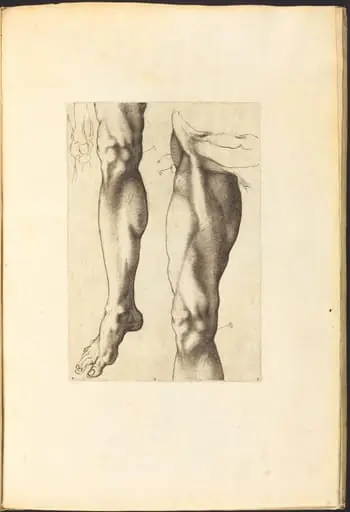
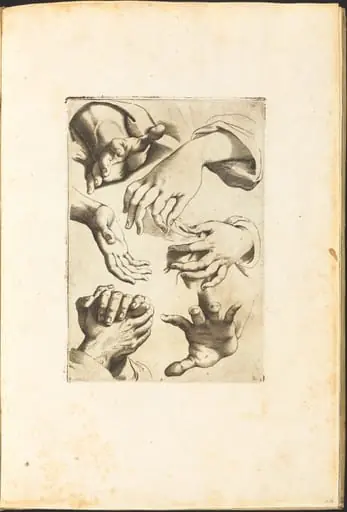
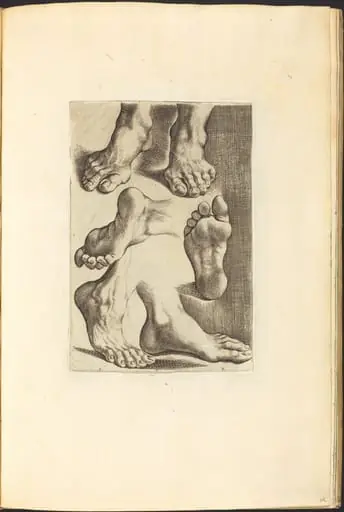
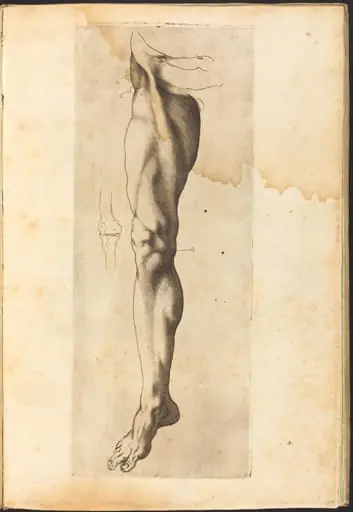
Print from Drawing Book is an ink print by the Baroque artist Luca Ciamberlano. It dates from 1615 and is held in the collection of the National Gallery of Art.
About this work
Overview
Its purpose was likely instructional, reflecting the artist’s routine practice rather than a completed work for display.
Created around 1615, this engraving comes from a private drawing book by Luca Ciamberlano. Executed with fine, precise lines on metal, it functions not as a public image but as a working study. The technique relies on cross-hatching—delicate intersecting strokes—to suggest form and shadow. Its purpose was likely instructional, reflecting the artist’s routine practice rather than a completed work for display.
Subject & Meaning
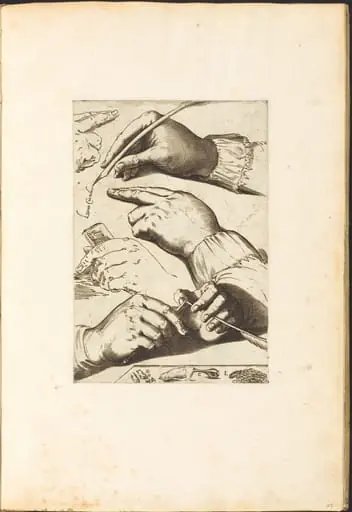
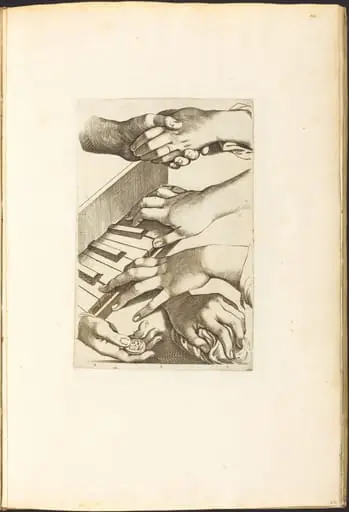
The plate depicts multiple hand positions, rendered with careful attention to anatomy and gesture. These studies served as reference material for figure composition, common in artistic training before the era of photographic aids. The absence of a narrative context emphasizes the focus on form and movement, revealing how artists built skill through repetition and observation of the human body.
Technique & Style
Ciamberlano employed engraving, a method involving incised lines on a metal plate inked and pressed onto paper. His lines are controlled and fine, with cross-hatching used to model volume and texture. The precision suggests familiarity with the medium, likely honed through apprenticeship. The composition is sparse, prioritizing clarity over ornamentation, typical of preparatory studies.
History & Provenance
The engraving is part of a larger collection of studies attributed to Ciamberlano, who trained under the prominent printmaker Agostino Carracci. It entered the National Gallery of Art’s holdings as part of a group of Renaissance and Baroque drawings and prints, preserved for their pedagogical value rather than their aesthetic finish.
Context
In early 17th-century Italy, artists routinely compiled drawing books to refine their skills outside formal commissions. These sheets were personal tools, circulated among peers or used by students. Ciamberlano’s work reflects a broader culture of visual learning, where mastery was built through disciplined observation and repeated rendering of anatomical elements.
Legacy
This engraving exemplifies the quiet, essential labor behind artistic training in the Baroque period. Though not intended for public exhibition, such studies underpin the technical fluency seen in finished works of the era. Today, they offer insight into the process behind canonical art, revealing the foundation of skill rather than its culmination.
Artist & collection