Artwork
Print from Drawing Book
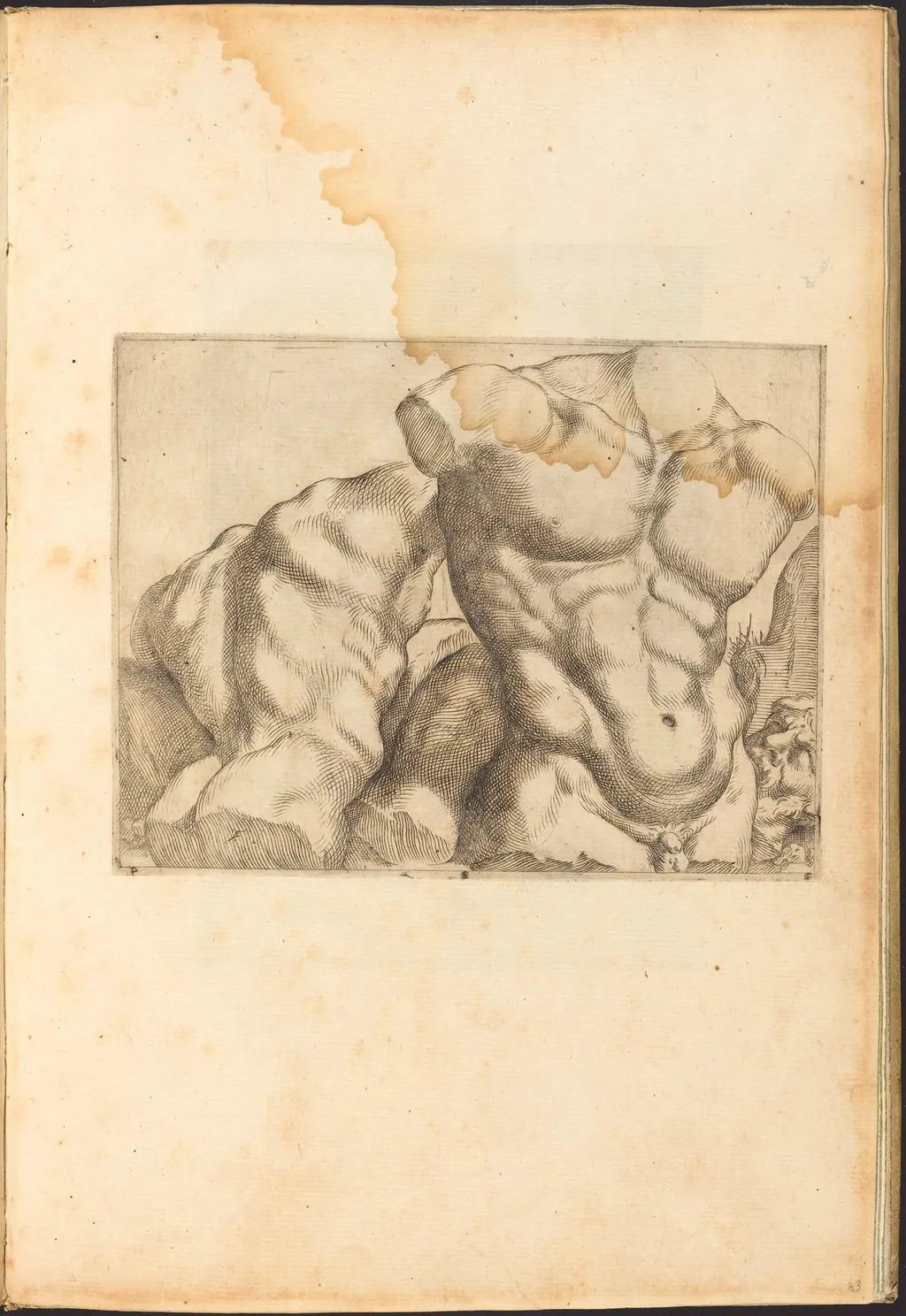
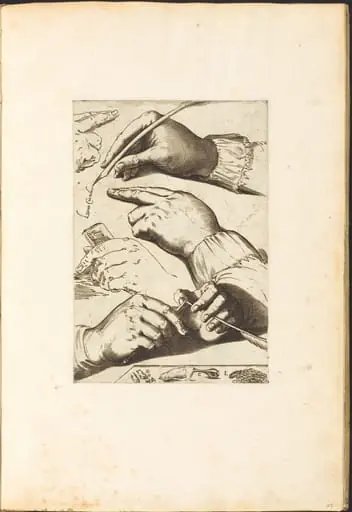
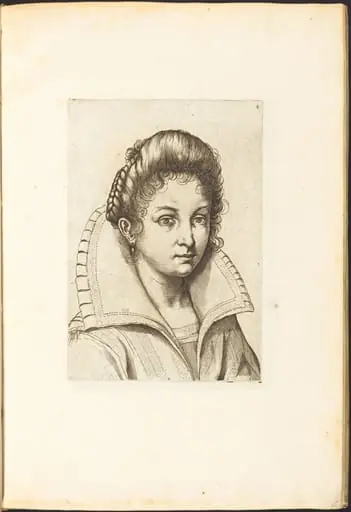
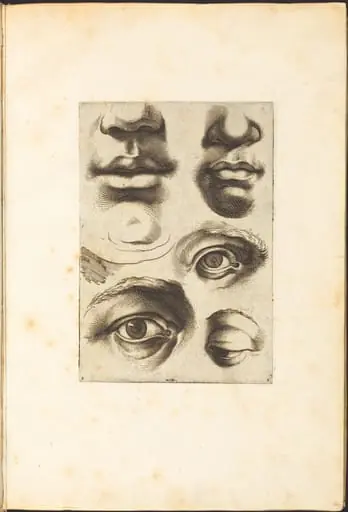
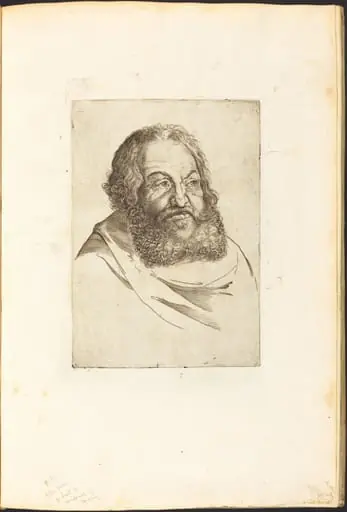
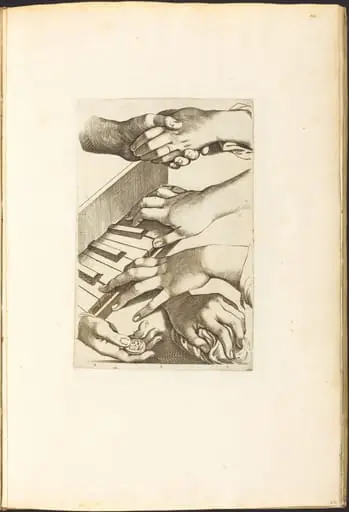
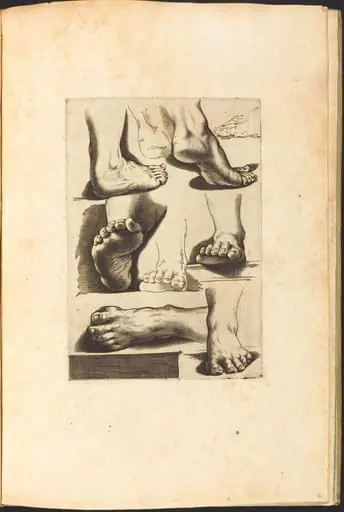
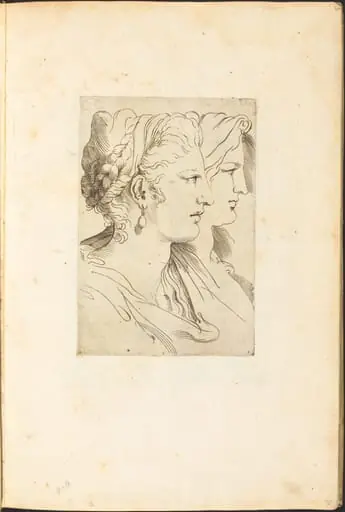
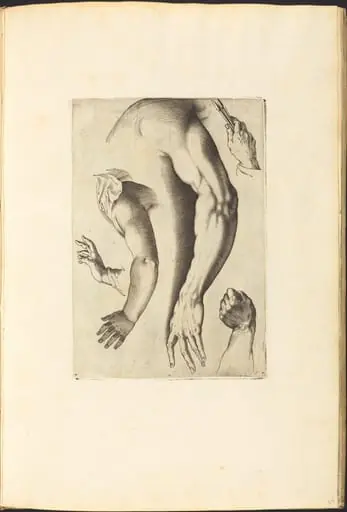
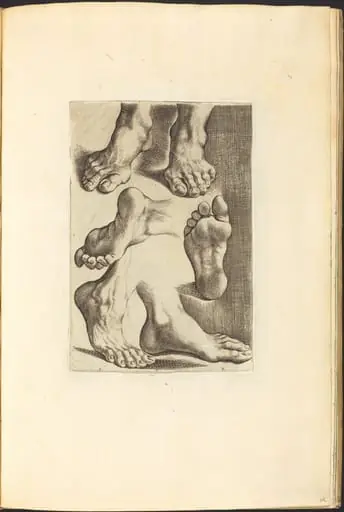
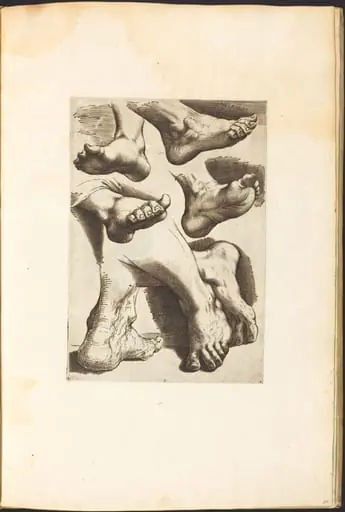
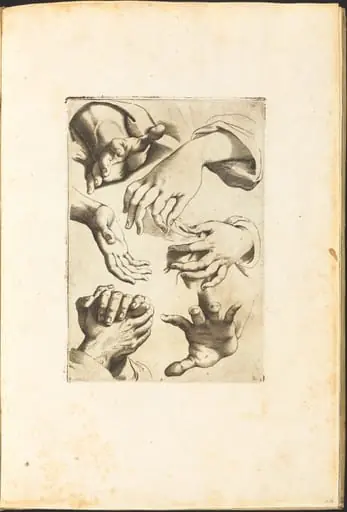
Print from Drawing Book is an ink print by the Baroque artist Luca Ciamberlano. It dates from 1615 and is held in the collection of the National Gallery of Art.
About this work
Overview
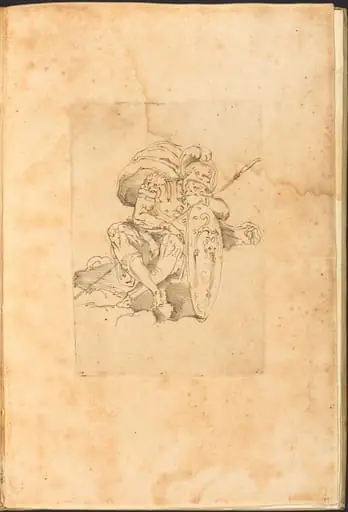
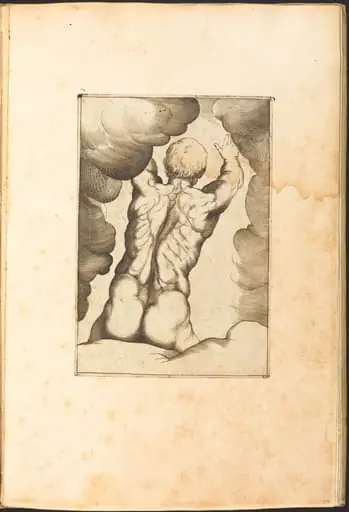
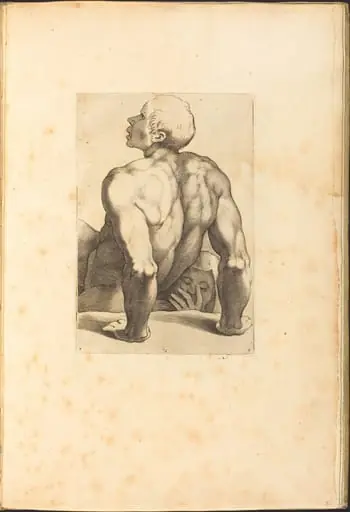
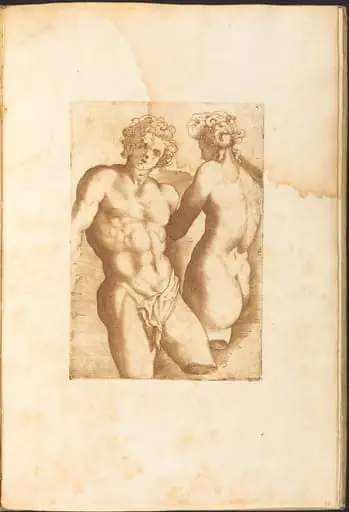
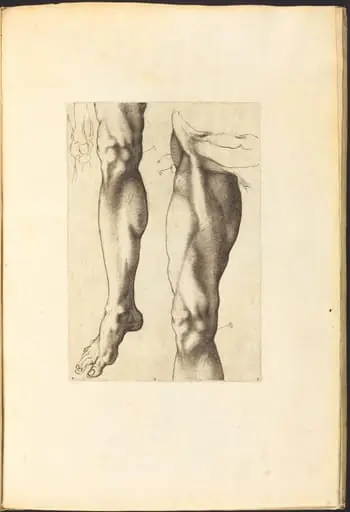
Luca Ciamberlano’s black‑and‑white print, titled *Print from Drawing Book*, dates to around 1615. Executed as an engraving, the work depicts a solitary, muscular figure seated on a rock, his back turned toward the viewer. The composition is rendered in fine, intersecting lines that define the anatomy, drapery and the subtle curvature of the terrain.
Subject & Meaning
The central figure is a nude male, positioned in a relaxed pose with flexed arms and slightly bent legs, suggesting a moment of rest after exertion. The anonymity of the subject and the absence of narrative elements focus attention on the study of the human form, a common preoccupation of artists exploring idealized anatomy during the early Baroque period.
Technique & Style
The print’s tonal depth arises from dense cross‑hatching, where multiple layers of parallel lines intersect to create shadows and volume.
Ciamberlano employed traditional engraving methods, incising the design onto a copper plate with a burin. The print’s tonal depth arises from dense cross‑hatching, where multiple layers of parallel lines intersect to create shadows and volume. This meticulous linework, especially evident in the rendering of muscle tone and fabric folds, exemplifies the precision valued in early 17th‑century printmaking.
History & Provenance
Created circa 1615, the print was likely part of a drawing book used for instructional or collectible purposes. Over the centuries the paper has acquired a yellowed patina and a minor tear at the top edge, indicating typical aging of early modern prints. Its survival in a private collection reflects the continued interest in Ciamberlano’s contributions to the engraving tradition.
Artist & collection