Artwork
Print from Drawing Book
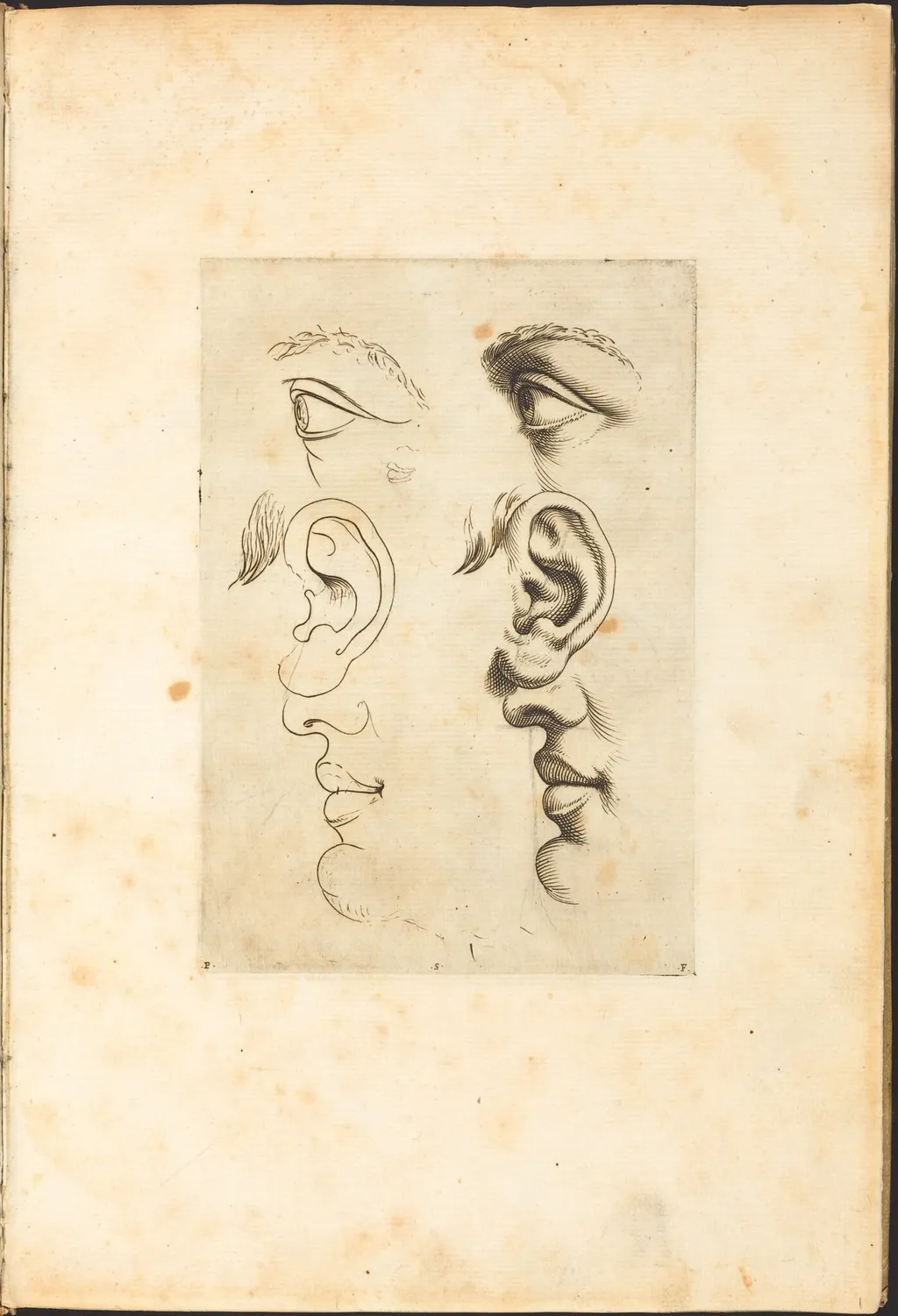
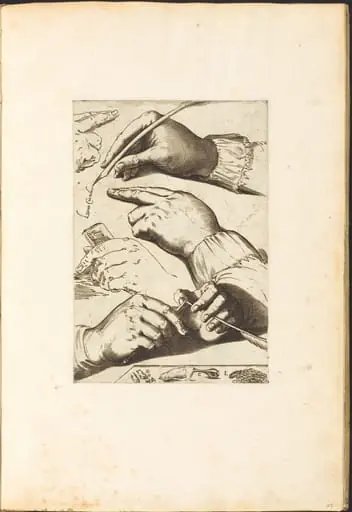
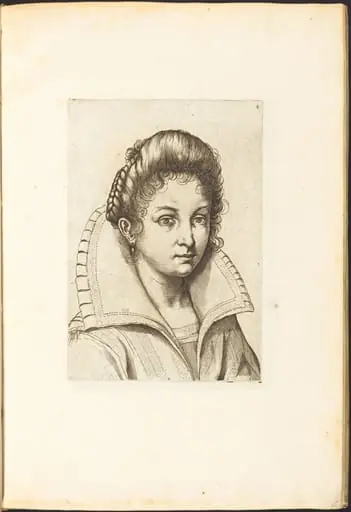
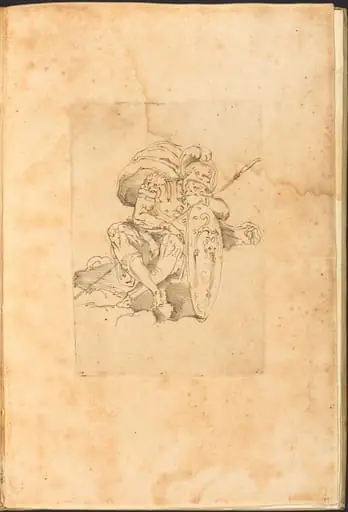
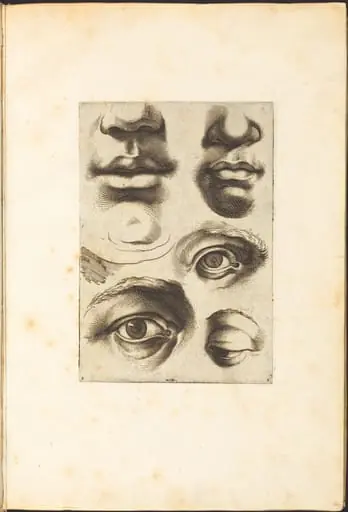
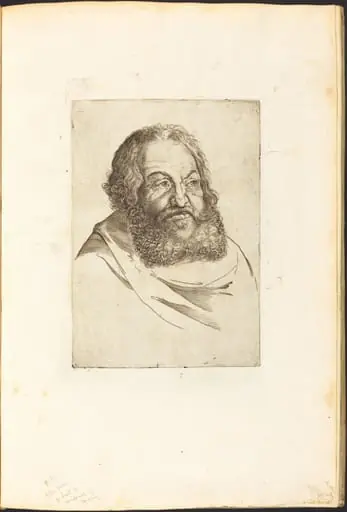
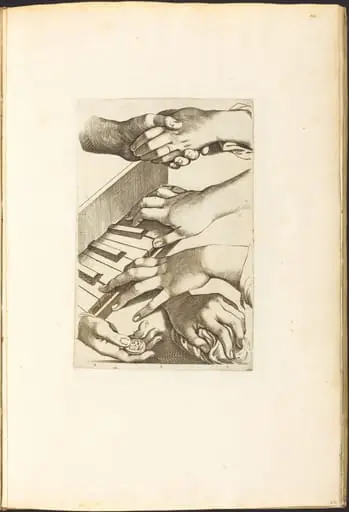
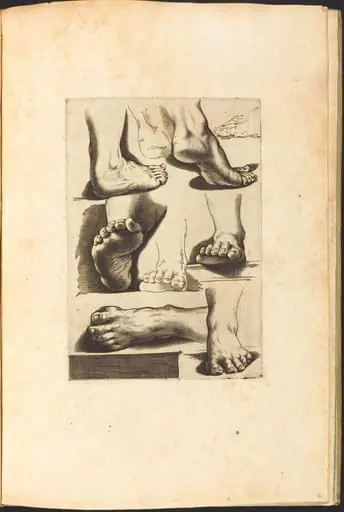
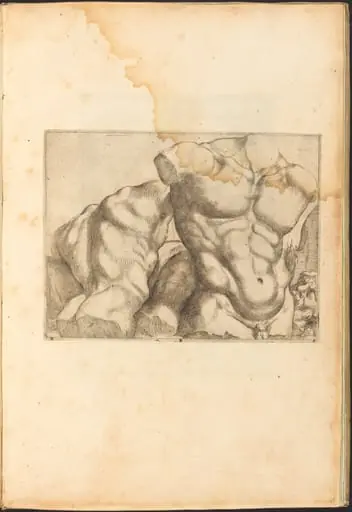
Print from Drawing Book is an ink print by the Baroque artist Luca Ciamberlano. It dates from 1615 and is held in the collection of the National Gallery of Art.
About this work
Overview
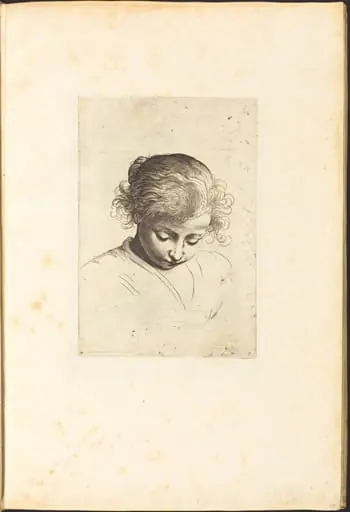
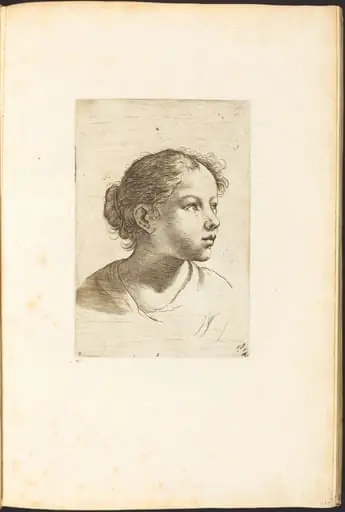
Luca Ciamberlano’s engraving, dated around 1615, presents a study of a human head rendered from two opposite perspectives. The work juxtaposes a conventional frontal portrait with a dramatically altered counterpart, where anatomical features are elongated and the visage appears to dissolve. Executed as a single sheet, the image functions as a visual experiment in contrast and transformation.
Subject & Meaning
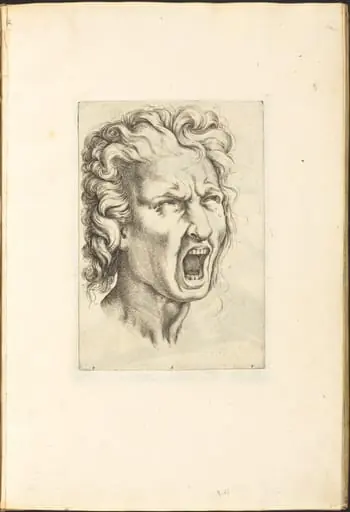
The composition explores the duality of appearance, pairing a recognizable face with a grotesquely distorted version. By stretching ears, wildening hair, and allowing the facial structure to melt, the artist invites viewers to consider how perception shifts when familiar forms are subverted. The piece reflects a fascination with the uncanny and the limits of representation.
Technique & Style
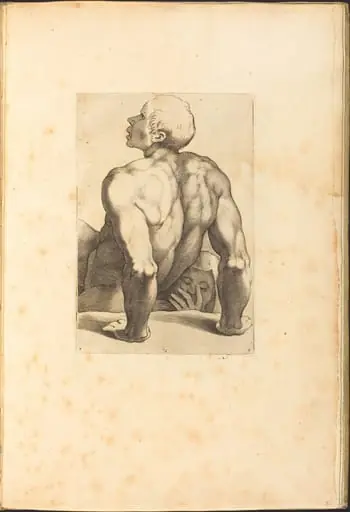
Ciamberlano employs the engraving medium, using fine, incisive lines that convey both clarity and immediacy. The drawing‑like quality of the marks suggests rapid execution, yet the contrast between the orderly and the chaotic sides is achieved through controlled hatching and bold contouring. This simplicity of line underscores the conceptual focus of the work.
Context
Created during the early Baroque period, the print aligns with contemporary interests in the grotesque and the theatrical. Artists of the time often explored exaggerated physiognomy to provoke emotional response and intellectual curiosity. Ciamberlano’s piece fits within this broader trend of using distortion to challenge conventional portraiture.
Artist & collection