Artwork
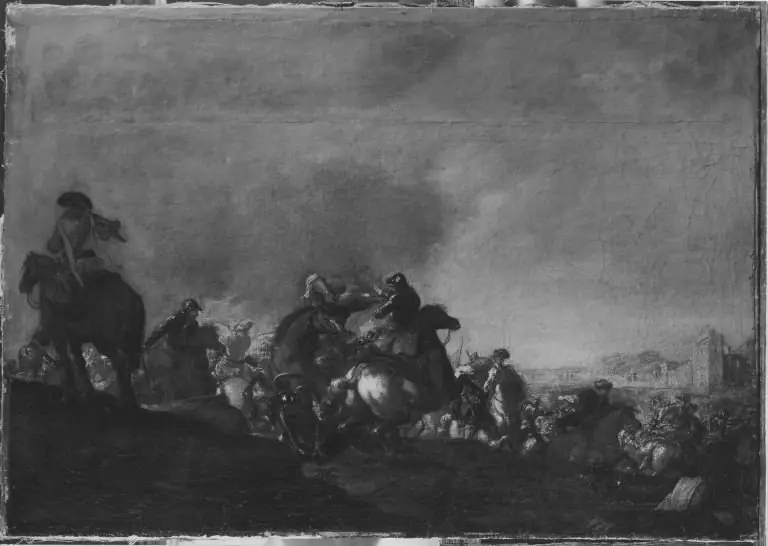
Reitergefecht
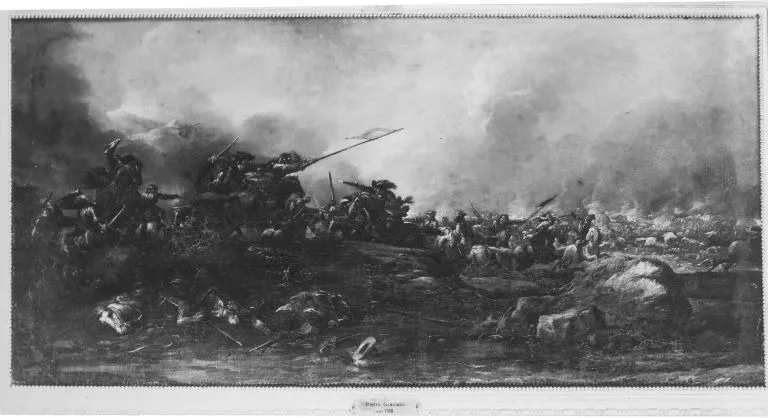
Reitergefecht is an unspecified painting by Ciccio Graziani. It dates from 1658 and is held in the collection of the Bavarian State Painting Collections.
About this work
Overview
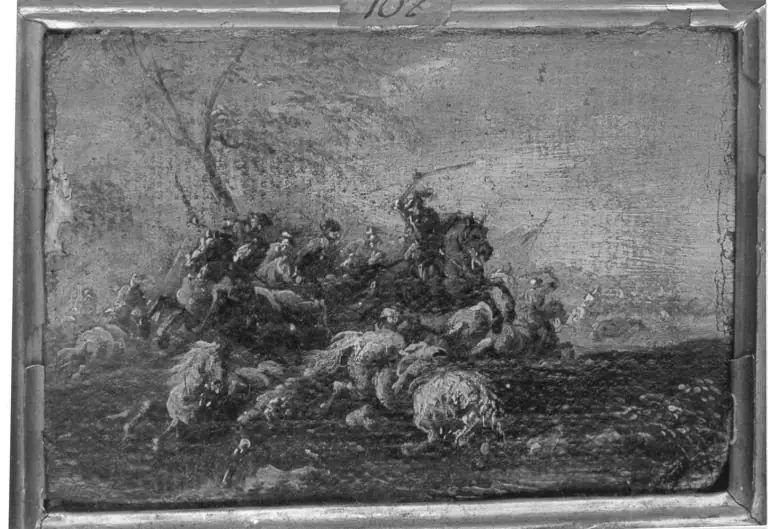
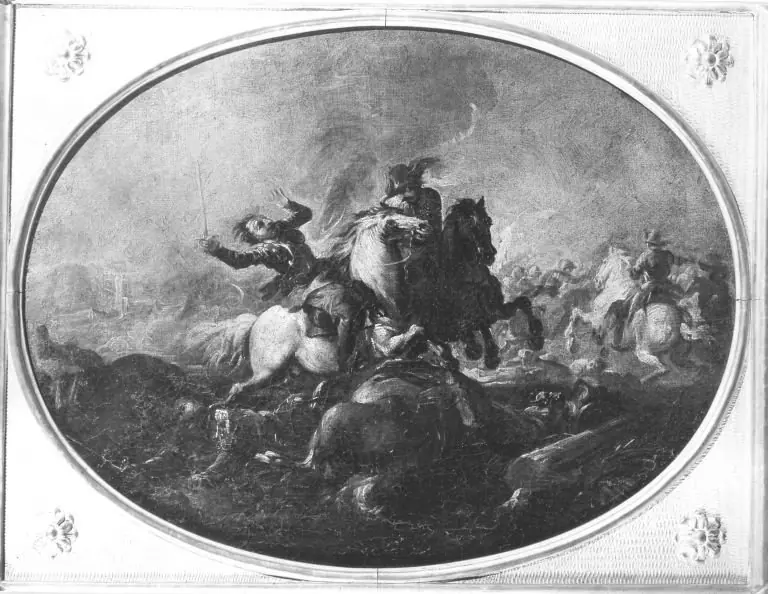
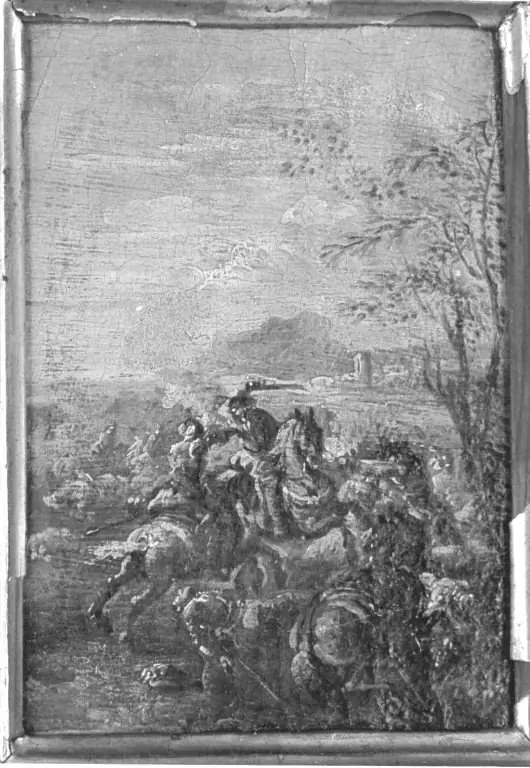
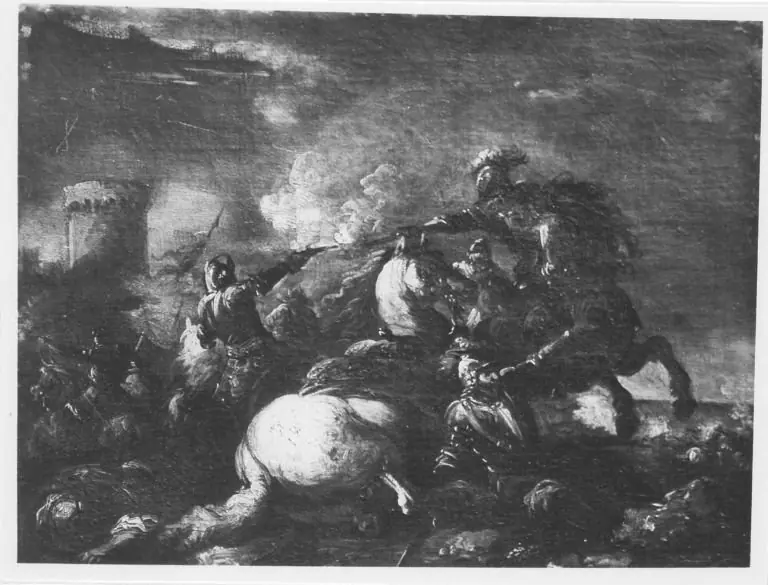
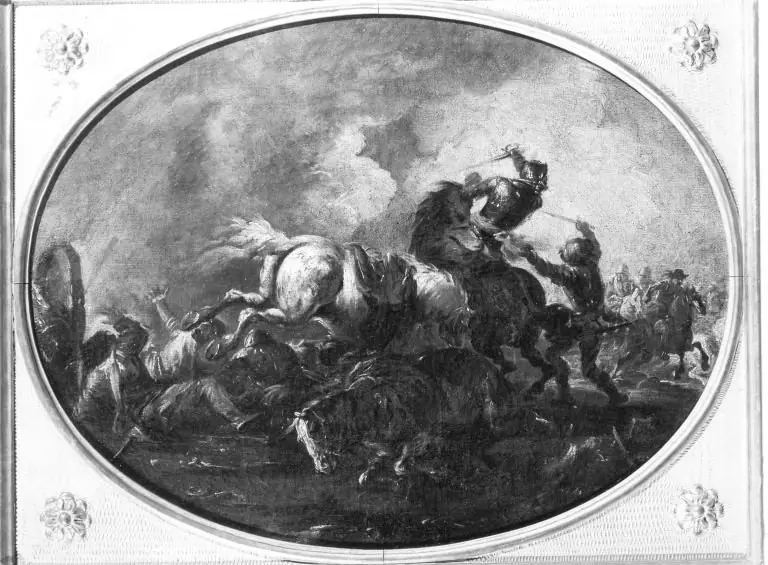
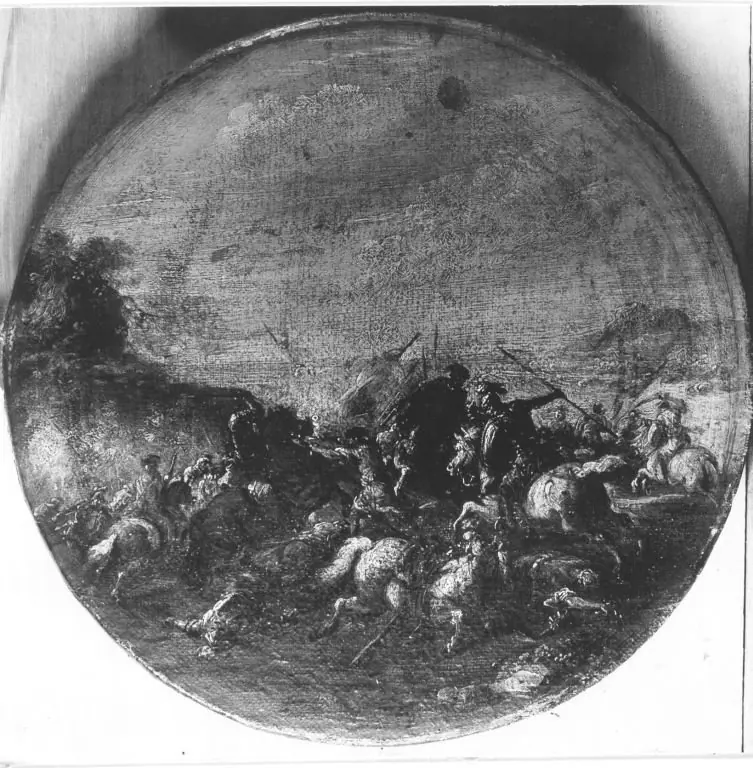
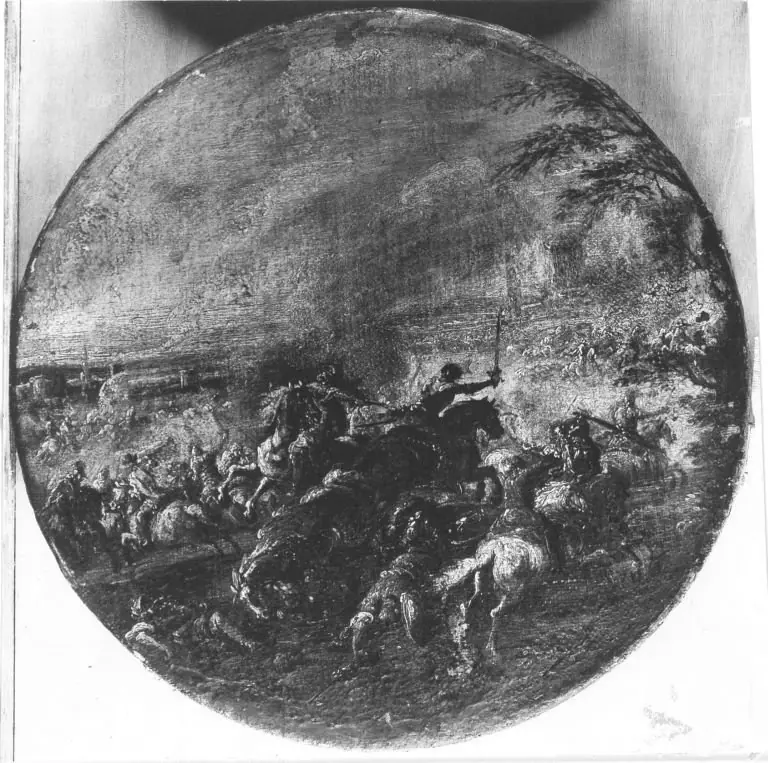
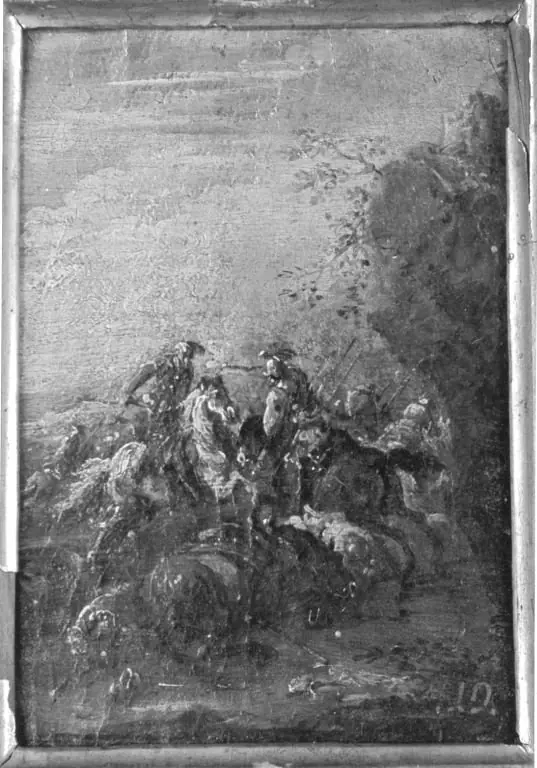
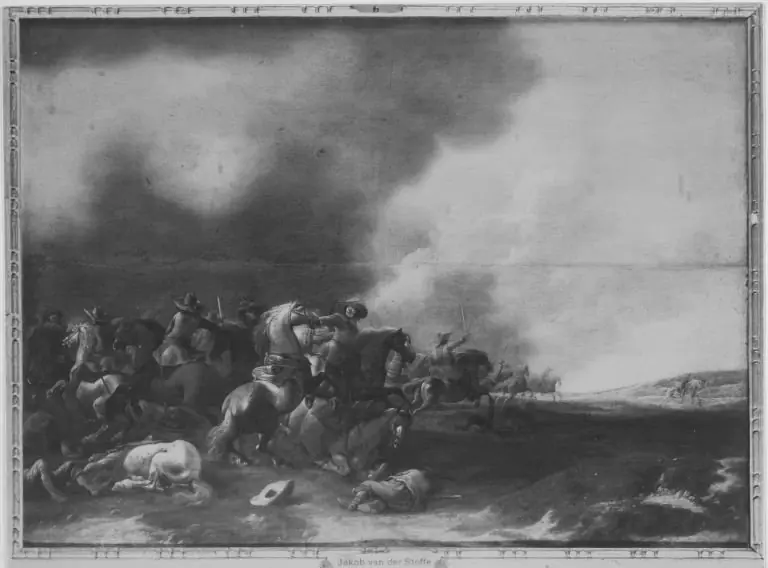
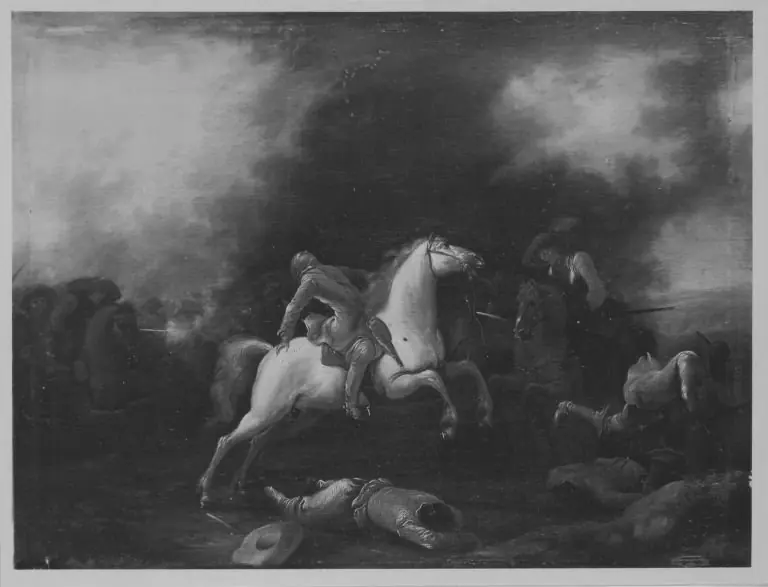
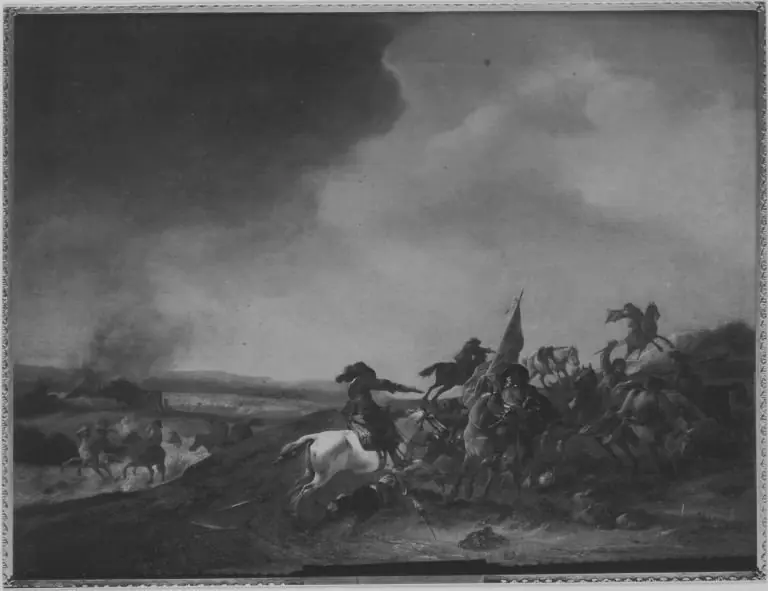
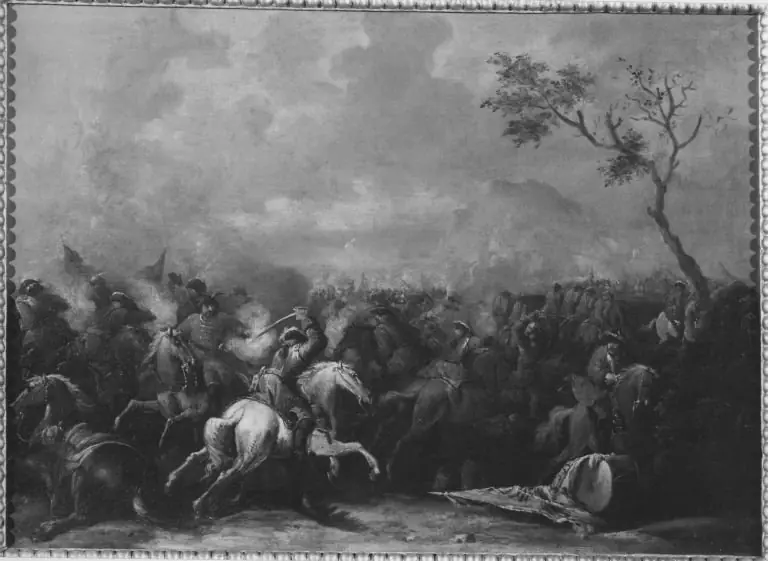
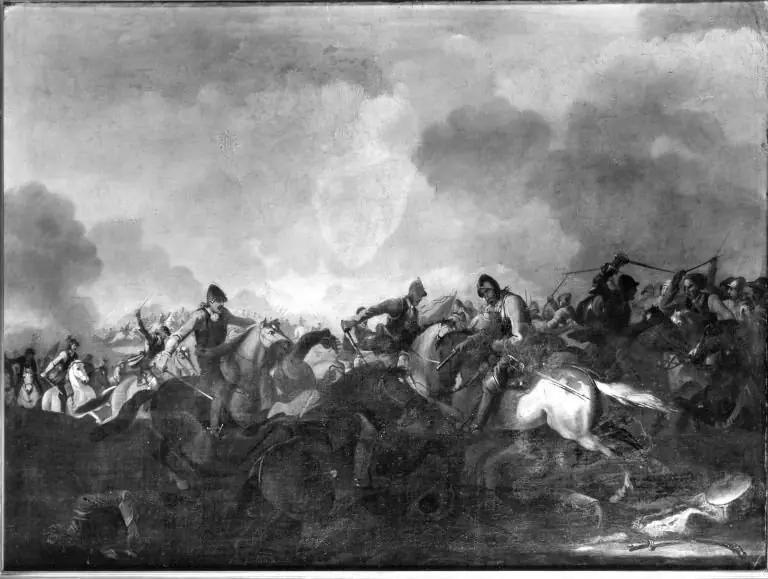
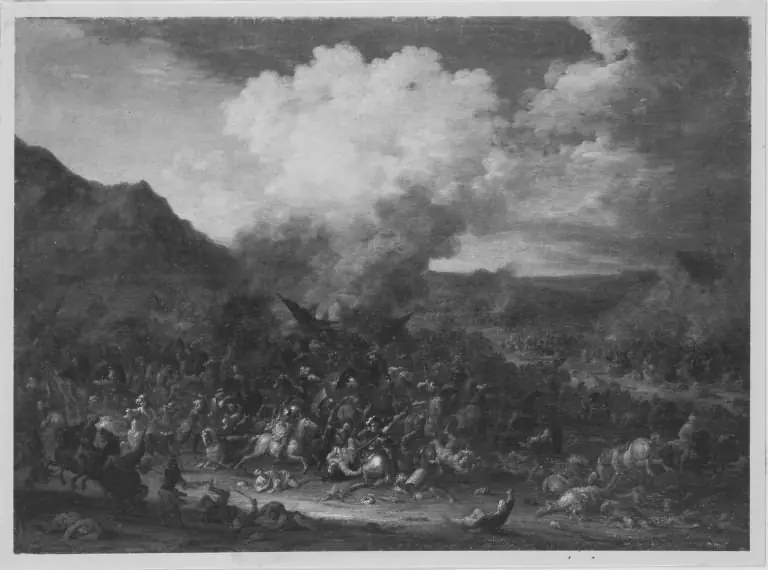
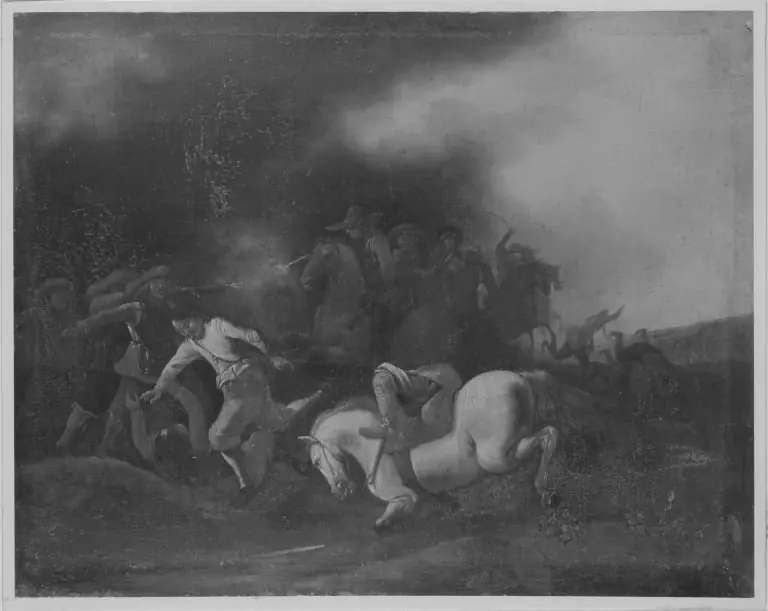
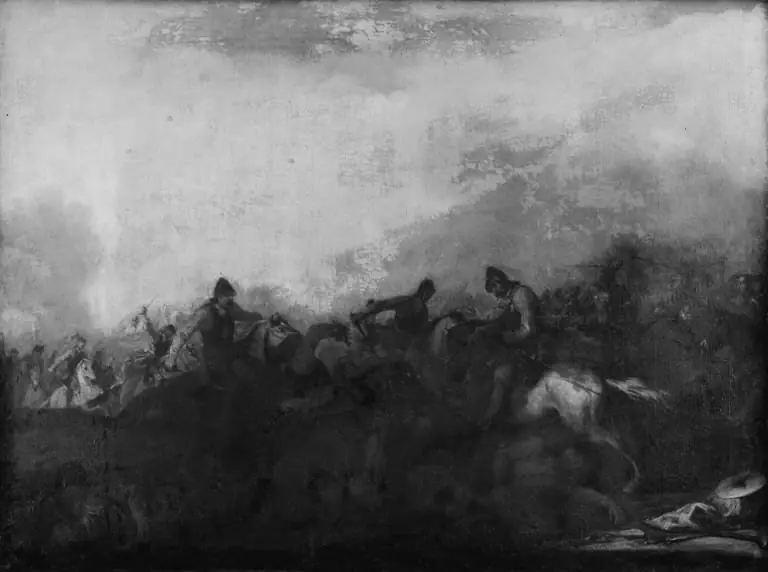
Painted around 1658 by Ciccio Graziani, Reitergefecht is an oil-on-canvas depiction of a cavalry skirmish. It resides in the Alte Pinakothek in Munich, where it is recognized for its intense atmosphere and dynamic composition. The work captures a moment of violent confrontation, emphasizing motion and disorder rather than narrative clarity.
Subject & Meaning
The scene portrays a disordered cavalry engagement, with riders and horses locked in close combat. No identifiable historical event is referenced; instead, the focus lies in the raw energy of conflict. A central figure on horseback, armed with a long spear, acts as a visual anchor amid the chaos, suggesting individual valor without clear allegiance or context.
Technique & Style
Graziani employs a restricted palette dominated by deep browns, blacks, and muted greens, punctuated by sudden highlights that cut through the gloom. The brushwork is loose and urgent, enhancing the sense of movement. Dramatic chiaroscuro isolates key figures and heightens tension, aligning the work with early Baroque sensibilities focused on emotional immediacy.
History & Provenance
The painting entered the collection of the Alte Pinakothek in the 19th century, likely through the Bavarian royal acquisitions.
The painting entered the collection of the Alte Pinakothek in the 19th century, likely through the Bavarian royal acquisitions. Its attribution to Ciccio Graziani, a lesser-known Italian painter active in the mid-17th century, was established through stylistic comparison and archival records. No earlier provenance is documented, suggesting it may have remained in private hands before institutional acquisition.
Context
Created during a period of widespread military conflict in Europe, the painting reflects a broader artistic interest in battlefield scenes, though without specific political or historical intent. Graziani’s approach diverges from grand historical narratives, favoring visceral immediacy. His work aligns with regional Italian traditions that prioritized emotional impact over documentary precision.
Legacy
Reitergefecht remains one of the few surviving works attributed to Graziani, offering insight into the lesser-documented practices of Italian Baroque painters outside major centers. While not widely influential, it contributes to understanding how battlefield themes were interpreted in smaller studios, emphasizing atmosphere over heroism or ideology.
Artist & collection