Artwork
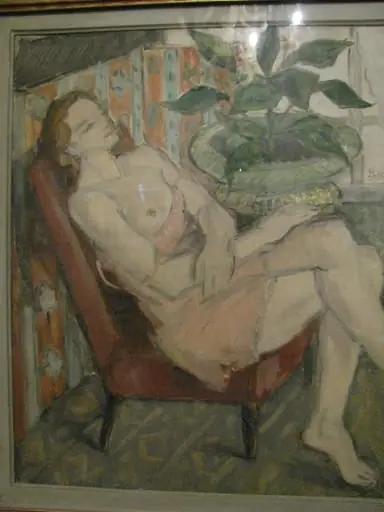
Femeie șezând
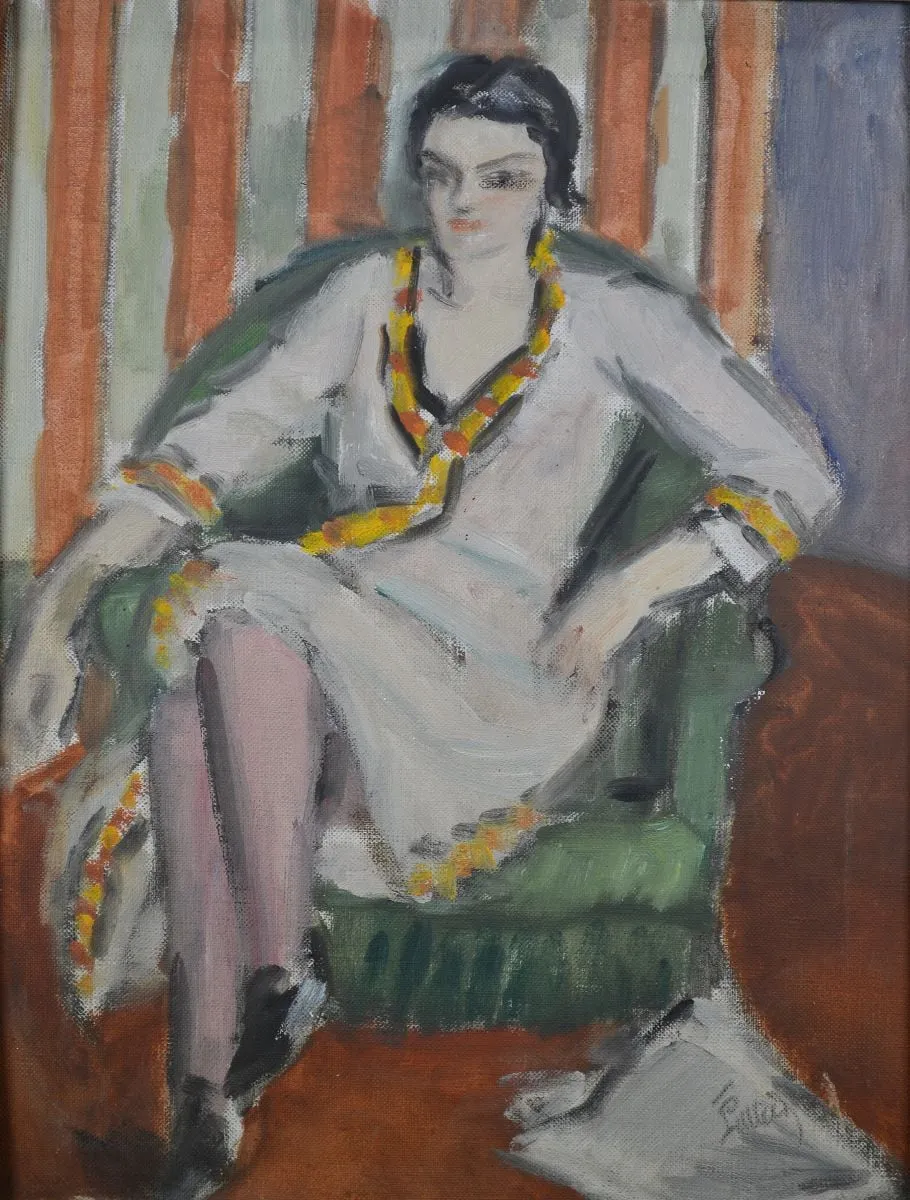
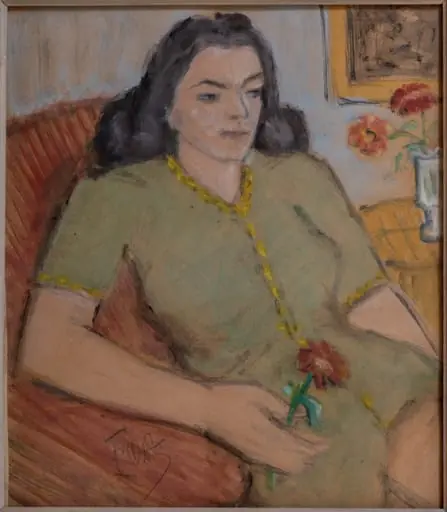
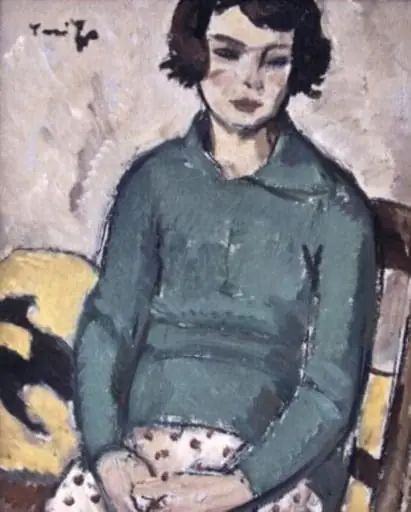
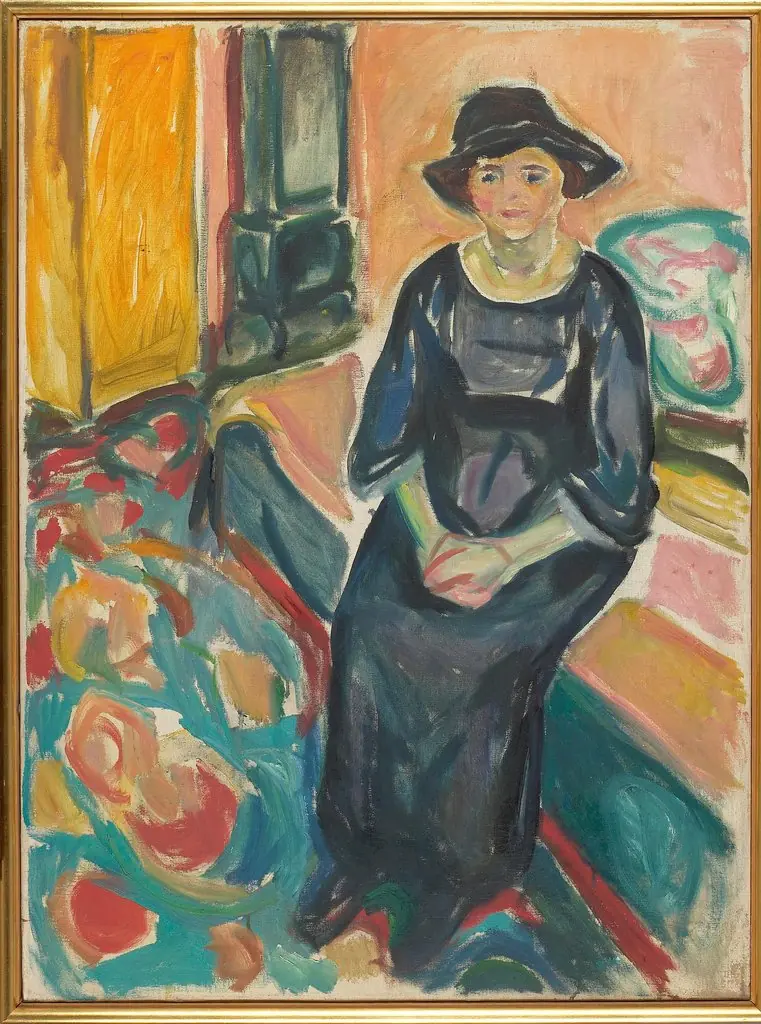
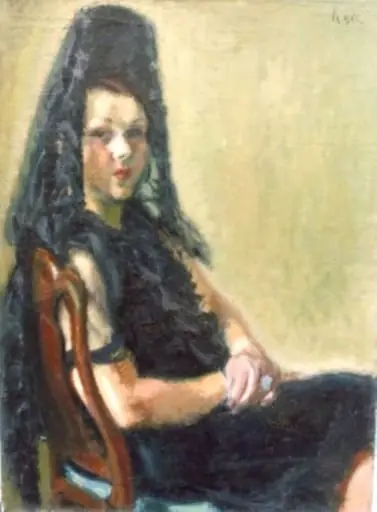
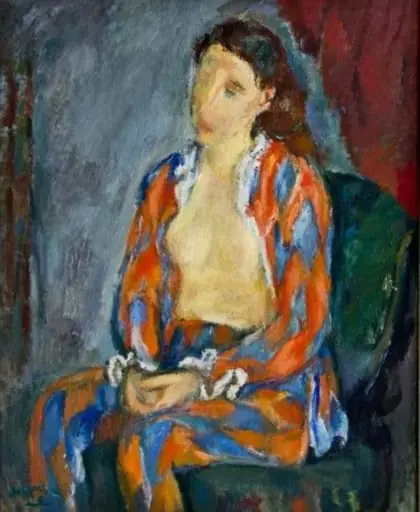
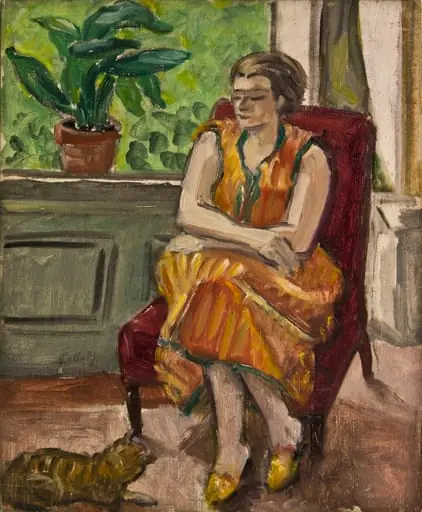
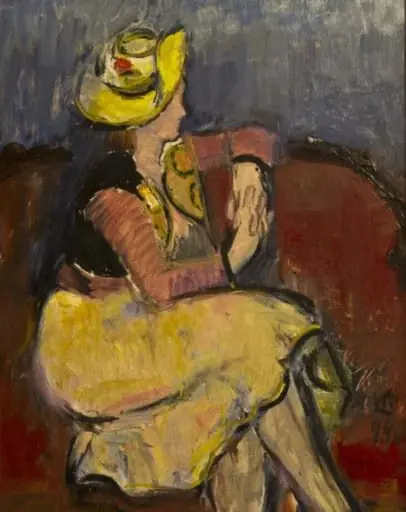
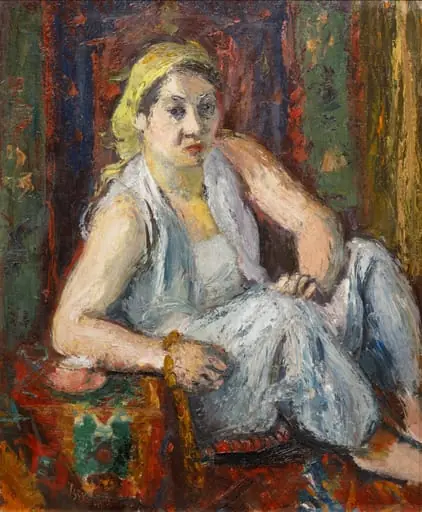
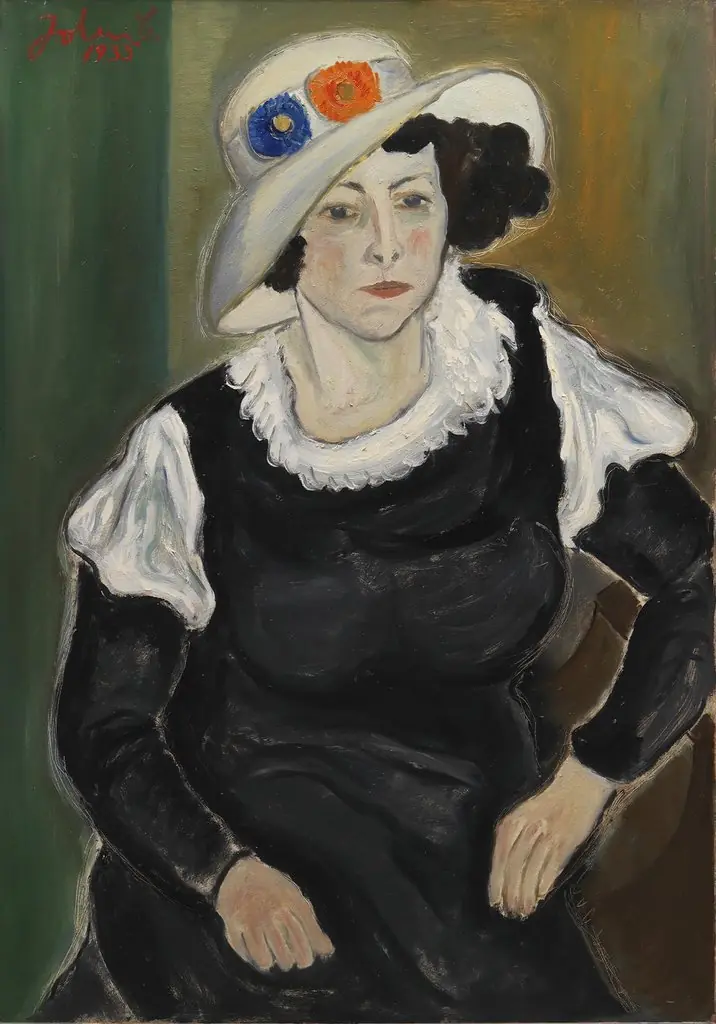
Femeie șezând is a print by Theodor Pallady. It dates from 1921 and is held in the collection of the Brukenthal National Museum.
About this work
Overview
The composition emphasizes form and color over detailed realism, with broad brushwork and unblended hues defining the figure and surroundings.
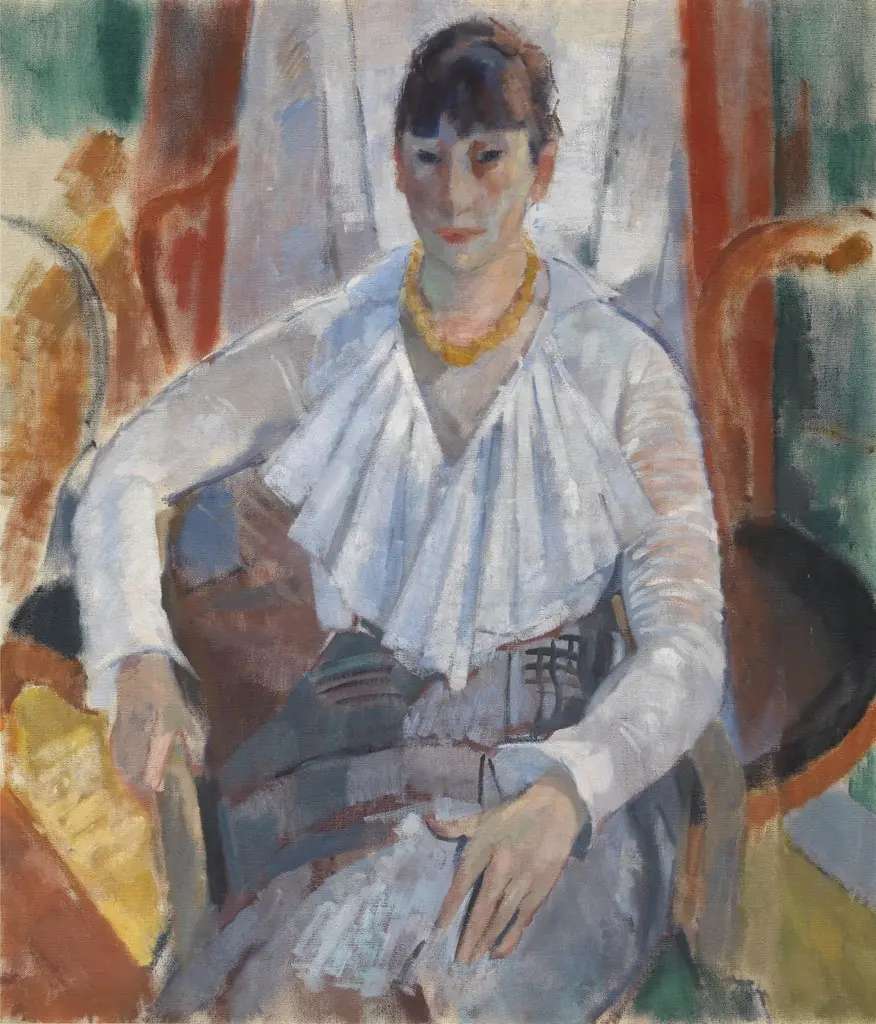
Painted around 1921 by Theodor Pallady, Femeie șezând is a portrait of a seated woman rendered in a simplified, expressive style. The composition emphasizes form and color over detailed realism, with broad brushwork and unblended hues defining the figure and surroundings. The work reflects Pallady’s engagement with modernist tendencies, balancing structure with a sense of spontaneity in its execution.
Subject & Meaning
The subject is a woman seated calmly in a chair, her hands resting gently in her lap. Her posture suggests quiet introspection rather than narrative action. The absence of facial detail and the stylized rendering shift focus from individual identity to the presence and stillness of the figure. The vibrant necklace and contrasting background imply a deliberate play between personal adornment and environmental rhythm.
Technique & Style
Pallady employs loose, visible brushstrokes and thick applications of paint, creating a tactile surface that emphasizes materiality over precision. Colors are applied in flat, unmodulated planes—bright yellows and oranges against deep reds and blues—enhancing visual tension. The dark wooden chair and green cushion are rendered with minimal modeling, reinforcing the painting’s departure from naturalism toward expressive abstraction.
History & Provenance
Created during Pallady’s mature period after years of study in Paris, Femeie șezând reflects his synthesis of Romanian sensibilities with French modernist influences. The work entered public collections in Romania following his return from abroad, where it became part of a broader effort to document the evolution of modern Romanian painting in the early 20th century.
Context
In the early 1920s, Romanian artists were redefining national identity through art that blended folk motifs with European avant-garde styles. Pallady’s work, while not overtly nationalistic, contributed to this shift by embracing bold color and simplified form—paralleling trends in Fauvism and early Expressionism—while maintaining a distinctly personal, intimate tone.
Legacy
Femeie șezând remains a key example of Pallady’s contribution to Romanian modernism. Its emphasis on color relationships and structural economy influenced later generations of artists seeking alternatives to academic realism. The painting is frequently cited in studies of interwar Romanian art as a quiet yet decisive step toward abstraction grounded in everyday observation.
Artist & collection