Artwork
NUD PE CANAPEA
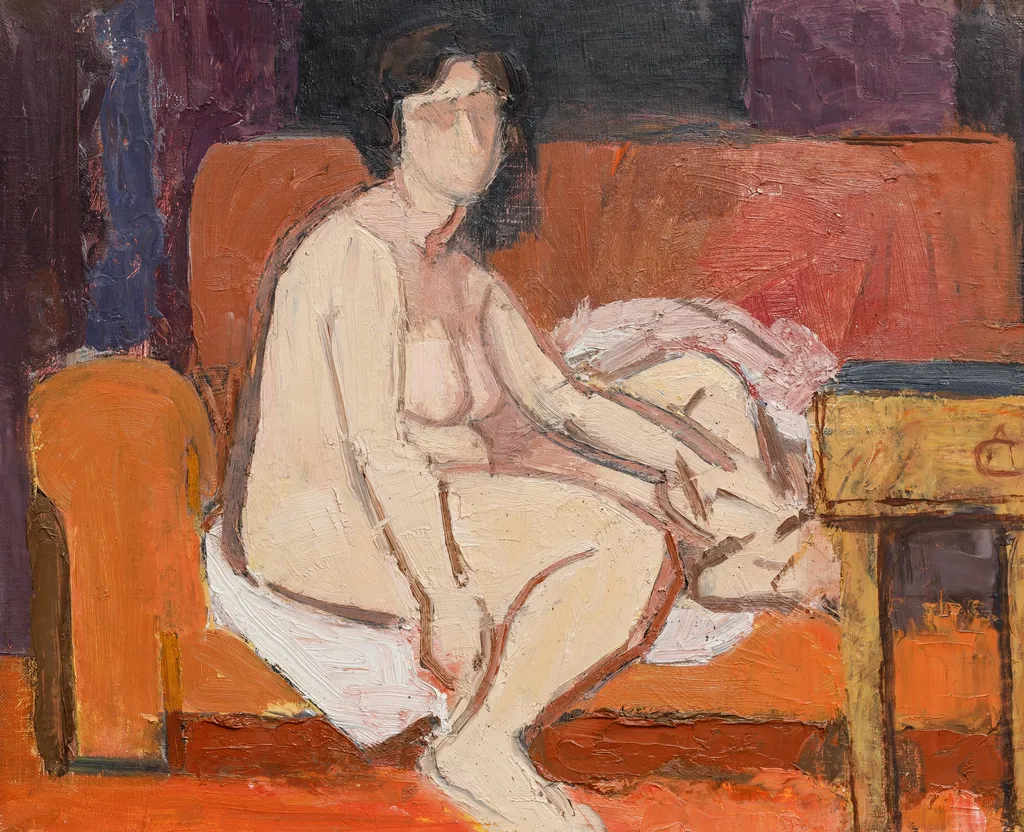
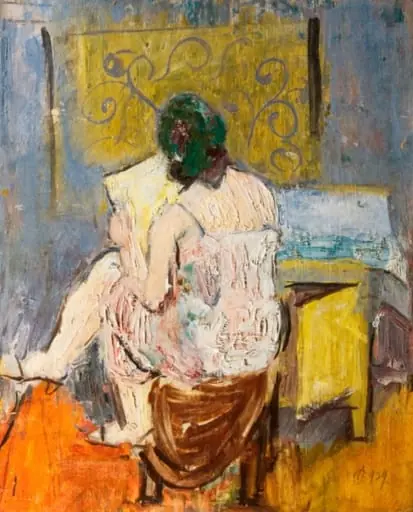
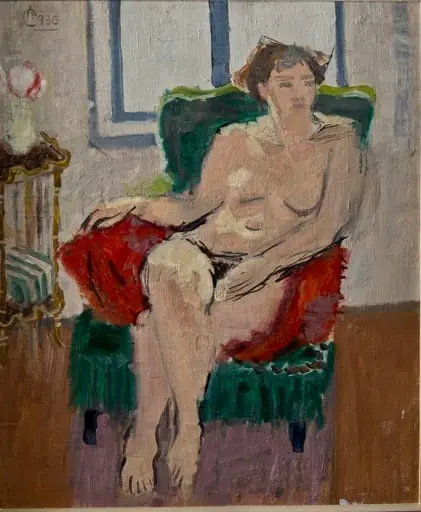
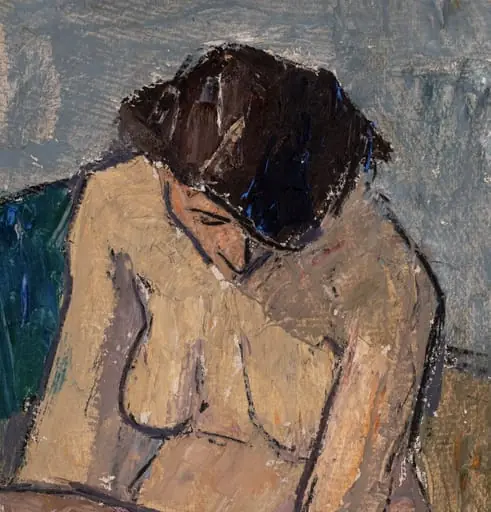
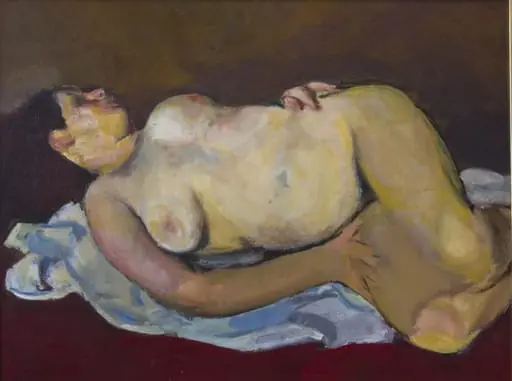
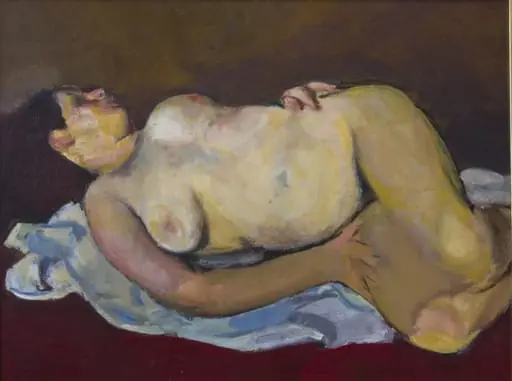
NUD PE CANAPEA is a print by Alexandru Ciucurencu. It dates from 1940 and is held in the collection of the National Museum of Art of Romania.
About this work
Overview
This painting captures a moment of quiet intimacy, rendered without idealization, reflecting his interest in personal observation over academic convention.
Created around 1940 by Romanian painter Alexandru Ciucurencu, *Nud pe canapea* is a figurative work that bridges Post-Impressionist sensibilities with a spontaneous, almost sketchlike execution. Ciucurencu, trained in Bucharest and later in Paris under André Lhote, developed a style marked by expressive brushwork and emotional immediacy. This painting captures a moment of quiet intimacy, rendered without idealization, reflecting his interest in personal observation over academic convention.
Subject & Meaning
The painting depicts a woman seated on a red sofa, holding a white cloth, her posture relaxed and unposed. There is no narrative or symbolic layer beyond the presence of the figure and the domestic setting. The absence of theatricality or eroticism suggests an emphasis on authenticity—her vulnerability is conveyed through posture and texture rather than gesture. The towel may imply a moment of transition, grounding the scene in ordinary, unadorned reality.
Technique & Style
Ciucurencu applied paint with thick, visible strokes, using impasto to build form and texture. Skin tones blend subtly into the saturated red of the couch and warm yellows, creating a tactile contrast. Edges are deliberately unresolved, and contours suggest haste or deliberate abandonment of polish. The brushwork prioritizes emotional resonance over precision, aligning the work with expressive modernism rather than traditional finish.
History & Provenance
The painting emerged during Ciucurencu’s mature period, following his studies in Paris and his return to Romania. While specific ownership history is not widely documented, it is held within Romanian public collections, consistent with his status as a corresponding member of the Romanian Academy. Its creation around 1940 places it amid a time of cultural consolidation in Romanian modern art, as artists sought to define a national voice beyond academic traditions.
Context
In 1940s Romania, artists like Ciucurencu navigated between European modernist trends and local artistic expectations. While Parisian influences remained strong, there was growing interest in depicting everyday Romanian life with honesty. *Nud pe canapea* reflects this tension—its subject is universal, yet its handling is distinctly personal, resisting both academic idealism and overt political messaging of the era.
Legacy
The painting contributes to a broader understanding of Romanian modernism as a practice rooted in individual expression rather than dogma. Ciucurencu’s willingness to embrace unfinished surfaces and emotional rawness influenced later generations who valued authenticity over polish. Though not widely exhibited internationally, it remains a key example of how Post-Impressionist techniques were adapted to Romanian artistic concerns in the mid-20th century.
Artist & collection
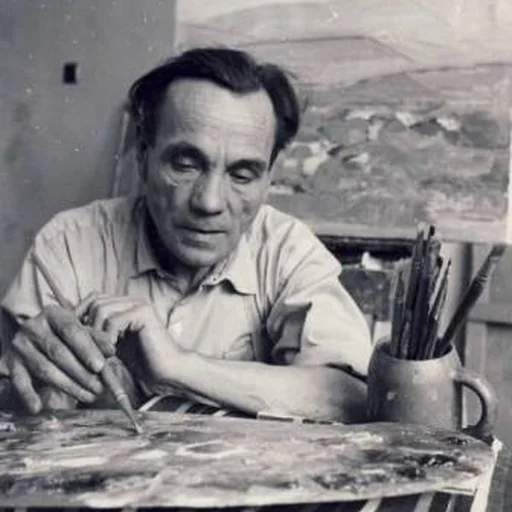
Artist
Alexandru Ciucurencu (Romanian pronunciation: ; 27 September 1903 – 27 December 1977) was a Romanian Post-Impressionist painter, and a corresponding member of the Romanian Academy.