Artwork
The Square at Canterbury
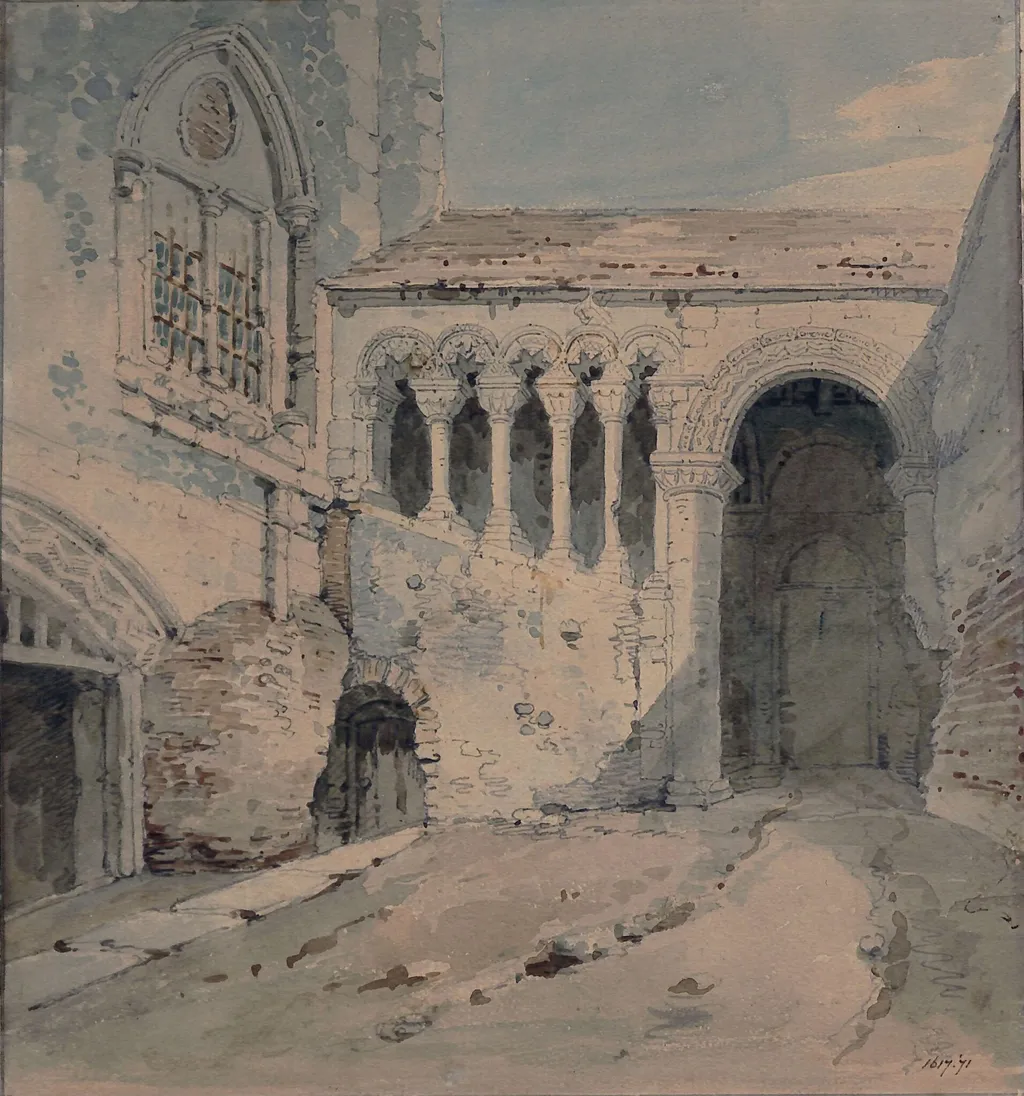
The Square at Canterbury is a watercolor work on paper by the Romanticist artist Clarendon. It dates from 1805 and is held in the collection of the Victoria and Albert Museum.
About this work
Overview
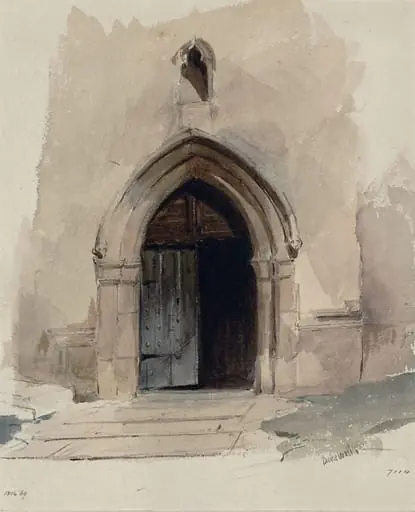
Created in 1805, this watercolour by Clarendon portrays a public square in Canterbury. The composition is dominated by two opposing structures— a larger edifice on the left and a smaller, similarly arched building on the right— framing an open, largely empty space.
Subject & Meaning
The work records an urban scene, emphasizing the architectural rhythm of arches and columns that define the square. The absence of figures and the subtle play of shadows suggest a moment of quiet stillness, inviting contemplation of the built environment rather than human activity.
Technique & Style
Clarendon employs the transparent qualities of watercolour to achieve a softened, atmospheric effect. A restrained palette of greys and browns creates a muted tonal range, while delicate washes convey the diffused light and the gentle gradations of shadow across the pavement.
Historical Context
The painting belongs to the early nineteenth‑century Romantic period, a time when artists often sought to evoke mood and imagination through landscape and urban scenes. Its emphasis on feeling and the poetic rendering of a familiar locale aligns with the broader Romantic interest in the emotional resonance of place.
Artist & collection
Artist
This watercolour and print artist worked in late-18th and early-19th century Britain, leaving quiet views of public spaces.

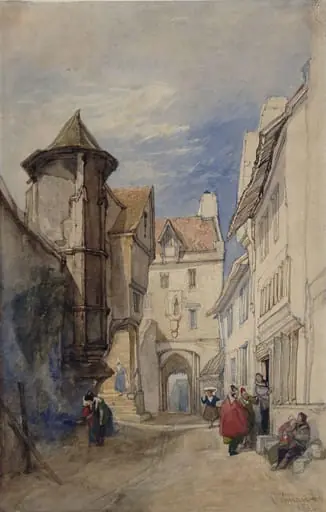 A Gateway in a Norman Town
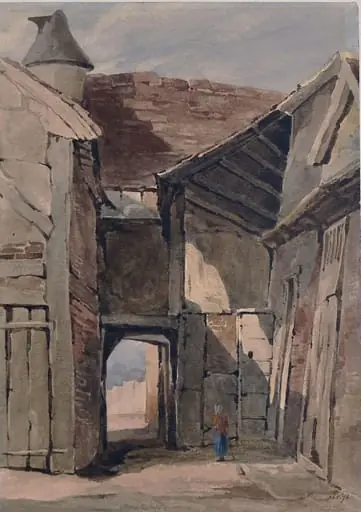 Old House, Bristol
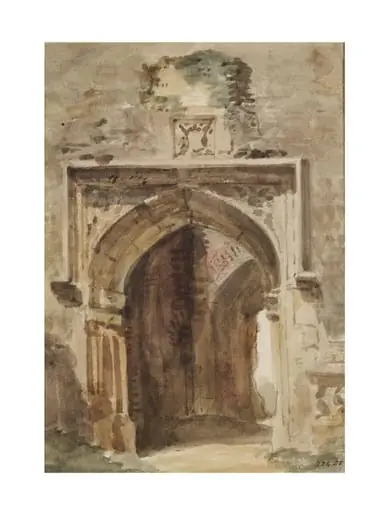 East Bergholt Church: south archway of the ruined tower
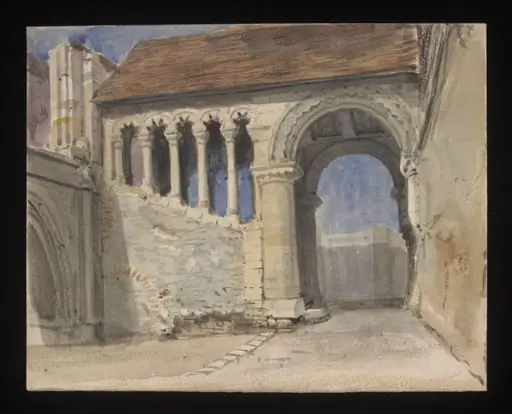 Watercolour drawing by the Grieve family, probably by Thomas Grieve, showing a Norman building at Canterbury
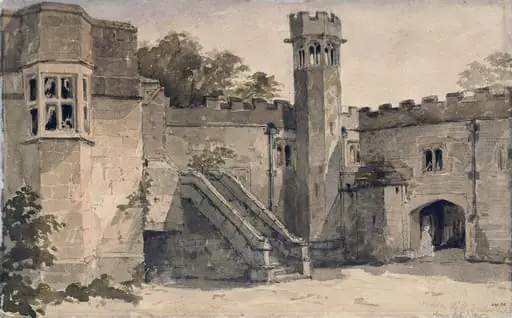 Courtyard of Haddon Hall, Derbyshire
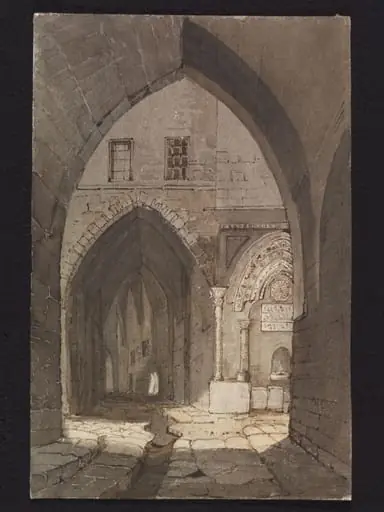 Fountain at Jerusalem near the House of Dives
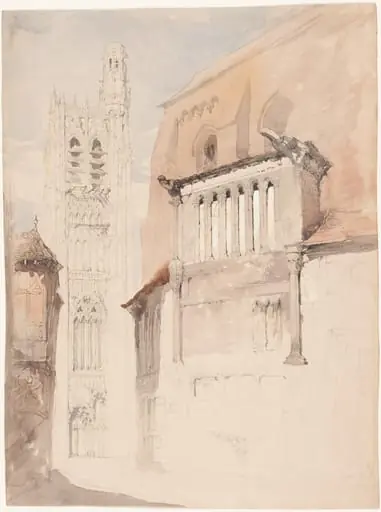 Tower of the Cathedral at Sens
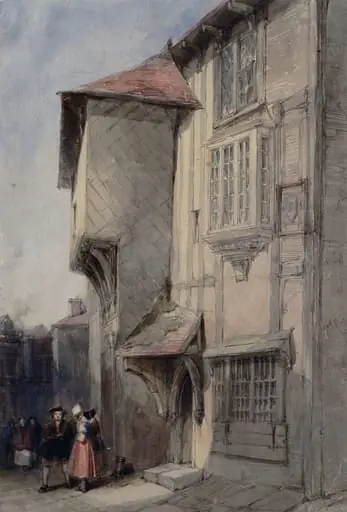 A street scene
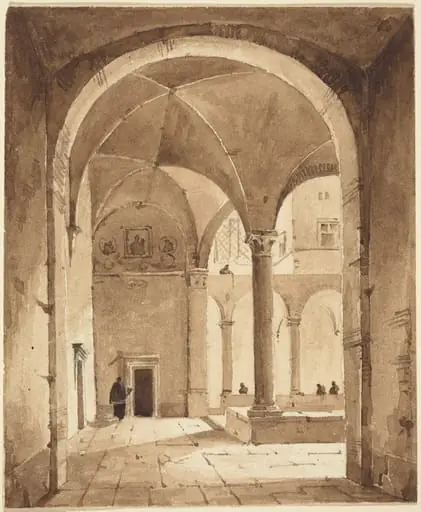 A Cloister
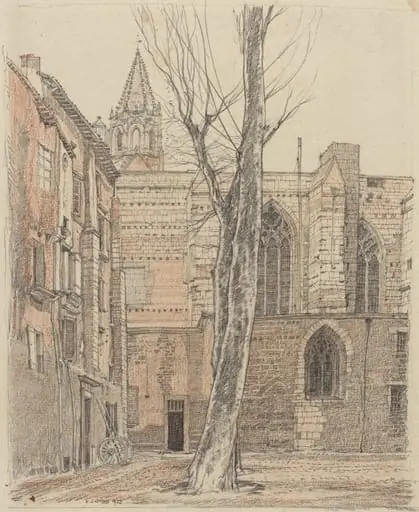 Cloitre St. Pierre, Avignon
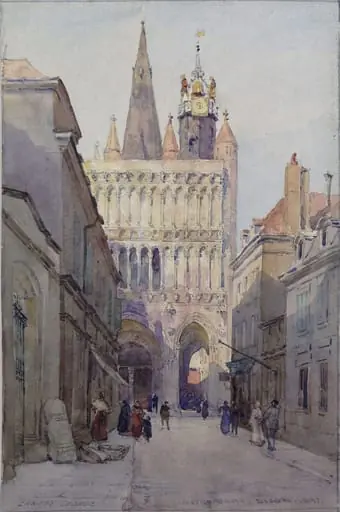 Notre Dame, Dijon
 Church door, Bakewell